Gujarat Explorer

Home › Chhota Udaipur › Forest Deity Shrines

TRIBAL DEITIES · SACRED GROVE · FOREST SHRINE

Forest Deity Shrines

Sacred presences in the forest — the sacred groves and tribal deity shrines scattered through the forests of Chhota Udaipur, where Rathwa and Bhil communities maintain their ancient relationship with the forest deities: spirits of trees, rivers, hillsides and thresholds.

AT A GLANCE Quick Facts
📍 DISTRICT Chhota Udaipur
🏷️ TYPE Tribal sacred ecology
🗺️ REGION Eastern Gujarat
🧭 CATEGORY Temple
☀️ BEST TIME Oct – Mar
🎟️ ENTRY Free
⏱️ DURATION 30–45 min
💡 IDEAL FOR Pilgrimage
ABOUT THE PLACE

The sacred forest ecology of the Rathwa

The forests of Chhota Udaipur are not simply habitat — for the Rathwa and Bhil communities who live within them, they are sacred landscapes inhabited by a complex of deities, spirits and ancestral presences who must be respected, propitiated and lived alongside. The most important physical expressions of this relationship are the sacred groves (oran in Gujarati; called by specific names in Rathwi) — areas of forest that are protected from cutting, hunting and disturbance because they are the dwelling places of forest deities.

These groves are often ancient, comprising old-growth trees not found elsewhere, and serve as both ecological reserves and sacred ritual centres. Beyond the groves, individual trees, rocks, streams and hill features are worshipped as local deities. Roadside shrines, threshold markers, and the specific trees under which offerings are made mark the sacred geography of a tribal village in Chhota Udaipur.

The forest deity tradition coexists with and interpenetrates the Babo Pithoro tradition — the Rathwa sacred world is a continuum of relationships, not a bounded religion. Visit only with a local guide. Sacred groves must not be entered without permission. This is an active and living religious tradition.

HISTORY

From a riverside experiment to the road to freedom

Illustration — forest shrine.

Ancient

The veneration of forest deities begins among the tribal communities of the eastern Gujarat forests.

Sacred grove

Patches of old-growth forest are set aside and protected as oran — the dwelling places of forest deities.

Syncretic

The tradition grows syncretic, coexisting with Hindu worship and the Babo Pithoro tradition of the Rathwa.

Today

The forest deity tradition remains an active, living sacred ecology across Chhota Udaipur's tribal villages.

WHY VISIT

Reasons to make the time

🌿

Sacred forest

Living sacred ecology.

🙏

Forest deities

Ancient veneration.

🌳

Sacred groves

Protected old-growth.

🤝

Tradition

Rathwa and Bhil.

📸

Atmosphere

Forest shrines.

🧘

Quiet

Sacred presence.

HIGHLIGHTS

What to look for inside

SACRED GROVE

Oran

Protected forest.

FOREST SHRINE

Tribal shrine

Living tradition.

THINGS TO DO

How to spend an hour or two

01

Go with a local guide

Essential.

02

Ask about the oran

The sacred grove.

03

Find a roadside shrine

Forest deity.

04

Do not enter oran without permission

Sacred space.

05

Note the protected trees

Ancient growth.

06

Offer respect

No photography of sacred objects.

ARCHITECTURE & SETTING

Sacred grove and forest shrine tradition

The Rathwa sacred grove (oran) is typically a patch of old-growth forest set aside for a forest deity — protected from cutting and disturbance, sometimes for centuries. The trees within may be of exceptional age and girth. Alongside the grove, specific shrines for forest spirits, ancestors and threshold deities mark the sacred geography of tribal village life.

Active sacred tradition; always go with a guide; sacred groves require explicit permission.

Sacred groves (oran) — protected old-growth forest

Forest deity shrines — trees, rocks, streams venerated

Rathwa and Bhil tribal sacred ecology

Coexists with and complements the Babo Pithoro tradition

BEST TIME TO VISIT

When to go

WINTEROct – Feb★★★★★

Cool — ideal for pilgrimage.

MONSOONJul – Sep★★★☆☆

Lush; paths may flood.

SUMMERMar – May★★☆☆☆

Hot; early morning best.

⏰ October to February is ideal for spiritual visits in Chhota Udaipur.

PLANNING ESSENTIALS

Timings & entry

🕗OPENING HOURSDaylight hours
  • Forest shrines are open-air sacred sites
  • Visit during daylight only, with a local guide
  • Allow 30–45 minutes for an unhurried visit
  • Sacred groves must not be entered without permission
🎟️ENTRY FEEFree to visit
  • No ticket required to visit forest shrine sites
  • Engage a local guide from the tribal villages
  • Respect all restrictions on photography
  • This is an active, living religious tradition
HOW TO REACH

Getting there

✈️

By Air

Vadodara airport sits about 100 km away, the nearest air connection to the Chhota Udaipur forests.

🚆

By Rail

Bodeli and Chhota Udaipur are the nearest railheads, reached on lines branching from Vadodara.

🚗

By Road

NH-56 runs from Vadodara into the district; forest villages are reached by local roads with a guide.

NEARBY DISTANCES
Forest villages · Kawant — 15 km · Rathwa hamlets — 20 km · Chhota Udaipur — 30 km
TRAVEL TIPS

Know before you go

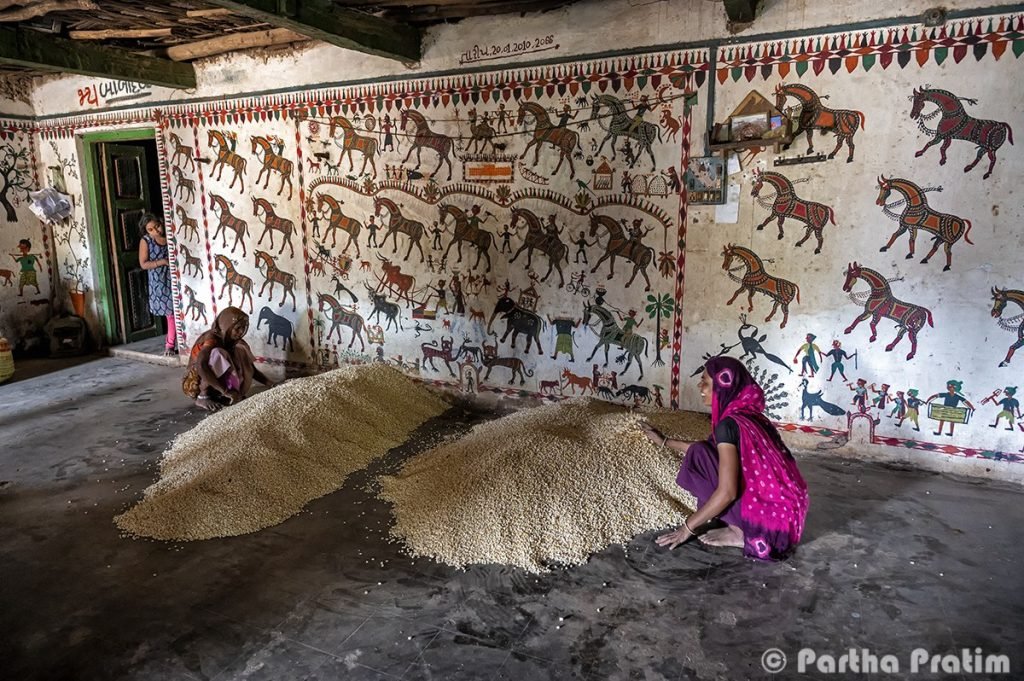
1Seek out Pithora art — Visit Rathwa villages to see ritual wall-paintings in situ.
2Time the Kawant fair — The tribal Holi fair (Mar) is the cultural highlight.
3Buy Sankheda direct — Pick up GI-tagged lacquered furniture at the source.
4Pair with the Statue — The Statue of Unity is an easy ~90 km day-trip.
5Respect tribal customs — Ask before photographing people or sacred paintings.
6Visit a weekly haat — Tribal markets are colourful and authentic.
7Base in Vadodara or town — Both work well for exploring the district.
8Best Oct–Mar — Winter offers the most comfortable weather.
NEARBY FOOD

Where to eat around the ashram

THALI

Gujarati Thali

Comfort home cooking.

TRIBAL

Rathwa food

Forest produce & millet.

BAJRA

Bajra roti

Tribal staple.

🍽️GOOD TO KNOW

Forest & tribal fare

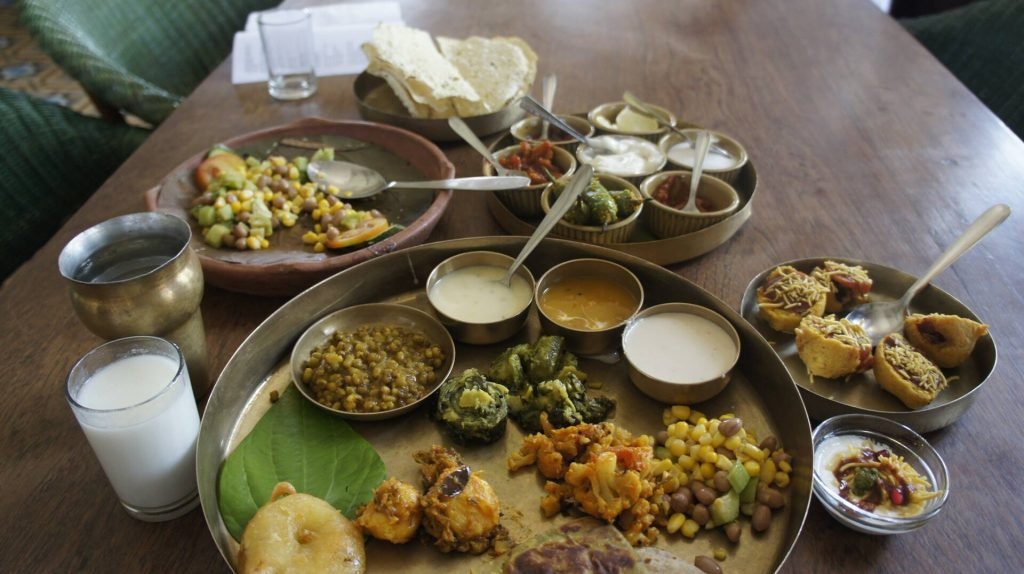
Expect simple Gujarati thalis, millet rotis and forest honey from the Adivasi villages of Chhota Udaipur.
FREQUENTLY ASKED

Forest Deity Shrines FAQ

What are forest deity shrines?

Sites of Rathwa and Bhil tribal deity veneration.

Can visitors go?

Yes — only with a guide.

What are sacred groves?

Oran — forest protected for deity residence.

Photography?

No — of sacred objects or within shrines.

Why visit?

The most ancient layer of Chhota Udaipur spirituality.

Guide required?

Always.

WHERE TO STAY

Find your stay in Gujarat

Compare live prices across the big booking sites and reserve in a few taps. Booking happens securely on the partner's site — we may earn a small commission at no extra cost to you.

📍 DestinationAnywhere in Gujarat 📅 Check-inAdd date 📅 Check-outAdd date 👥 Guests2 adults Search Hotels
🏨SAMPLE
Heritage Haveli
★ 4.5  ·  800 reviews
Book Now
🏨SAMPLE
Lakeside Resort
★ 4.6  ·  1140 reviews
Book Now
🏨SAMPLE
City Boutique
★ 4.7  ·  1480 reviews
Book Now
Affiliate links: prices and availability are shown by our partners. You pay the same price; we may earn a commission that helps keep Gujarat Explorer free.

SHOP THE REGION

Bring home Gujarat — & travel essentials

Hand-picked crafts and trip gear, available on Amazon.

🧵
Patola Silk Scarf
View on Amazon
🪔
Kutch Embroidery
View on Amazon
🎒
Travel Backpack 40L
View on Amazon
🍪
Gujarati Snack Box
View on Amazon
As an Amazon Associate, Gujarat Explorer earns from qualifying purchases. Product prices and availability are accurate as of the date/time shown on Amazon and are subject to change.
🚕
Book a cab anywhere in Gujarat
Airport transfers, day trips & intercity rides — reserve a comfortable cab, or just ask us on WhatsApp.
Enquiries are passed to independent, licensed local operators. Gujarat Explorer is a facilitator, not the transport provider.