Home › Destinations › Dada Harir Stepwell
HERITAGE · STEPWELLA quiet 15th-century stepwell of carved sandstone — five storeys spiralling down to the water, well off the tourist trail.
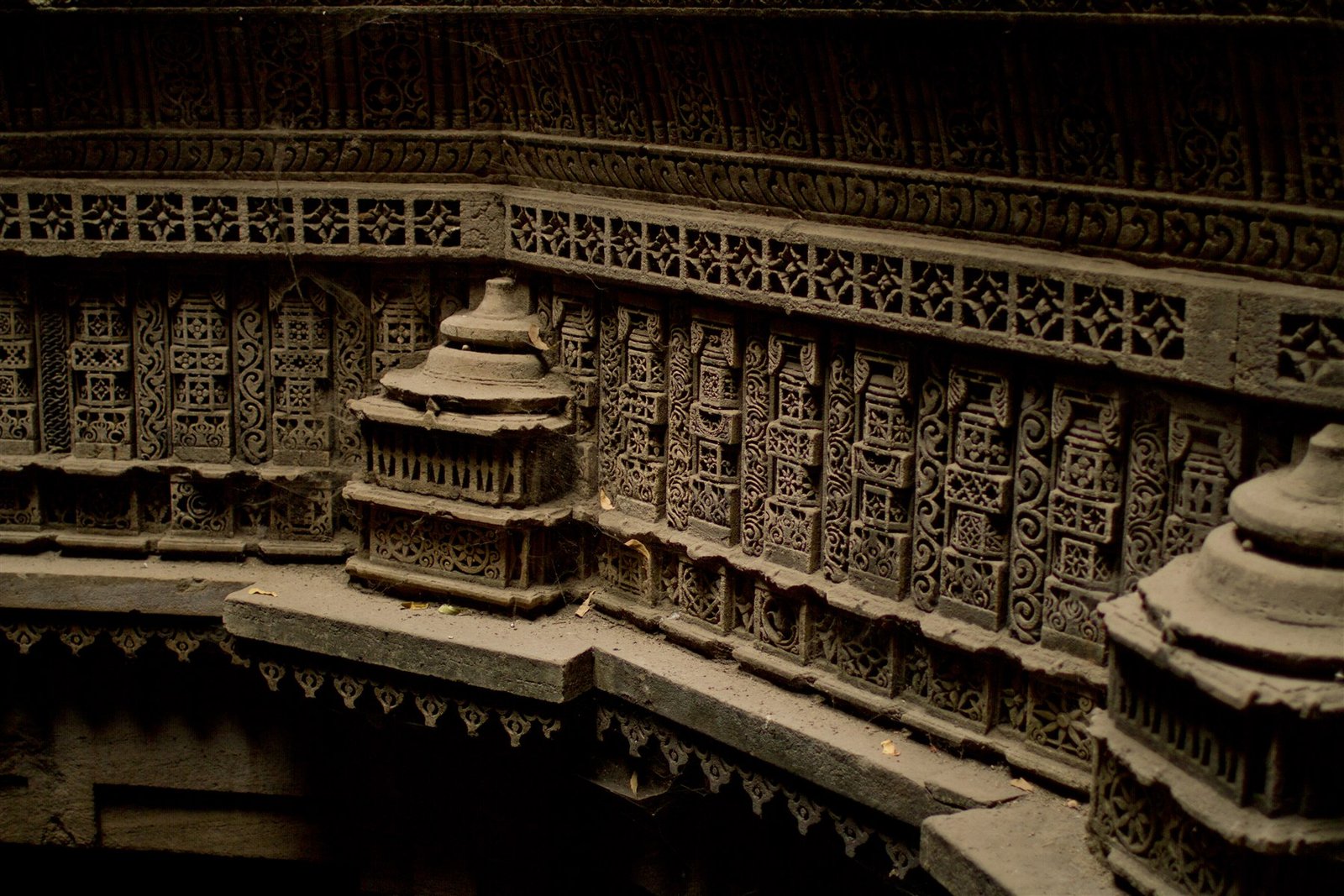
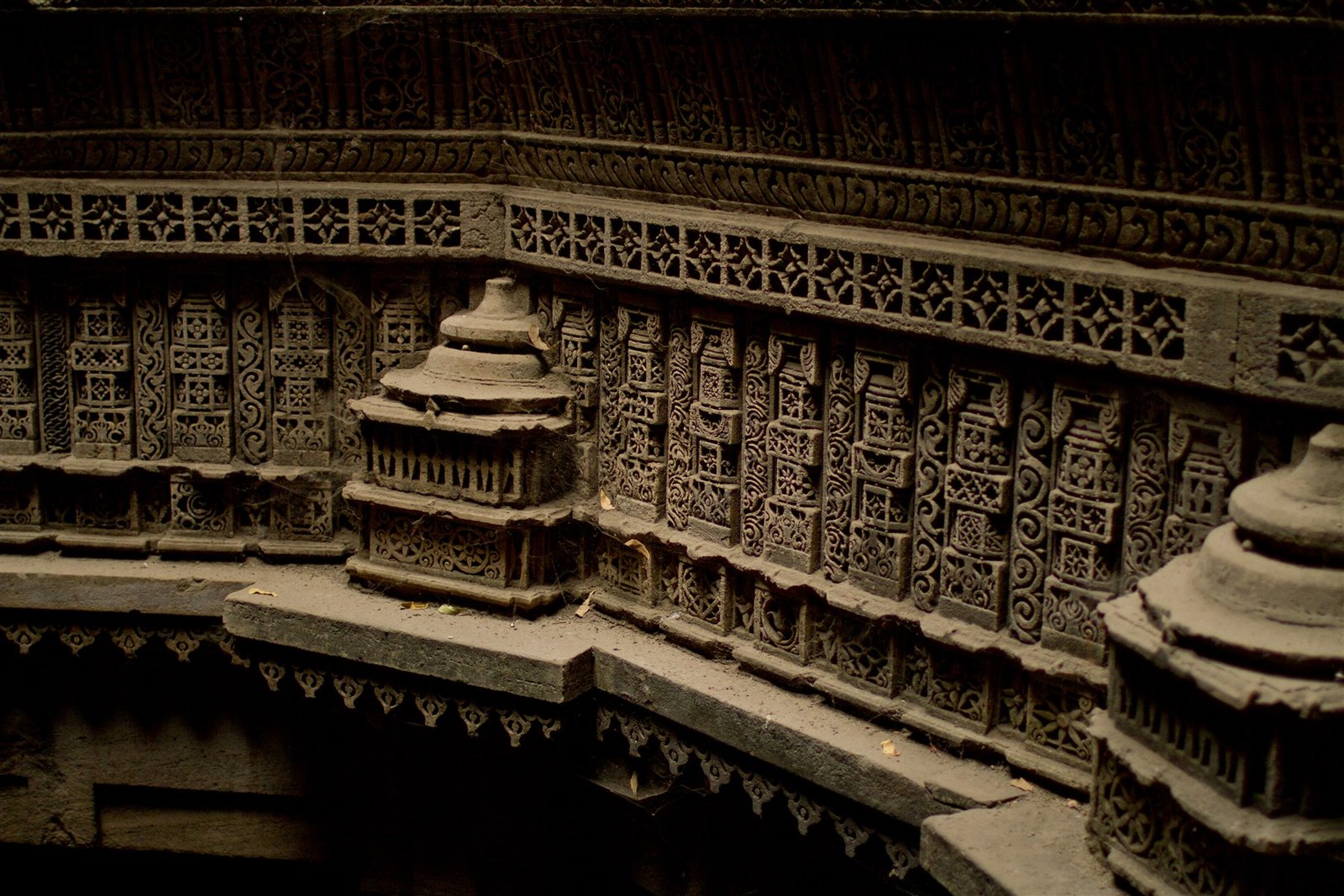
Tucked away in the Asarwa quarter, Dada Harir is one of Ahmedabad’s loveliest and least-visited stepwells. Cut from warm sandstone in 1499, it drops five storeys underground through a series of carved galleries to a deep, octagonal well — a feat of engineering that also served as a cool retreat and a quiet place of prayer.
It was commissioned by Bai Harir Sultani, a senior woman of Sultan Mahmud Begada’s court, and inscriptions in both Sanskrit and Persian still record its founding. The carving is gentler and more weathered than at grander Adalaj, but that is part of its charm: pillared landings, floral bands and shadowed niches, almost always free of crowds.
For anyone who has seen the busier stepwells, Dada Harir offers the same descent into cool, carved darkness — with the silence restored.
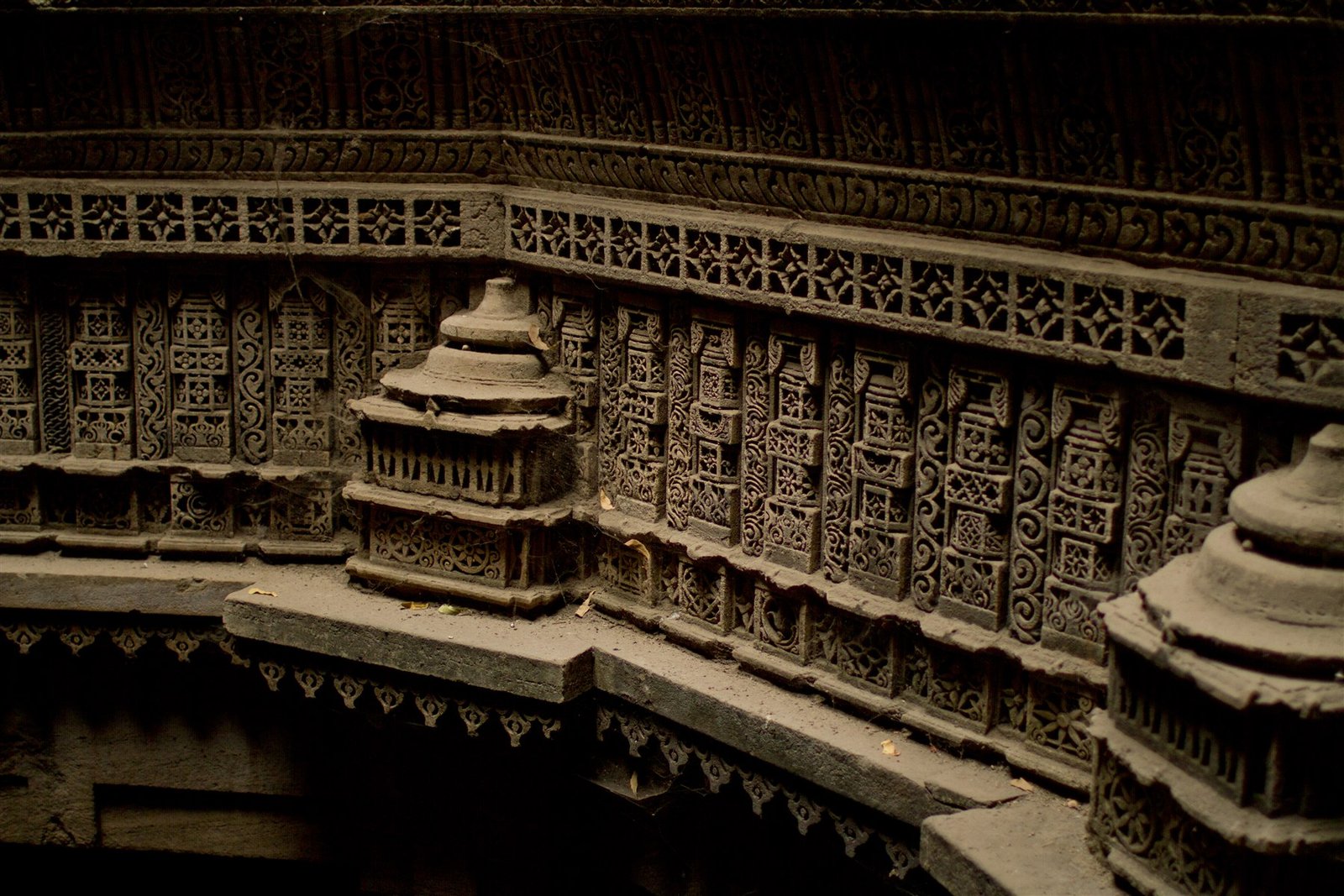
Carved storeys step down into the cool shaft.
The sandstone galleries of the 1499 vav.
Bai Harir Sultani, a lady of Mahmud Begada's court, commissions the stepwell.
Founding records are carved in both Sanskrit and Persian within the well.
A mosque and tomb for Bai Harir, and the older Mata Bhavani vav, stand close by.
An ASI-protected monument and a serene, lesser-known counterpart to Adalaj.
One of the city's quietest monuments, even on busy days.
Gentle floral and geometric work across five carved storeys.
The lower levels stay shaded and cool through the heat.
Founding inscriptions in both Sanskrit and Persian.
Shafts of sun in the shaft make for atmospheric photos.
A quick, rewarding stop in the north-east of the city.
Galleries stepping down to the water.
Weathered floral and geometric stonework.
Take the steps down through the carved galleries to the well.
Look for the founding records in Sanskrit and Persian.
Notice how the air drops several degrees at the lower levels.
Trace the weathered floral bands and pillar work.
Wait for a sunbeam to fall through the open shaft.
The nearby Bai Harir mosque and Mata Bhavani vav are worth a look.
Pillared landings descend to the octagonal shaft.
Dada Harir is a classic Gujarati ‘vav’ — a stepped corridor of carved sandstone descending five storeys to a deep, octagonal well shaft. Pillared landings break the descent at each level, lit by the open well above and decorated with floral bands, brackets and small niches.
Like its grander cousins, it was built without mortar, relying on the precise fit of carved blocks, and served as much more than a water source: a cool refuge from the heat and a quiet, shaded place to gather. Its dual Sanskrit-and-Persian inscriptions capture the blended culture of late-Sultanate Ahmedabad.
Five storeys below ground
Octagonal well shaft
Carved sandstone galleries
Sanskrit & Persian inscriptions
Cool and bright — the most pleasant time to be out across Ahmedabad.
The city greens up and the heat breaks with brief, refreshing showers.
Hot and dry, often 40°C+. Best enjoyed early morning or after sunset.
⏰ Late morning sends light down the shaft; the well is quietest on weekday mornings.
SVP International Airport is about 9 km away — roughly a 25-minute cab ride.
Ahmedabad Junction is around 4 km; Asarwa is close to the civil hospital area.
In the Asarwa quarter; autos and app-cabs reach it easily.
LIGHT IN THE DARK
Late morning drops a clean shaft of light through the open well.
The descending galleries, the octagonal shaft and pillar carvings.
The lower levels are dim — a steady hand or fast lens helps.
A figure on the steps shows the well's true depth.
By night the old jewellers' square turns into a buzzing street-food bazaar.

An evening lane of carts serving Gujarati chaat, sandwiches and sweets.

Fresh fafda-jalebi, dabeli and khaman in the lanes of the walled city.
Ahmedabad is famously veg-friendly — expect superb thalis and farsan.
In the Asarwa area of north-east Ahmedabad, about 4 km from the railway station.
Bai Harir Sultani, a senior woman of Sultan Mahmud Begada's court, in 1499.
No, entry is free.
Roughly 8 AM to 6 PM daily.
It descends five storeys underground to the octagonal well shaft.
It's smaller, more weathered and far quieter — a peaceful alternative.
Both Sanskrit and Persian.
About 30 to 45 minutes.
It's a little off the trail in Asarwa; a cab or auto is the simplest way there.
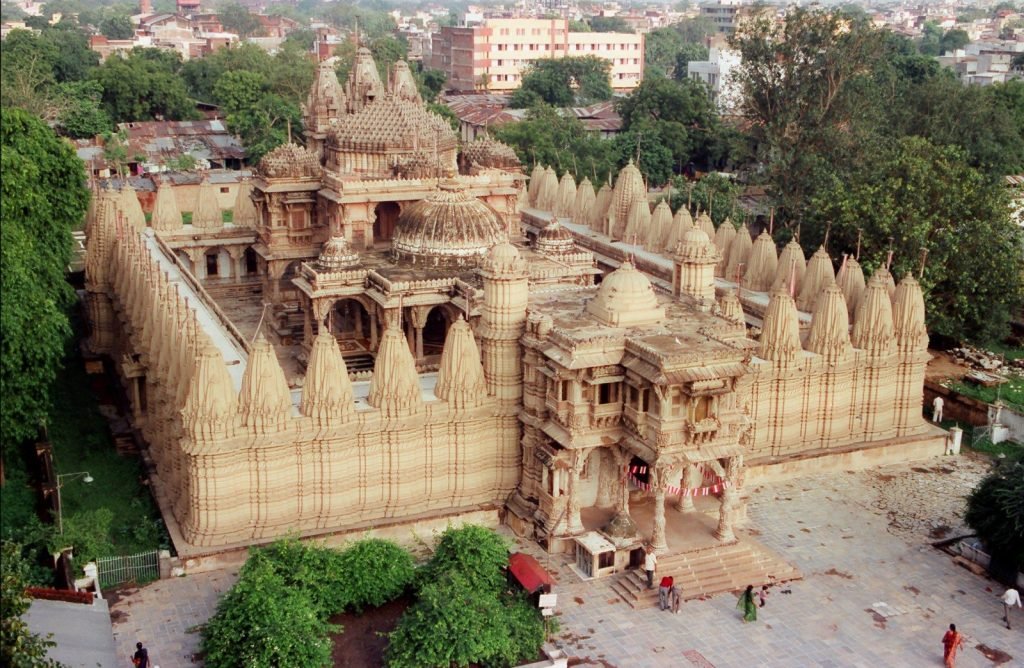
The Hutheesing Temple and the older Mata Bhavani stepwell are close by.
WHERE TO STAY
Compare live prices across the big booking sites and reserve in a few taps. Booking happens securely on the partner's site — we may earn a small commission at no extra cost to you.
SHOP THE REGION
Hand-picked crafts and trip gear, available on Amazon.