
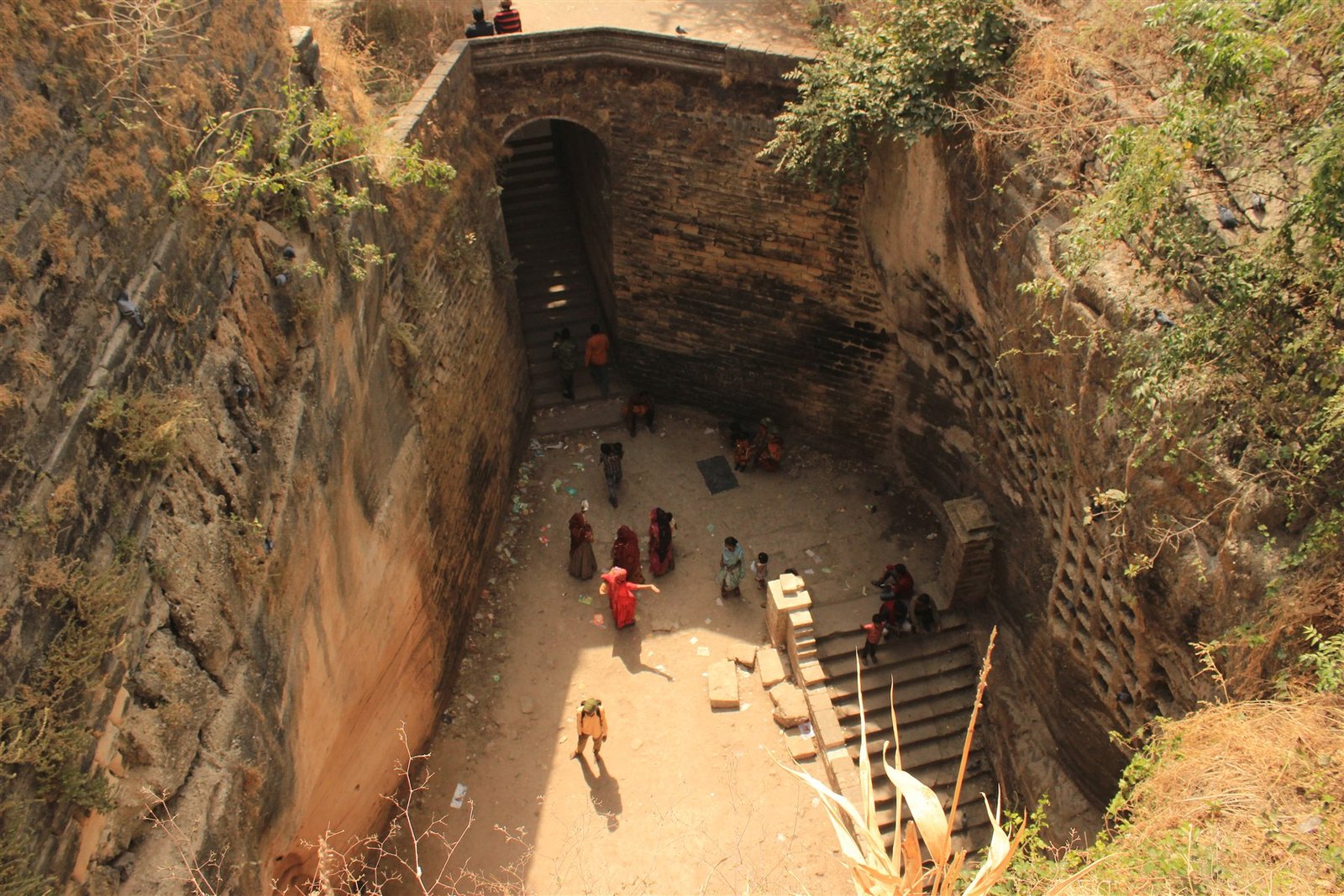
A spiral into the earth
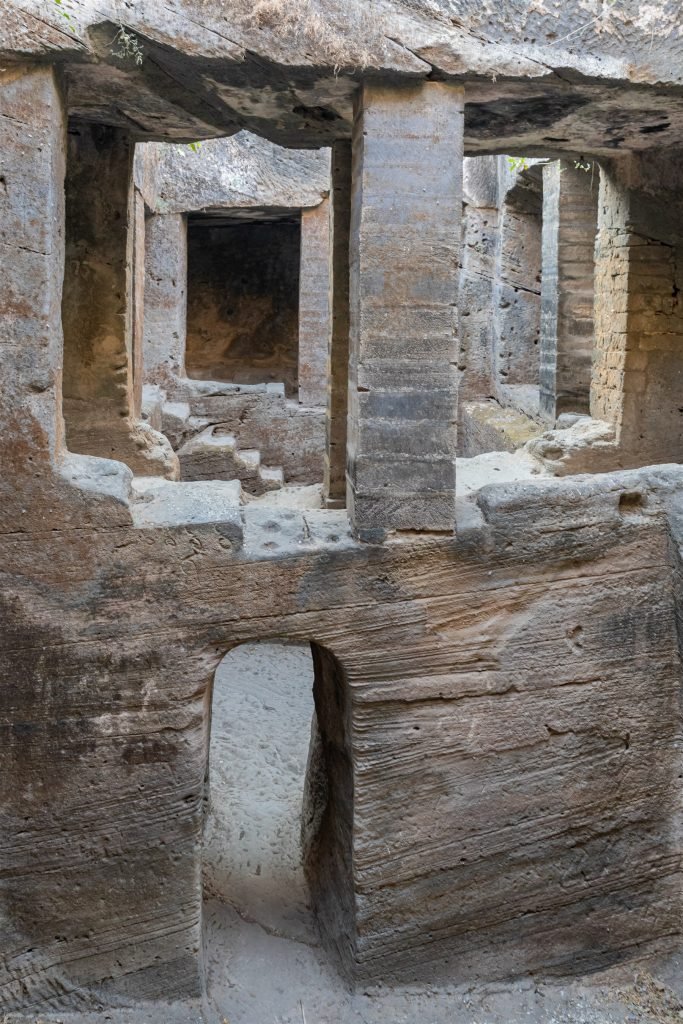
Also hidden within Uparkot Fort, the Navghan Kuvo is even older and more spectacular than the Adi Kadi Vav. Here a remarkable staircase spirals down through the living rock, curving around a deep circular well-shaft that plunges some fifty metres or more to the water table.
The well belongs to Uparkot’s water system, cut so the fort could withstand a siege without depending on anything outside its walls — the same logic that produced Adi Kadi Vav a short walk away. Descending it, the temperature drops with the light and the stair’s spiral tightens toward the water, with the rock’s tool marks still legible on either hand.
Carry a torch, take the worn steps slowly, and give the descent five minutes at the bottom before climbing back — the acoustics and the cool are the point. The well is covered by the single Uparkot ticket, and the fort’s caves, mosque and ramparts fill out a Junagadh morning; October to March is the season.
See it as half of a pair: the Adi Kadi Vav, a stair-corridor cut through open rock a short walk away, shows the other answer to the same siege-water problem, and together the two wells make Uparkot’s underground the fort’s most memorable layer. The Buddhist caves complete the trio, all covered by the fort’s single ticket — carry a small torch, and give the dim lower turns of the spiral your full attention.
Navghan Kuvo’s engineering is the point: rather than the familiar stepped corridor of Gujarat’s vavs, its makers sank a circular shaft some fifty metres into the fort’s soft rock and wrapped the staircase around it — a spiral descent lit by openings cut through to the well, older than the classical stepwell form and possibly its ancestor. Sieges that starved Uparkot never dried it; the fort’s legendary twelve-year defences rested on exactly this water.
Believed to date back well over a thousand years — and linked in name to the Chudasama ruler Ra’ Navghan — it was a masterful piece of ancient engineering, designed to give the fort a protected, year-round water supply able to withstand prolonged siege.
Descending its worn, dimly lit spiral — the rock close on either side, the great shaft falling away beside you — is an unforgettable, slightly vertiginous experience, and a testament to the ingenuity of Junagadh’s early builders.
The spiral rock-cut Navghan Kuvo.
A well cut to survive a siege
A spiral shaft over a millennium old.
The spiral well is cut deep into the fort's rock.
Its name links to the Chudasama ruler.
It secures siege-proof water for Uparkot.
One of India's most striking ancient stepwells.
Reasons to make the time
Spiral stair
Winds down around the shaft.
Rock-cut
Carved from the living rock.
50 m+ deep
A plunging circular well.
Ancient
Over a thousand years old.
Siege water
The fort's hidden lifeline.
Inside Uparkot
Part of the great citadel.
What to look for inside
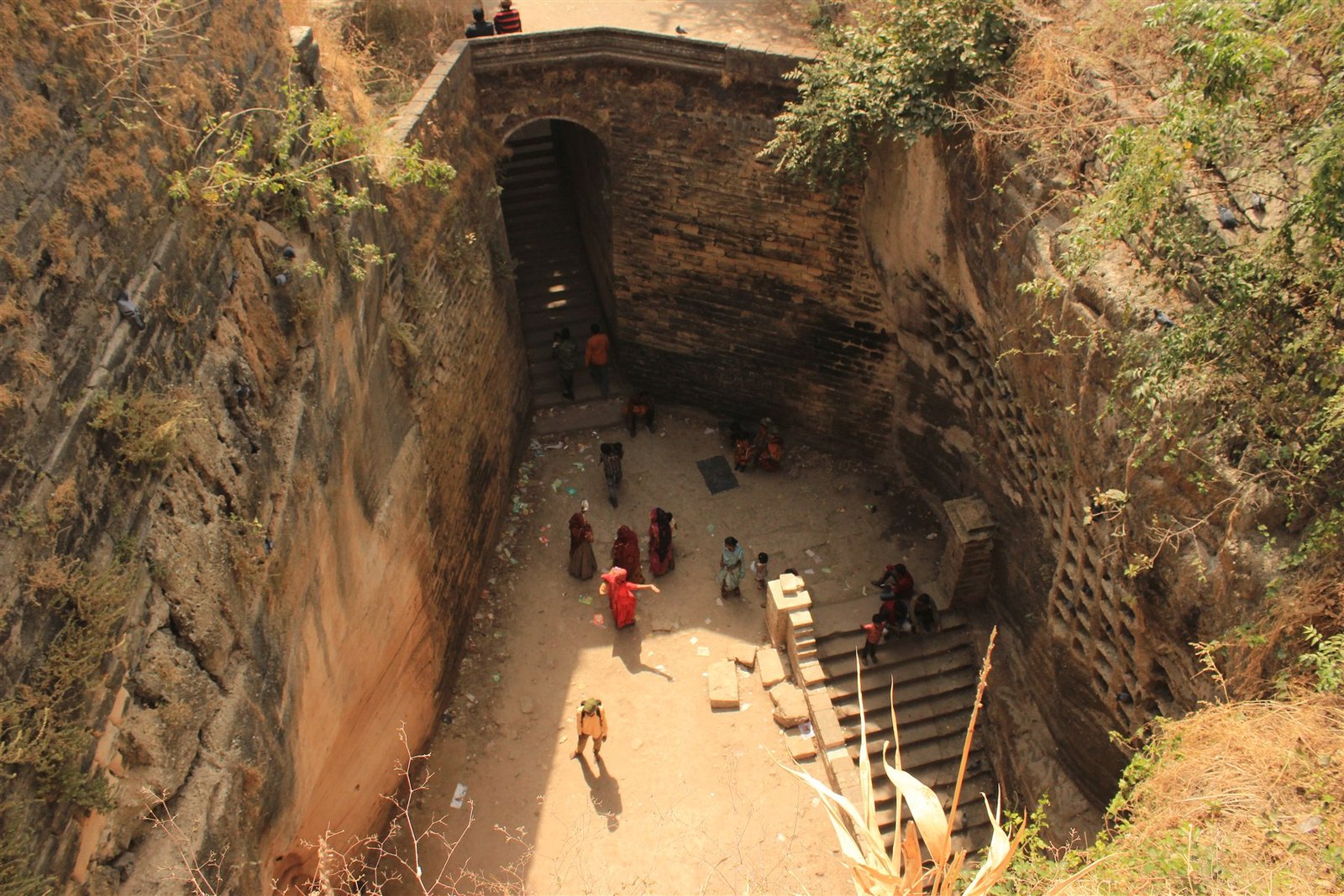 THE SPIRAL
Winding stair
Curving down the shaft.
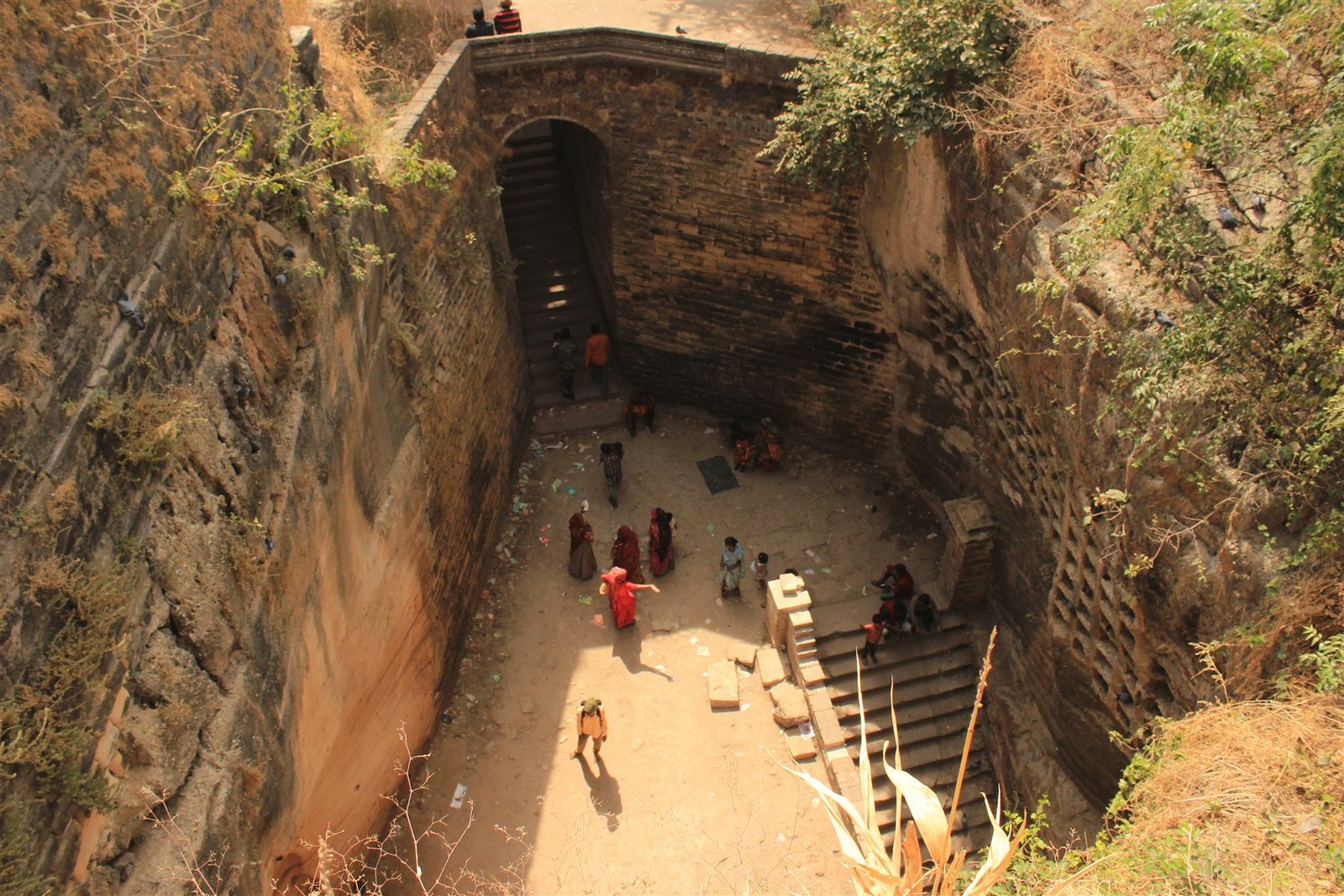 THE WELL
Deep shaft
Water far below.
How to spend an hour or two
Find it in the fort
Find the well inside Uparkot's walls, near the caves.
Descend the spiral
Wind down the stair cut spiralling around the shaft.
Peer down the well
Look into the deep circular shaft with water far below.
Feel the age
Register the age — over a millennium of continuous descent.
Mind the dark
Tread carefully; the steps are dim, worn and uneven.
Pair with Adi Kadi
See the Adi Kadi Vav nearby, the fort's other great well.
A spiral cut to the water table.
A corkscrew through the rock
Navghan Kuvo is an engineering marvel of its age: rather than a straight descent, its builders cut a spiralling staircase that winds around the outside of a deep circular shaft sunk into the rock, allowing people to walk all the way down to the water even as the level fell.
Largely unadorned, its drama lies in form and depth — the corkscrew of worn steps, the dim light filtering down, and the great void of the shaft dropping fifty metres and more beside you. It secured Uparkot’s water for centuries.
Our Junagadh travel guide maps out the other places worth your time here.
If this is what you travel for, browse the stepwells of Gujarat.
Spiral rock-cut staircase
~50 m+ circular shaft
Ancient siege water source
Carved from living rock
When to go
Cool and clear — ideal for the fort and its stepwells.
Lush surrounds; stepwell steps can be slippery.
Hot above — but the rock-cut depths stay cool.
⏰ See it with the Adi Kadi Vav and Buddhist caves; tread carefully on the dim, worn spiral steps.
Timings & entry
- Open during Uparkot Fort hours
- Reached on the fort visit
- The spiral is dim — step carefully
- Allow about 30 minutes
- Covered by the Uparkot Fort ticket
- Hold the rail on the spiral steps
- Mind the depth and low light
- See it with Adi Kadi Vav nearby
Getting there
By Air
Keshod Airport (~40 km) is nearest.
By Rail
Junagadh station is a short ride away.
In the Fort
Inside Uparkot, central Junagadh.
Shooting the well
SPIRAL & SHAFT
A corkscrew descent into shadow
What to shoot
The spiralling staircase.
The shaft
The deep circular well.
Light
Daylight fading down the spiral.
Angle
Shoot down the curve for drama.
Know before you go
More to see close by
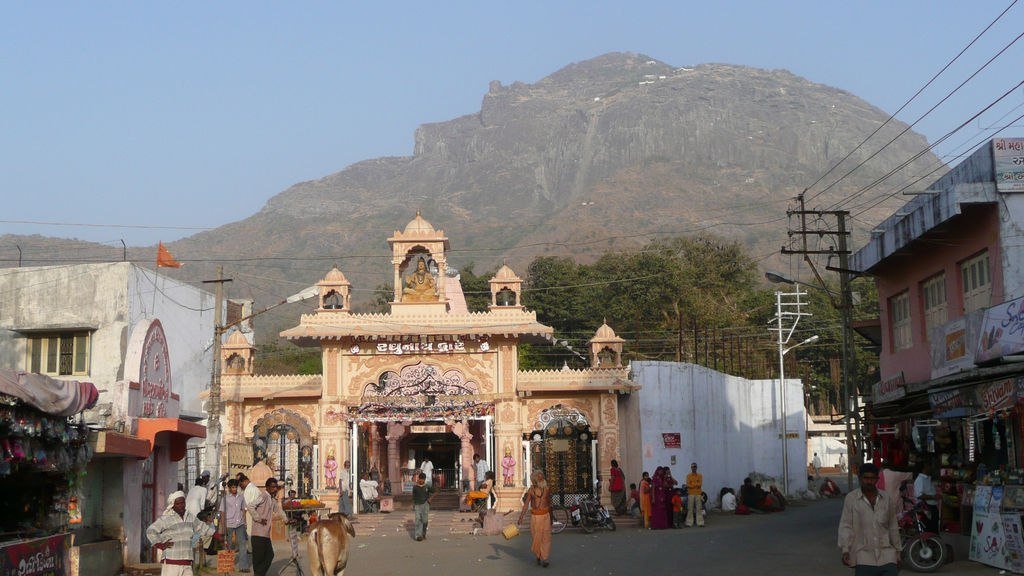 FESTIVAL
Bhavnath Mahadev
Shiva temple & the great Maha Shivratri fair
Jama Masjid, Uparkot
A pillared mosque within the old fort
 NATURE
Willingdon Dam
A scenic reservoir beneath Girnar’s peaks
 SUFI
SUFIDatar Hill
A hilltop Sufi shrine with sweeping valley views
 CAVES
CAVESKhapra Kodiya Caves
Buddhist rock-cut monastic caves
 FORT
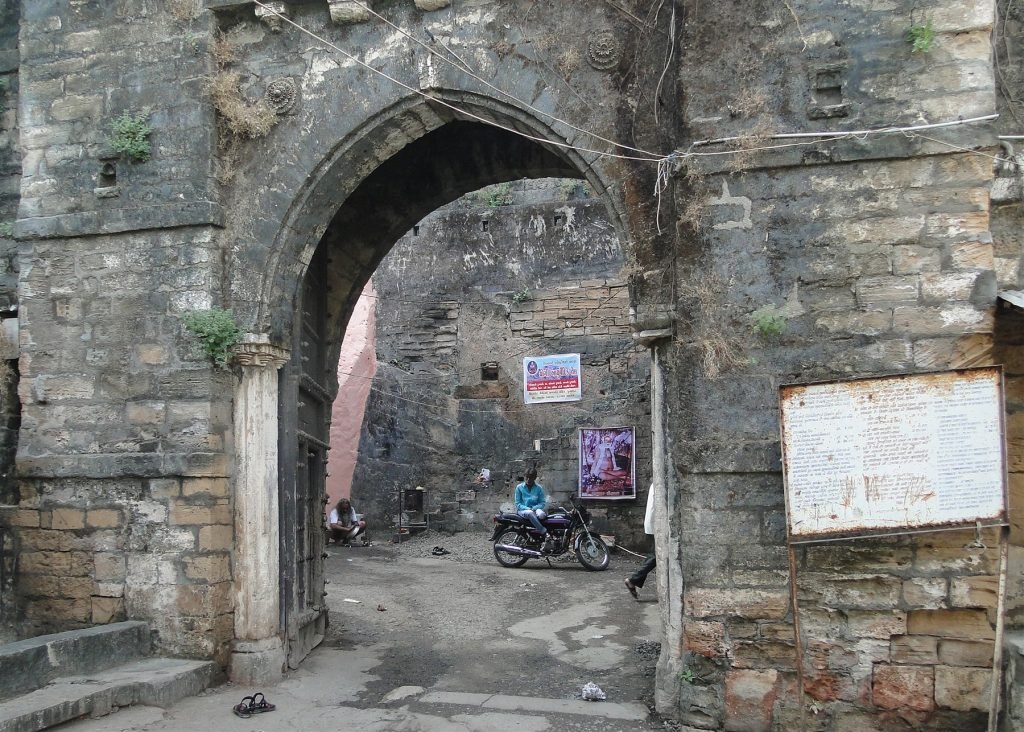
FORTUparkot Fort
Ancient citadel with stepwells, caves & cannons
Where to eat near Navghan Kuvo
 THALI
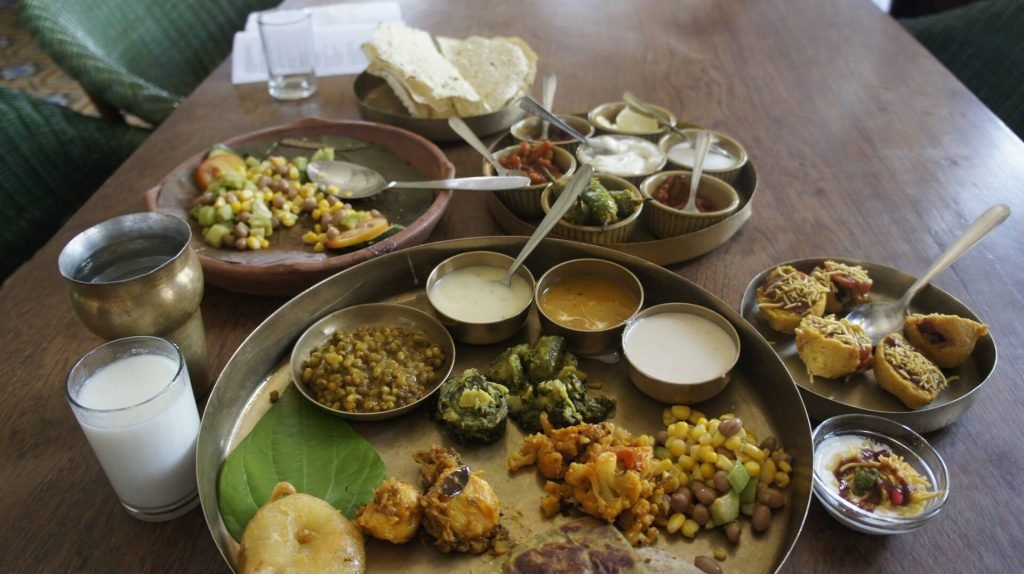
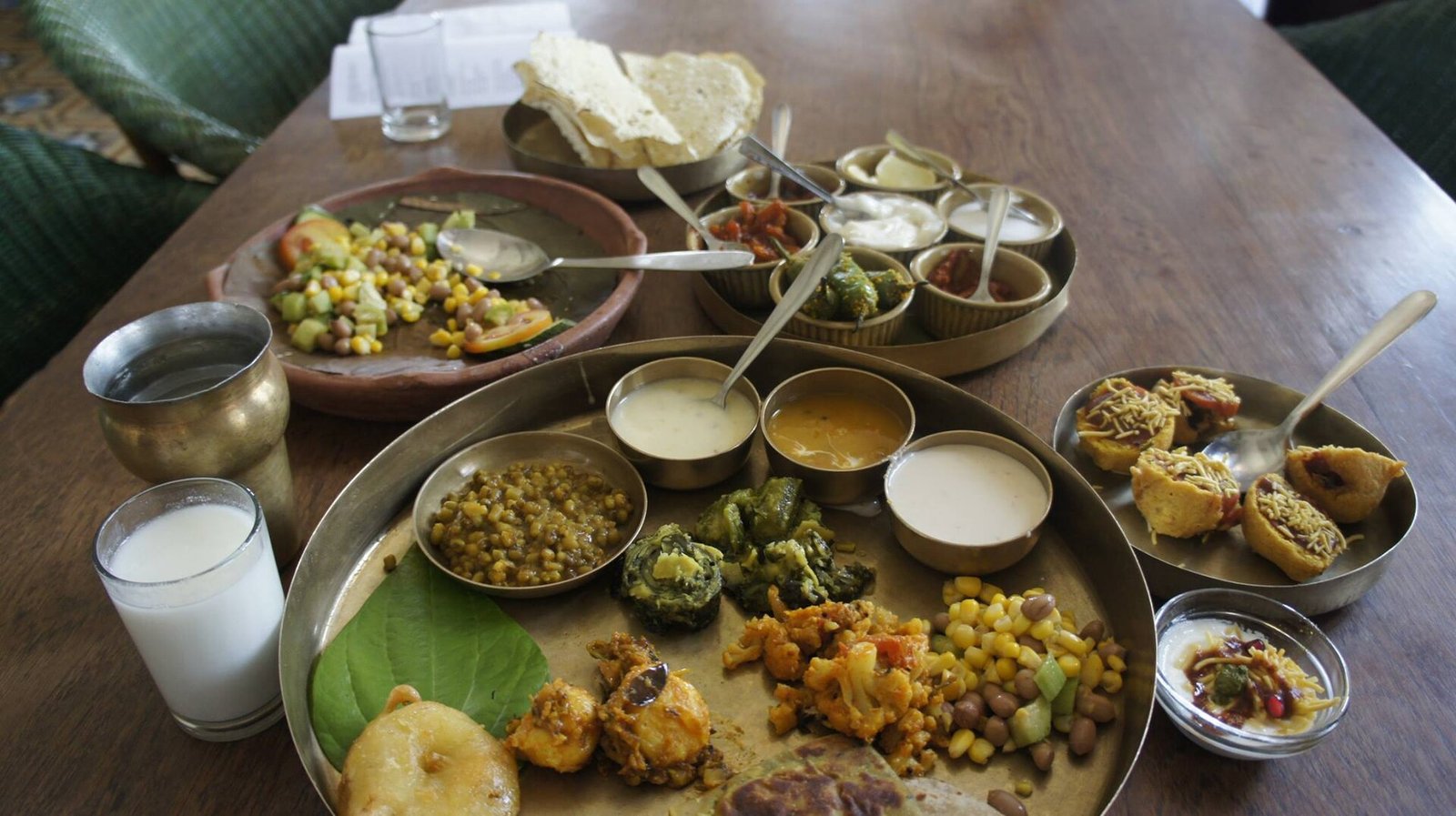
THALIKathiawadi Thali
Rotla, kadhi, shaak and ghee-rich fare.
 SNACKS
Ganthiya & farsan
Saurashtra's beloved fried snacks.
 STREET FOOD
Chaat & kachori
Bustling old-city bazaar bites.
Kesar mangoes
Junagadh's Girnar-grown Kesar mango is famed (summer).
Navghan Kuvo FAQ
What is Navghan Kuvo?
An ancient spiral rock-cut stepwell inside Uparkot Fort, over a thousand years old.
Why is it special?
Its staircase spirals down around a deep circular shaft cut into the rock.
How deep is it?
Around 50 metres or more to the water table.
Who is it named after?
The Chudasama ruler Ra' Navghan.
Where is it?
Within Uparkot Fort in Junagadh.
Is there a separate fee?
It's covered by the Uparkot Fort ticket.
Is it safe?
Yes, with care — the spiral is dim and the steps worn.
What's nearby?
The Adi Kadi Vav and the Buddhist caves.
Related places across Gujarat
 LAKE
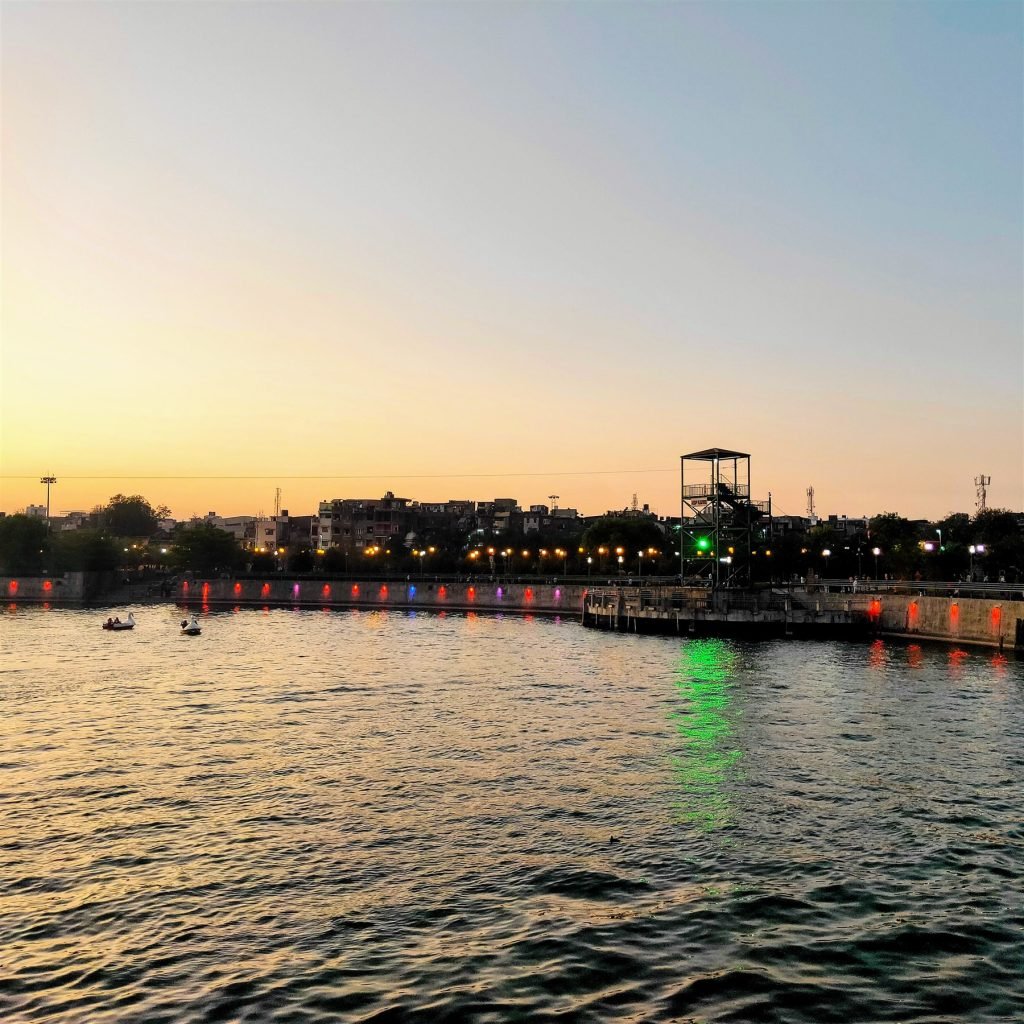
LAKEGopi Talav
A restored medieval lake & lakefront plaza
 TOWN
TOWNBodeli
A bustling market town of the belt
 HILL
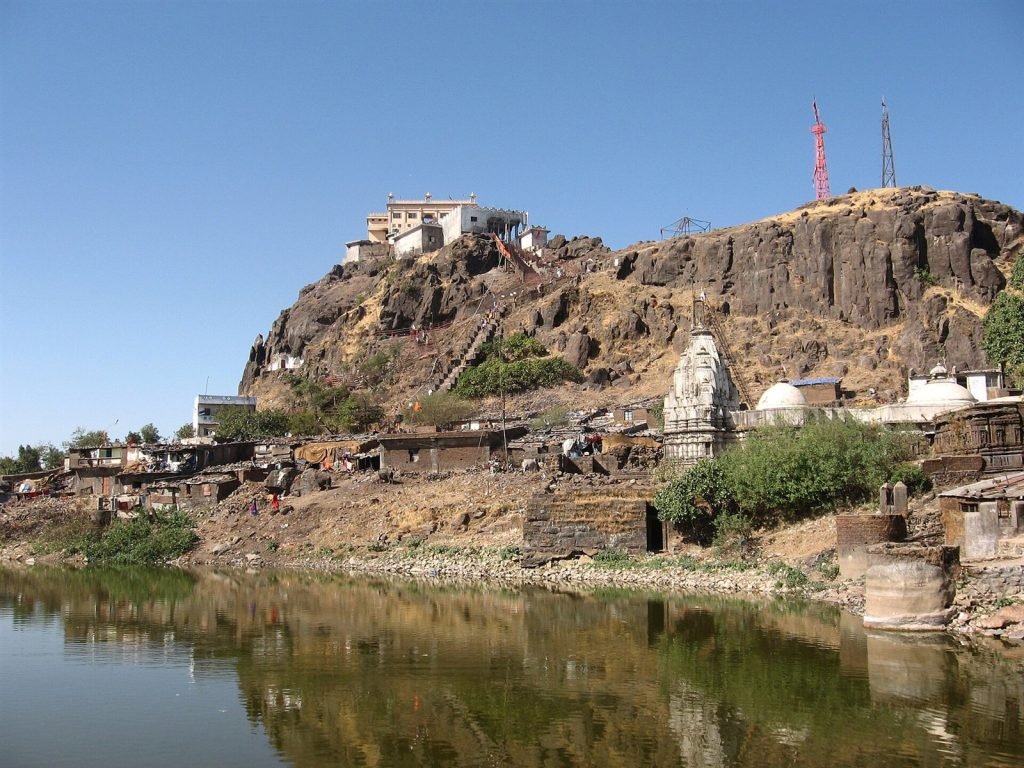
HILLPavagadh Slopes
A volcanic outcrop wrapped in green forest
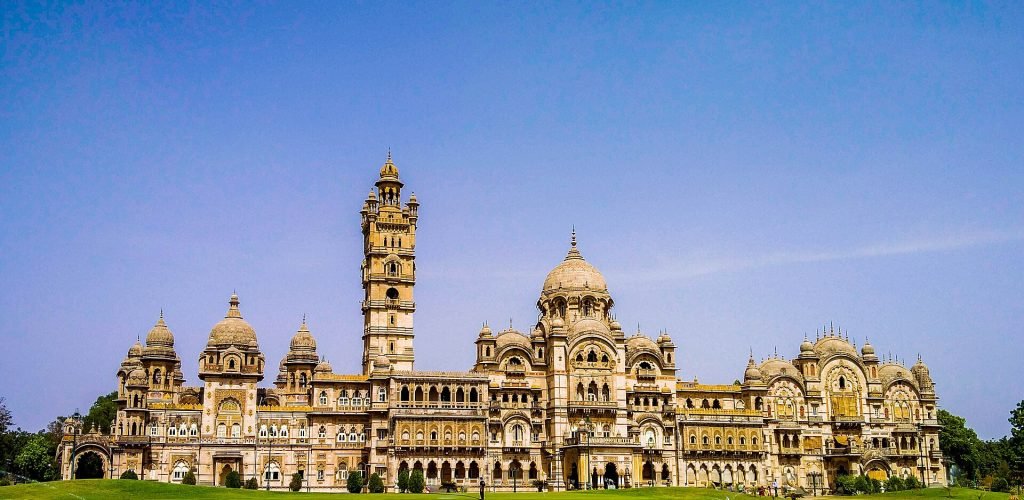 HERITAGE
MS University
India’s famed Faculty of Fine Arts campus
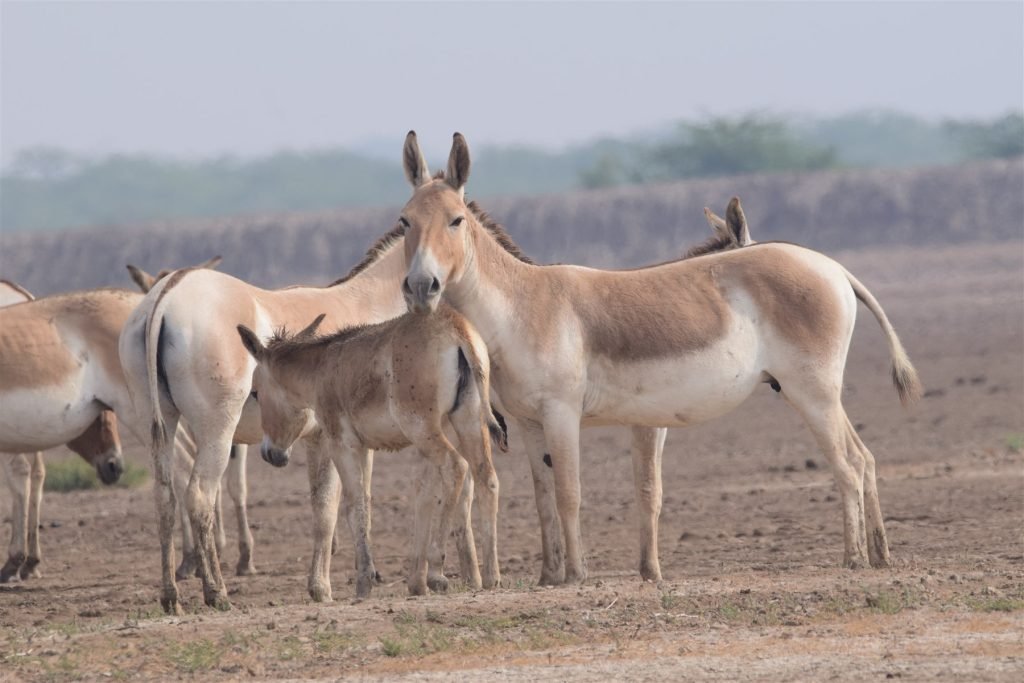 6
6Indian Wild Ass
Flamingos and waders on the Rann’s quiet edge
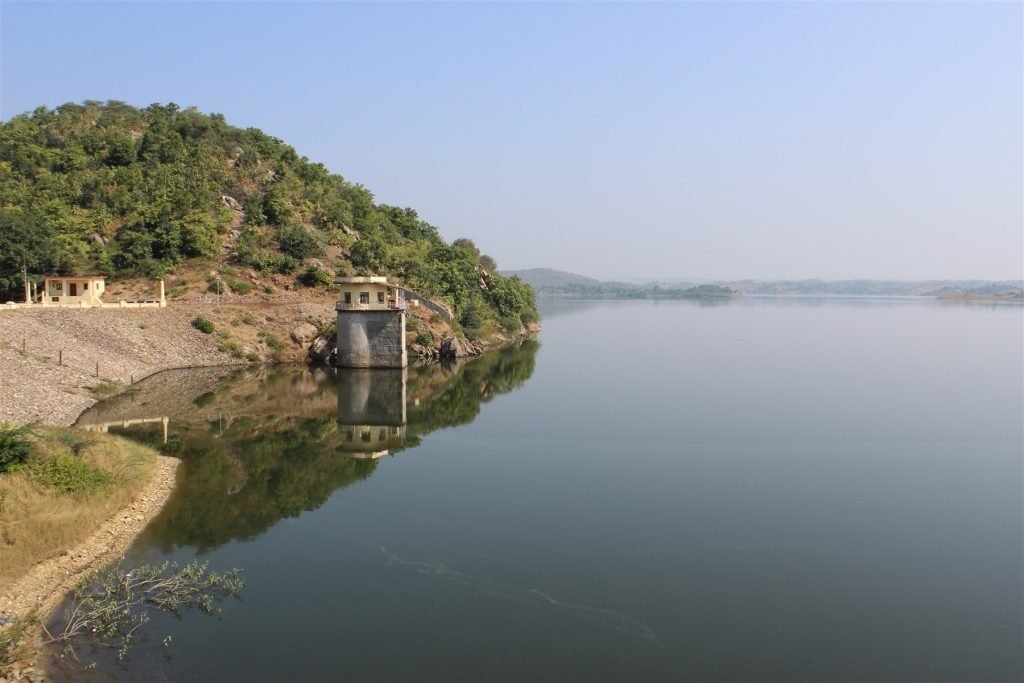
Meshvo at Dawn
Dawn on a Gujarat reservoir — Meshvo at first light, when the Aravalli hills reflect gold…
WHERE TO STAY
Find your stay in Gujarat
Compare live prices across the big booking sites and reserve in a few taps. Booking happens securely on the partner's site — we may earn a small commission at no extra cost to you.
Book directly on our partner sites — tap a provider to see live Gujarat hotels & prices:
SHOP THE REGION
Bring home Gujarat — & travel essentials
Hand-picked crafts and trip gear, available on Amazon.
Published 24 June 2026 · Updated 24 August 2026
We’re an independent group of writers and travellers documenting every corner of Gujarat — one place, plate and festival at a time.