Home › Dahod › Tribal Deities
FOLK RELIGION · VOTIVE SHRINES · ADIVASIThe oldest layer of the sacred — the tribal deities of Dahod, honoured at village shrines with offerings of votive terracotta horses, represent a living folk religion of the Bhil and Rathwa communities, an ancient sacred world woven into the forests, fields and villages of the district.
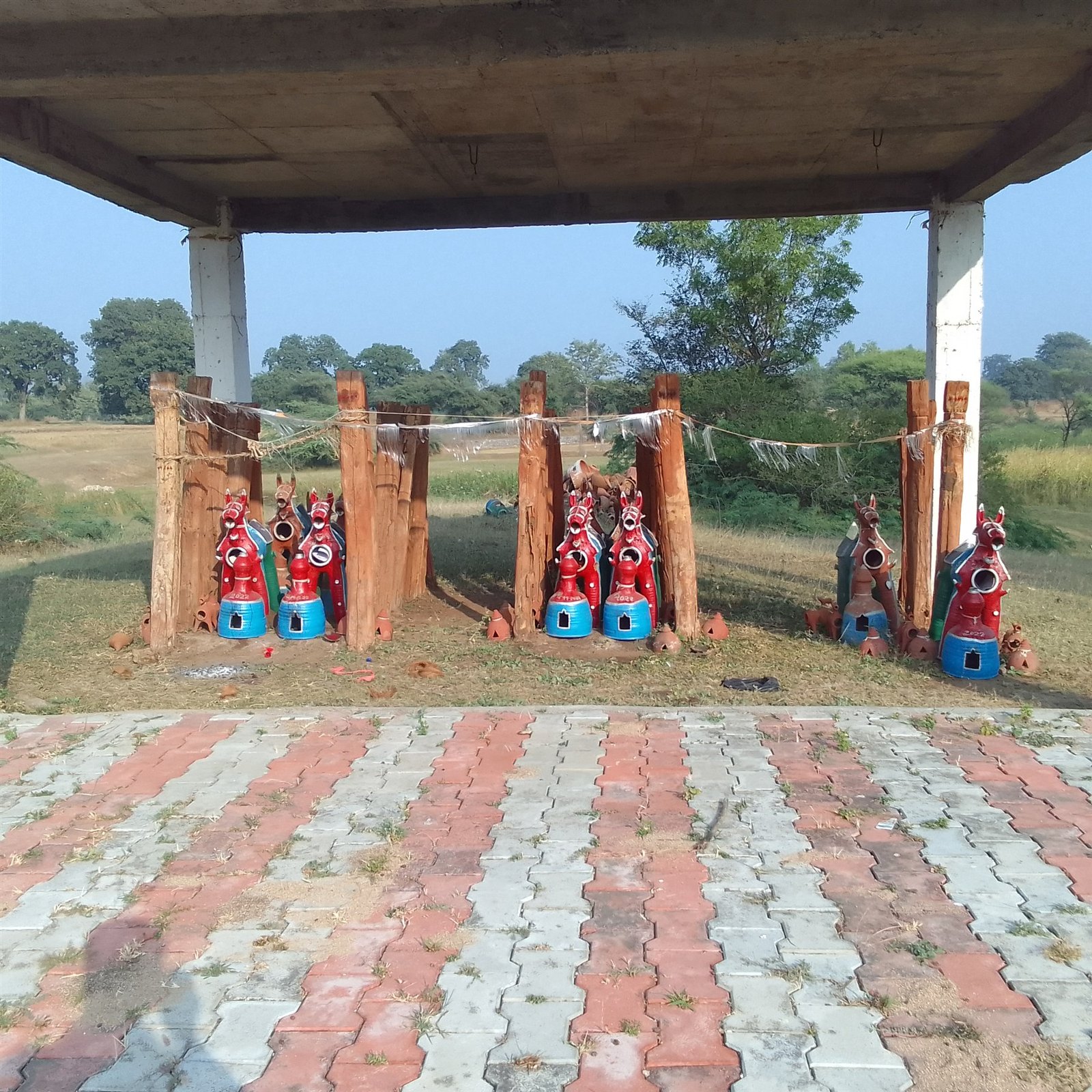
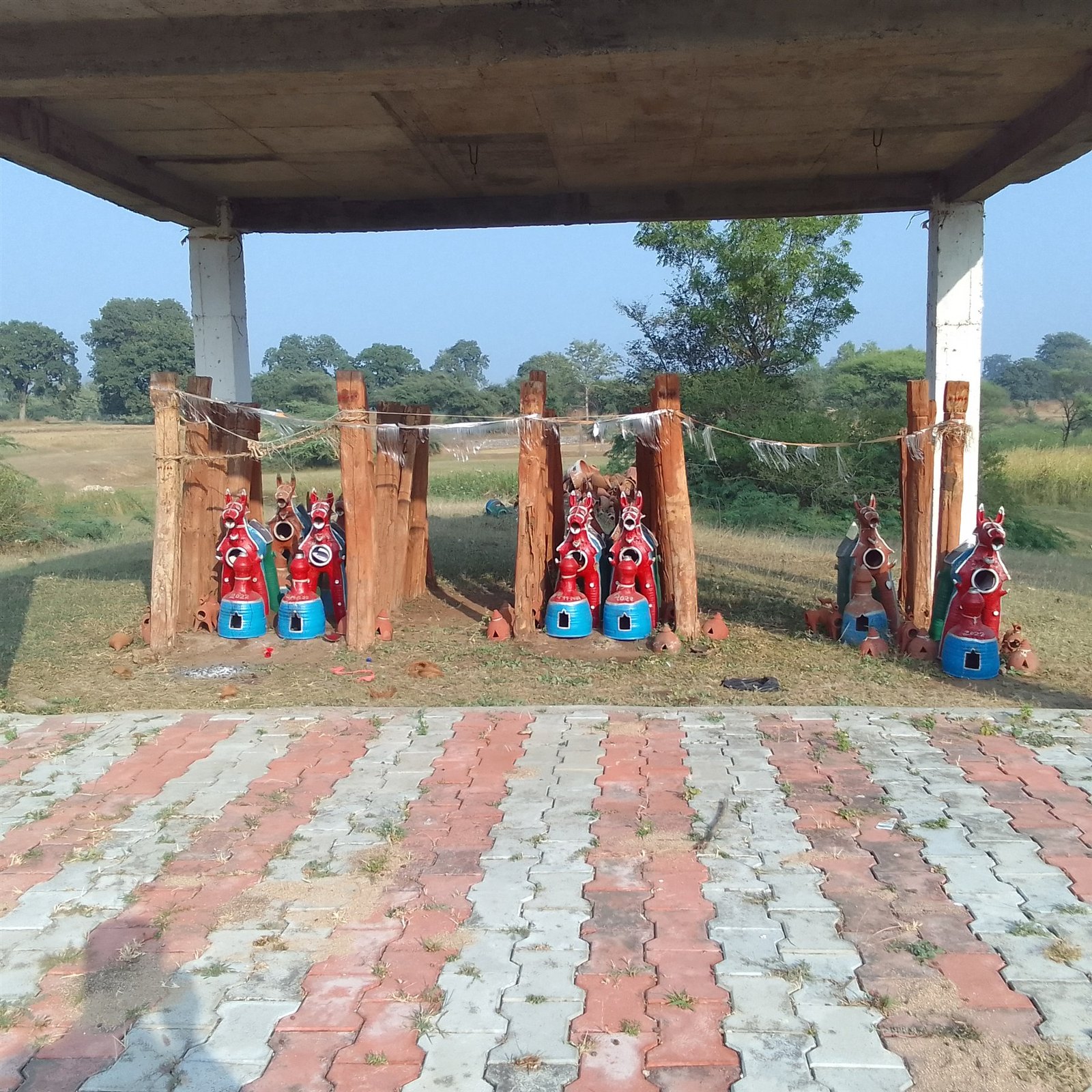
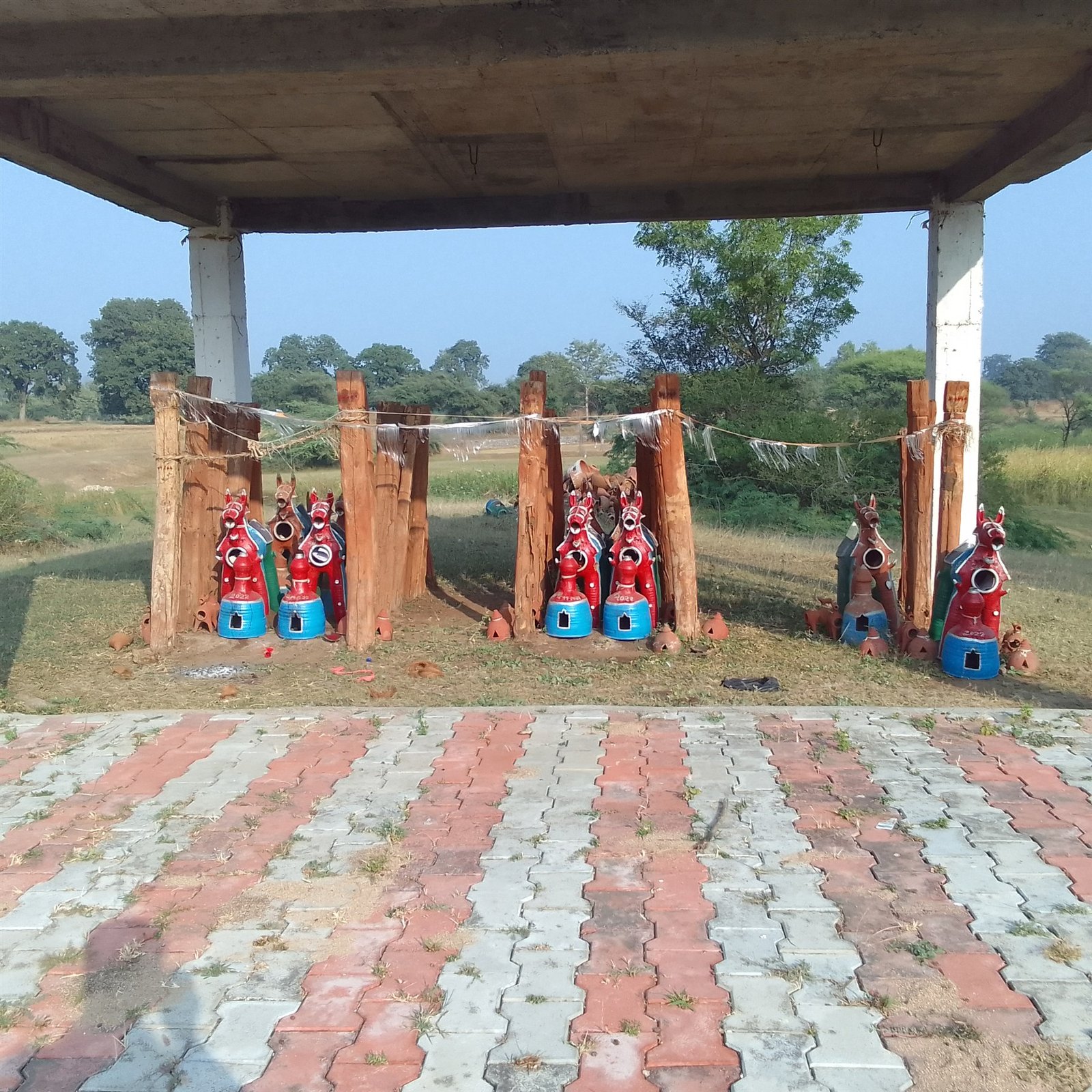
Beneath and alongside the mainstream Hindu temples of Dahod district lies an older and equally living layer of the sacred — the folk religion of the Bhil, Rathwa and other Adivasi communities who form the great majority of the district’s population. The most evocative and visible expression of this tradition is the votive terracotta horse — fired clay horse figures, often brightly painted, offered at village shrines as fulfilments of vows and as offerings to local deities, ancestral spirits and guardian figures.
Clusters of these terracotta horses, standing at shrines under trees, beside fields or in the open countryside, are one of the most striking sights of tribal Gujarat, connecting the present-day communities to an ancient stratum of folk belief. The tribal sacred world is not confined to shrines: it encompasses sacred groves and trees, hill and river deities, ancestral spirits, and a calendar of festivals — including the great Holi gatherings of the region — in which the relationship between the community and the sacred is renewed.
For the respectful visitor, encountering this living folk religion — best with a local guide who has community connections — is one of the most rewarding and humbling experiences that Dahod offers, a glimpse of a sacred tradition far older than the recorded history of the region. (A living tribal religion; visit shrines only with a local guide; ask before photographing sacred objects; maintain respectful behaviour throughout.)
Votive terracotta horses at a tribal shrine, Dahod. Source: Wikimedia Commons.
Votive terracotta horses, Dahod. Wikimedia Commons.
Tribal folk religion.
Offerings at shrines.
Groves, hills, rivers.
A living everyday faith.
Votive horse offerings.
A living tradition.
Trees and nature.
Bhil and Rathwa.
Holi and more.
Older than history.
Offerings at shrines.
A sacred landscape.
Under trees and in fields.
Local guardians and ancestors.
Painted clay, given in faith.
The sacred renewed each year.
With a local guide.
Offerings and vows.
Deities and spirits.
Trees and nature.
Holi is remarkable.
Ask first.
Votive terracotta horses, Dahod. Wikimedia Commons.
The tribal religion of Dahod is a living folk tradition of the Bhil, Rathwa and other Adivasi communities — expressed most visibly in the votive terracotta horses offered at village shrines, and extending to sacred groves, hill and river deities, ancestral spirits, and a calendar of festivals.
It is an ancient sacred world, woven into the forests, fields and villages of the district, far older than its recorded history. (A living tribal religion; visit only with a local guide; ask before photographing sacred objects.)
The living folk religion of the Bhil and Rathwa
Votive terracotta horses offered at village shrines
Sacred groves, hill and river deities, ancestral spirits
Renewed through festivals including the great Holi gatherings
Cool and clear — ideal for visits.
The cultural highlights.
Hot; early morning best.
⏰ Festival days — Holi and Shravan — are the most vivid times for Dahod's sacred life.
Vadodara (~155 km) or Indore are the nearest airports, with onward road connections to Dahod.
Dahod Junction is a major station on the Mumbai–Delhi line, well connected across the network.
NH-47 runs through the district; state buses reach Dahod from Godhra and Vadodara.
RESPECT FIRST
These are active places of worship — always ask before photographing sacred objects or people.
Clusters of votive terracotta horses, shrines under trees, and the wider tribal landscape.
A local guide with community connections opens doors and explains what you are seeing.
Festival days and the soft light of early morning bring the shrines most vividly to life.
Ancient rock-cut shelters hidden in the hills
Rugged hills sheltering India's sloth bears
Living Bhil tribal hamlets
Historic shrines of the old town
Colourful weekly markets of the Bhil belt
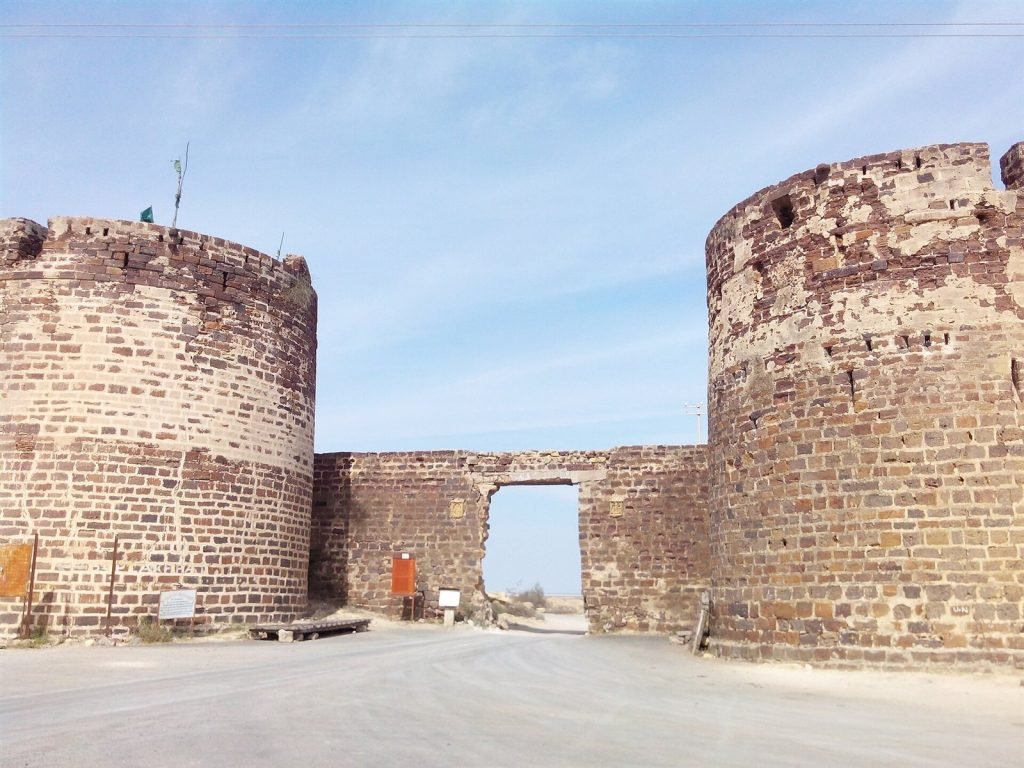
Birthplace of emperor Aurangzeb
Comfort home cooking.
Forest produce & maize.
The maize staple.
Expect maize (makai), dal-bati and simple forest produce across the district.
The local deities and spirits of the Bhil and Rathwa folk religion.
Clay horse figures offered at village shrines as fulfilments of vows.
Yes — only with a local guide, respectfully.
Ask before photographing sacred objects.
During festivals such as Holi.
It is an ancient living folk religion, older than recorded history.
WHERE TO STAY
Compare live prices across the big booking sites and reserve in a few taps. Booking happens securely on the partner's site — we may earn a small commission at no extra cost to you.
SHOP THE REGION
Hand-picked crafts and trip gear, available on Amazon.