Home › Morbi › Indian Wild Ass
WILDLIFE · KHUR · LITTLE RANNThe last of the khur — the Indian wild ass, found only in the Little Rann beyond Morbi, where herds of these swift, handsome equines gallop across the salt flats.
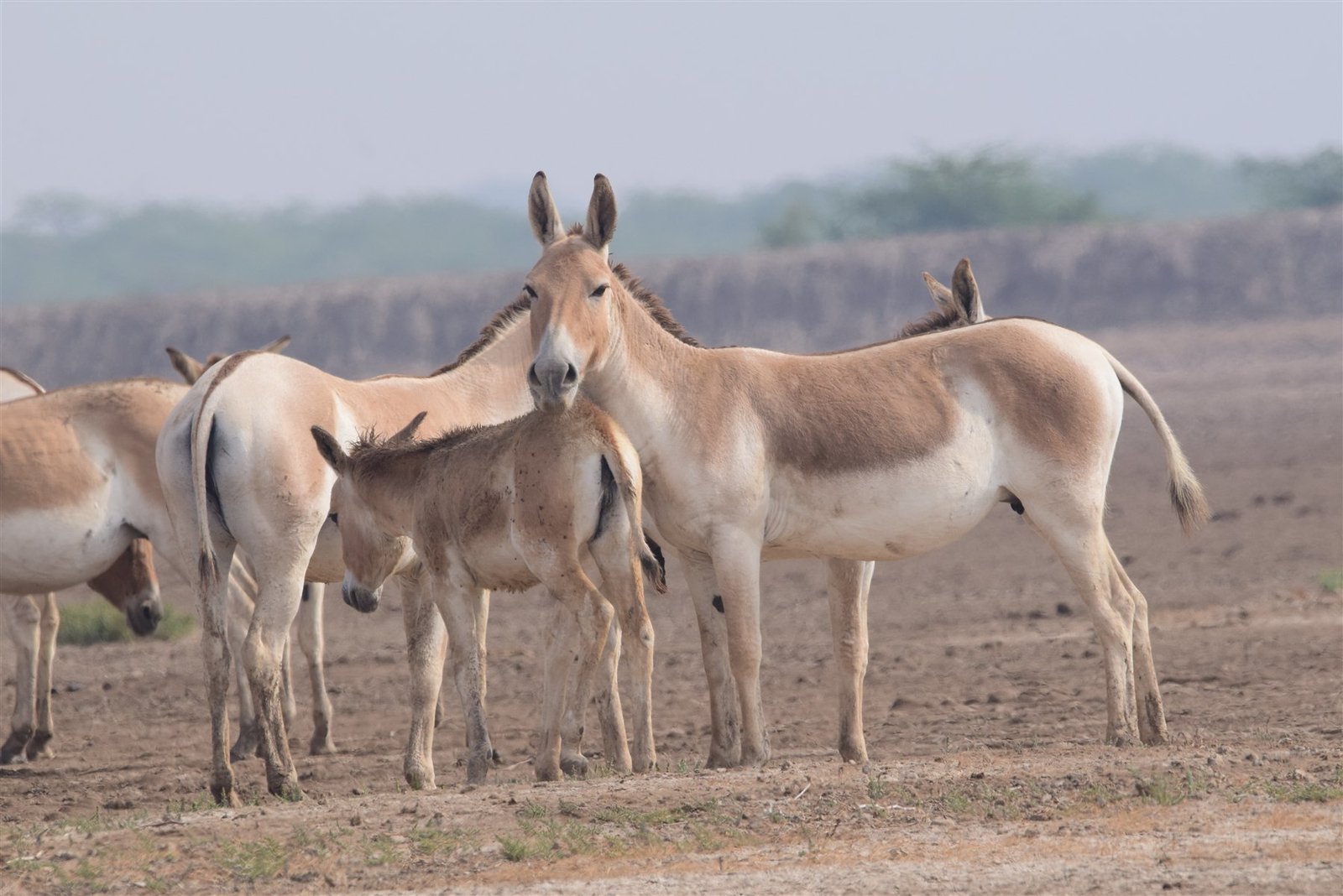
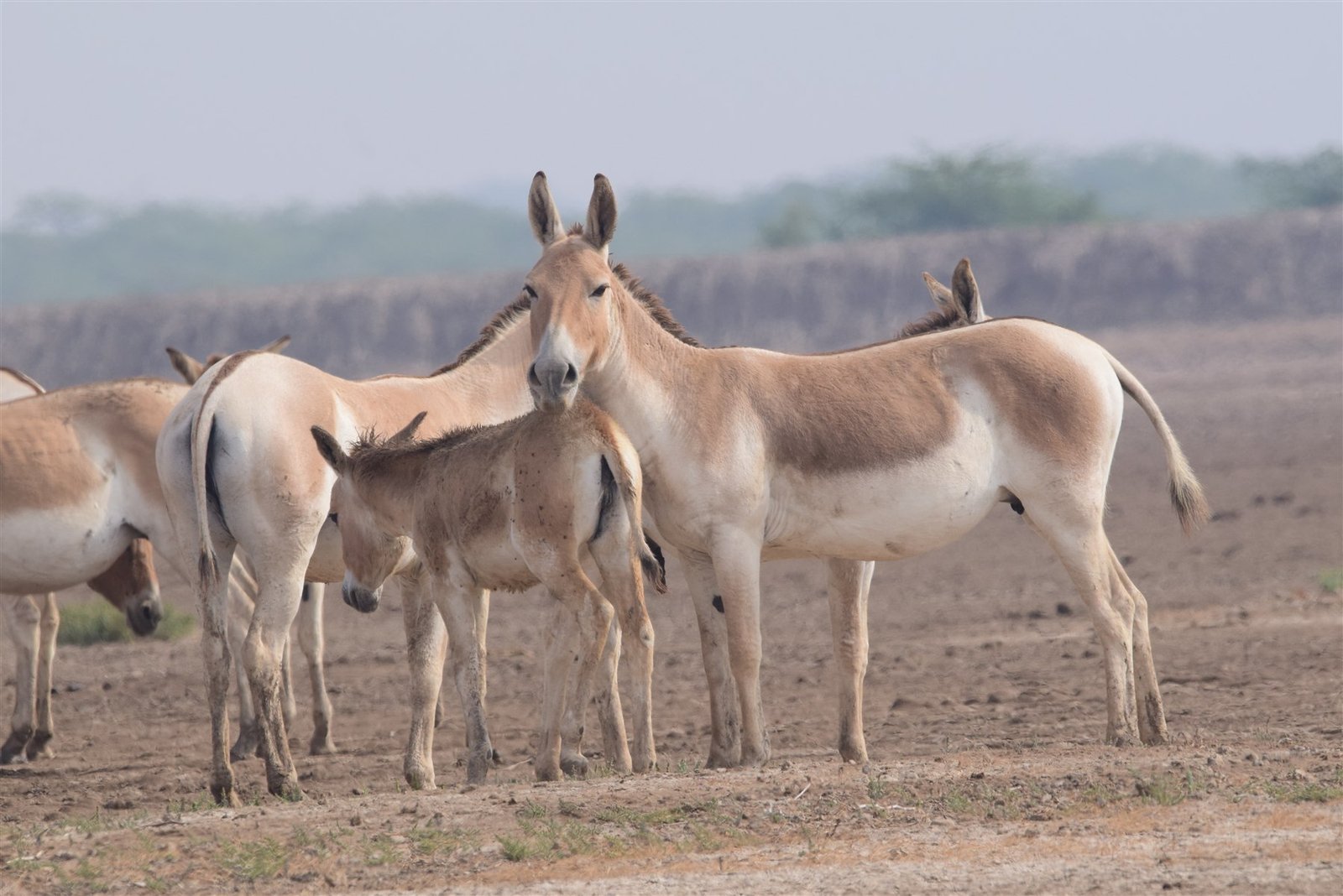
The Indian wild ass, or khur, is one of the rarest and most special creatures of Gujarat — a swift, sturdy, sandy-brown equine that survives in the wild in only one place on earth: the Little Rann of Kutch and its fringes, reached from Morbi via Maliya.
Once close to extinction, the khur has recovered strongly under protection in the Wild Ass Sanctuary, and herds now range across the salt flats and the grassy islands (bets) that dot the Rann, capable of galloping at remarkable speed across the open ground.
A jeep safari into this stark, beautiful landscape offers the chance to see the wild ass alongside nilgai, chinkara, desert foxes, flamingos and a wealth of migratory birds. The combination of a unique species and an otherworldly salt-desert setting makes the wild ass of the Little Rann an unforgettable wildlife encounter — a quiet conservation triumph on Morbi’s wild frontier. (Safari via the sanctuary; book officially.)
A khur in the Little Rann.
Khur on the open flats.
The khur is reduced to a few hundred.
The Wild Ass Sanctuary is created to protect it.
The population rebounds strongly.
Thousands roam the Little Rann.
Found nowhere else in India.
Galloping across the flats.
Into the salt wilderness.
A recovery story.
Flamingos, nilgai, foxes.
An otherworldly stage.
Swift desert equine.
Galloping across salt.
Via the sanctuary, officially.
The salt wilderness.
Herds on the flats.
At remarkable speed.
Nilgai, foxes, birds.
Dawn and dusk.
The Indian wild ass.
The Indian wild ass (Equus hemionus khur) is a swift, sandy-brown equine of the open salt flats, surviving in the wild only in the Little Rann of Kutch. Herds graze the grassy bets and cross the salt at speed, sharing the Rann with nilgai, chinkara, desert foxes, and — in winter — flamingos and migratory waterbirds.
It is the living wonder of the Rann, best seen on a permit-controlled safari into this stark, beautiful landscape. (Book the safari officially via the sanctuary.)
India’s only wild ass (khur)
Herds on the salt flats
Recovered under protection
Nilgai, foxes & birds too
Cool and clear — the best season for the Rann.
The Rann floods; wildlife disperses.
Hot, but wildlife gathers at water.
⏰ Take a winter safari at dawn or dusk; book via the Wild Ass Sanctuary and travel with a guide.
Rajkot airport is nearest.
Maliya/Morbi, then road to the Rann.
Into the Little Rann via Maliya.
KHUR & SALT
The khur on the flats.
Herds galloping.
A long lens from the jeep.
Keep distance; don't chase.
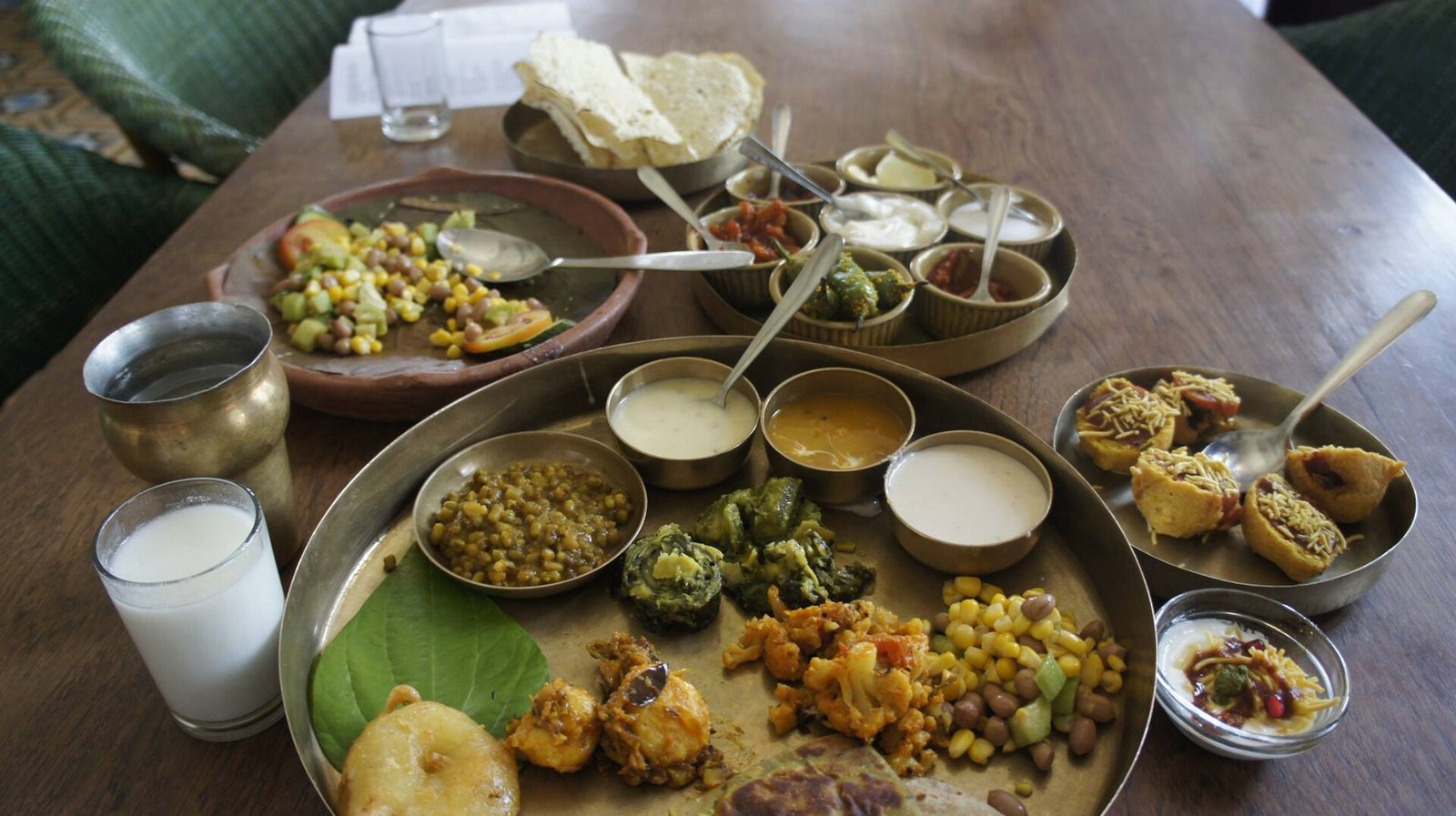
Rotla, kadhi, shaak and ghee-rich fare.
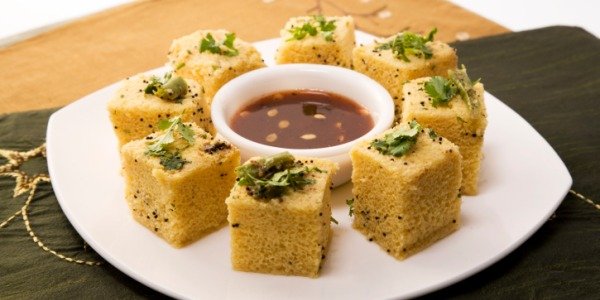
Saurashtra's fried snacks.
Lively local street food.
Hearty Kathiawadi veg fare and sweets.
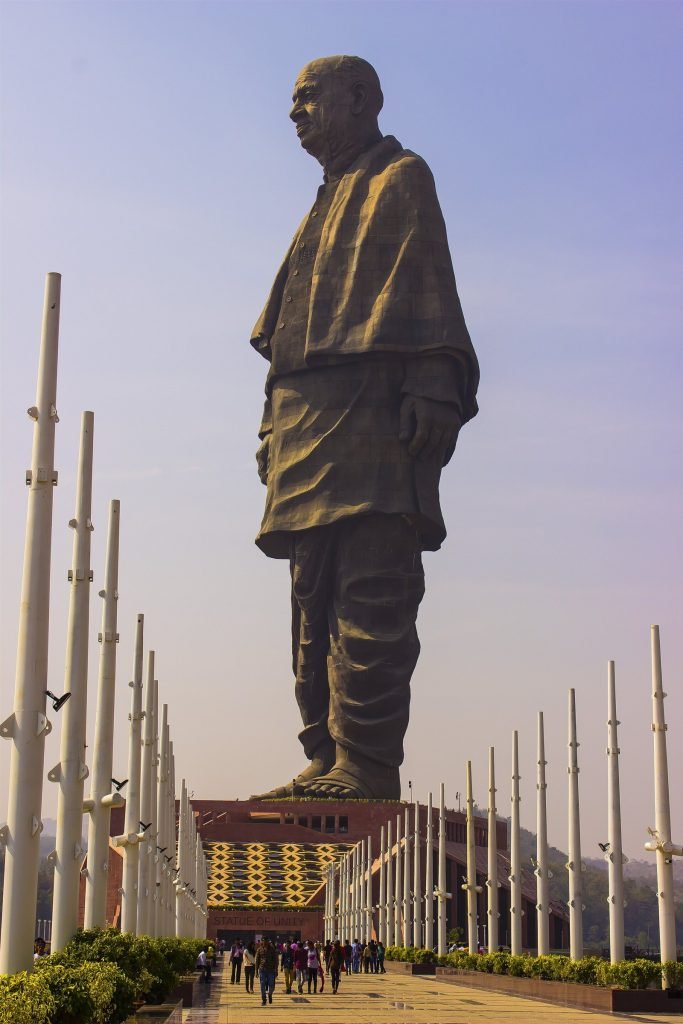
The khur — a swift wild equine that survives in the wild only in the Little Rann of Kutch.
On a safari into the Little Rann, reached from Morbi via Maliya.
It was near extinction but has recovered well under protection.
Via the Wild Ass Sanctuary, officially — this is an information guide, not a booking service.
Nilgai, chinkara, desert foxes, flamingos and many birds.
October to March, at dawn or dusk.
Remarkably fast — they gallop across the open salt flats.
Maliya in Morbi district (also Dhrangadhra/Dasada).
WHERE TO STAY
Compare live prices across the big booking sites and reserve in a few taps. Booking happens securely on the partner's site — we may earn a small commission at no extra cost to you.
SHOP THE REGION
Hand-picked crafts and trip gear, available on Amazon.