Home › Ahmedabad › Adalaj Stepwell
HERITAGE · STEPWELLFive storeys of carved stone descending into cool shadow — a 15th-century well that is part engineering, part temple, part love story.
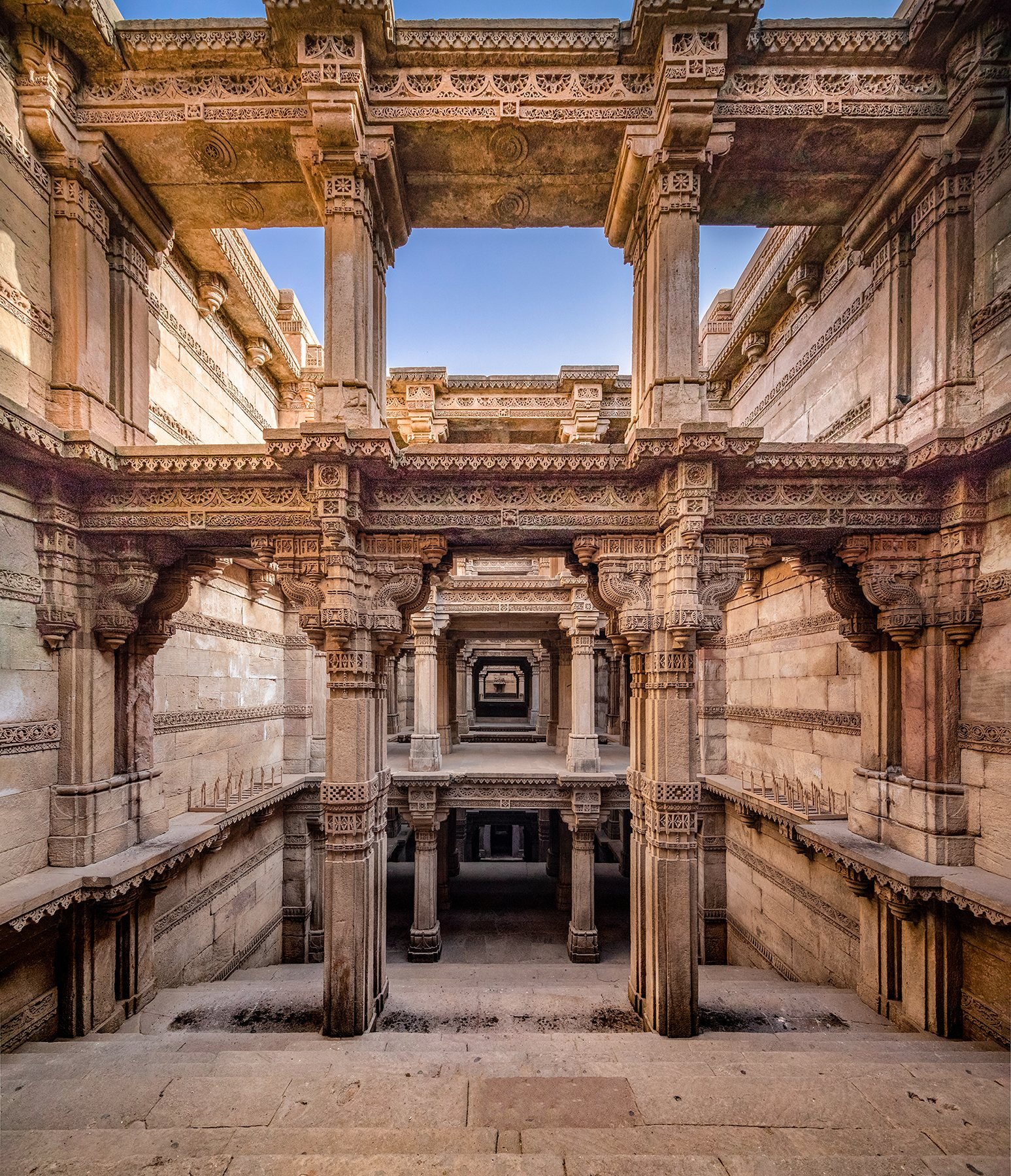
From the surface, Adalaj gives little away — just an opening in the ground and the tops of some carved pavilions. Then you start down the steps, and a hidden world unfolds: five storeys of intricately worked stone descending into deep, cool shade, with the water waiting far below.
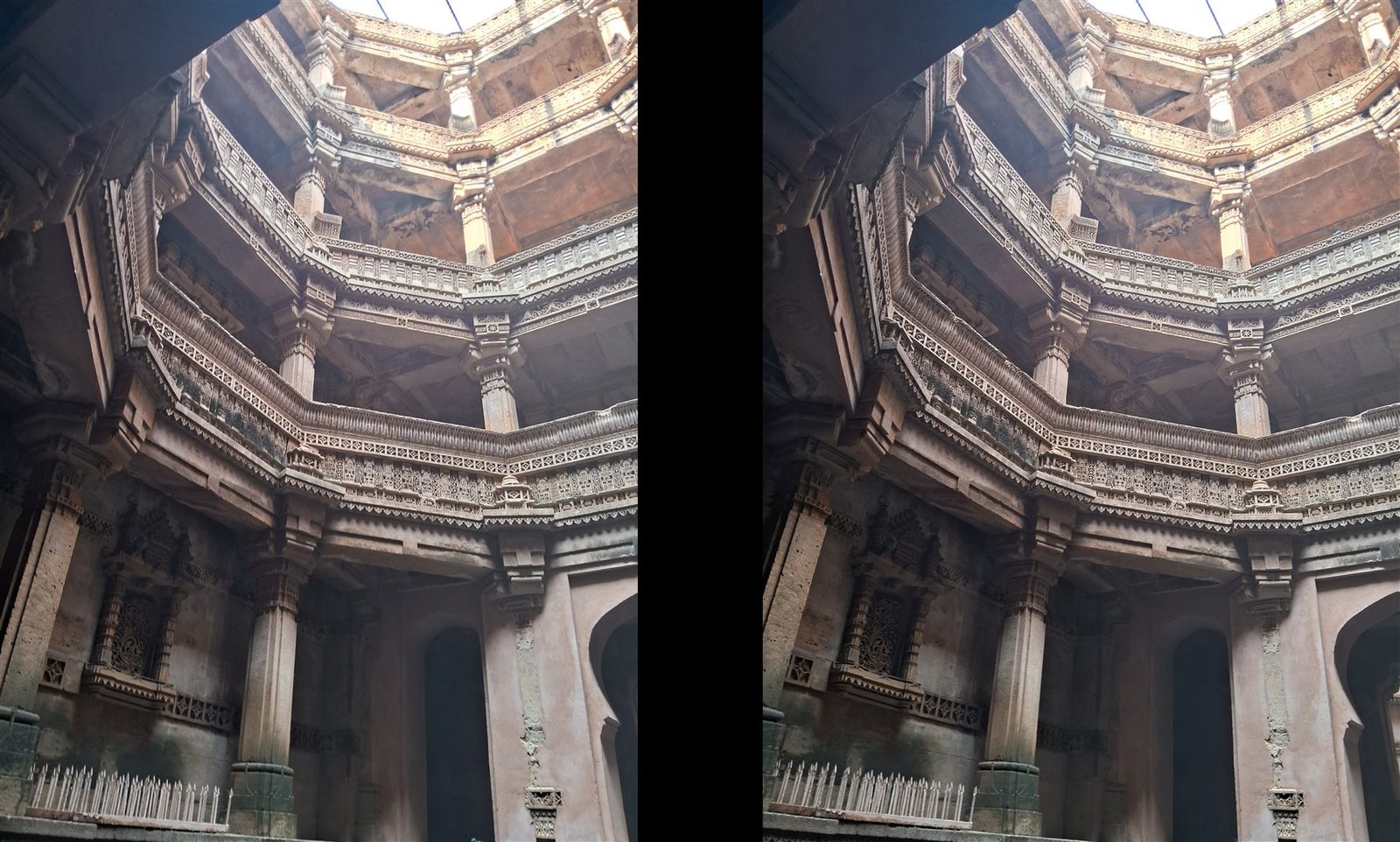
Built in 1499 at the order of Queen Rudabai, the well was both a lifeline and a sanctuary — a place to draw water, shelter from the heat and pause at the small shrines carved into its walls. Octagonal landings, pillared galleries and panels of flowers, dancers and everyday life line the descent.
It is also wrapped in legend: of a Vaghela queen, an invading sultan and a promise that ended in tragedy. True or not, the story suits the place — beautiful, shadowed and quietly sad.
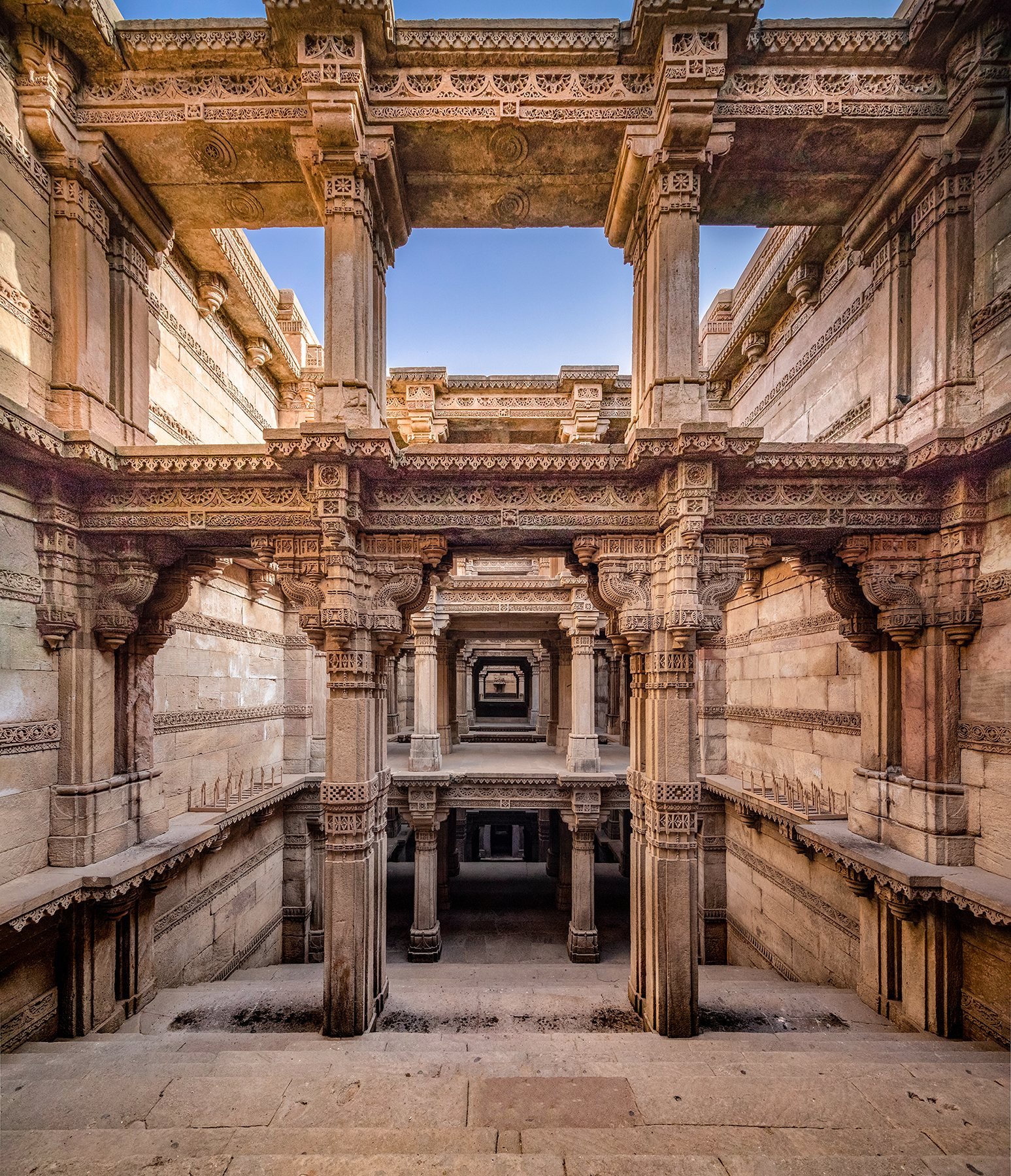
Light falls to the water far below the entrance.
The carved storeys of Rudabai’s stepwell.
The Vaghela ruler Rana Veersinh begins a stepwell to serve the dry village of Adalaj.
After his death in battle, his widow Queen Rudabai completes the vav in his memory.
Sultan Mahmud Begada, who invaded the region, is said to have offered to finish it — a tale that ends, by legend, in Rudabai's sacrifice.
An ASI-protected monument and one of Gujarat's finest surviving stepwells.
Even at the height of summer, the lower storeys stay several degrees cooler.
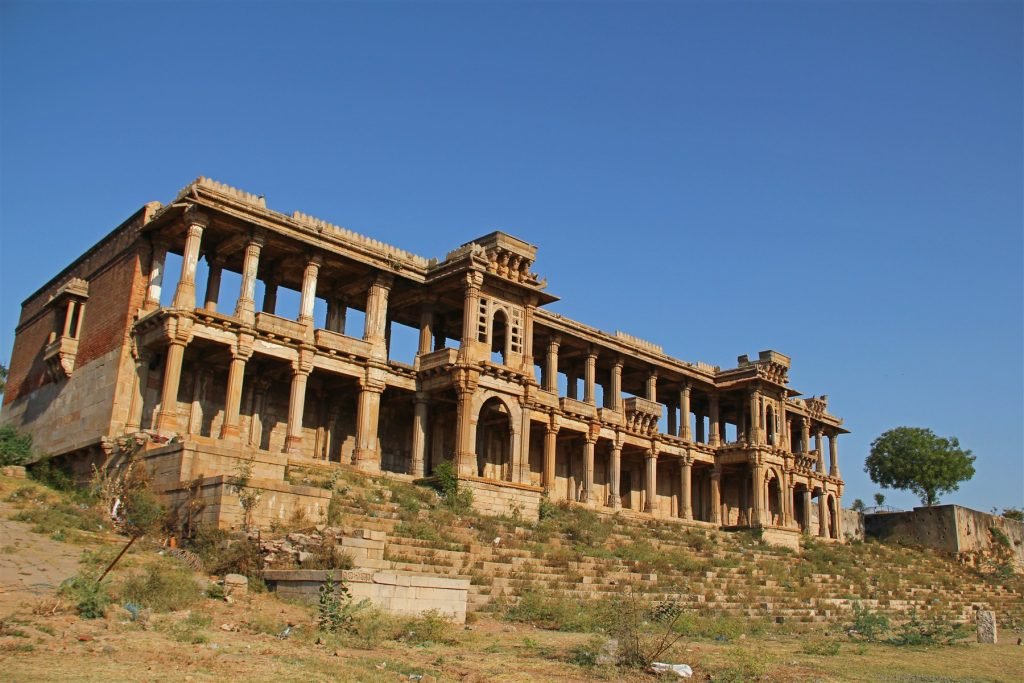
Pillars, niches and panels worked with flowers, dancers and daily life.
A five-storey octagonal well that doubled as a temple and rest-house.
The story of Queen Rudabai gives the place its haunting reputation.
Shafts of sun falling through the storeys make for striking photographs.
An easy half-day trip, on the way to or from Gandhinagar.
Steps and galleries falling into cool shade.
Light filtering down to the water below.
Take the steps storey by storey and feel the air cool as you go down.
Look for flowers, elephants, dancers and scenes of everyday village life.
Small carved niches along the descent once offered a moment of prayer.
The eight-sided landing over the well is the most atmospheric spot.
Ask about Queen Rudabai and Mahmud Begada — the well's famous, tragic tale.
Wait for a sunbeam to drop through the storeys for the classic shot.
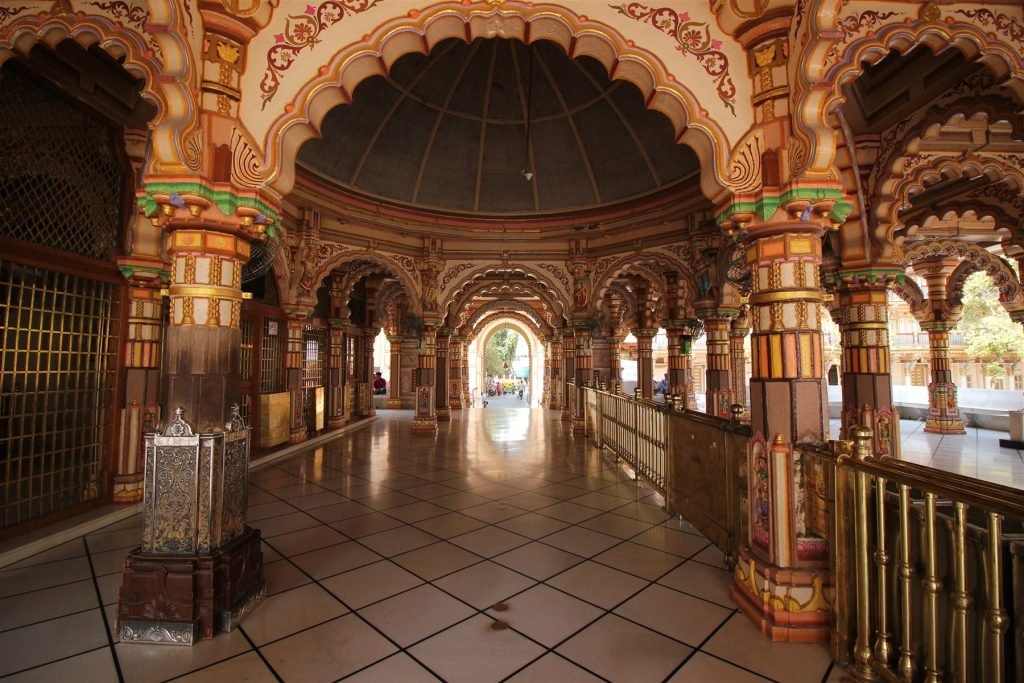
Pillared landings step down to the water.
Adalaj is a five-storey ‘vav’ — a subterranean stepwell that descends through a series of pillared pavilions to a deep octagonal well shaft. Three stepped entrances meet at the first underground landing, an unusual plan that floods the upper levels with light while keeping the depths cool and shaded.
The stone is densely carved in an Indo-Islamic blend: floral and geometric bands sit beside figures of dancers, musicians and animals, with small shrines set into the walls. Built without mortar, the whole structure relies on the precise fit of its carved blocks — engineering and devotion in a single descent.
Five storeys below ground
Octagonal well shaft
Three stepped entrances
Indo-Islamic carved panels
Cool and bright — the most pleasant time to be out across Ahmedabad.
The city greens up and the heat breaks with brief, refreshing showers.
Hot and dry, often 40°C+. Best enjoyed early morning or after sunset.
⏰ Come mid-morning, when the sun drops cleanly through the storeys and lights the carvings far below.
SVP International Airport is about 14 km south — roughly a 30-minute drive.
Ahmedabad Junction is around 18 km; cabs and autos make the trip easily.
Just off the Ahmedabad–Gandhinagar highway, with parking at the gate.
LIGHT IN THE DEPTHS
Mid-morning sends a clean shaft of light down through the open storeys.
The descending steps, the octagonal shaft and the carved pillars and niches.
Lower levels are dim — a steady hand or fast lens helps without flash.
A single figure on the steps shows just how deep the well really goes.
By night the old jewellers' square turns into a buzzing street-food bazaar.

An evening lane of carts serving Gujarati chaat, sandwiches and sweets.

Fresh fafda-jalebi, dabeli and khaman in the lanes of the walled city.
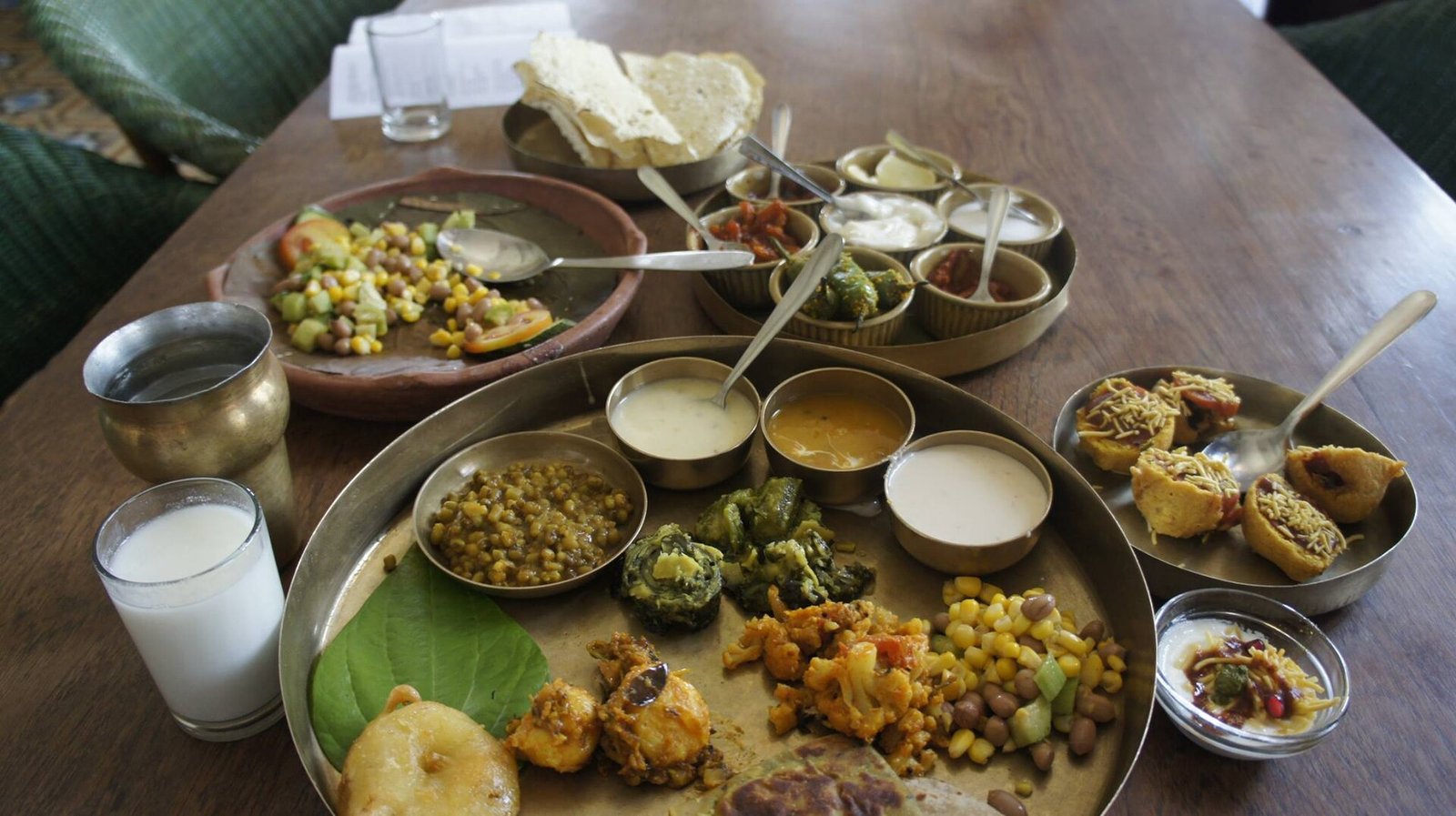
Ahmedabad is famously veg-friendly — expect superb thalis and farsan.
In Adalaj village, about 18 km north of Ahmedabad, near Gandhinagar.
Queen Rudabai completed it in 1499, in memory of her husband Rana Veersinh.
It's open daily from 6 AM to 6 PM.
It's free for Indian visitors; foreign nationals pay a small ASI fee.
It descends five storeys underground to the well shaft.
About 45 to 60 minutes to explore the full descent.
The steps are steep and can be smooth; take care and hold the rails where present.
A tale of Queen Rudabai, the invader Mahmud Begada and a promise that ended in tragedy.
It's just off the Ahmedabad–Gandhinagar highway, about a 30-minute drive with parking at the gate.
Yes; mid-morning light through the storeys gives the best shots.
WHERE TO STAY
Compare live prices across the big booking sites and reserve in a few taps. Booking happens securely on the partner's site — we may earn a small commission at no extra cost to you.
SHOP THE REGION
Hand-picked crafts and trip gear, available on Amazon.