Home › Ahmedabad › Hutheesing Temple
JAIN TEMPLEA serene masterpiece in white marble — the city's finest Jain temple, raised by a merchant family in 1848.
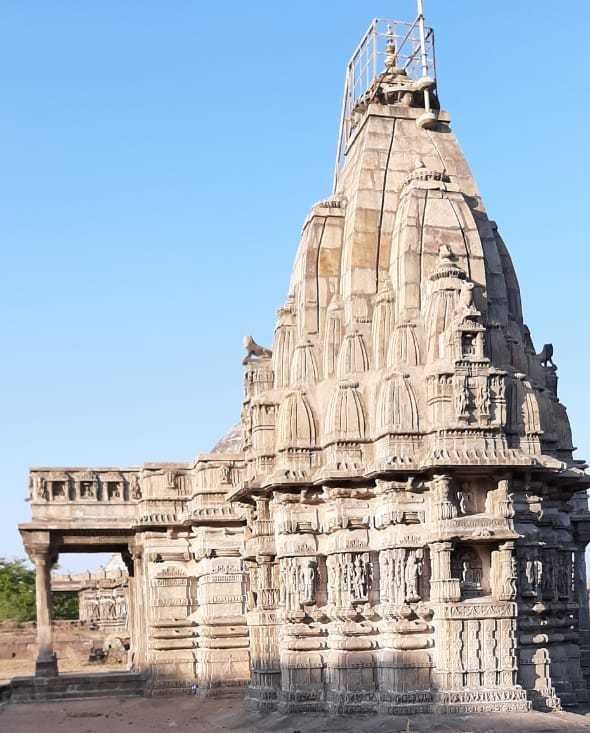
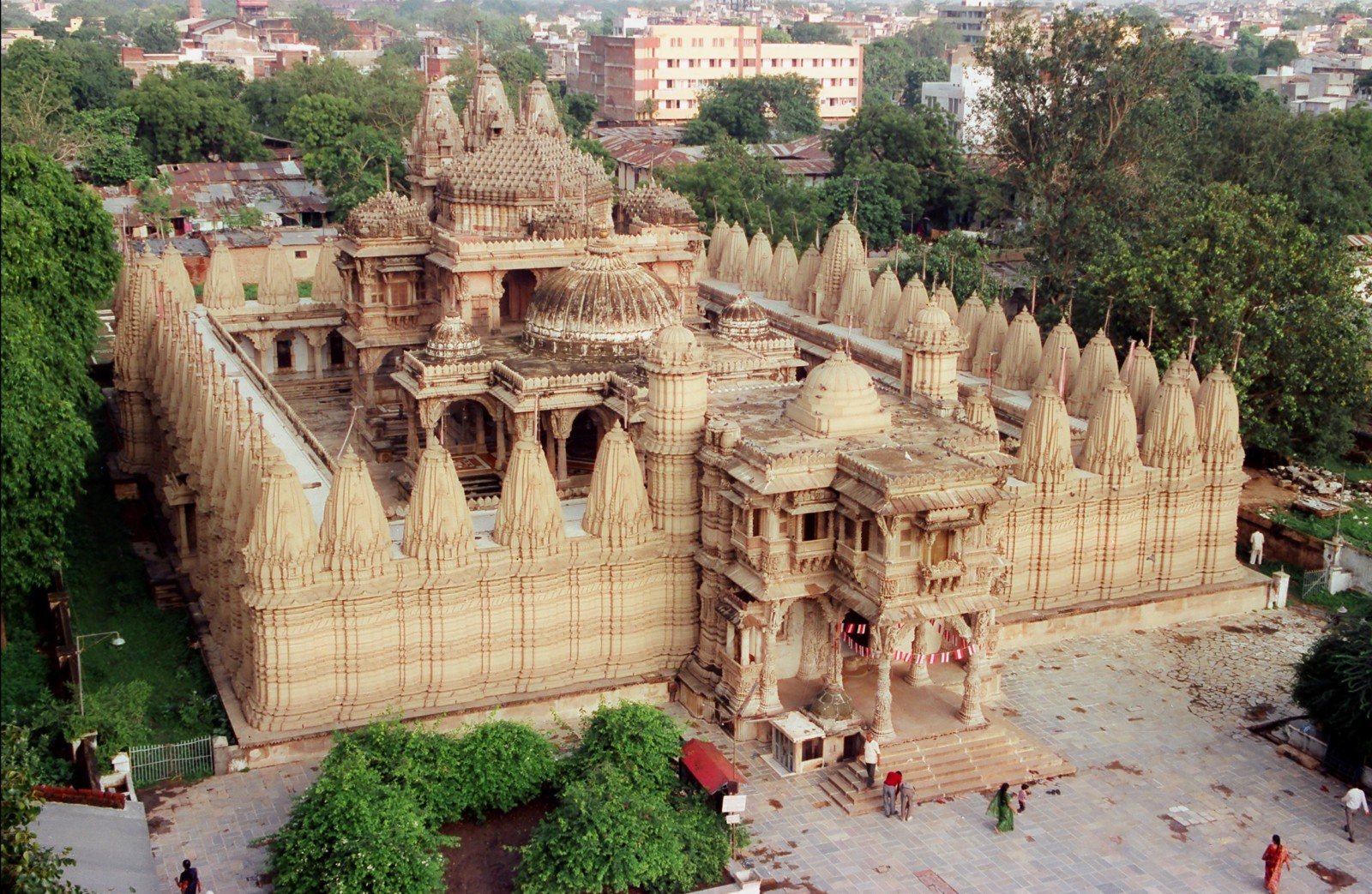
Set behind a quiet gate north-east of the old city, the Hutheesing temple is Ahmedabad’s most beautiful Jain shrine — a composition in white marble dedicated to Dharmanath, the fifteenth Tirthankara. A paved courtyard ringed by 52 small shrines surrounds the central temple, every surface carved with figures, flowers and fine geometric bands.
It was built in 1848 by the wealthy merchant Sheth Hutheesing and completed, after his early death, by his widow Harkunvar — reputedly as famine relief, giving work to hundreds of craftsmen.
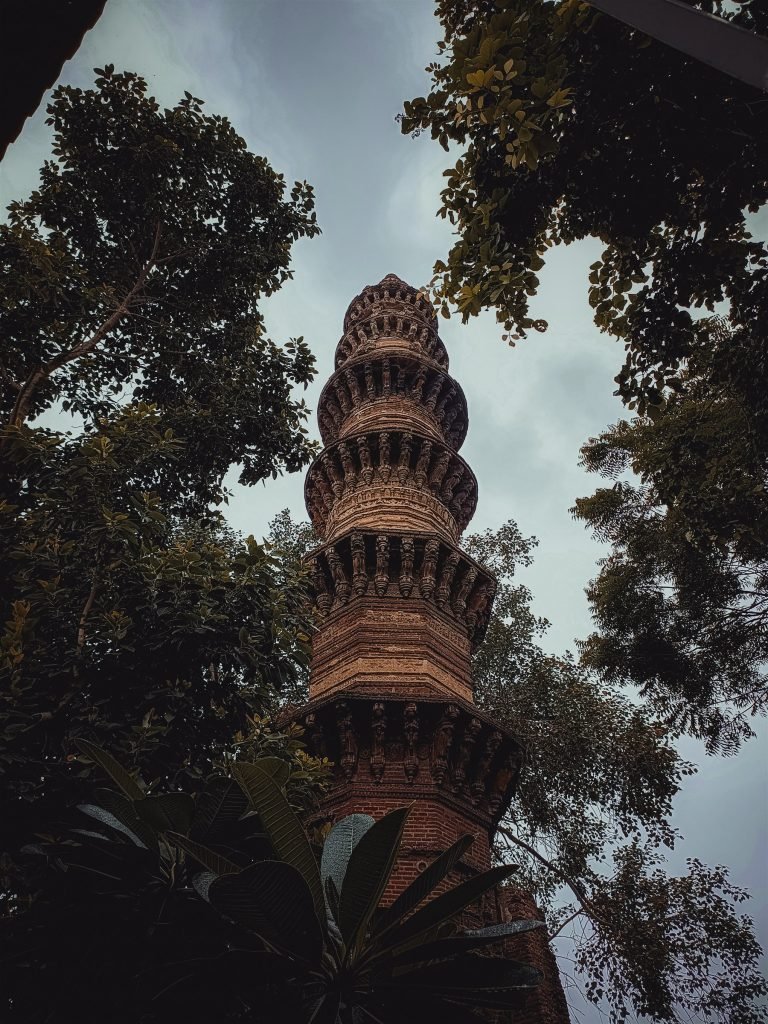
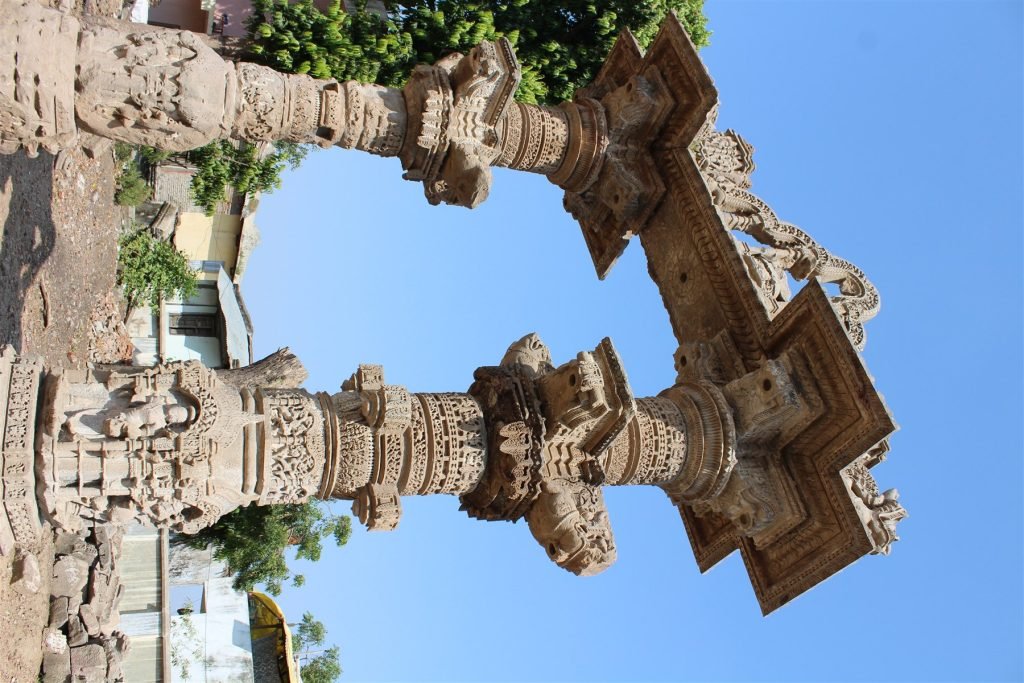
A tall, ornate Manastambha (column of honour), added in 1903 and inspired by the tower at Chittorgarh, rises just outside, completing one of Gujarat’s loveliest temple ensembles.
Every pillar and bracket worked in fine relief.
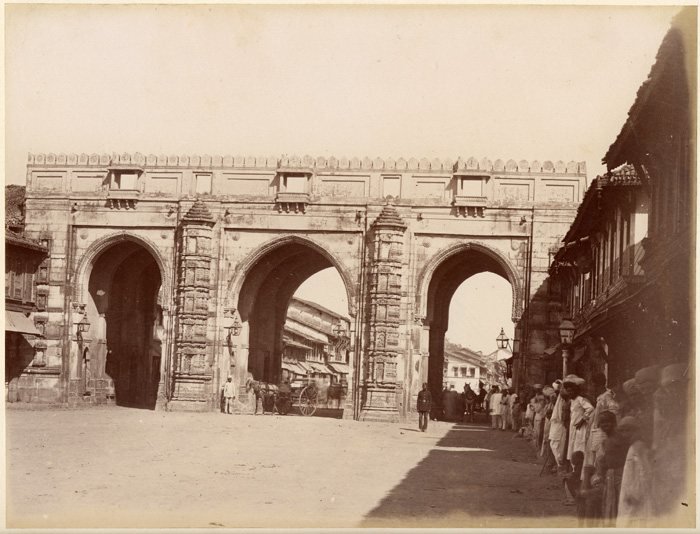
The temple as drawn by 19th-century visitors.
Sheth Kesarisinh Hutheesing commissions the temple; he dies before it is finished.
His widow Harkunvar completes it, reputedly employing famine-struck craftsmen.
The 52-foot Manastambha, inspired by Chittorgarh's tower, is added outside the gate.
Cared for by the Hutheesing family trust and admired as a marble masterpiece.
Carving so fine it reads like lacework across pillars, domes and brackets.
An ornate column of honour modelled on the famous tower at Chittorgarh.
A peaceful, ticket-free courtyard away from the city's bustle.
An active Jain shrine with daily ritual and quiet devotion.
White marble and deep-cut shadow reward patient, respectful framing.
A ring of small marble shrines encircles the central temple.
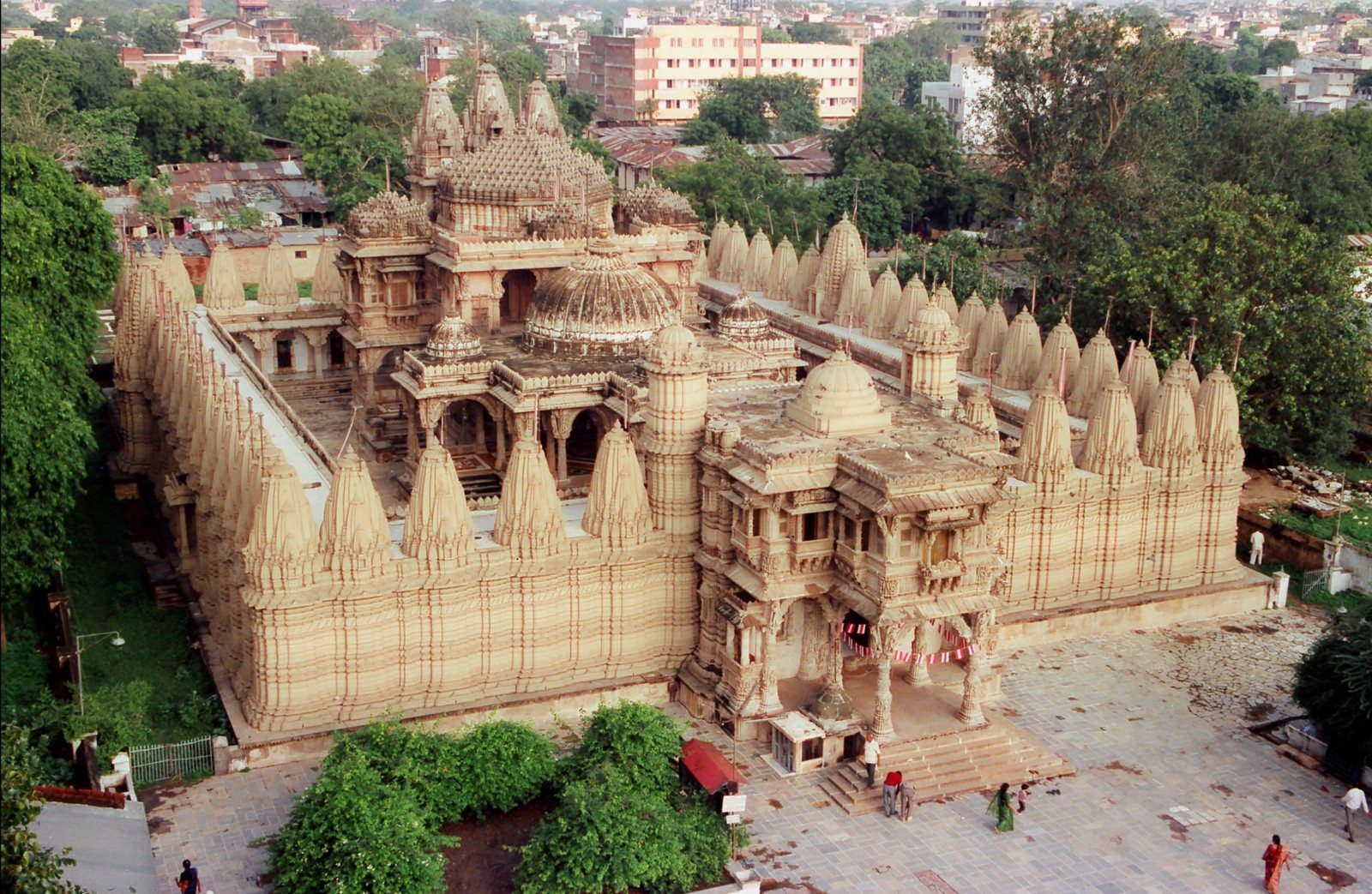
The white-marble central temple and its courtyard.
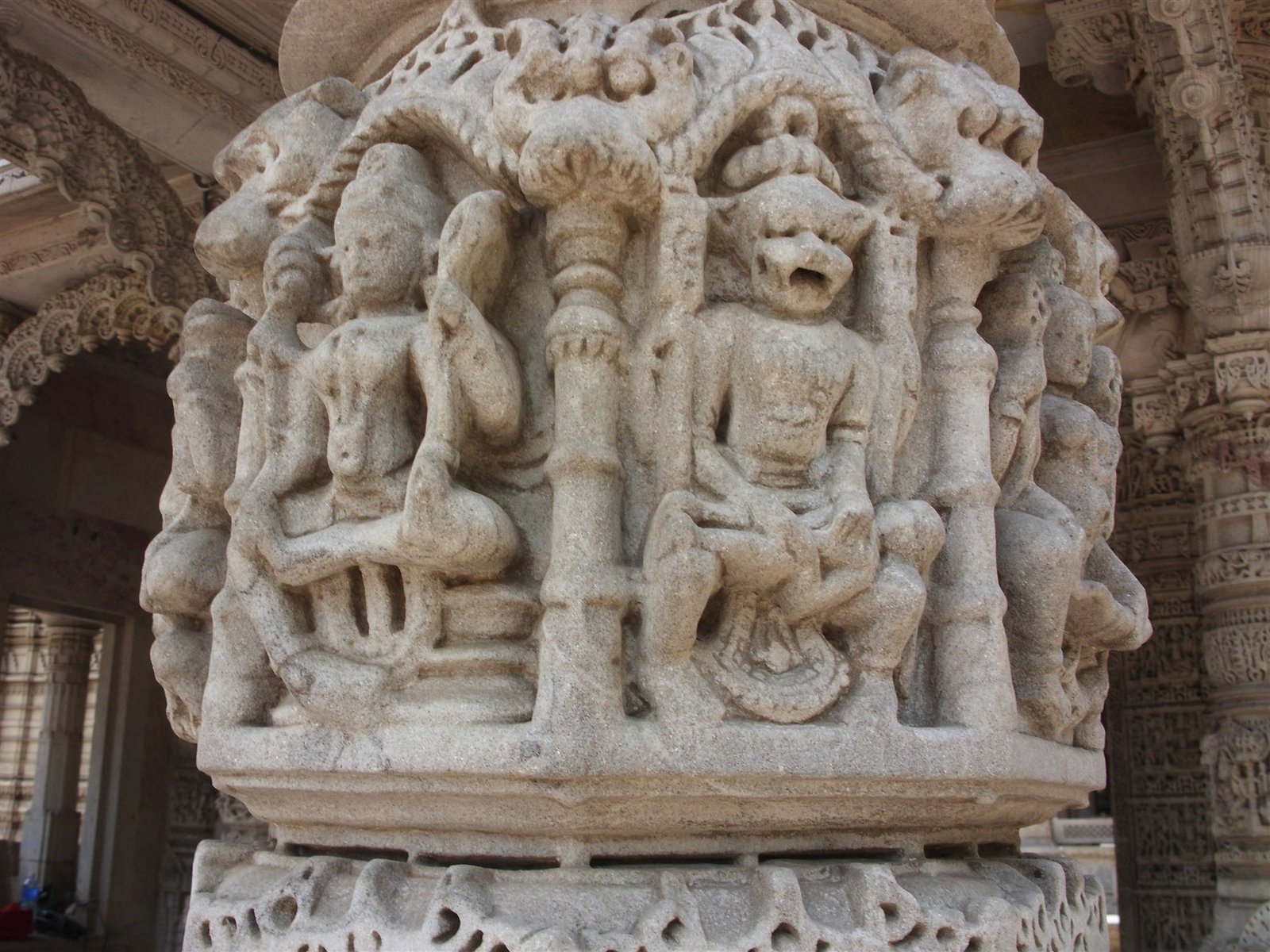
Figures, flowers and fine geometric relief.
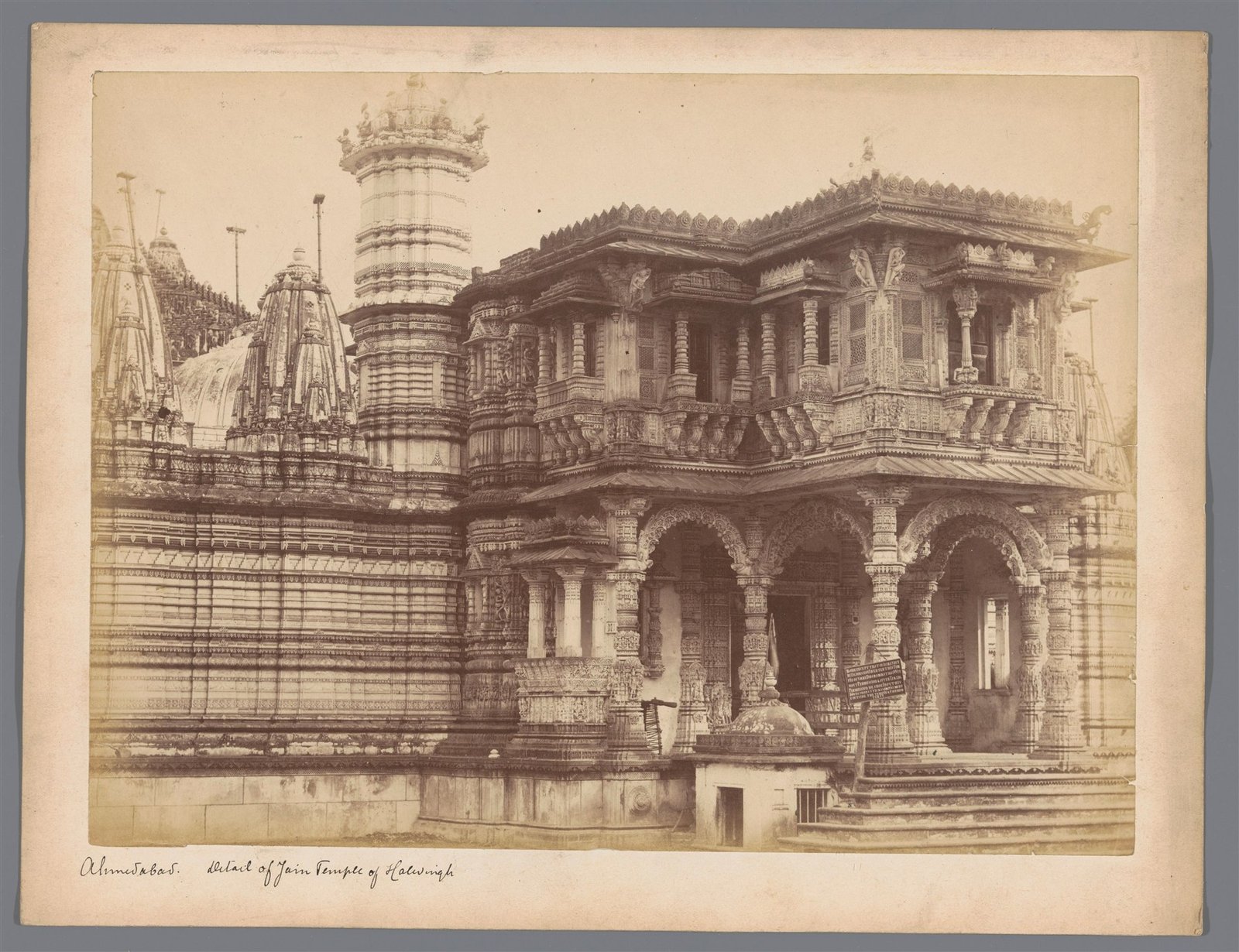
How visitors saw it in the 19th century.
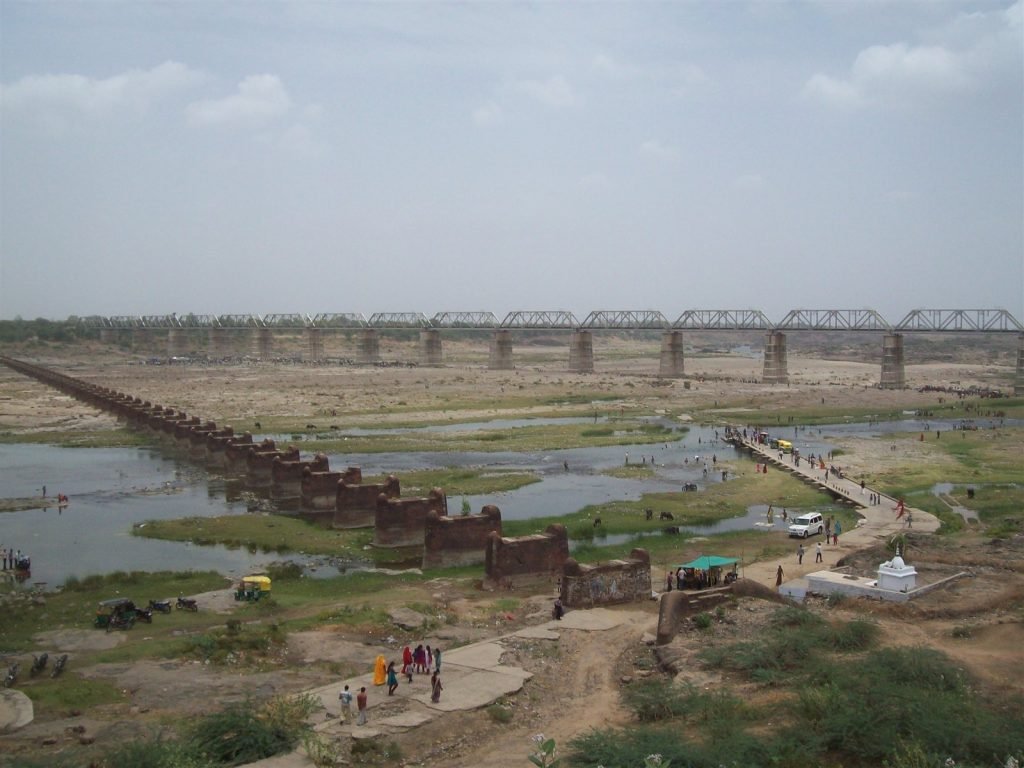
Walk the ring of 52 shrines that frames the central temple.
Look closely at the pillars and ceilings — the detail rewards slow eyes.
Step outside the gate for the tall, ornate column of honour.
Marble glows softly in morning and late-afternoon sun.
If you visit at prayer time, watch quietly and respectfully.
Learn how a widow completed her husband's vision as famine relief.
Domes, pillars and brackets in carved white marble.
Built entirely of imported white marble, the temple follows the classic Jain plan: a richly carved central shrine, a domed assembly hall on intricately worked pillars, and a surrounding cloister of 52 devakulikas (subsidiary shrines). The carving blends figural panels, lotus medallions and crisp geometric bands, all cut in shallow, confident relief.
The later Manastambha outside the gate adds a vertical flourish — a slender, many-tiered column covered in sculpture. Together they show 19th-century Gujarati craftsmanship at its absolute peak, carrying forward a temple-building tradition centuries old.
Imported white marble throughout
52 surrounding shrines
Domed, pillared assembly hall
1903 Manastambha column
Cool and bright — the most pleasant time to be out across Ahmedabad.
The city greens up and the heat breaks with brief, refreshing showers.
Hot and dry, often 40°C+. Best enjoyed early morning or after sunset.
⏰ Come mid-morning or late afternoon, when low sun warms the marble and the courtyard is quiet.
SVP International Airport is about 8 km away — roughly a 20-minute cab ride.
Ahmedabad Junction (Kalupur) is around 2 km from the temple.
It sits near Delhi Darwaza; autos and app-cabs reach it easily.
MARBLE & LIGHT
Soft morning or late-afternoon sun gives the marble warmth and depth.
Pillar carvings, the domed ceiling, the shrine ring and the Manastambha.
Ask before shooting inside; never photograph people at prayer.
Expose for the bright marble so the carved detail doesn't wash out.
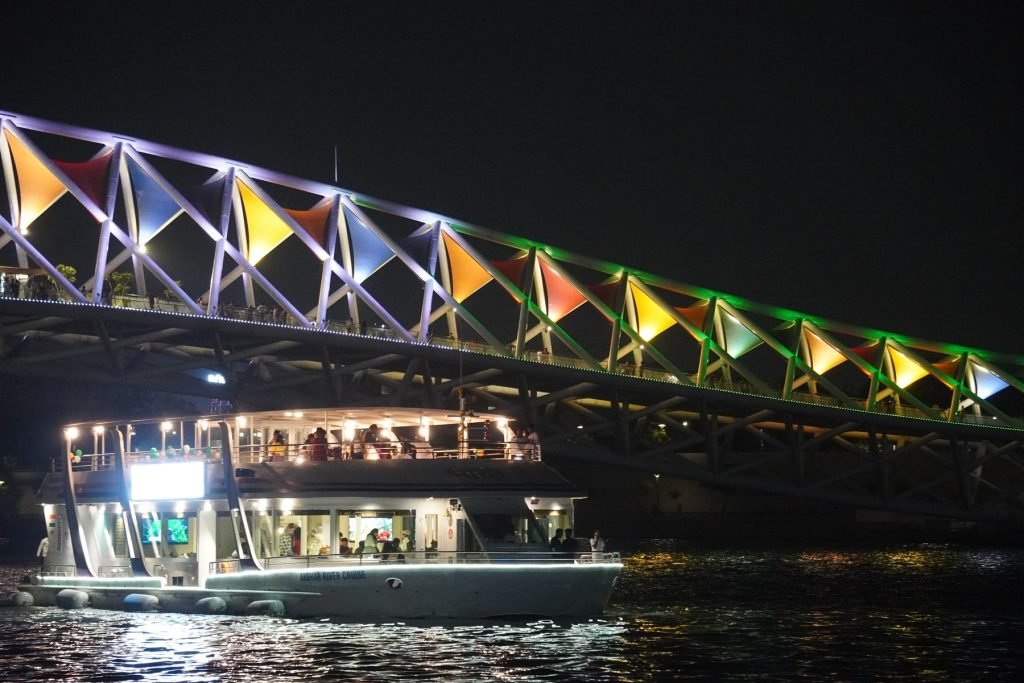
By night the old jewellers' square turns into a buzzing street-food bazaar.

An evening lane of carts serving Gujarati chaat, sandwiches and sweets.

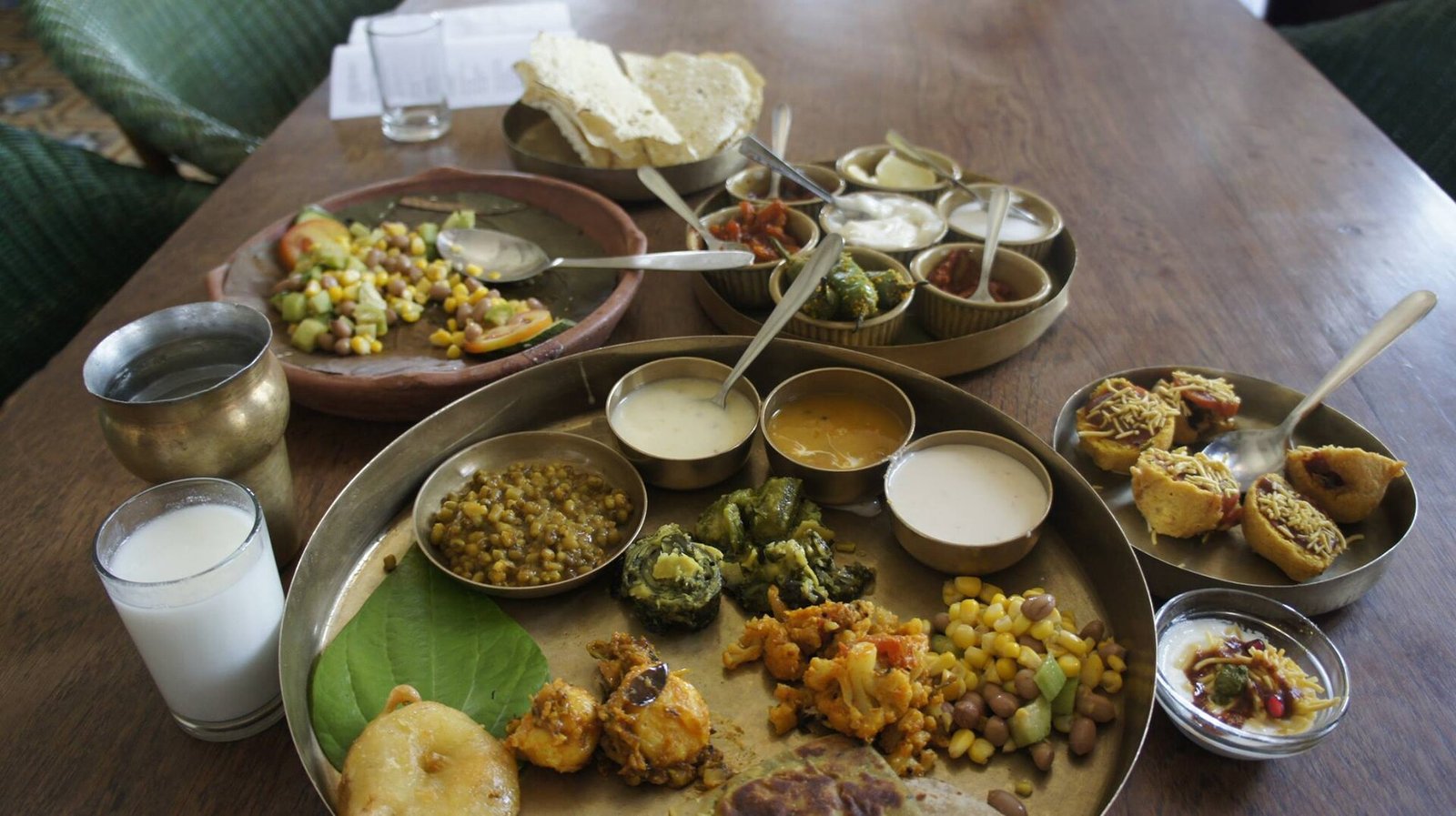
Fresh fafda-jalebi, dabeli and khaman in the lanes of the walled city.
Ahmedabad is famously veg-friendly — expect superb thalis and farsan.
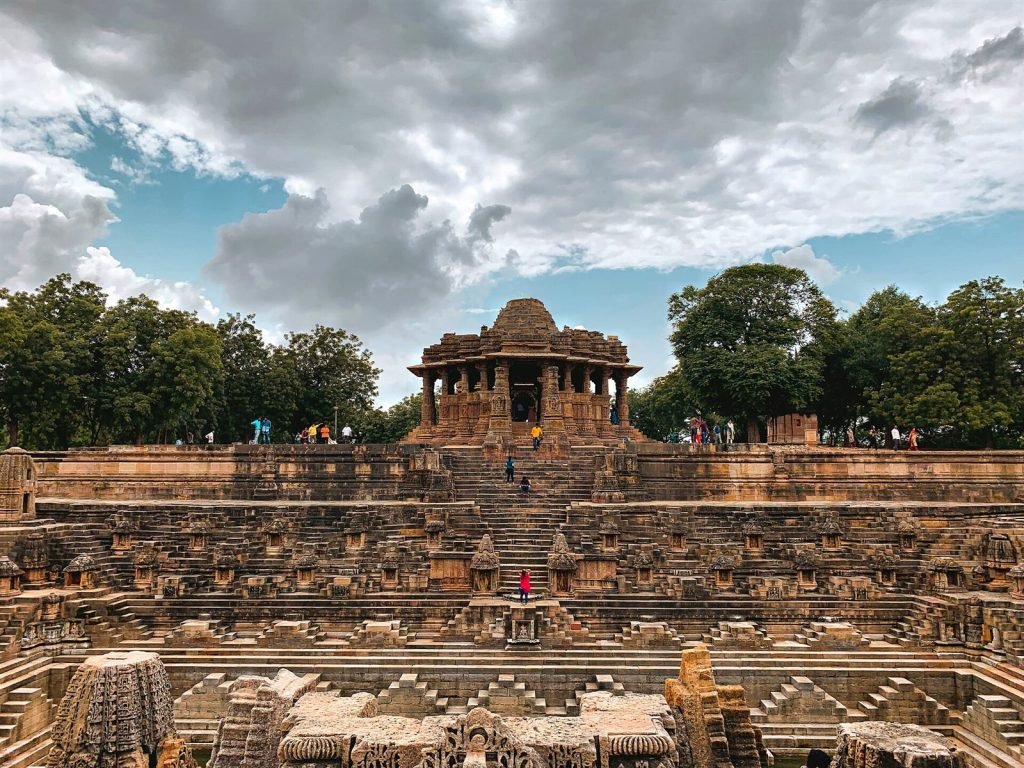
In the Bardolpura area of north-east Ahmedabad, near Delhi Darwaza, about 2 km from the railway station.
The merchant Sheth Hutheesing began it in 1848; his widow Harkunvar completed it.
Dharmanath, the fifteenth Jain Tirthankara.
No, entry is free.
It is generally open through the day, roughly 10 AM to 6 PM.
Modest clothing; you must remove shoes and leather items before entering.
Outdoor photography is usually fine; ask before shooting inside the shrine.
A 52-foot ornate 'column of honour' added in 1903, inspired by Chittorgarh's tower.
About 30 to 45 minutes.
It's near Delhi Darwaza, ~2 km from Ahmedabad Junction; autos and cabs reach it easily.
WHERE TO STAY
Compare live prices across the big booking sites and reserve in a few taps. Booking happens securely on the partner's site — we may earn a small commission at no extra cost to you.
SHOP THE REGION
Hand-picked crafts and trip gear, available on Amazon.