Home › Aravalli › Meshvo at Dawn
RESERVOIR · BIRDS · HIDDEN GEMDawn on a Gujarat reservoir — Meshvo at first light, when the Aravalli hills reflect gold in the still water, herons stand motionless at the shallows, and a Buddhist stupa from the 4th century lies somewhere in the blue-green depths below.
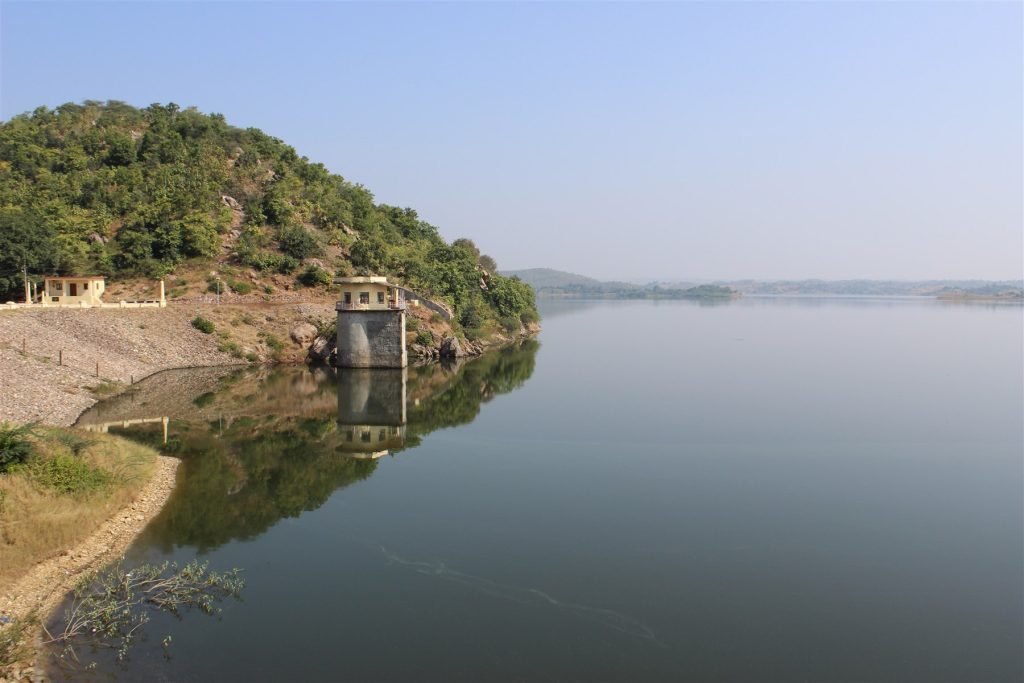
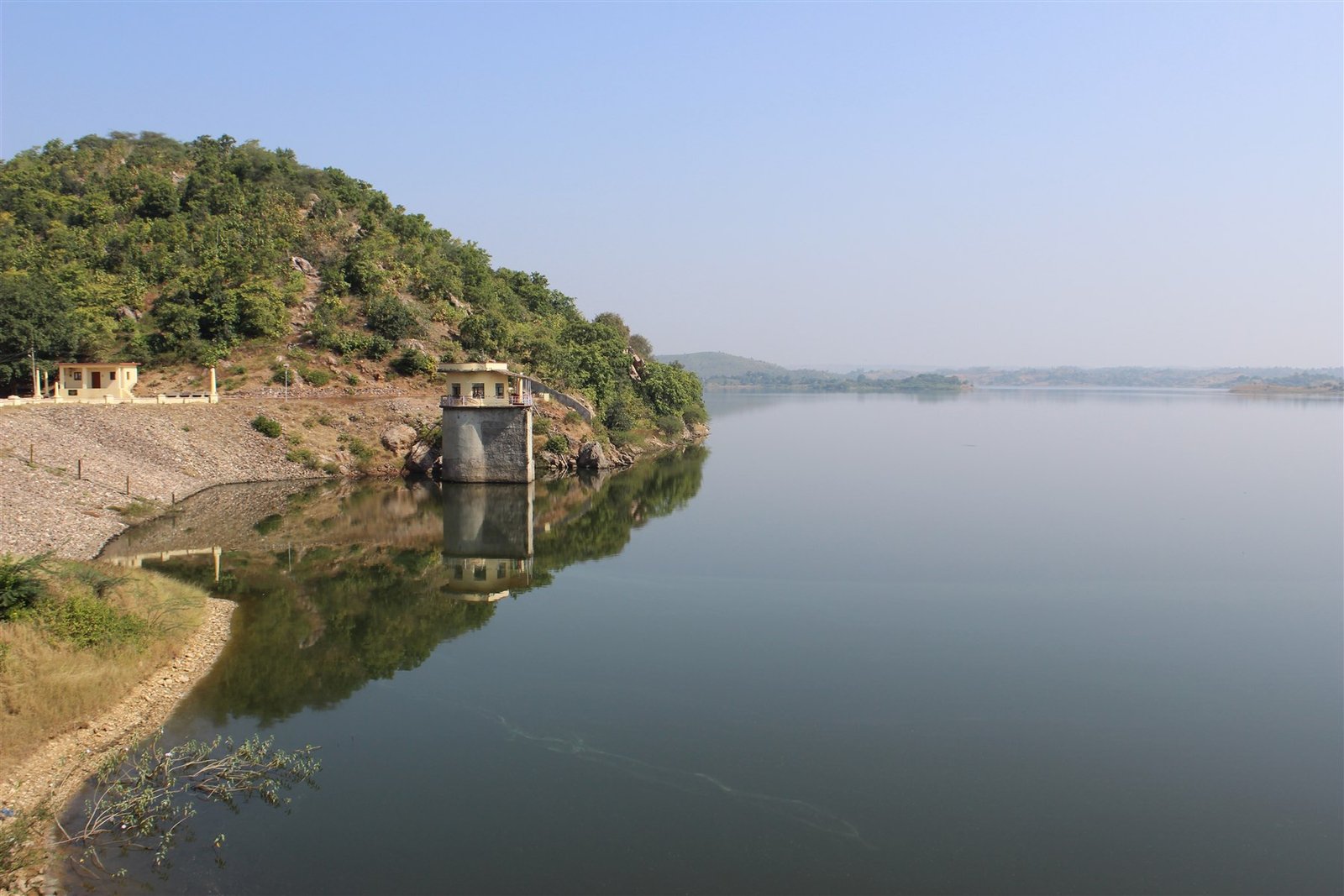
The Meshvo Reservoir — created by the Meshvo Dam in the late 1960s — is one of the quieter gems of Aravalli: a wide, still body of water set against the wooded Aravalli hills, almost unknown to tourism. At dawn it is quite beautiful. The Aravalli ridgeline reflects in the glassy water; herons and egrets stand in the shallows; the occasional kingfisher launches from the bank.
Painted storks have been recorded here in winter. This is a self-made experience — there are no facilities, no signposts, no crowds. You drive to the dam wall, park, and walk to the water’s edge in the early morning quiet.
The fact that a 4th-century Buddhist stupa lies beneath the surface adds an unusual layer to the silence. Free; open access; no facilities. Bring water and a camera.
Meshvo Reservoir, Aravalli — dawn on the water.
Meshvo Reservoir, Aravalli.
A Buddhist stupa is built at Dev ni Mori, on land that the reservoir would one day cover.
The Meshvo Dam is planned and the stupa site is excavated before the valley is flooded.
The dam is completed and the reservoir fills, submerging the ancient site beneath still water.
The reservoir draws herons, egrets and winter storks — a quiet dawn haunt for birders and photographers.
Aravalli hills reflected in glassy water at first light.
Herons, egrets and winter painted storks at the shallows.
A wide reservoir that lies still and glassy at dawn.
A 4th-century Buddhist stupa lies submerged below.
A rewarding, uncrowded dawn location for landscapes.
No facilities, no signposts, no crowds — just the water.
The wide dawn water set against the Aravalli ridge.
Winter visitors stand motionless in the shallows.
Ancient ranges reflected gold in the still surface.
Walk the wall for the cleanest view across the water.
A 4th-century Buddhist stupa rests somewhere below.
No crowds — a self-guided dawn to yourself.
Reach the reservoir while it is still dark so you catch the first gold light on the water.
The dam wall offers the best, cleanest view out across the still reservoir.
Scan the shallows for herons and egrets standing motionless at the water's edge.
Catch the Aravalli ridgeline reflected in the glassy surface at golden hour.
In winter, painted storks have been recorded here — keep your eyes on the far banks.
Linger as the sun lifts over the hills; the drive out is worth this single quiet hour.
Watch the banks for the flash of a kingfisher launching across the water.
Take a moment over the buried 4th-century stupa lying somewhere beneath the surface.
Meshvo Reservoir, Aravalli — at dawn.
Meshvo Reservoir at dawn — Aravalli hills reflected in still water, herons in the shallows, and a buried 4th-century Buddhist stupa somewhere in the depths — is one of the district’s most quietly rewarding gems.
There is nothing built here for the visitor: no gates, no kiosks, no signposts. The reservoir is simply the dam wall, the wide sheet of water and the wooded ridgeline behind it. Free; open access; no facilities; bring your own water.
Wide reservoir set against Aravalli hills
Winter birds: herons, egrets, painted storks
Dev ni Mori stupa lies beneath the water
Dawn the best time; no facilities — self-guided
Cool and clear — the ideal window. Comfortable mornings and the best dawn light of the year.
The hills turn lush and green, but roads to the dam may flood after heavy rain.
Hot and dry by mid-morning — come only for the early dawn hour, then leave.
⏰ October to March is ideal for Aravalli — arrive before dawn for the softest light and the calmest water.
Ahmedabad's Sardar Vallabhbhai Patel International Airport is about 130 km away — the nearest airport, roughly a three-hour drive.
The closest railheads are at Himmatnagar and Modasa, from where you can hire a taxi out to the reservoir.
Drive via NH-48 and Modasa; the dam is reached by local roads, and a car is essential as there is no public transport to the water.
GOLDEN-HOUR FRIENDLY
Come before dawn — the low sun rakes across the still water and lights the Aravalli ridge in gold.
The hill reflections, herons and egrets in the shallows, and the long view down the dam wall.
Move quietly near the shallows so you don't flush the wading birds before you get the frame.
A telephoto helps for the birds; go wide for the reservoir-and-ridge landscape at sunrise.
Hearty home cooking — an unlimited Gujarati thali in nearby Modasa.
Gujarat's famous savoury snacks, fresh from the town's shops.
Local dhabas along the highway serve simple, filling roadside meals.
There is no food at the reservoir — stock up or eat in Modasa, the nearest town.
About 140 km — roughly a three-hour drive via NH-48 and Modasa.
October to February, and specifically at dawn, for cool air and the best reflections.
Herons, egrets and, in winter, painted storks — plus the occasional kingfisher.
No. The reservoir is free and open access at all times.
None at all — bring your own water, snacks and supplies.
No — the 4th-century Dev ni Mori stupa lies submerged beneath the reservoir.
A private car is essential; the nearest railheads are Himmatnagar and Modasa.
One to two hours is enough — most visitors come for the dawn hour and leave.
WHERE TO STAY
Compare live prices across the big booking sites and reserve in a few taps. Booking happens securely on the partner's site — we may earn a small commission at no extra cost to you.
SHOP THE REGION
Hand-picked crafts and trip gear, available on Amazon.