
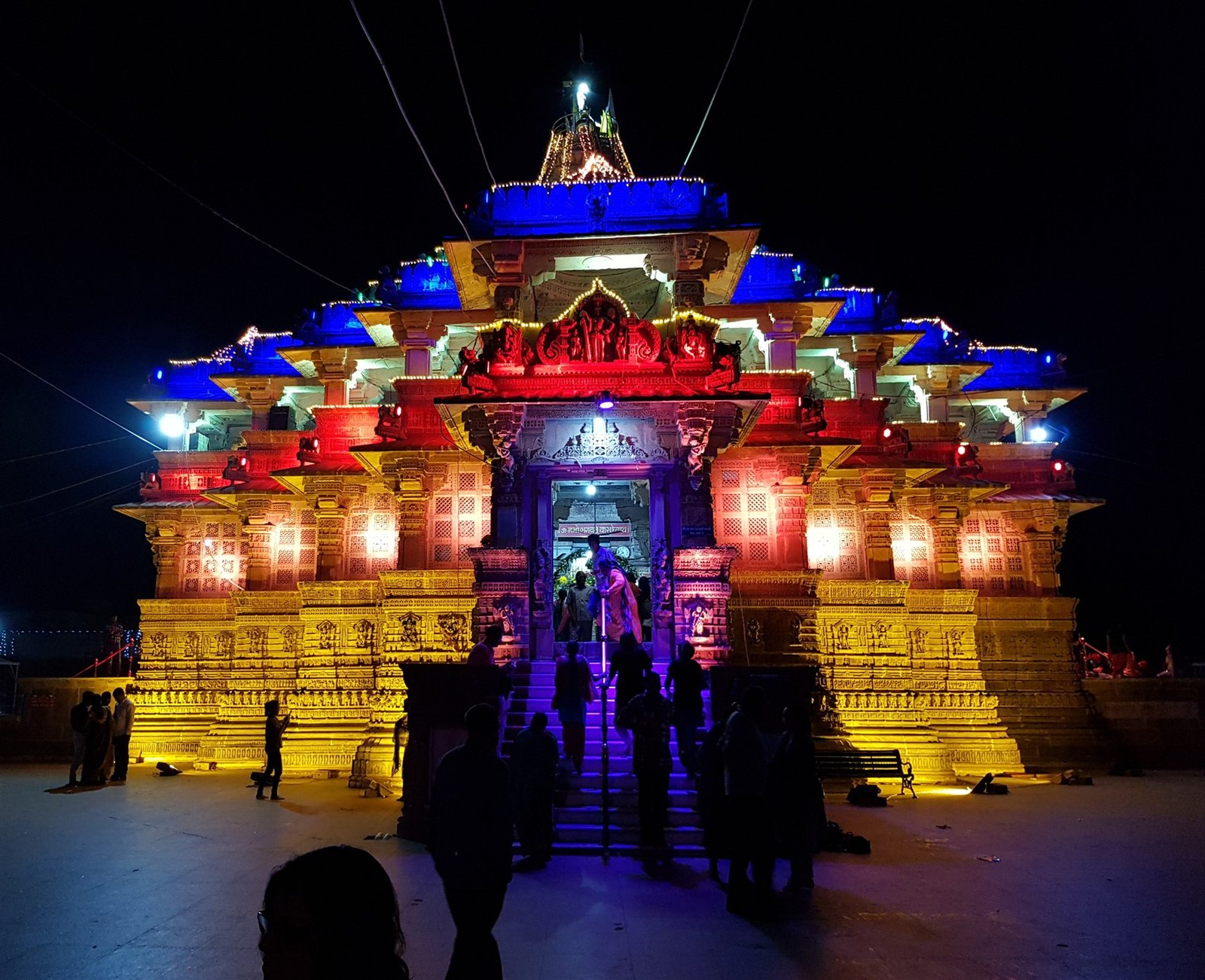
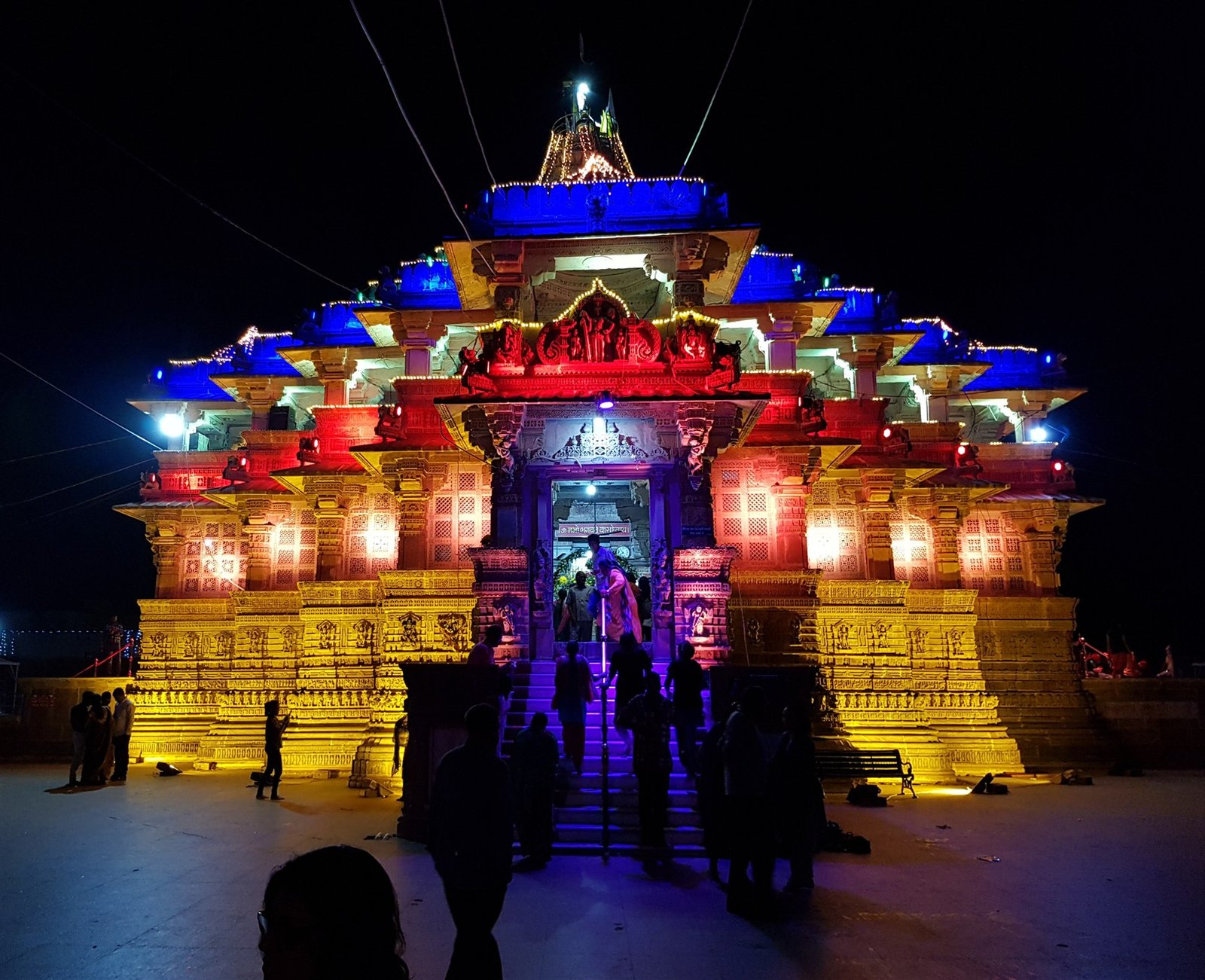
The great Vishnu tirth of Aravalli
Shamlaji is one of Gujarat’s most beloved Vishnu temples — an ancient shrine dedicated to Gadhadhara (Shamlaji), the dark-complexioned form of Vishnu, built on a promontory above the Sabarmati river. The temple is considered one of the most significant Vishnu pilgrimage sites in north Gujarat.
The presiding deity — a beautiful dark stone image of Vishnu — is believed to be self-manifested (swayambhu) and has been venerated here for centuries. The complex includes the main shrine, subsidiary mandaps, and bathing ghats on the Sabarmati.
The great Kartiki fair draws hundreds of thousands each November, but even in quieter months, Shamlaji is a temple of genuine power: the riverside setting, the ancient sculpture tradition, the constant stream of devotees. (Open all day; small entry fee; photography restricted inside.)
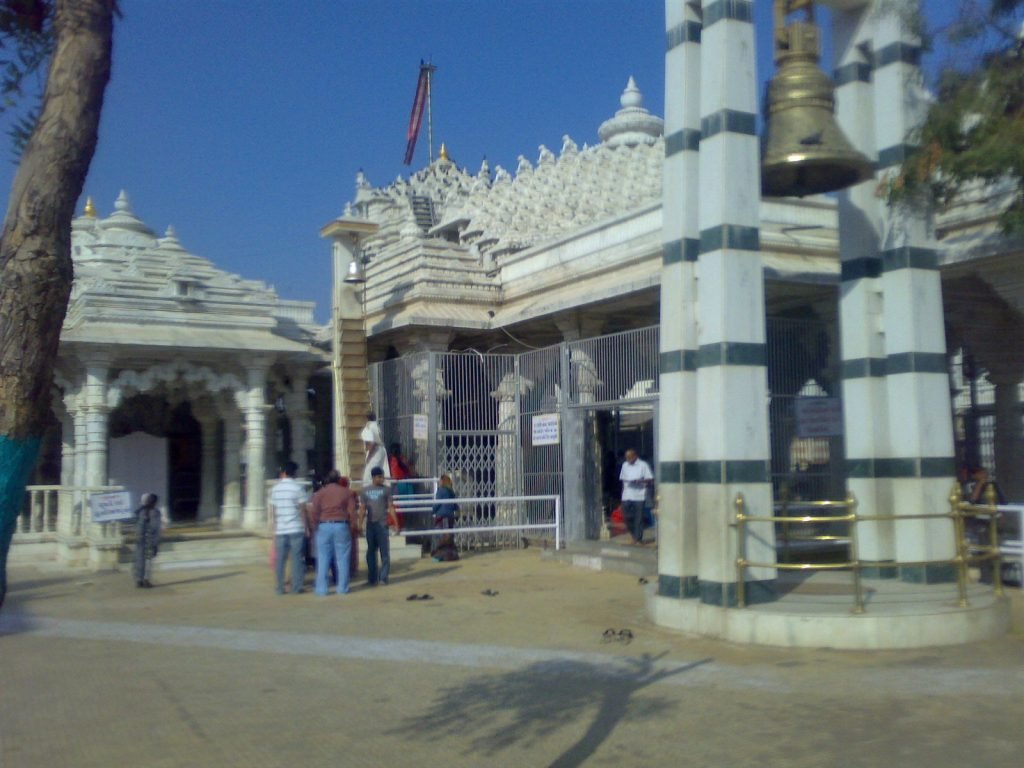
Shamlaji Temple, Aravalli — the beloved Vishnu shrine on the Sabarmati.
A swayambhu image, and the fair it draws
Shamlaji Temple, Aravalli — ancient Vishnu tirth.
A self-manifested image of Gadhadhara Vishnu is enshrined above the Sabarmati.
The medieval temple complex — main shrine, mandaps and ghats — takes shape.
The great Kartiki fair grows into one of India's most famous Adivasi gatherings.
Shamlaji remains a living temple, drawing a constant stream of devotees year-round.
Reasons to make the time
Ancient tirth
Centuries of devotion at one of north Gujarat's most significant Vishnu shrines.
Sabarmati ghats
Sacred river bathing on the ghats below the temple promontory.
Kartiki fair
A great Adivasi gathering that fills the riverbanks every November.
Sculpture
Ancient Vishnu images and a living sculpture tradition in stone.
Setting
A hilltop shrine perched above the river, open to wide Aravalli skies.
Pilgrimage
A living temple with a constant stream of pilgrims and worshippers.
What to look for inside
 THE SHRINE
Shamlaji
The dark Vishnu lord — the swayambhu image of Gadhadhara at the heart of the temple.
 THE GHATS
Sabarmati
Sacred riverside ghats below the temple, where pilgrims bathe in the holy river.
How to spend an hour or two
See the main shrine
Stand before Gadhadhara, the dark Vishnu lord — the swayambhu image enshrined in the sanctum.
Walk the mandaps
Explore the subsidiary mandaps and temple courts that surround the central shrine.
Bathe at the ghats
Descend to the Sabarmati ghats below the temple for a sacred riverside dip.
Visit at festival time
Time your visit for Kartiki Purnima, when the great fair fills the riverbanks.
See the sculpture
Look closely at the ancient Vishnu images and the temple's living sculpture tradition.
Walk the setting
Take in the hilltop river setting — the promontory, the water and the open sky.
Shamlaji — Gujarat’s beloved Vishnu shrine.
An ancient Vishnu temple
Shamlaji temple houses a swayambhu (self-manifested) image of Gadhadhara Vishnu, enshrined in a medieval complex above the Sabarmati — one of Gujarat’s most significant Vishnu pilgrimage sites. (Photography restricted inside; small entry fee.)
See what else is nearby in our guide to Aravalli.
This belongs to a wider story: temples across Gujarat.
Swayambhu Gadhadhara (Vishnu) image
Medieval temple complex above the Sabarmati
Kartiki Purnima — one of India’s great Adivasi fairs
Ancient sculpture tradition; sacred bathing ghats
When to go
Cool and clear — the ideal window. Comfortable all day and perfect for an unhurried pilgrimage.
Lush and green across the Aravalli, but roads may flood — check conditions before you set out.
Hot across north Gujarat. Still doable if you come for the early mornings, before the heat builds.
⏰ October to March is ideal for Aravalli — cool, clear days and the easiest travel across the district.
Timings & entry
- Open daytime hours
- Cool season best
- Morning ideal
- Check locally
- Check locally
- Good road connections
- Combine places
- Cool months best
Getting there
By Air
Ahmedabad's Sardar Vallabhbhai Patel International Airport is the nearest, around 130 km away.
By Rail
The closest railheads are at Himmatnagar and Modasa, with onward road connections to the temple.
By Road
Shamlaji sits just off NH-48; Modasa is the nearest town, with good road links across Aravalli.
Shooting Shamlaji
RIVERSIDE & ANCIENT
A hilltop shrine above the Sabarmati, best in the soft light of morning
Best light
Come early — the morning light is soft on the temple promontory and the river below.
What to shoot
The temple exterior, the bathing ghats, the Sabarmati and the wider hilltop setting.
Be respectful
Photography is restricted inside the sanctum — keep your camera to the outdoors and the grounds.
Gear tip
A standard lens suits the shrine; go wider for the ghats, the river and the open sky.
Know before you go
More to see close by
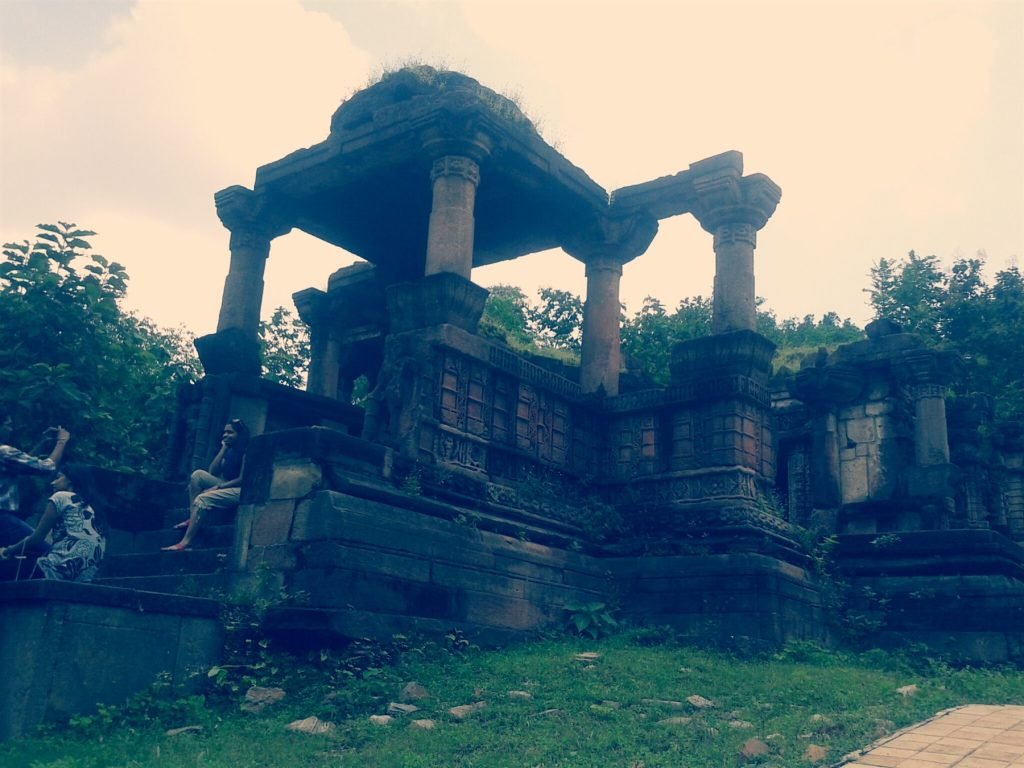
Aravalli Hills Traverse
The world’s oldest mountains — the Aravalli range in Gujarat, ancient Pre-Cambrian ridges rolling through Aravalli…
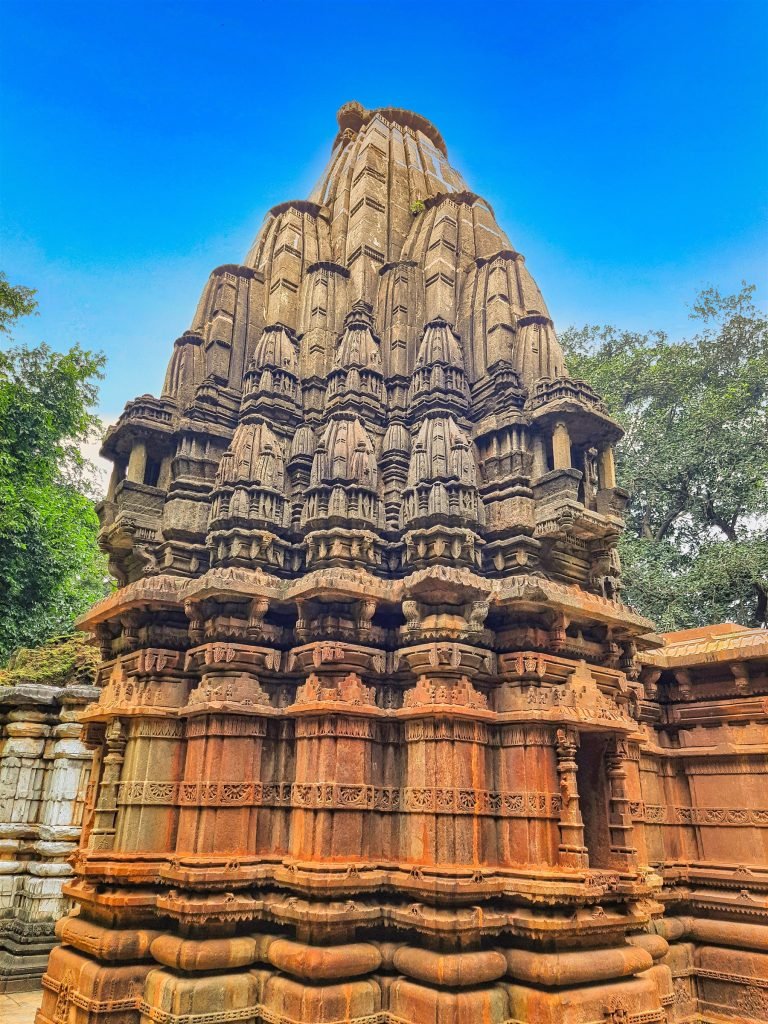 FOREST
Polo Forest
A jungle valley of ruined medieval temples
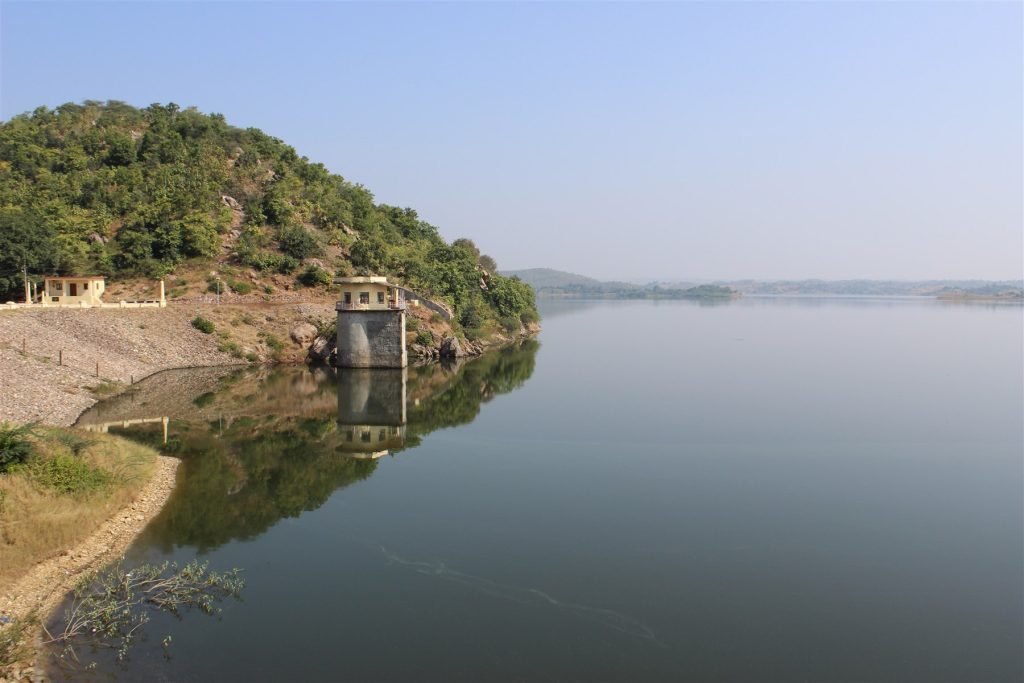 RESERVOIR
Meshvo Reservoir
A serene dam-lake beside Shamlaji

Roho Ancient Temples
Medieval stone shrines in the Aravalli hills — the Roho temple cluster, a collection of ancient…

Tribal Shrines of Aravalli
Sacred stones and spirit flags — the tribal shrines of Aravalli, where Bhil and Garasia Adivasi…

Trimandir Modasa
A serene modern three-in-one temple
Where to eat near Shamlaji Temple
Gujarati Thali
Hearty home cooking — an unlimited Gujarati thali of dal, rotli, shaak and sweets.
Farsan
Gujarat's famous savoury snacks, from dhokla to fafda, found in every nearby town.
Street food
Local dhabas and roadside stalls along the highway serve quick, hot meals.
Adivasi cuisine
The Aravalli region also offers tribal Adivasi cooking — millets and forest produce.
Shamlaji Temple FAQ
Who is Shamlaji?
Gadhadhara — the dark-complexioned form of Vishnu, venerated here through a swayambhu (self-manifested) image.
When is the great fair?
The great Kartiki fair falls on Kartiki Purnima, in October or November, drawing hundreds of thousands of pilgrims.
Can I take photographs?
Photography is restricted inside the temple, but you are free to photograph the grounds and the ghats outside.
Is there an entry fee?
A small entry fee applies — around ₹20. Check the current rate locally before you visit.
When is the best time to visit?
October to March, when Aravalli's weather is cool and clear and travel is comfortable.
How long should I plan?
Around half a day is comfortable — the temple itself needs 30 to 45 minutes, plus time at the ghats.
How do I reach Shamlaji?
It sits just off NH-48; Modasa is the nearest town (60 km), with Ahmedabad about 130 km away.
What can I see at the temple?
The main shrine of Gadhadhara, the subsidiary mandaps, the ancient sculpture and the Sabarmati bathing ghats.
Related places across Gujarat
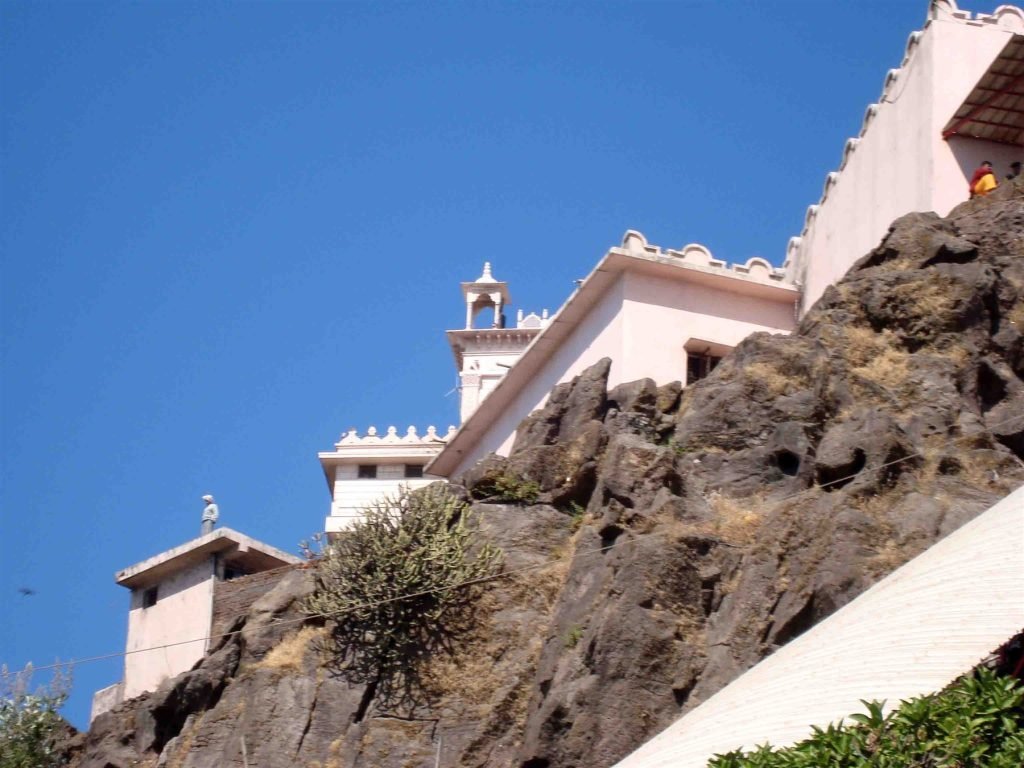
Pavagadh Jain Temples
Carved Digambar shrines along the climb

Idar Jain Derasar
Hilltop Jain shrines above the town
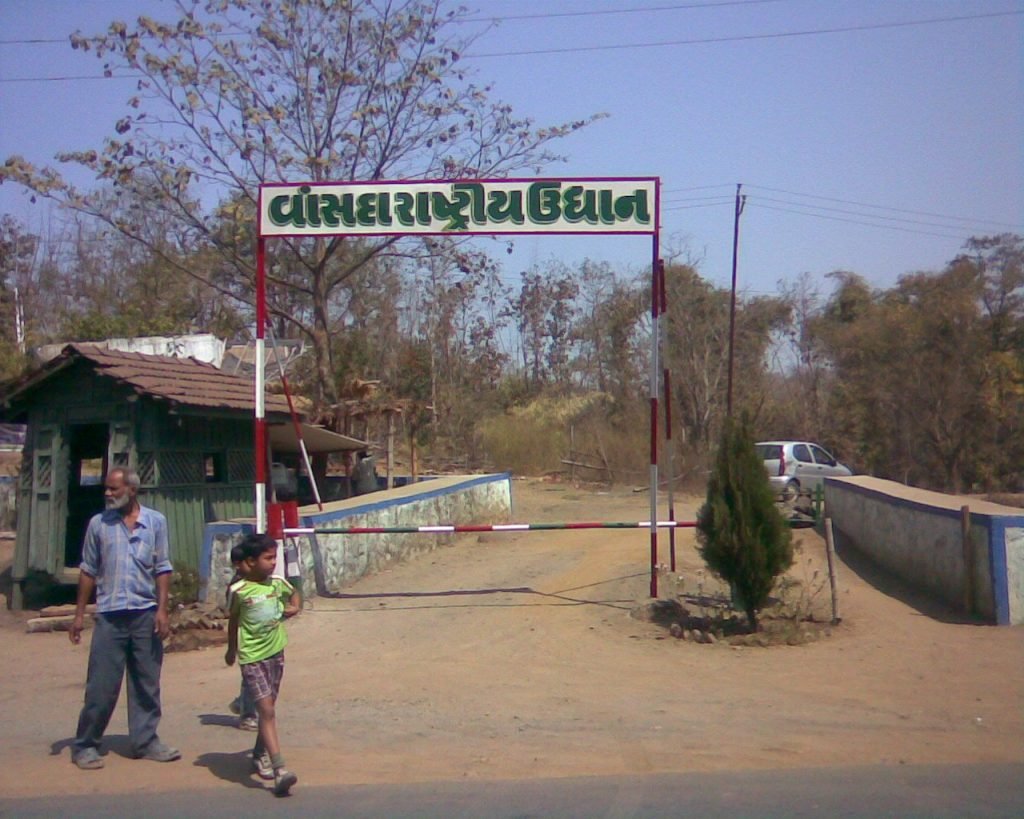
Vijaynagar Jungle
Vijaynagar Jungle refers to the wooded belt around the small town of Vijaynagar in the Sabarkantha…
 QUIET
QUIETChorwad Beach
A former royal seaside retreat
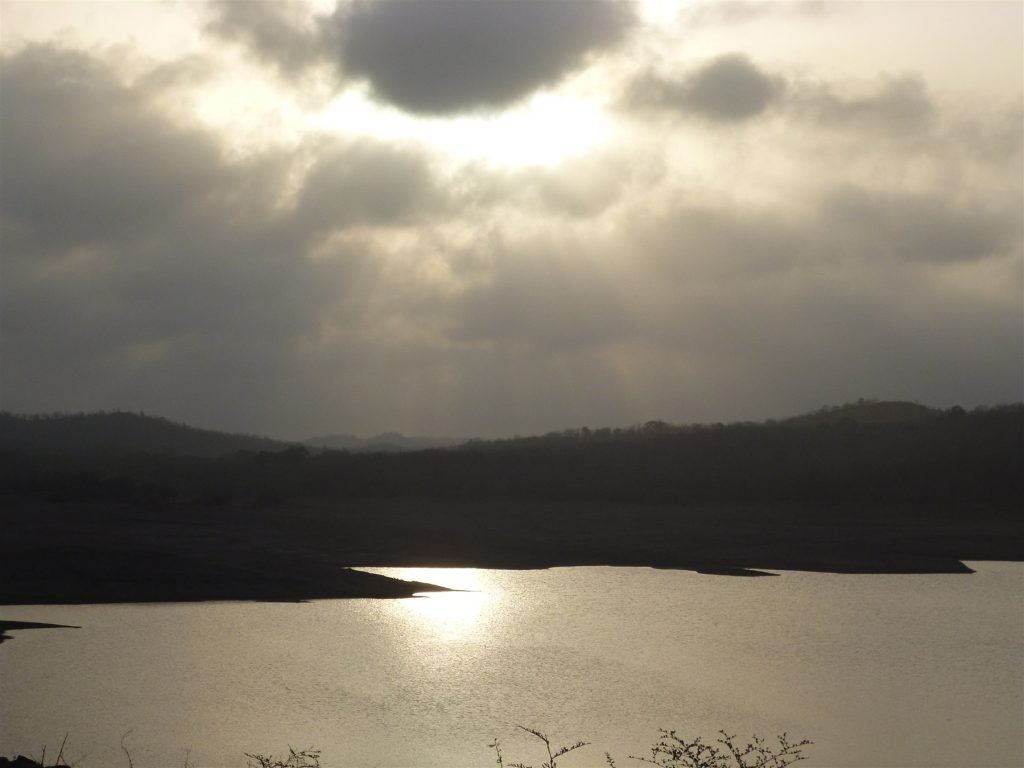 CONFLUENCE
Kamleshwar Dam
Ritual bathing where rivers meet the sea
 GARDEN
Jubilee Garden
A colonial-era park in the city heart
WHERE TO STAY
Find your stay in Gujarat
Compare live prices across the big booking sites and reserve in a few taps. Booking happens securely on the partner's site — we may earn a small commission at no extra cost to you.
Book directly on our partner sites — tap a provider to see live Gujarat hotels & prices:
SHOP THE REGION
Bring home Gujarat — & travel essentials
Hand-picked crafts and trip gear, available on Amazon.
Published 24 June 2026 · Updated 24 August 2026
We’re an independent group of writers and travellers documenting every corner of Gujarat — one place, plate and festival at a time.