Home › Destinations › Bhadra Fort
FORT · HERITAGEWhere Ahmedabad began — the royal citadel of 1411, its clock-tower gate watching over the old city for six centuries.
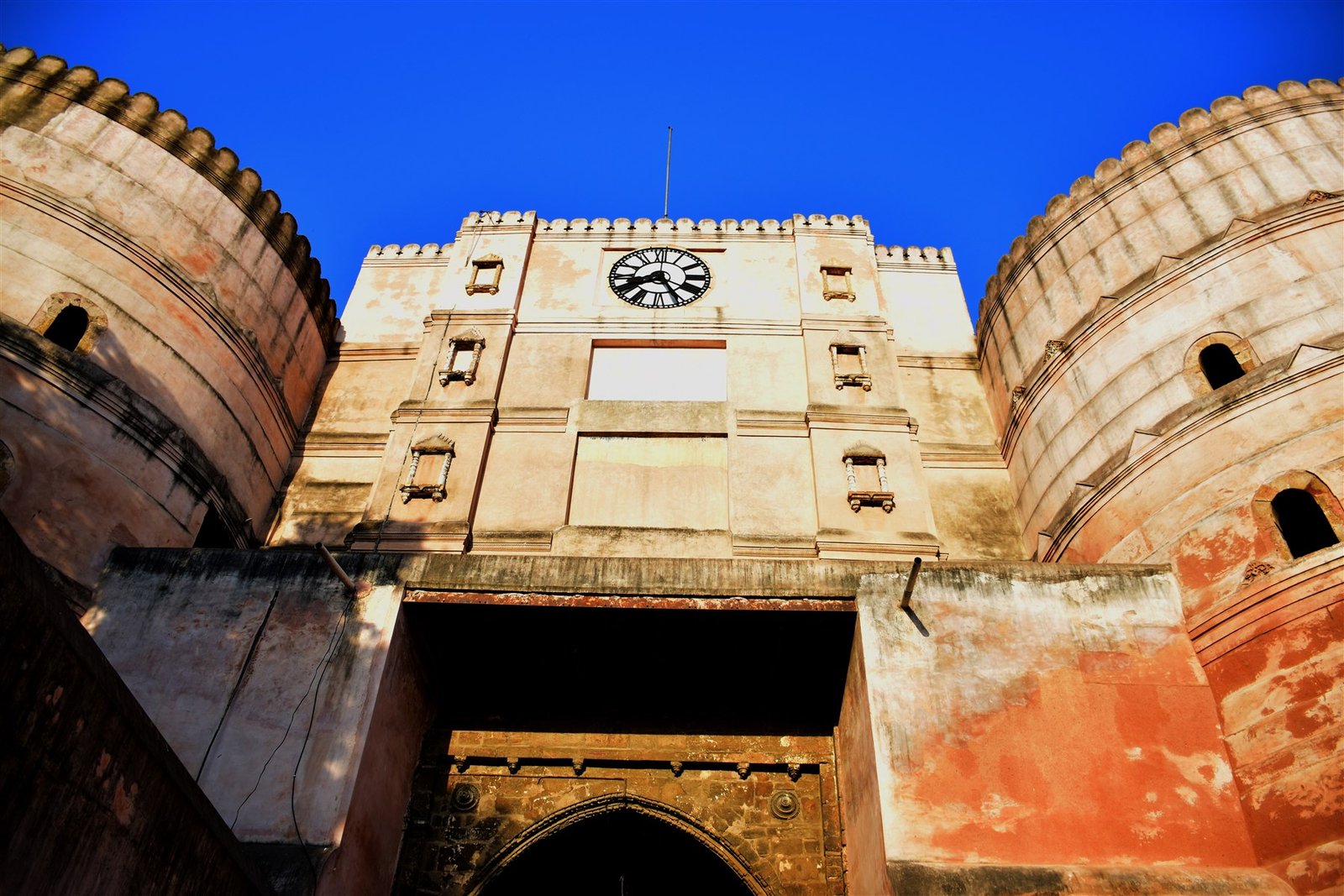
When Sultan Ahmad Shah I founded Ahmedabad in 1411, he laid out this fortified citadel as its royal heart and named it Bhadra, after the goddess Bhadrakali whose temple stands within. For centuries it held the palaces, the royal square and the seat of power; today its honey-coloured walls, gates and courtyards anchor the UNESCO-listed walled city.
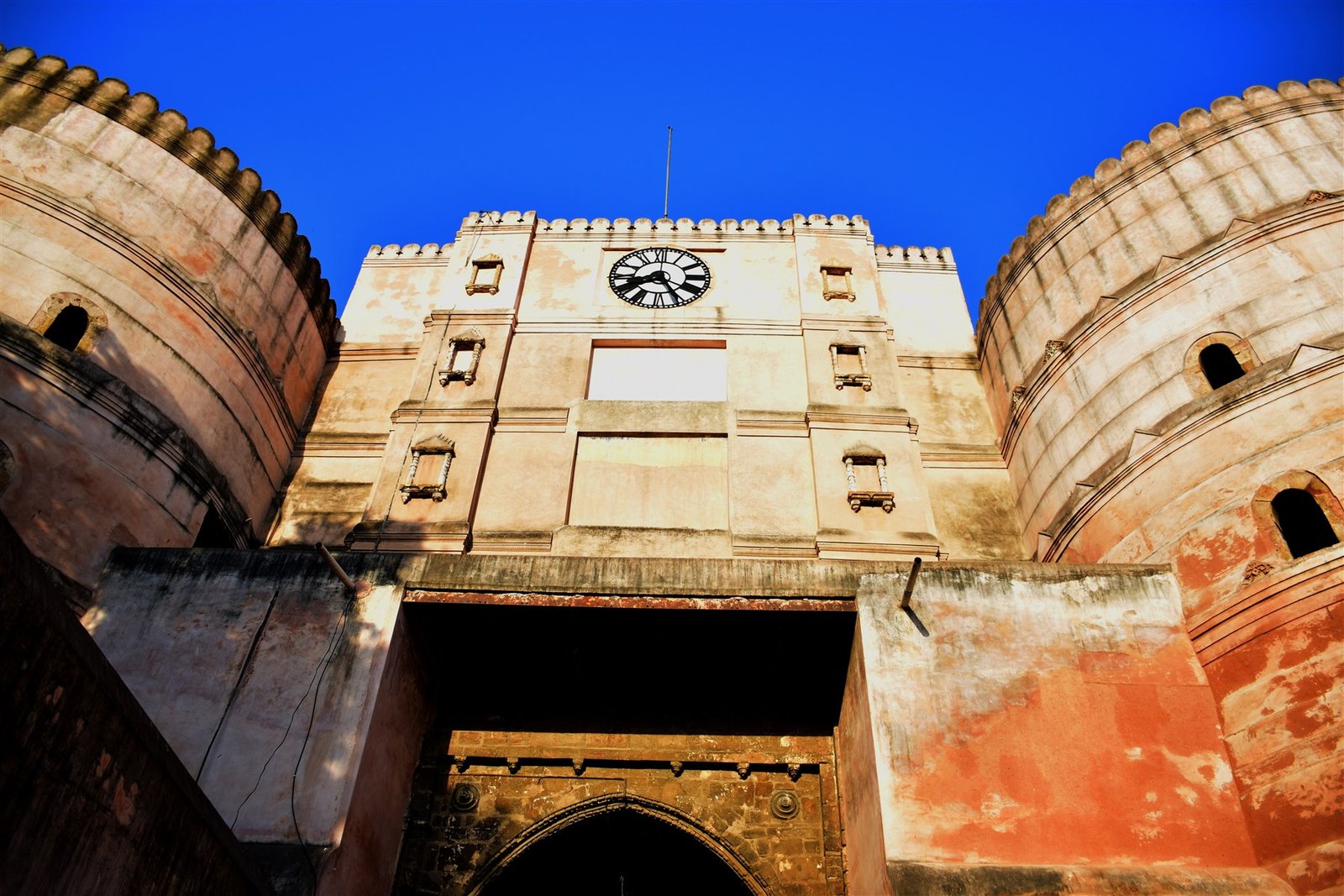
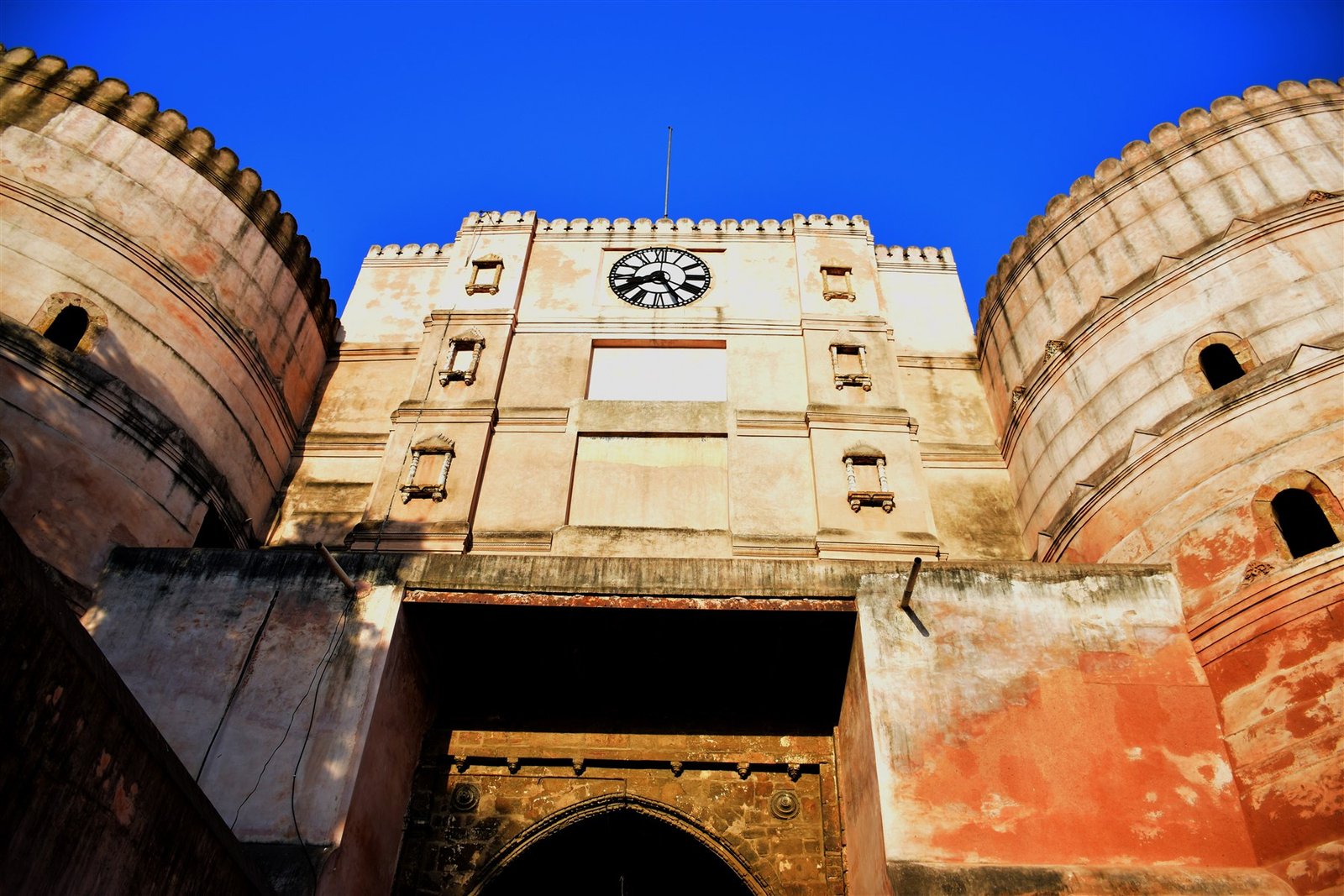
The landmark everyone photographs is the Bhadra gate, crowned by a clock tower the British added in the 19th century and flanked by great curving bastions. Around it spread the old royal maidan, the Azam Khan Sarai and a thicket of bazaars — six hundred years of the city layered into a single, walkable precinct.
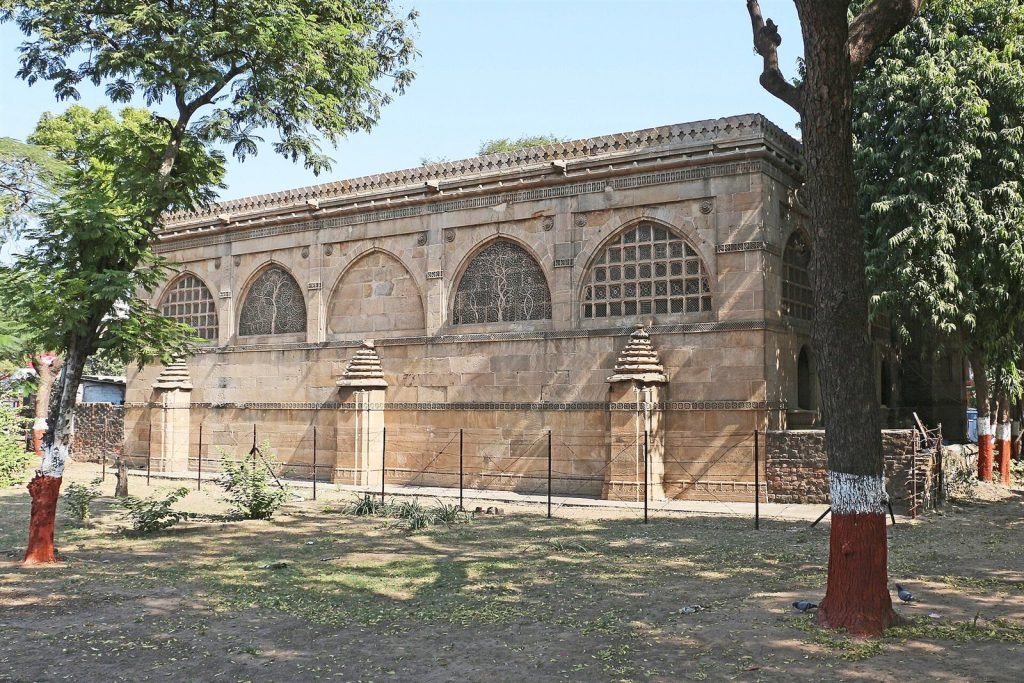
The fort precinct at the heart of old Ahmedabad.
The clock-tower gate against a deep blue sky.
Ahmad Shah I founds Ahmedabad and builds the Bhadra citadel as its royal core.
Mughal and then Maratha rulers hold the fort as control of the city changes hands.
Under British rule a clock is set into the main gate, giving it its familiar face.
Restored by the city; in 2017 Ahmedabad becomes India's first UNESCO World Heritage City.
Stand where Ahmedabad was founded more than six centuries ago.
The fort's photogenic face, framed by curving bastions.
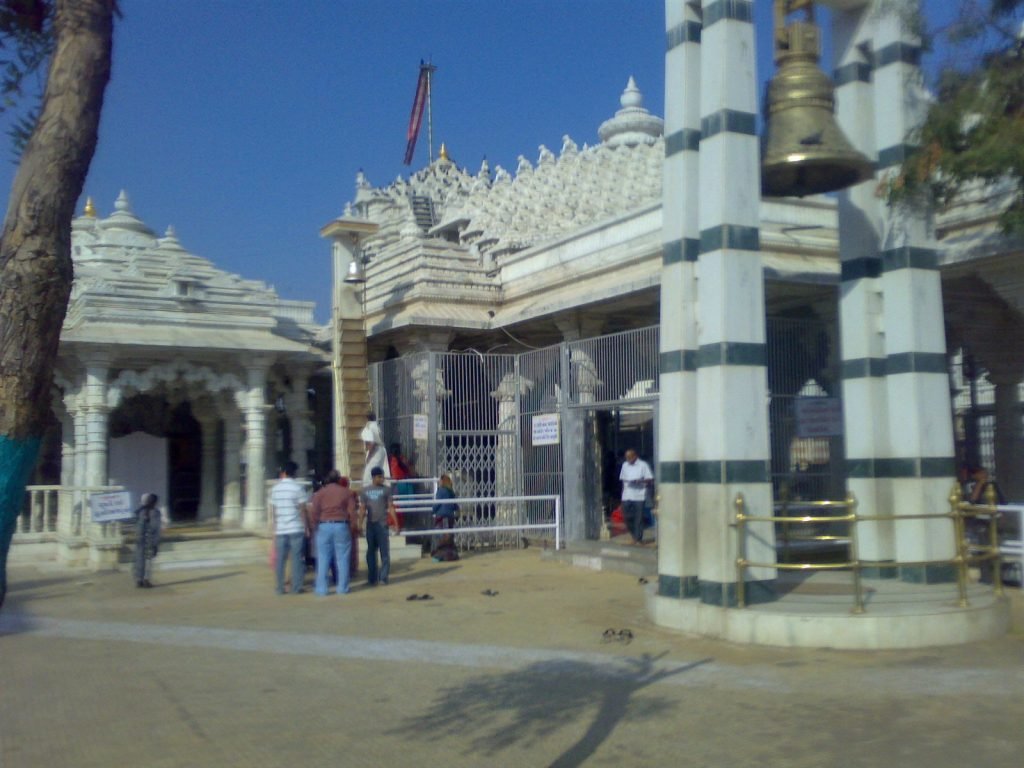
The shrine that gave the citadel — and the city's heart — its name.
Climb to the terrace for a sweep over the old city's rooftops.
Open to all, in the thick of the walled city's bazaars.
Sultanate, Mughal, Maratha and British traces in one precinct.
The fort's iconic, bastion-flanked face.
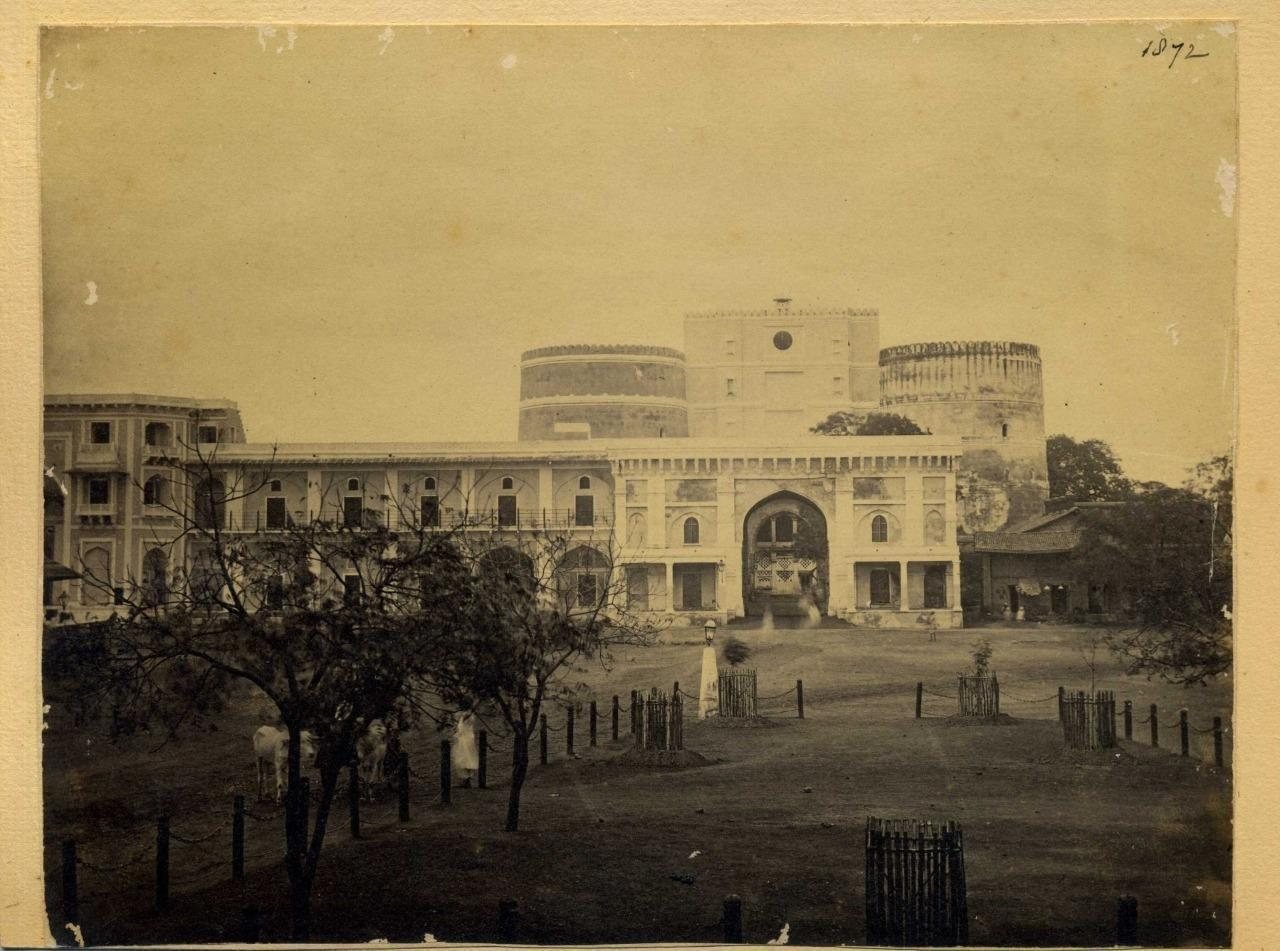
The fortified precinct and old royal maidan.
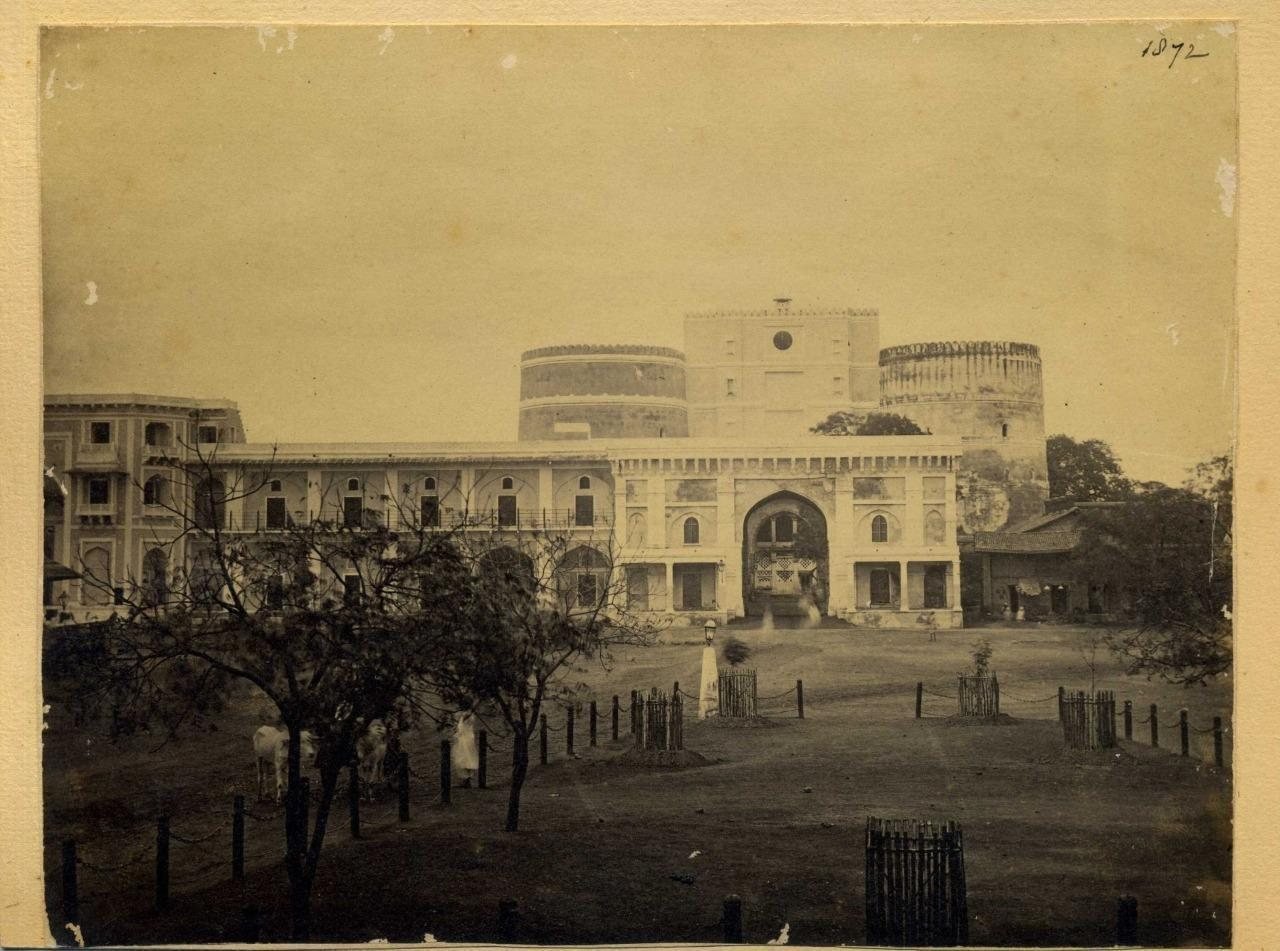
The temple that gave the citadel its name.
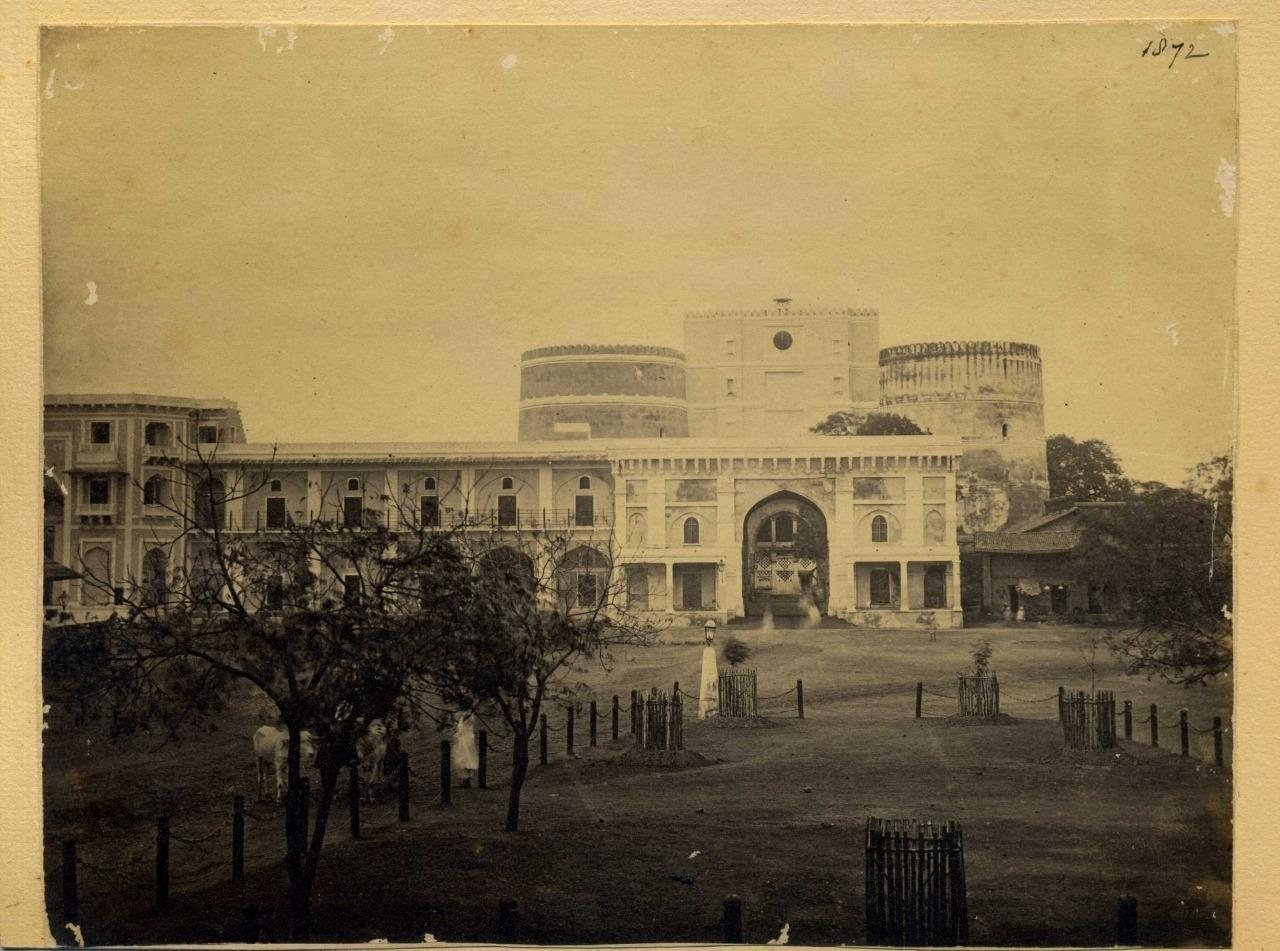
Climb up for views across the old-city rooftops.
The open maidan that fronts the citadel walls.
The market streets that ring the fort precinct.
Frame the clock tower between its two great curving bastions.
Head up for rooftop views across the old city (when open).
Step into the temple that gave the fort its name.
Cross the old royal square that fronts the citadel.
Spot Sultanate stonework beside British and Maratha additions.
Drift into the surrounding lanes of the walled-city market.
Honey-coloured walls and curving bastions.
Bhadra is a compact royal citadel of warm, dressed stone, built to the disciplined Sultanate style of the early 15th century. Massive curved bastions flank its main gate, and within once stood palaces, a royal square and the Bhadrakali temple. The plan set the template for the walled city that grew around it.
Later rulers left their mark: Mughal and Maratha repairs, and the British clock set into the gateway in 1849. A careful restoration in the 2010s reopened courtyards and the terrace, letting visitors read six centuries of the city in one set of walls.
Early-15th-century Sultanate citadel
Curved bastions and royal gate
British clock tower (1849)
Restored courtyards & terrace
Cool and bright — the most pleasant time to be out across Ahmedabad.
The city greens up and the heat breaks with brief, refreshing showers.
Hot and dry, often 40°C+. Best enjoyed early morning or after sunset.
⏰ Late afternoon light warms the stone and softens the gate; climb the terrace before it closes for the rooftop view.
SVP International Airport is about 9 km away — roughly a 25-minute cab ride.
Ahmedabad Junction (Kalupur) is around 3 km from the fort.
Lal Darwaza, the main bus hub, is a short walk; autos reach it easily.
STONE & SKY
Late afternoon turns the stone golden and lengthens the bastions' shadows.
The clock-tower gate, the curving bastions and rooftop views from the terrace.
Shoot the gate from below to exaggerate its height and symmetry.
The bazaar crowds around the gate give the shot scale and energy.
Carved havelis on the heritage walk
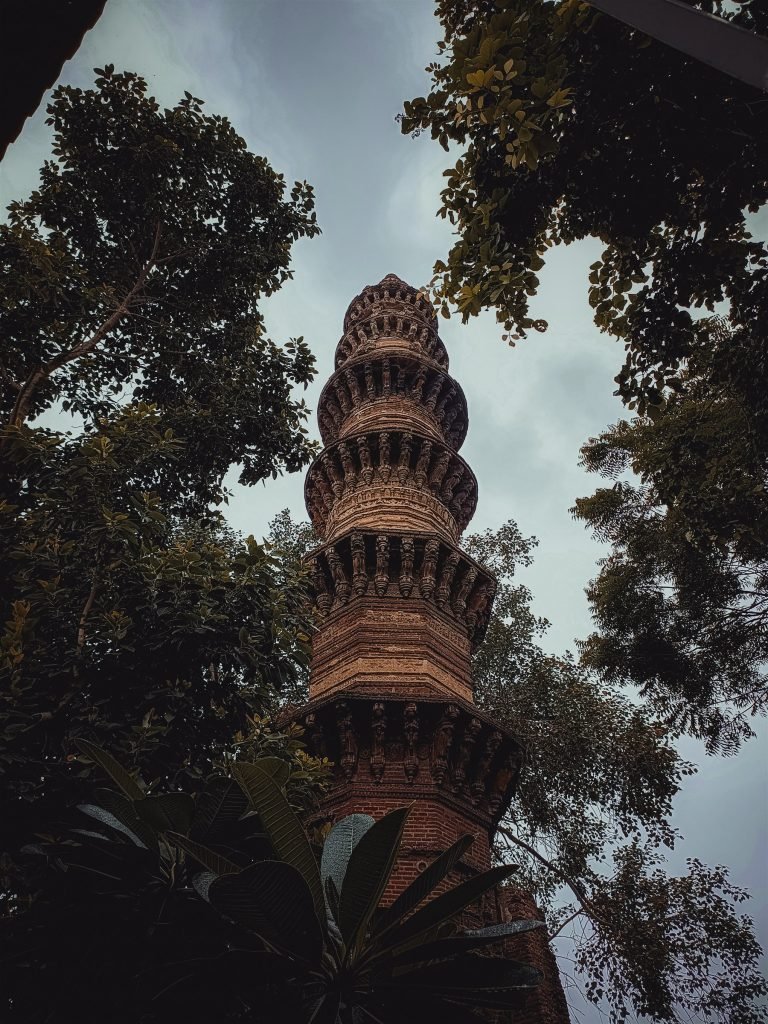
1424 mosque on 250+ carved pillars
◐ Mid-morning · light shafts
The city's 1411 triple gateway & bazaar
Promenade & the flower-shaped Atal Bridge
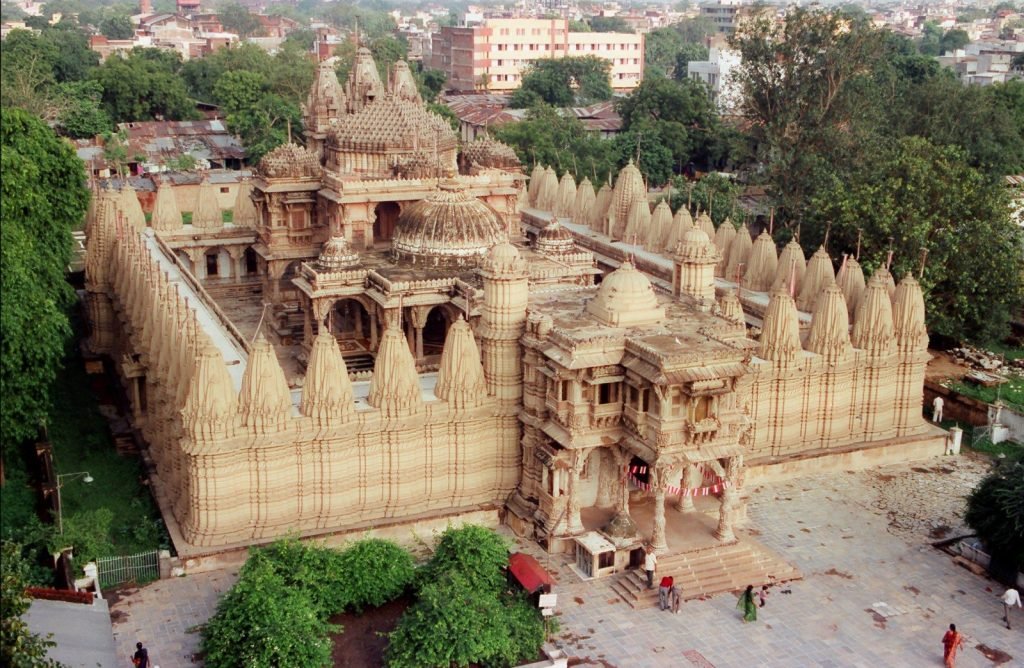
The serene 'Acropolis of Ahmedabad'
By night the old jewellers' square turns into a buzzing street-food bazaar.

An evening lane of carts serving Gujarati chaat, sandwiches and sweets.

Fresh fafda-jalebi, dabeli and khaman in the lanes of the walled city.
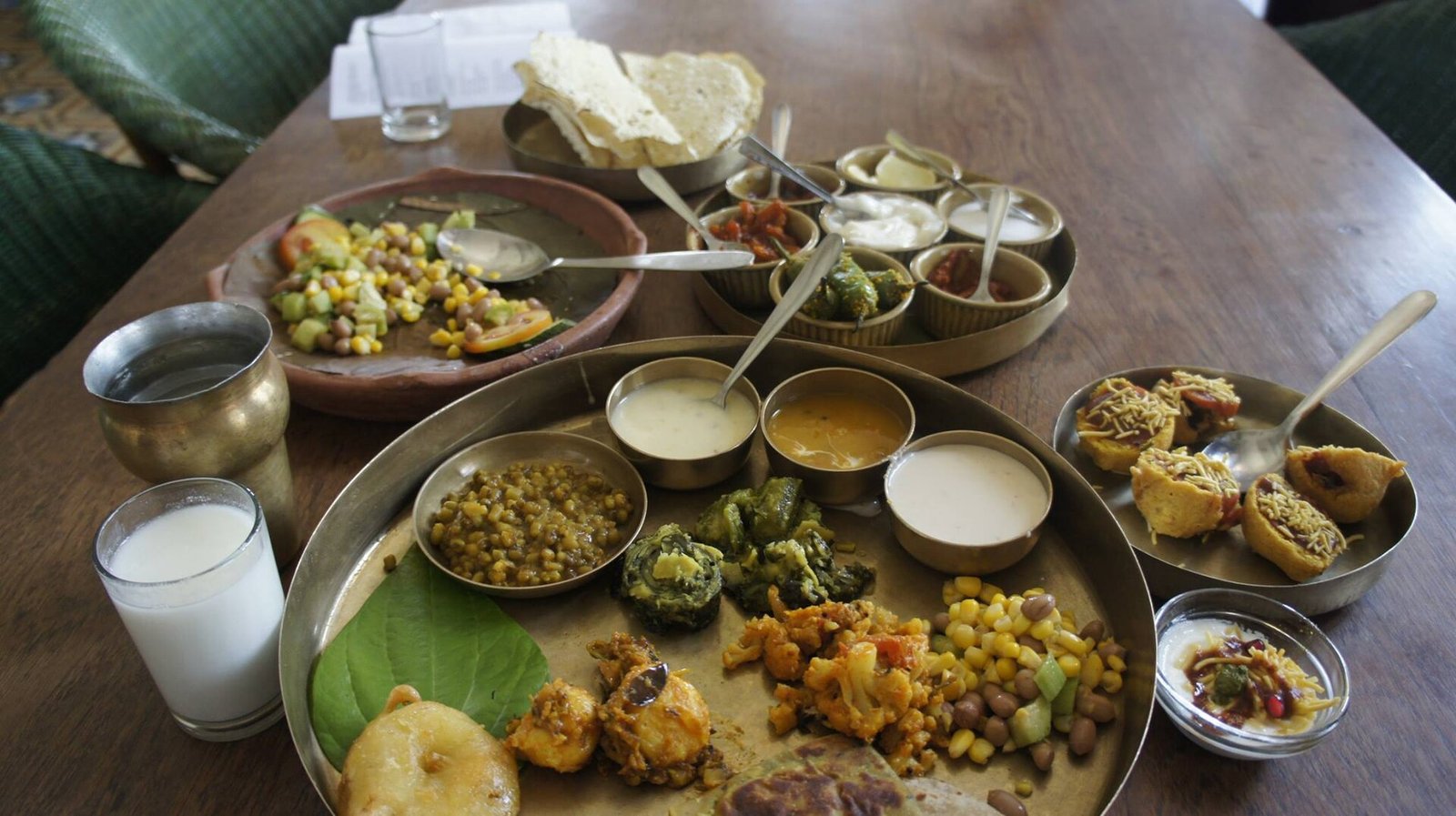
Ahmedabad is famously veg-friendly — expect superb thalis and farsan.
In the walled city of Ahmedabad, near Lal Darwaza, about 3 km from the main railway station.
In 1411, by Sultan Ahmad Shah I, when he founded the city.
After the goddess Bhadrakali, whose temple stands within the citadel.
No, the fort precinct is free to enter.
The gate and precinct are open through the day; terrace access is usually 9 AM–5 PM.
A clock set into the main gate by the British in 1849, now the fort's signature feature.
About 45 minutes, longer if you climb the terrace and visit the temple.
Yes — it anchors Ahmedabad, India's first UNESCO World Heritage City (2017).
Lal Darwaza bus hub is a short walk; the railway station is ~3 km away.
Teen Darwaza, Sidi Saiyyed Mosque and Jama Masjid are all within a short walk.
WHERE TO STAY
Compare live prices across the big booking sites and reserve in a few taps. Booking happens securely on the partner's site — we may earn a small commission at no extra cost to you.
SHOP THE REGION
Hand-picked crafts and trip gear, available on Amazon.