Home › Ahmedabad › Jama Masjid
HERITAGE LANDMARKA serene ocean of stone — 260 carved pillars and a vast sunlit courtyard at the heart of old Ahmedabad.
Step through the gate off the bustle of Gandhi Road and the noise simply stops. Ahmedabad’s Jama Masjid opens into a huge paved courtyard, and beyond it a prayer hall held up by a quiet forest of some 260 finely carved pillars.
Completed in 1424 by Ahmad Shah I, the city’s founder, it was for a time among the largest mosques in India. Its beauty lies in fusion: Sultanate architects drew freely on the skills of local Hindu and Jain stone-carvers, so lotus rosettes, bell-and-chain motifs and temple-like columns sit naturally within an Islamic plan.
It remains a living mosque, busiest at Friday prayers, but for most of the day it is simply calm — a vast, cool, light-filled room where the craft of six centuries ago still holds up the roof.
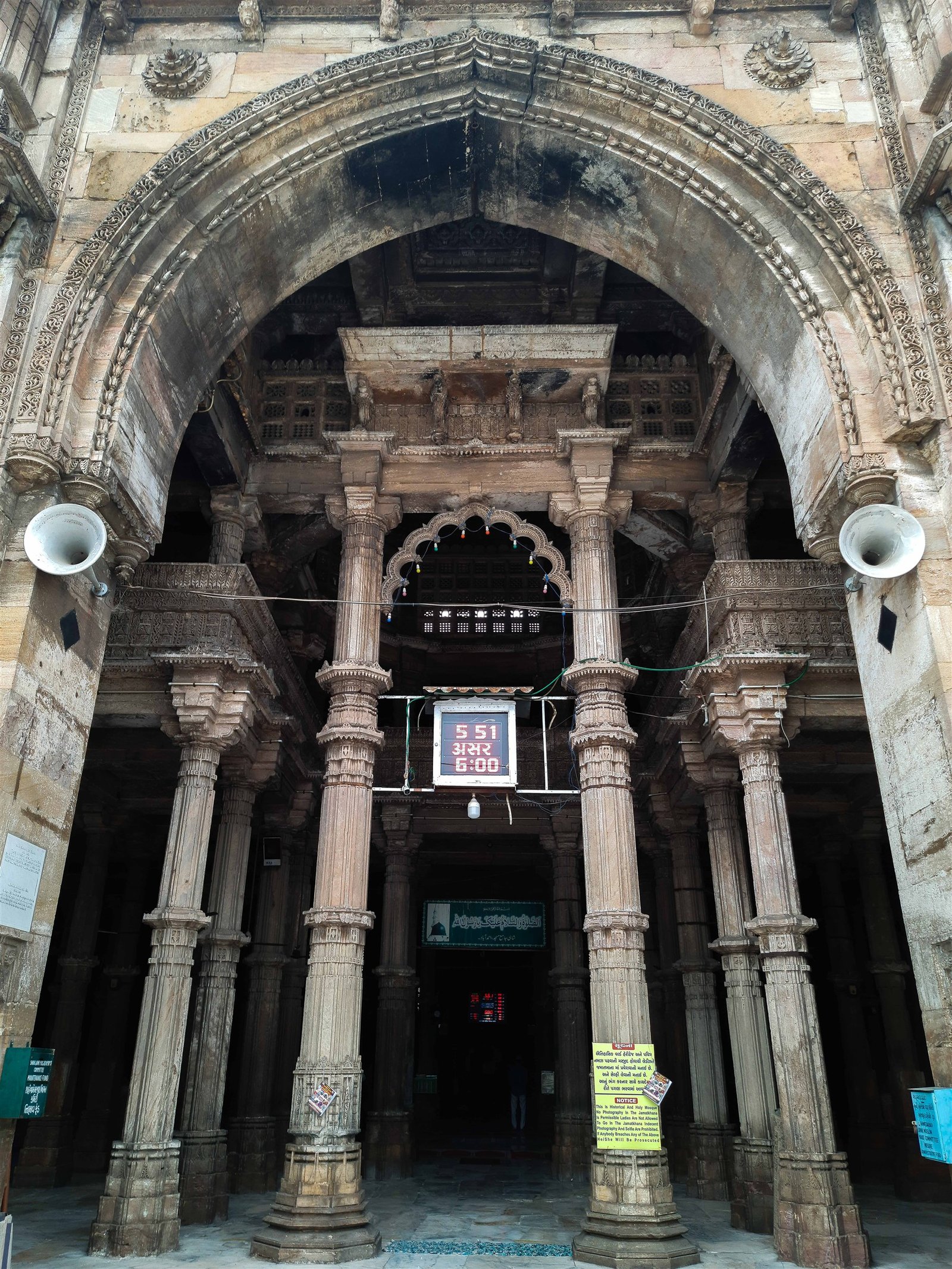
The prayer hall’s forest of carved columns.
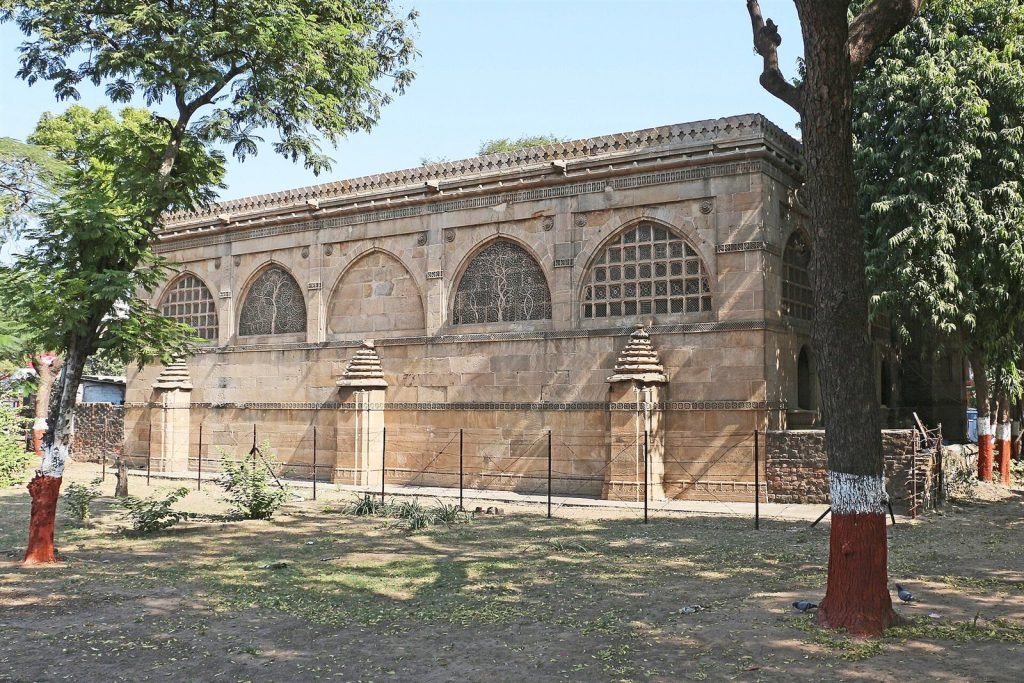
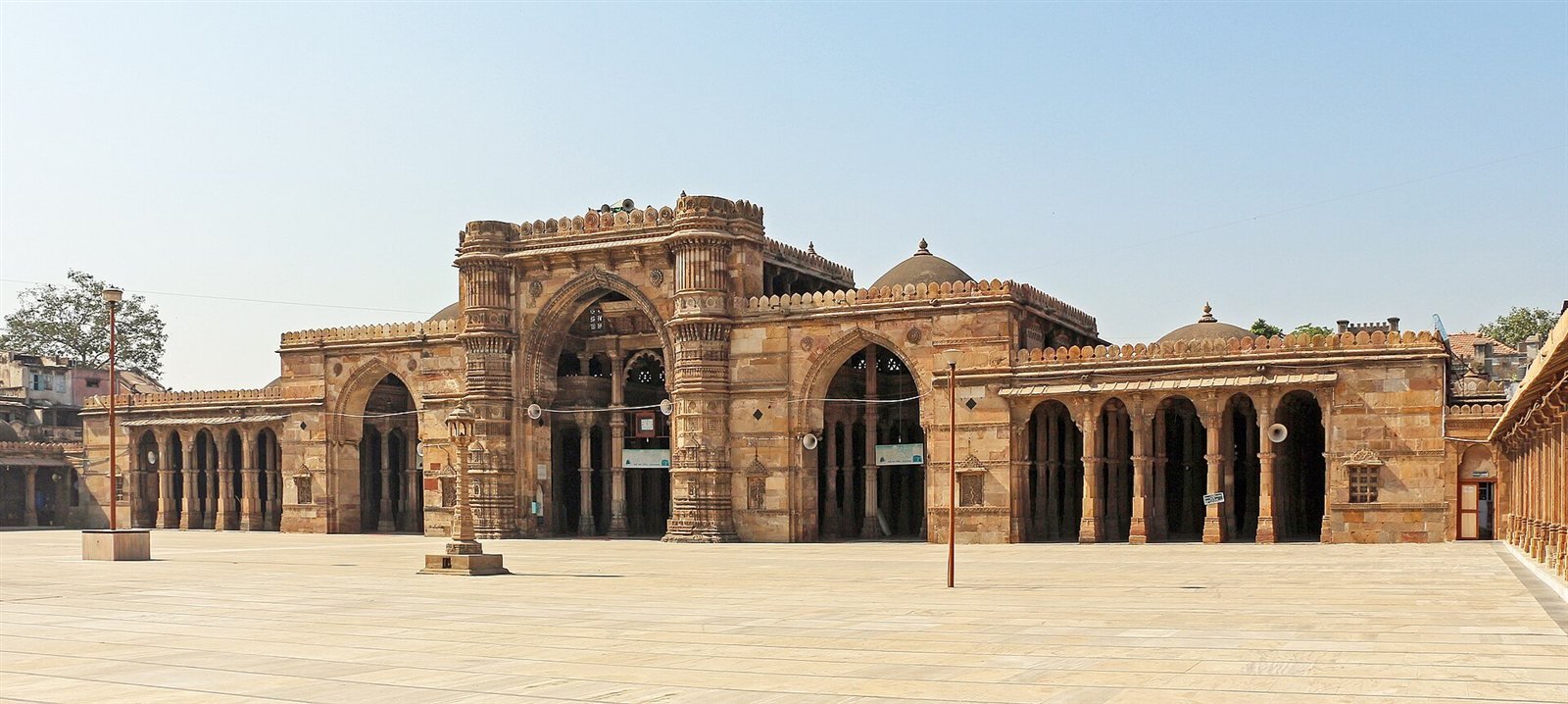
The mosque’s facade in an earlier era.
Ahmad Shah I completes the great mosque soon after founding the city of Ahmedabad.
It ranks among the largest and grandest congregational mosques in the subcontinent.
An earthquake topples the tops of its two 'shaking' minarets, which are never fully rebuilt.
An ASI-protected monument and a living mosque at the city's historic core.
Some 260 carved columns create one of India's most photogenic prayer halls.
A vast paved square offers stillness minutes from the busiest bazaar.
Hindu and Jain carving motifs woven into an Islamic masterpiece.
Open to respectful visitors, with no ticket, in the walled city's heart.
Columns, arches and shadows make for striking architectural photos.
Six centuries old and still the city's main congregational mosque.
Rank upon rank of carved stone columns.
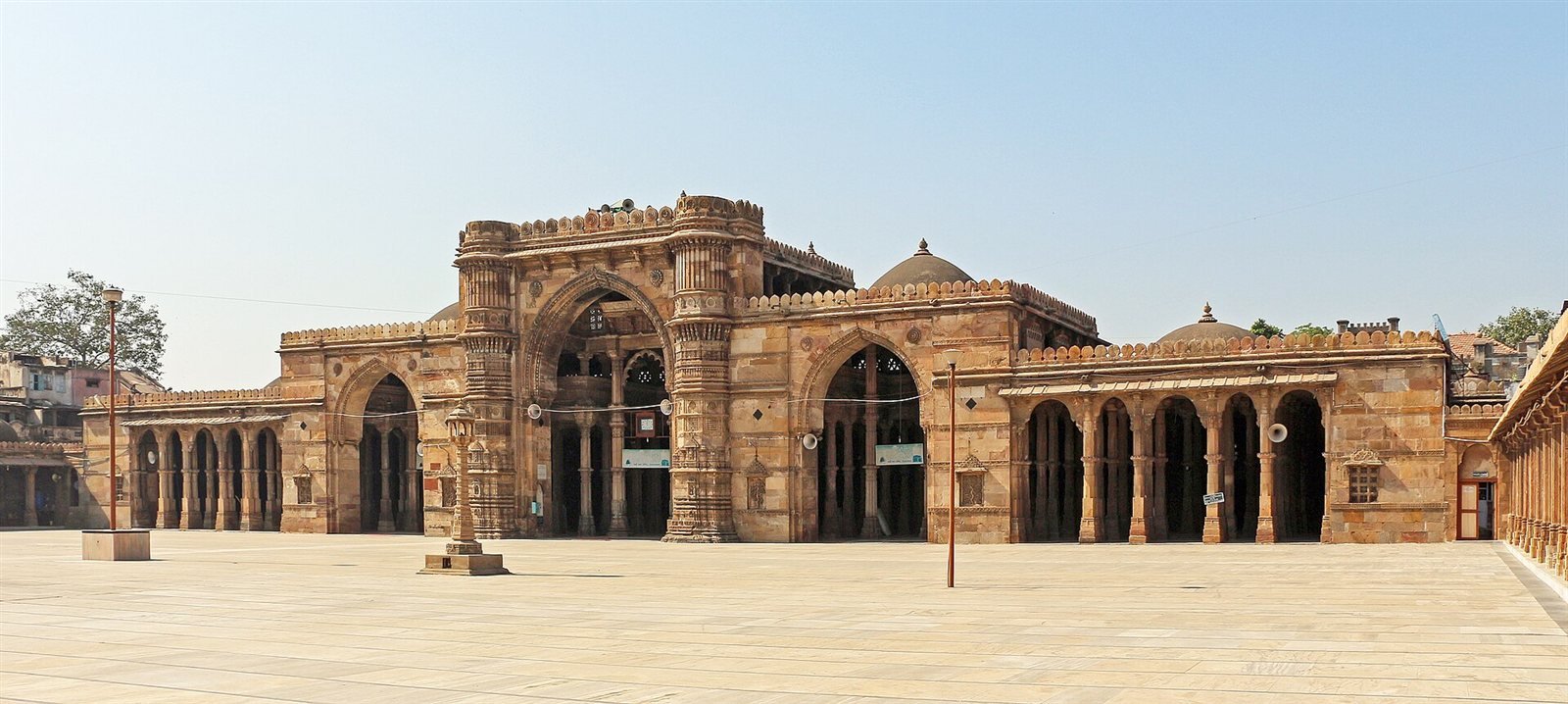
Arched bays opening onto the courtyard.
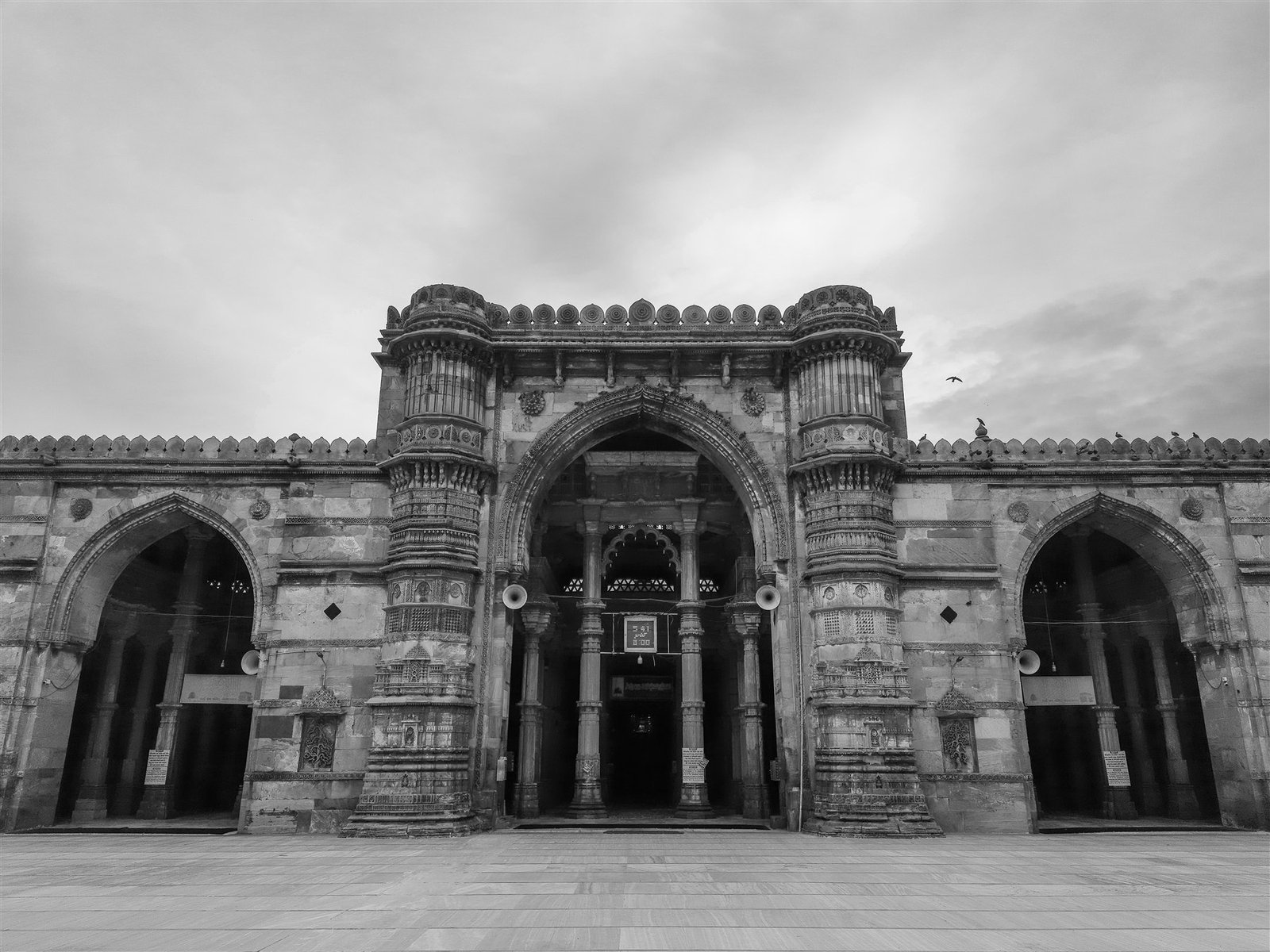
Stonework that fuses many traditions.
A vast paved court that calms the moment you step in.
Light shifts slowly between the 260 carved shafts.
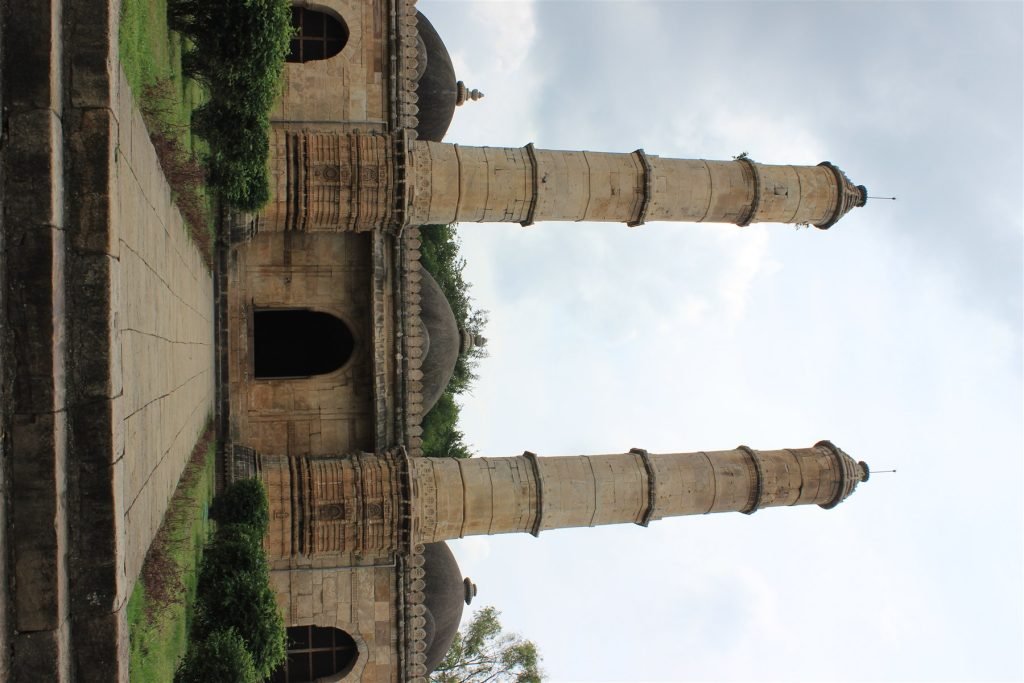
Where the famous twin minarets rose before 1819.
Take in the scale and symmetry of the vast paved square before entering.
Move slowly through the 260 columns and watch the light shift between them.
Spot lotus rosettes and bell-and-chain carvings borrowed from temple craft.
See where the famous 'shaking' minarets once rose before the 1819 quake.
The hall is cool and calm — a genuine pause in a busy old city.
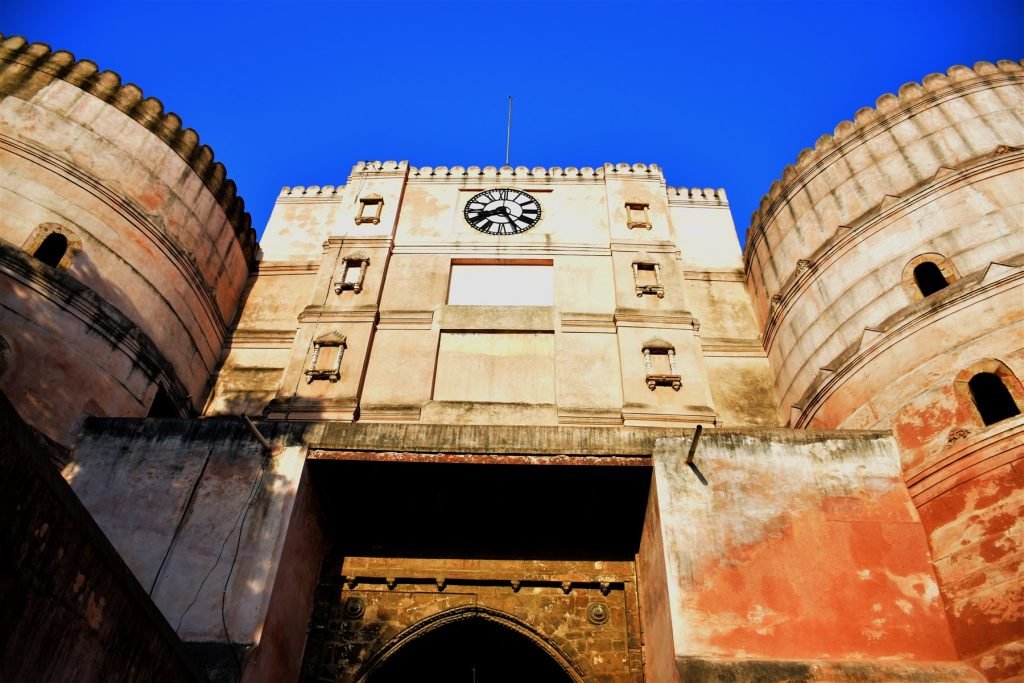
The royal triple gateway is a two-minute walk away.
260 columns carry the prayer-hall roof.
Built in warm yellow sandstone, the mosque marries Islamic planning with Gujarat’s deep temple-carving tradition. The prayer hall is carried on roughly 260 pillars arranged in disciplined rows, their capitals and shafts worked with lotus medallions, bell-and-chain pendants and other motifs lifted straight from Hindu and Jain craft.
Fifteen domes float above, lit by pierced screens and clerestory openings that fill the hall with soft, even light. Two tall minarets once flanked the central arch; their upper stages fell in the earthquake of 1819, leaving the dignified ‘shaking minaret’ stumps you see today.
Around 260 carved pillars
Fifteen domes overhead
Fused Hindu–Jain–Islamic motifs
Vast paved courtyard
Cool and bright — the most pleasant time to be out across Ahmedabad.
The city greens up and the heat breaks with brief, refreshing showers.
Hot and dry, often 40°C+. Best enjoyed early morning or after sunset.
⏰ Late morning fills the hall with even light between the columns; avoid Friday midday, the busiest prayer time.
SVP International Airport is about 9 km away — roughly a 25-minute cab ride.
Ahmedabad Junction (Kalupur) is around 2.5 km from the mosque.
It sits on Gandhi Road; Teen Darwaza and Lal Darwaza hubs are a short walk.
COLUMNS & LIGHT
Mid-morning light between the columns gives depth without harsh shadow.
The receding rows of pillars, the courtyard symmetry and carved capitals.
Use the column grid for strong leading lines and vanishing points.
Keep quiet, dress modestly and avoid shooting people at prayer.
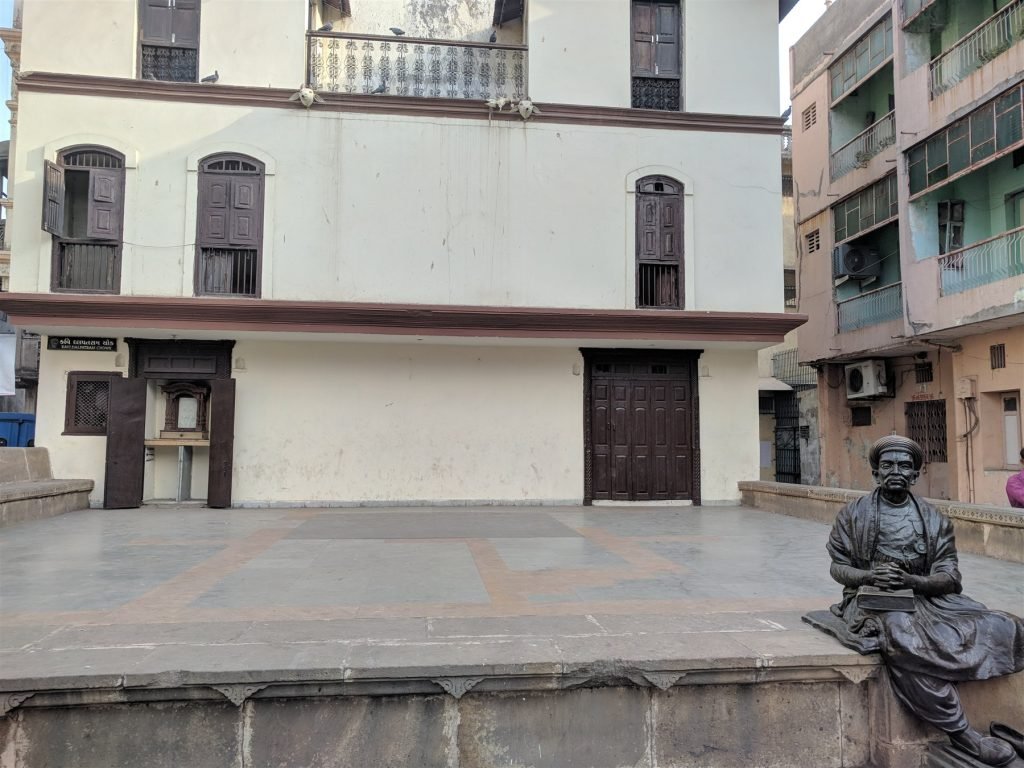
By night the old jewellers' square turns into a buzzing street-food bazaar.

An evening lane of carts serving Gujarati chaat, sandwiches and sweets.

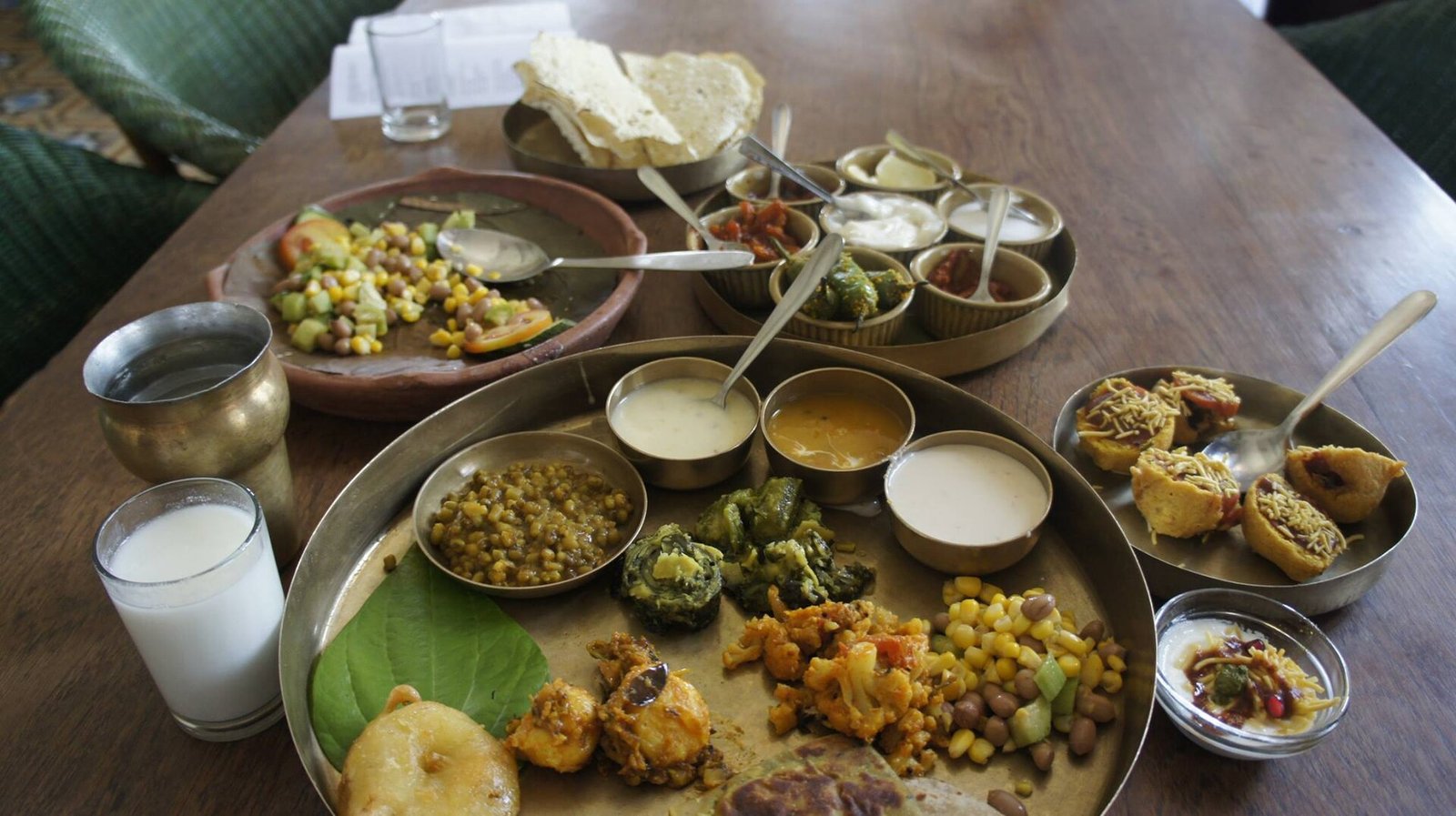
Fresh fafda-jalebi, dabeli and khaman in the lanes of the walled city.
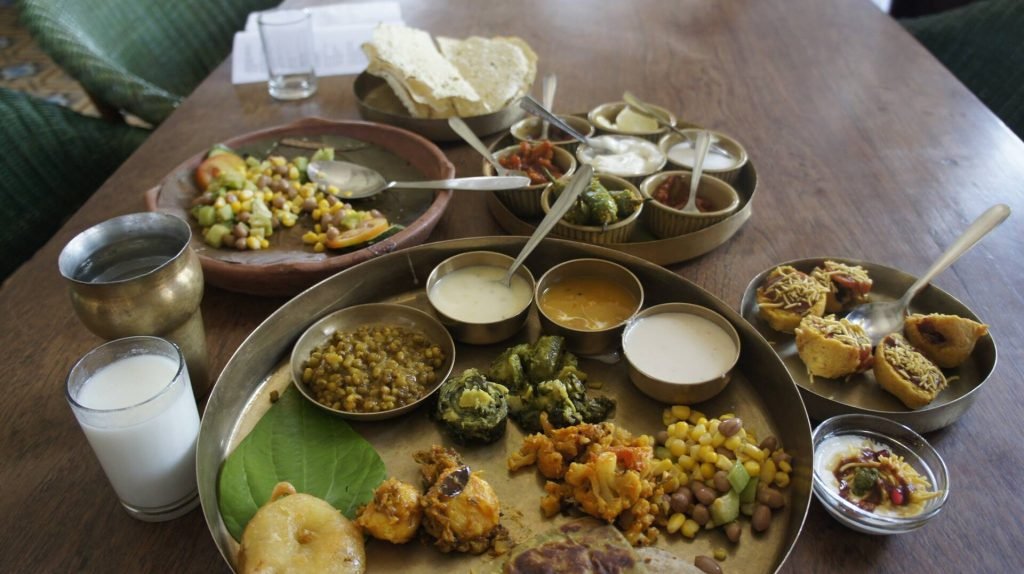
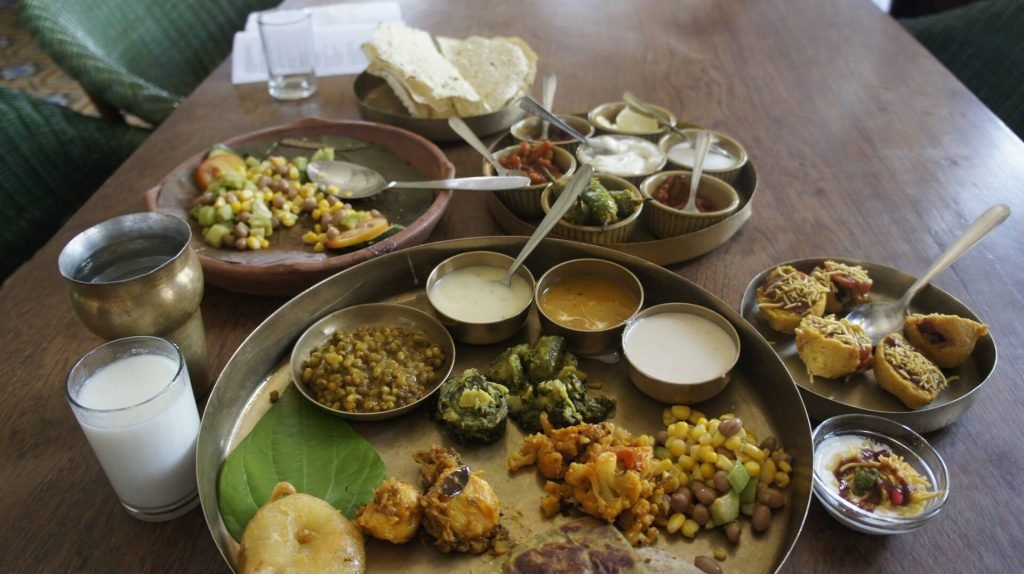
Ahmedabad is famously veg-friendly — expect superb thalis and farsan.
On Gandhi Road in the walled city, about 2.5 km from Ahmedabad Junction railway station.
In 1424, by Sultan Ahmad Shah I, the founder of Ahmedabad.
No, entry is free for visitors.
Open through the day, outside the five daily prayer times.
Yes, respectful visitors are welcome outside prayer times; dress modestly and remove footwear.
Around 260 carved stone columns support the prayer hall.
The tops of its two 'shaking' minarets fell in the 1819 earthquake.
About 45 minutes to take in the courtyard and hall.
Yes, generally — just avoid photographing people during prayer.
Teen Darwaza, Sidi Saiyyed Mosque and Bhadra Fort are all a short walk away.
WHERE TO STAY
Compare live prices across the big booking sites and reserve in a few taps. Booking happens securely on the partner's site — we may earn a small commission at no extra cost to you.
SHOP THE REGION
Hand-picked crafts and trip gear, available on Amazon.