
A planned city's elegant arcade
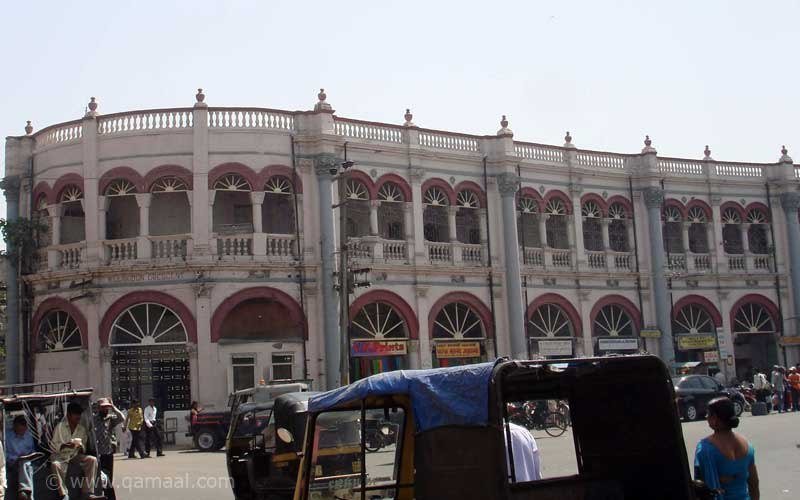
One of Jamnagar’s most elegant pieces of town planning is the Willingdon Crescent — long known too as the Chelmsford Market — a graceful semicircular sweep of colonnaded shopfronts built in the 1920s during the reign of Jam Ranjitsinhji, who reshaped Jamnagar into a strikingly planned modern city.
The crescent also tells the story of Ranji’s Europe: the Jam who dazzled England’s cricket grounds brought home its urban tastes, and Jamnagar’s arcades, gardens and solarium belong to the same instinct — a Saurashtra capital dressed to receive the world.
Willingdon Crescent belongs to Ranji’s grand remaking of Jamnagar in the 1910s and 20s, when the cricketer-Jam rebuilt his medieval capital with Parisian instincts — boulevards, gardens, and this colonnaded semicircle whose repeating arches gave the bazaar a royal front. The crescent still trades beneath its arcades, and the recent restoration has returned the façade’s cream sweep to photograph-ready condition.
See it as the anchor of a Jamnagar civic walk: the crescent’s arc, Darbargadh’s gate across the way, and the old-city bazaars threading toward the Jain temples — the princely town’s showpiece quarter in an easy hour, best in late-afternoon light.
Its repeating arches and unified façade curve around a public space, lending the everyday bazaar a rare sense of order and grandeur. Beneath the arcade, shops sell daily goods and the city’s crafts, while the crescent itself remains a beloved civic landmark.
It stands as proof of the cosmopolitan ambitions of early-20th-century Nawanagar — a princely state that built boulevards, parks and public buildings to rival any modern city of its day.
Ranjitsinhji's colonnade, named for a Viceroy
A 1920s arcade.
The colonnaded crescent is built under Jam Ranjitsinhji.
Ranji reshapes Jamnagar with parks and boulevards.
It honours a Viceroy of the era (also called Chelmsford Market).
A graceful civic landmark and working bazaar.
Reasons to make the time
Elegant arcade
A graceful colonnaded crescent.
Planned heritage
Part of Ranji's modern city.
Living bazaar
Shops beneath the arches.
Curving sweep
A unified semicircular façade.
Princely vision
Nawanagar's cosmopolitan ambition.
Photogenic
Repeating arches and symmetry.
What to look for inside
Colonnade
The curving arcade of arches.
Arched shops
Daily life beneath the arches.
How to spend an hour or two
Walk the crescent
Follow the curve of the arcade.
Admire the arches
Note the repeating, unified façade.
Browse the shops
Daily goods and local crafts.
Learn the history
Ranji's planned-city legacy.
Photograph it
Frame the colonnade's sweep.
Explore the old city
Continue to Darbargadh nearby.
A semicircle of repeating arches
Willingdon Crescent is a piece of deliberate urban design: a long, semicircular run of arcaded shopfronts, their repeating arches and shared cornice line giving the market a calm, unified, almost classical rhythm. Rather than a jumble of buildings, it presents a single curving façade wrapped around a public space.
It belongs to the wave of confident civic architecture that transformed Jamnagar in the early 20th century, when the princely state laid out parks, roads and public buildings on a generous, modern plan.
This is one of many places worth seeing here — the full guide to Jamnagar has the rest.
Semicircular colonnade
Repeating arched bays
Unified civic façade
1920s planned-city design
When to go
Cool and pleasant — the best season to explore Jamnagar.
Lush and green; the wetlands and lakes brim with birds.
Hot and dry — sightsee early or late in the day.
⏰ Walk it in the morning or early evening, when the light rakes the arches and the bazaar is busy.
Timings & entry
- The market is liveliest morning and evening
- The crescent is free to walk
- Mind traffic and crowds
- Allow 30–45 minutes
- Free to wander the arcade
- Browse and bargain in the shops
- Look up to read the unified façade
- Combine it with Darbargadh
Getting there
By Air
Jamnagar Airport is nearby.
By Rail
Jamnagar station, then a short ride.
On Foot
In the city centre, near the old city.
Shooting the crescent
ARCH & CURVE
A unified sweep of arcaded shopfronts
What to shoot
The curving line of repeating arches.
Best light
Morning or late-afternoon raking light.
Life
The bazaar busy beneath the arcade.
Composition
Use the curve as a leading line.
Know before you go
More to see close by
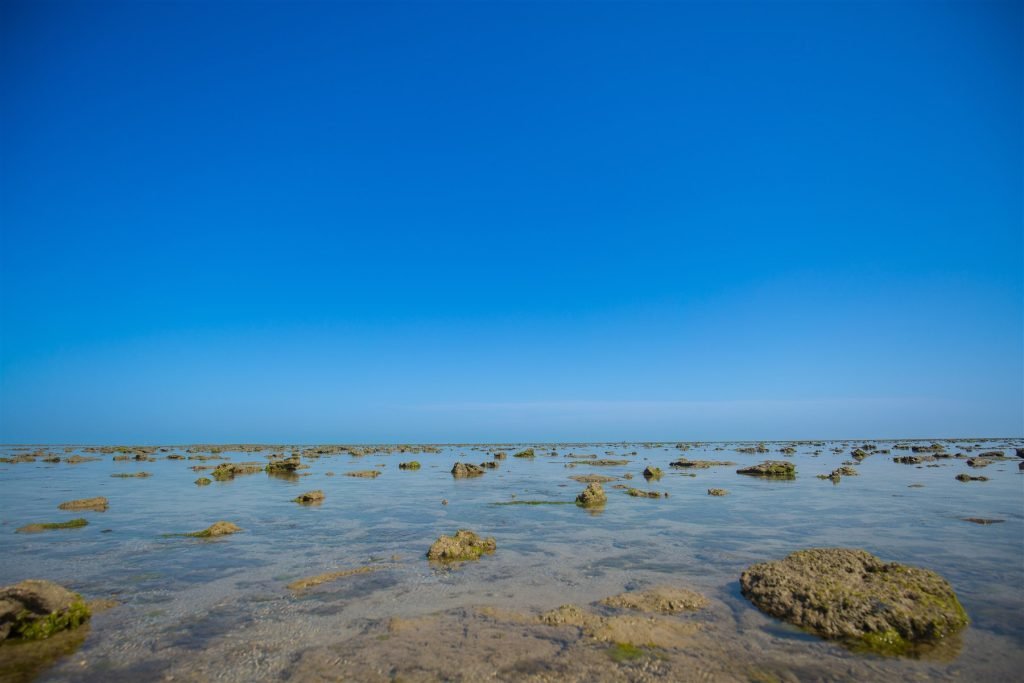
Gulf Mudflats
◐ Golden hour · the flats
 MARINE PARK
Narara Marine Park
India’s first — corals, islands & sea life
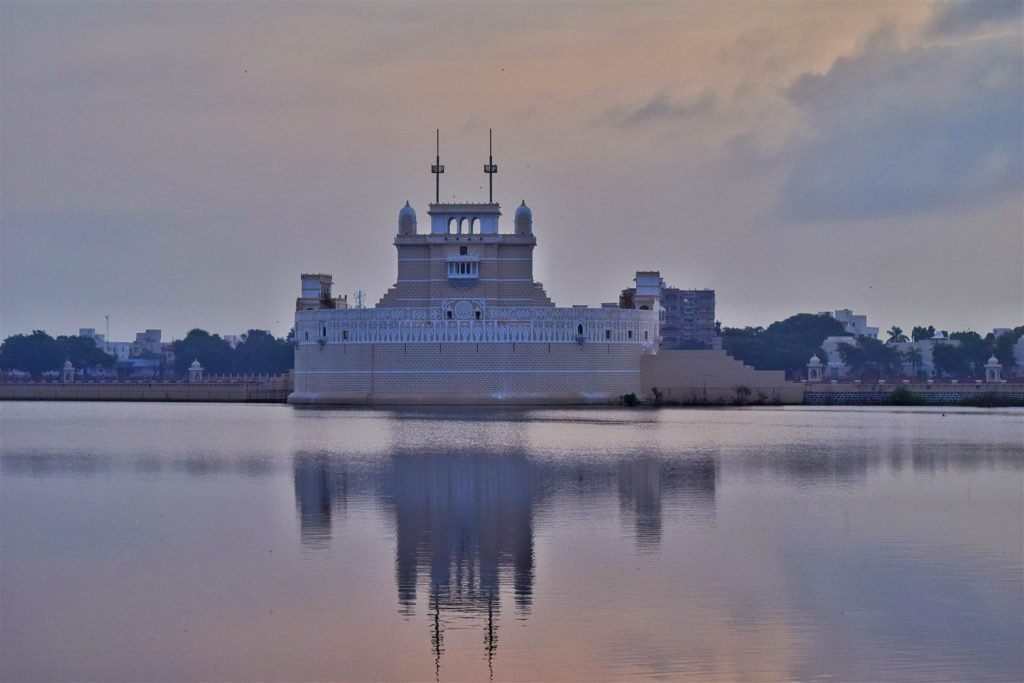 FORT
FORTLakhota Lake & Palace
An island fort-museum in the middle of Ranmal Lake
 COAST
COASTGulf Coast & Beaches
Quiet shores & flamingo-rich mudflats
 OLD CITY
Darbargadh
The royal quarter & Willingdon Crescent
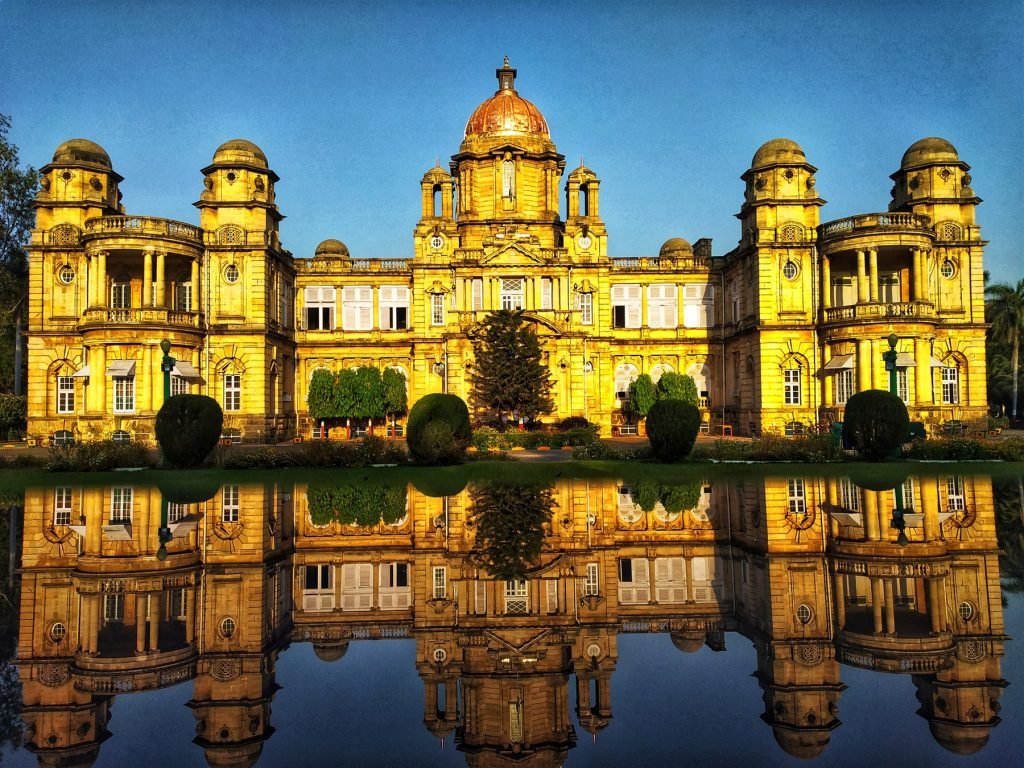 PALACE
Pratap Vilas Palace
A grand European-style royal palace
Where to eat near Willingdon Crescent
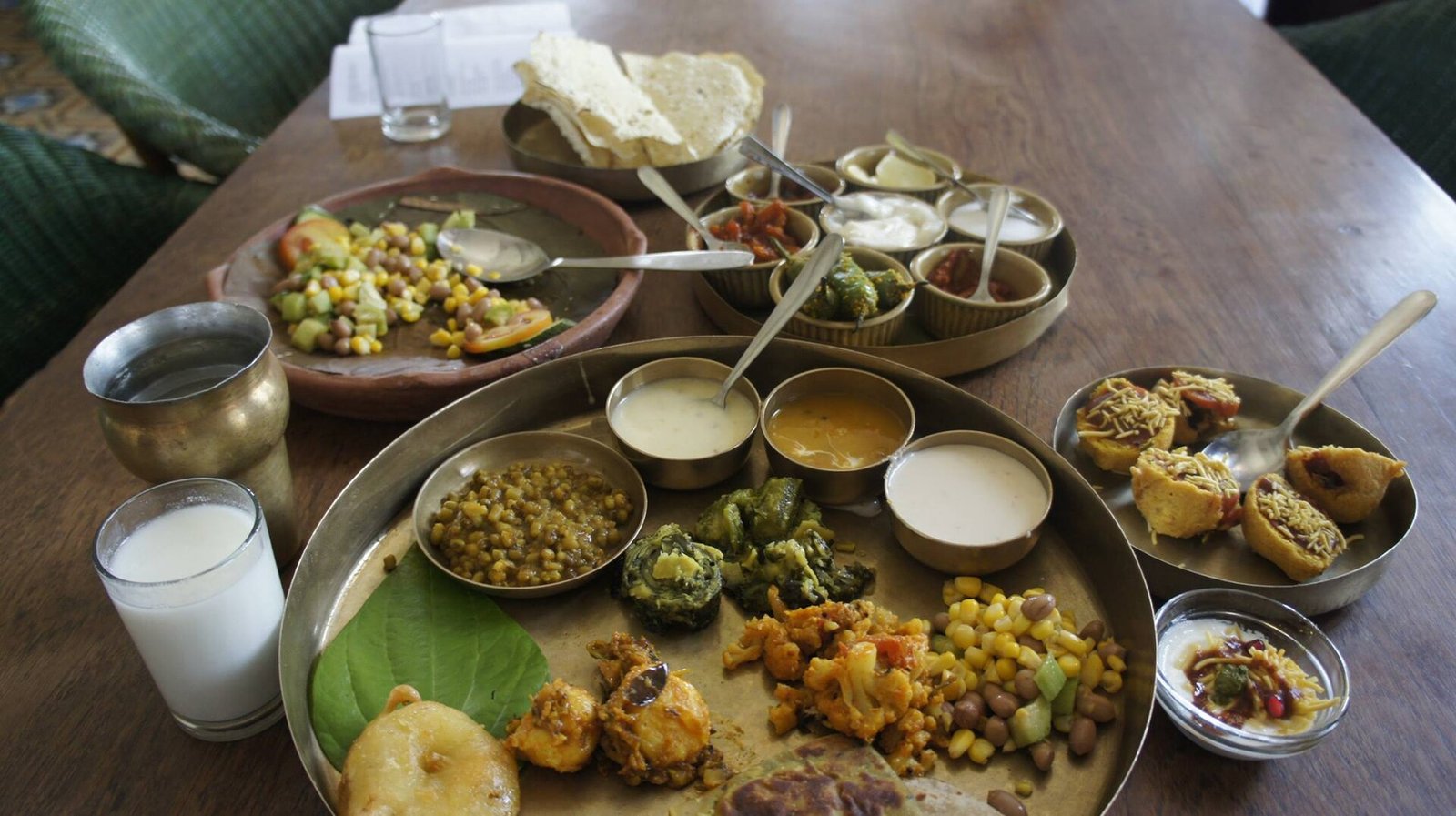 THALI
THALIKathiawadi Thali
Rotla, kadhi, shaak and ghee-rich fare.
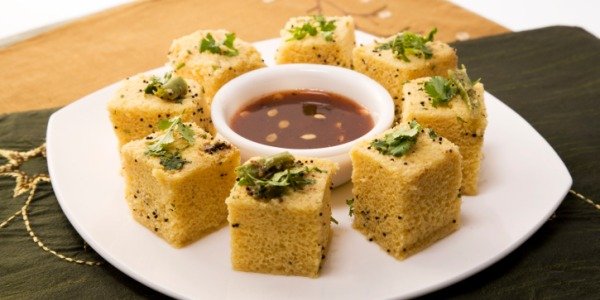 SNACKS
Ganthiya & fafda
Gathiya and farsan, a Saurashtra staple.
 STREET FOOD
Kachori & chaat
The old city's bustling bazaar snacks.
Pure-veg city
Jamnagar's food is largely vegetarian.
Willingdon Crescent FAQ
What is Willingdon Crescent?
A 1920s semicircular colonnaded market in Jamnagar, also called Chelmsford Market.
Who built it?
It was built during Jam Ranjitsinhji's reign, as part of his planned modern city.
Why is it special?
Its graceful, unified sweep of repeating arches is rare civic architecture.
Is there an entry fee?
No — it's a free, working market to wander.
What can I buy there?
Everyday goods and local crafts in the arcade shops.
When is it best?
Morning or early evening, when the light and bazaar are at their best.
What's nearby?
Darbargadh, Lakhota lake and the old city.
Why two names?
'Willingdon Crescent' and 'Chelmsford Market' both honour British-era officials.
Related places across Gujarat
 4
4Kapadvanj Torans
Ancient ornamental gateways of a faded town
 RITUAL
Narmada Aarti
Evening river worship on the banks
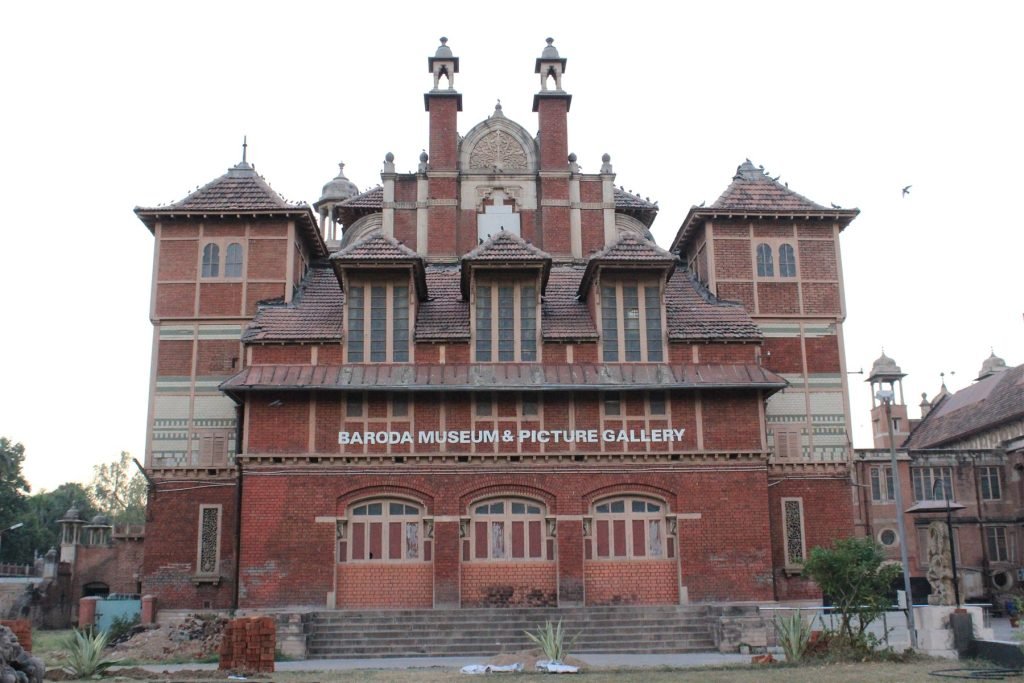 GALLERY
Baroda Museum
Art & picture gallery in Sayaji Baug
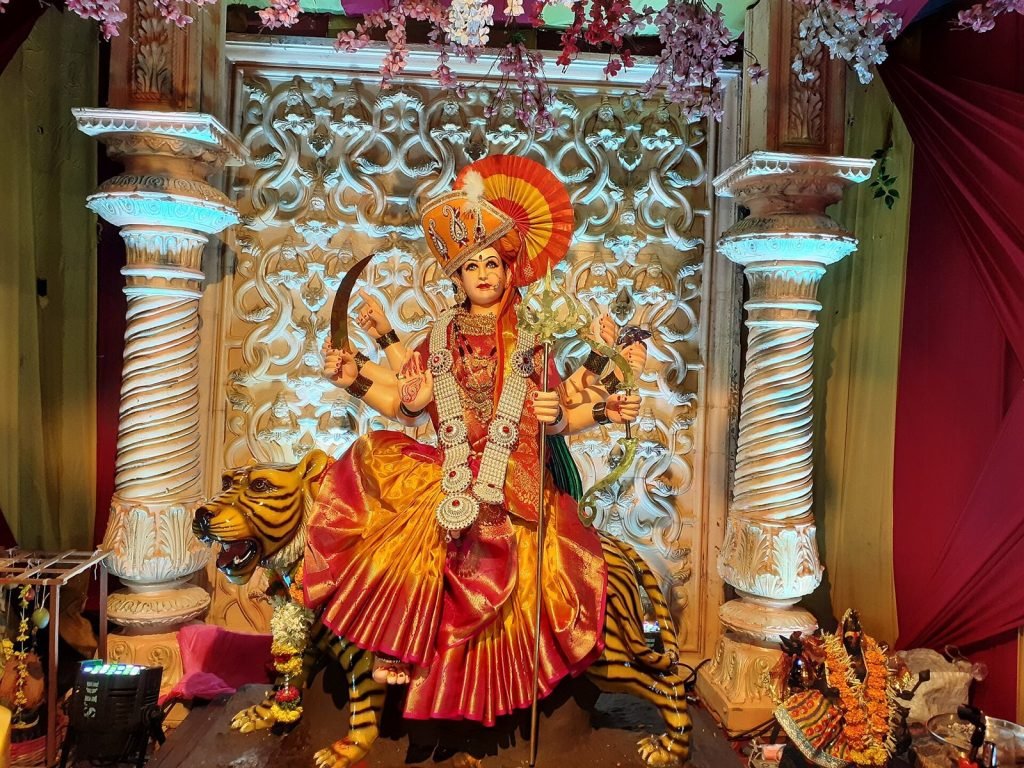 FAIR
FAIRMadhavpur Mela
Krishna-Rukmini’s celebrated spring wedding fair
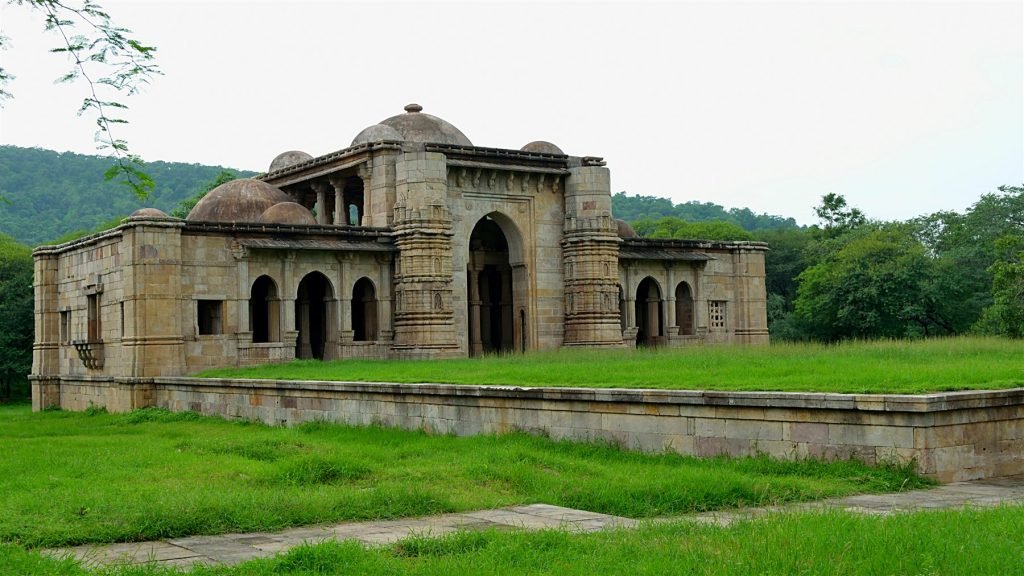 4
4Nagina Masjid
A jewel-like mosque standing alone in the fields
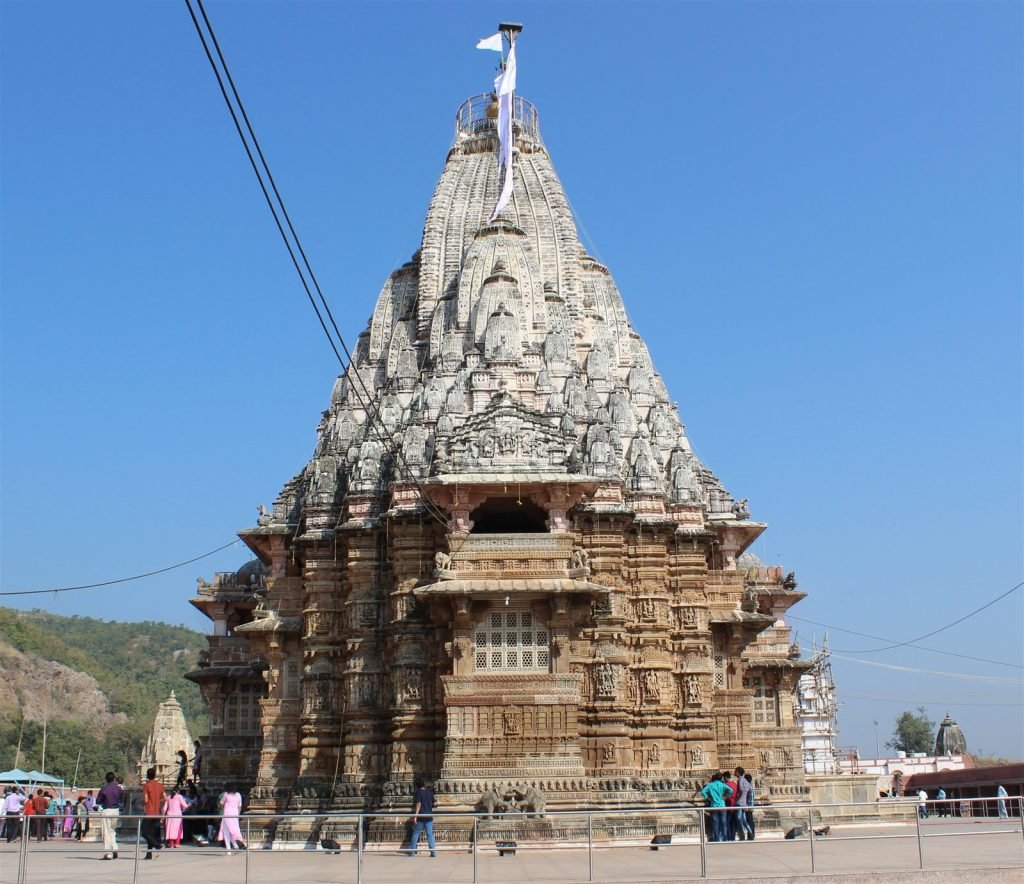 2
2Shamlaji Carvings
Marvel at the temple’s intricate sculptural panels
WHERE TO STAY
Find your stay in Gujarat
Compare live prices across the big booking sites and reserve in a few taps. Booking happens securely on the partner's site — we may earn a small commission at no extra cost to you.
Book directly on our partner sites — tap a provider to see live Gujarat hotels & prices:
SHOP THE REGION
Bring home Gujarat — & travel essentials
Hand-picked crafts and trip gear, available on Amazon.
Published 24 June 2026 · Updated 24 August 2026
We’re an independent group of writers and travellers documenting every corner of Gujarat — one place, plate and festival at a time.