Home › Ahmedabad › Mata Bhavani Stepwell
HERITAGE · STEPWELLAhmedabad's oldest stepwell — an 11th-century Hindu vav, weathered, serene and still worshipped, hidden beside its famous neighbour.
A few steps from the better-known Dada Harir vav lies a far older and quieter wonder. Mata Bhavani’s stepwell dates to around the 11th century — the Solanki era — making it one of the oldest surviving structures in Ahmedabad, predating the city itself by some four hundred years.
A long flight of weathered stone steps descends past tiers of carved pillars to the water, while a shrine to the goddess Bhavani, set into the well, is still tended and worshipped today. The carving is simpler and more eroded than at its Sultanate-era neighbours, but that age is precisely the point: this is living continuity, water and worship together, across a thousand years.
Because almost everyone visits Dada Harir instead, you may well have this ancient, atmospheric place entirely to yourself.
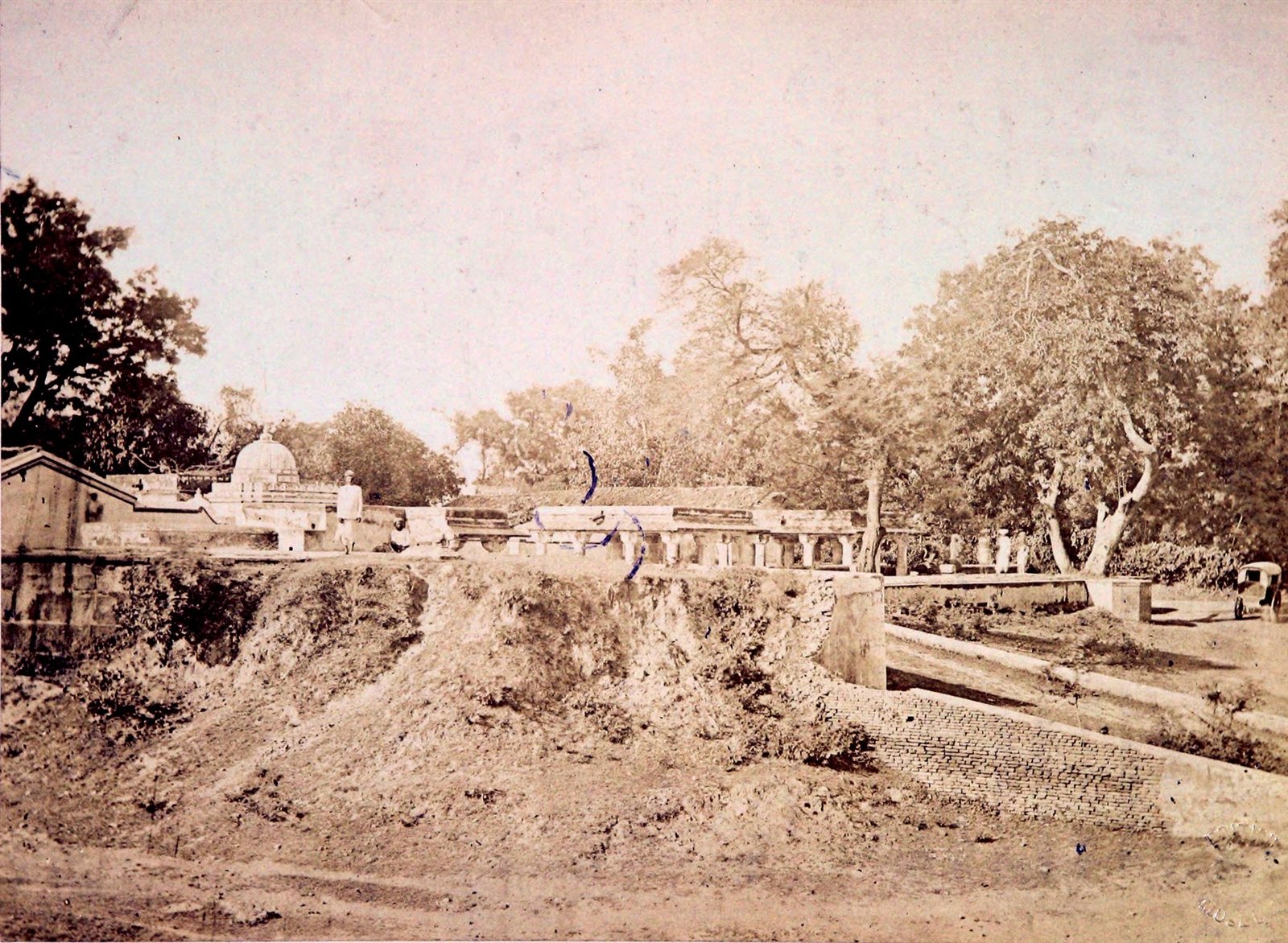
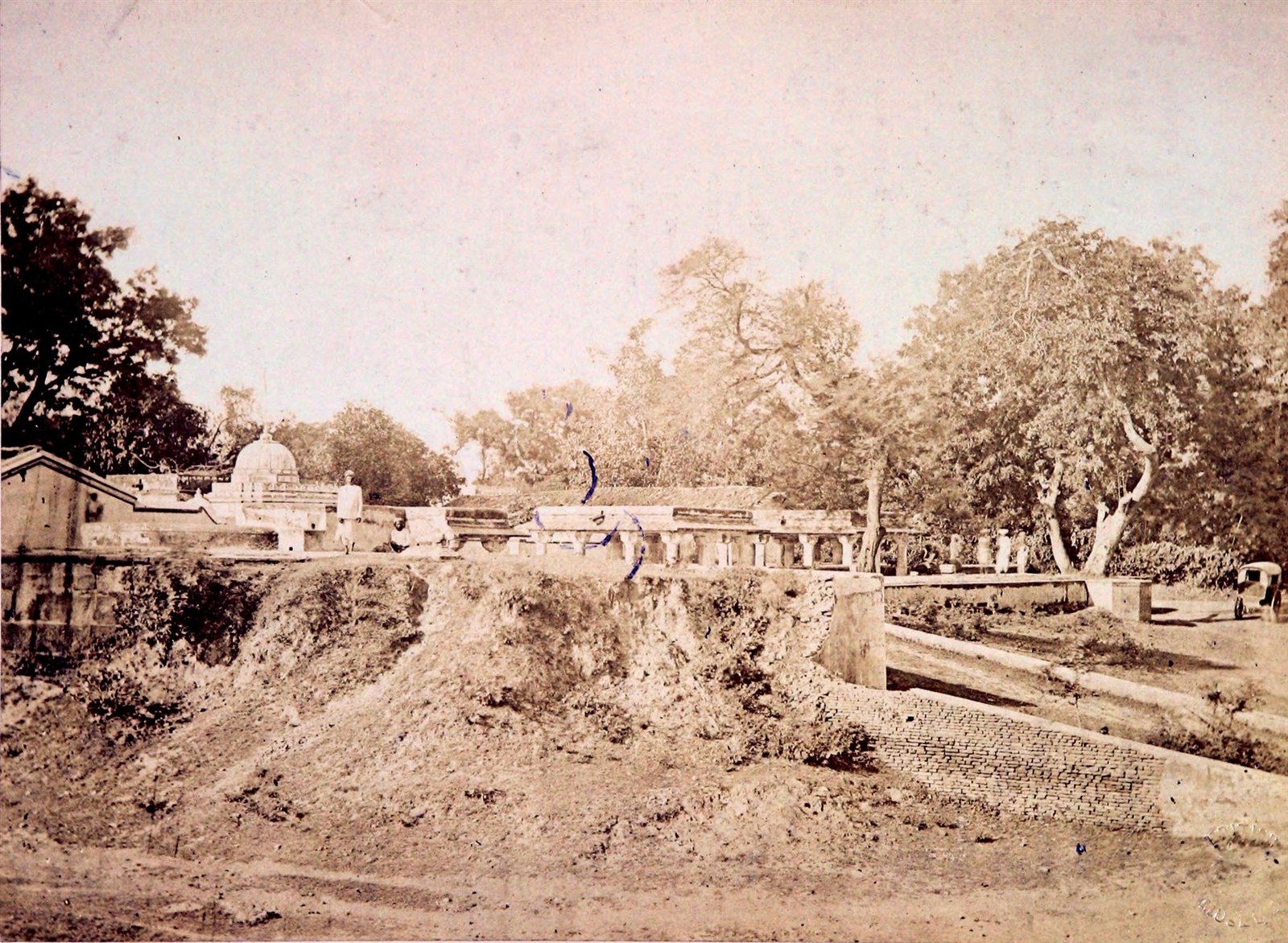
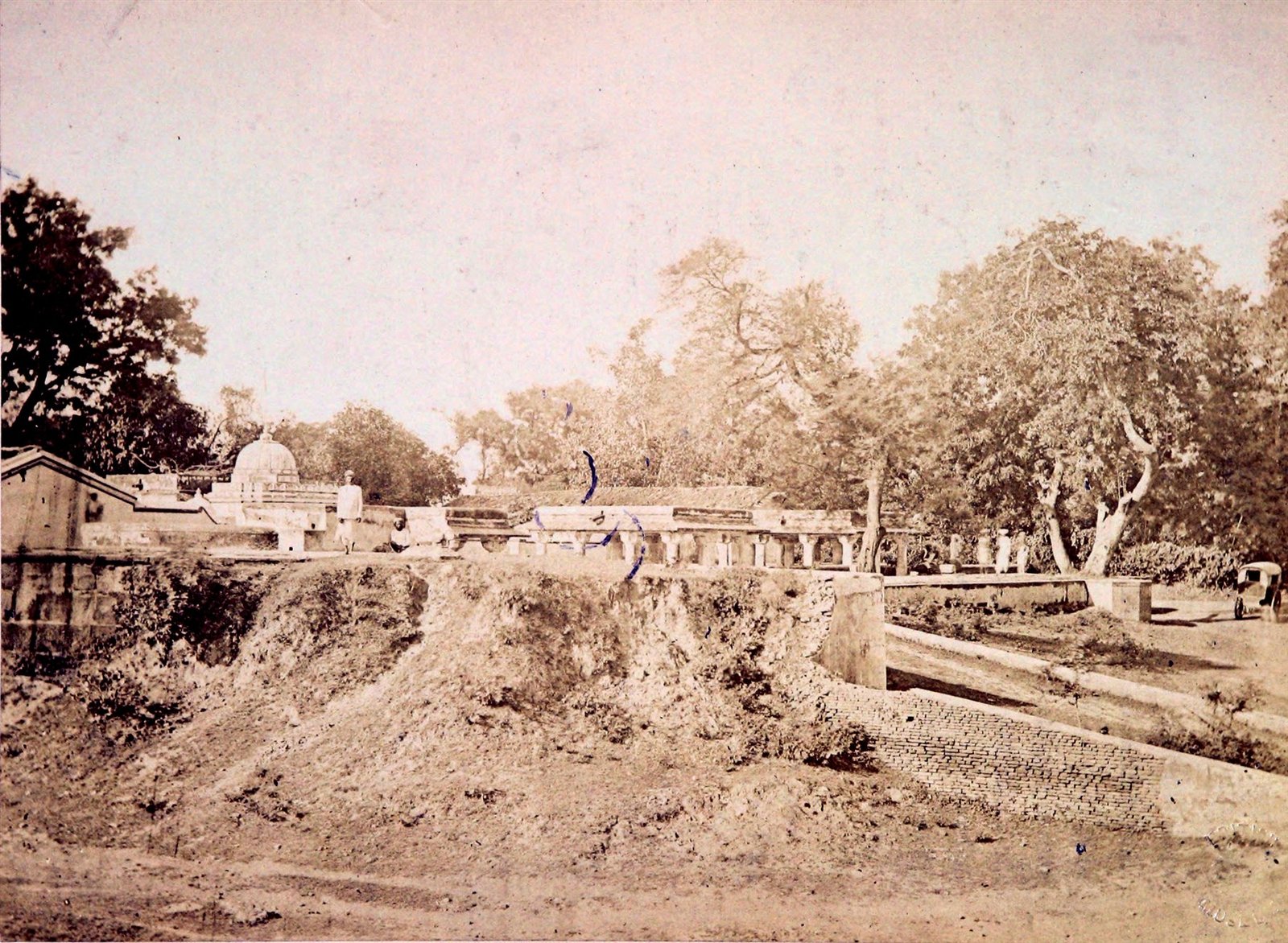
Mata Bhavani’s stepwell, photographed in 1866.
An ancient Solanki-era vav, still in use.
The vav is cut in the Solanki period, among the oldest structures in the region.
A shrine to goddess Bhavani is established and continuously worshipped.
The later city of Ahmedabad grows up around this far older site.
Quietly protected and overshadowed by the adjacent Dada Harir stepwell.
One of Ahmedabad's most ancient surviving structures.
The goddess Bhavani is still worshipped within the well.
Simple, weathered pillarwork from a thousand years ago.
Almost always quiet, unlike its famous neighbour.
Two stepwells, four centuries apart, side by side.
Worn stone and soft shadow reward a patient camera.
Worn steps falling to the old water line.
The living shrine set within the well.
Walk down the worn flight toward the old water level.
See the still-worshipped shrine to goddess Bhavani.
Note how much simpler it is than Sultanate-era Dada Harir next door.
Trace the eroded Solanki-period carving.
Linger in a thousand-year-old space few visitors reach.
The grander 1499 stepwell is just steps away.
Tiered pillars descend to the water.
Mata Bhavani’s vav is an early, relatively plain example of the Gujarati stepwell — a long stepped corridor descending through tiers of stone pillars to the water table, with a shrine niche worked into the structure. Its forms are simpler and more eroded than the ornate Sultanate vavs that followed, reflecting both its great age and its primary role as a sacred water source.
That restraint is its charm. Where later stepwells dazzle, this one quietly endures — a working piece of Solanki-era engineering that has served the same purpose, water and worship, for roughly a thousand years.
~11th-century Solanki vav
Tiered stone pillars
An in-built living shrine
Among the city’s oldest sites
Cool and bright — the most pleasant time to be out across Ahmedabad.
The city greens up and the heat breaks with brief, refreshing showers.
Hot and dry, often 40°C+. Best enjoyed early morning or after sunset.
⏰ Visit by day and pair it with Dada Harir next door — late morning light reaches deepest into the steps.
SVP International Airport is about 9 km away — roughly a 25-minute cab ride.
Ahmedabad Junction is around 4 km; Asarwa is near the civil hospital area.
In Asarwa, right beside Dada Harir; autos and cabs reach it easily.
AGE & SHADOW
Late morning reaches furthest down the stepped corridor.
The descending steps, the tiered pillars and the shrine niche.
Keep the active shrine area calm and unstaged.
Lower levels are dim — steady your camera rather than use flash.
Shrine to the city's guardian goddess
Grand 1424 congregational mosque
Host of the grand Rath Yatra procession
A bold museum of conflict & identity
Carved havelis on the heritage walk
By night the old jewellers' square turns into a buzzing street-food bazaar.

An evening lane of carts serving Gujarati chaat, sandwiches and sweets.

Fresh fafda-jalebi, dabeli and khaman in the lanes of the walled city.
Ahmedabad is famously veg-friendly — expect superb thalis and farsan.
In Asarwa, north-east Ahmedabad, right beside the Dada Harir stepwell.
Around the 11th century (Solanki era) — one of the city's oldest structures.
No, entry is free.
It's open during daylight hours.
Yes — a shrine to goddess Bhavani within the well is still tended.
It's far older and simpler, and usually much quieter.
About 20 to 30 minutes.
Yes; they're a minute apart in Asarwa.
Yes; just be respectful around the shrine.
Take a cab or auto to Asarwa/Dada Harir; the vav is alongside.
WHERE TO STAY
Compare live prices across the big booking sites and reserve in a few taps. Booking happens securely on the partner's site — we may earn a small commission at no extra cost to you.
SHOP THE REGION
Hand-picked crafts and trip gear, available on Amazon.