Home › Chhota Udaipur › Adivasi Museum
TRIBAL MUSEUM · CULTURE · CHHOTA UDAIPURGujarat's most important Adivasi cultural institution — the Tribal Research and Training Institute museum in Chhota Udaipur, a comprehensive collection of Adivasi material culture, Pithora art, traditional instruments, dress and tools from the tribal communities of eastern Gujarat.
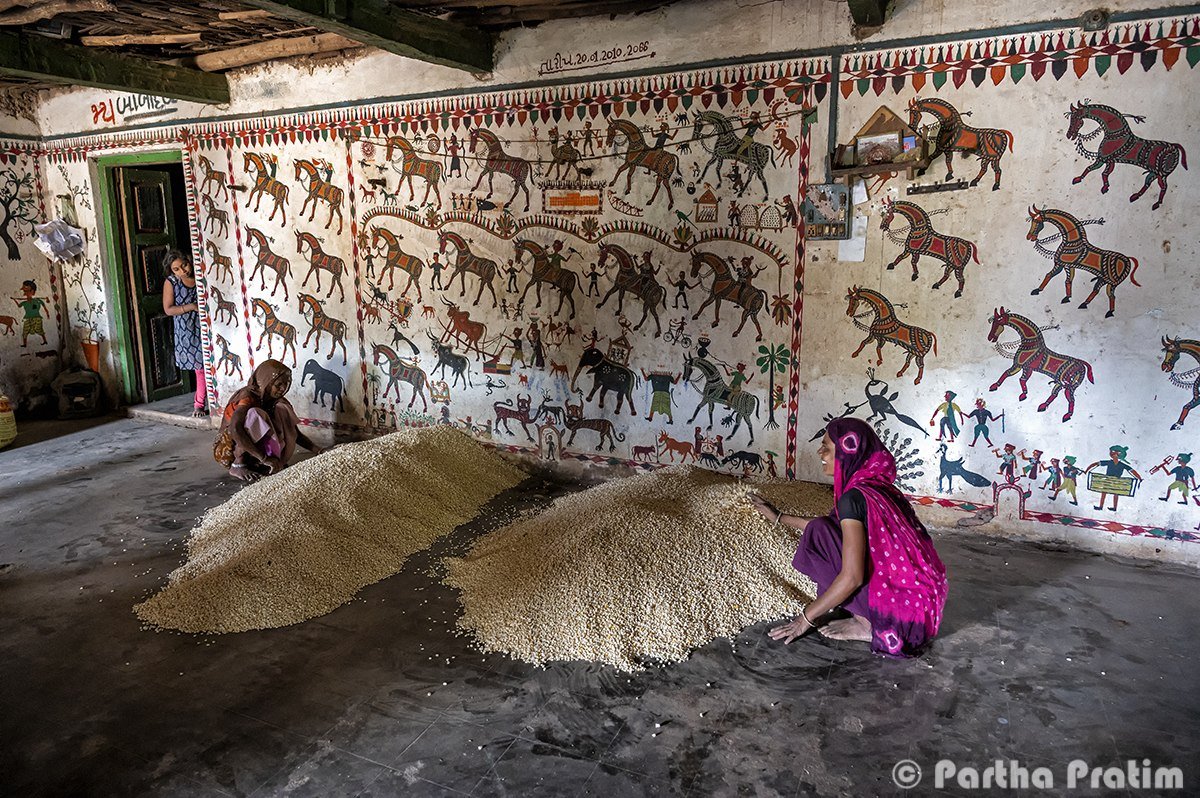
The Adivasi Museum in Chhota Udaipur — operated under the Tribal Research and Training Institute (TRTI) — is the most important repository of Adivasi cultural material in Gujarat, dedicated to the tribal communities of the state and particularly those of the eastern districts: Rathwa, Bhil, Bhilala, Nayaka, Dhanka and Gamit. The collection includes Pithora paintings (both historical examples and contemporary work), traditional musical instruments, agricultural and hunting tools, ritual objects, dress and jewellery, domestic craft and documentation of tribal festivals and practices.
The museum provides the best single introduction to the cultural world of Gujarat’s Adivasi communities — a context for understanding Pithora art, the Kawant fair, Rathwa architecture and the tribal ecology of eastern Gujarat before visiting villages and sites in the district. Chhota Udaipur is one of the few places in India where a tribal museum sits at the centre of the cultural district it represents, rather than in a distant city.
Operated by TRTI, the museum is best treated as a first stop on any Chhota Udaipur trip. Check opening hours before arriving, and note that photography may be restricted inside the galleries.
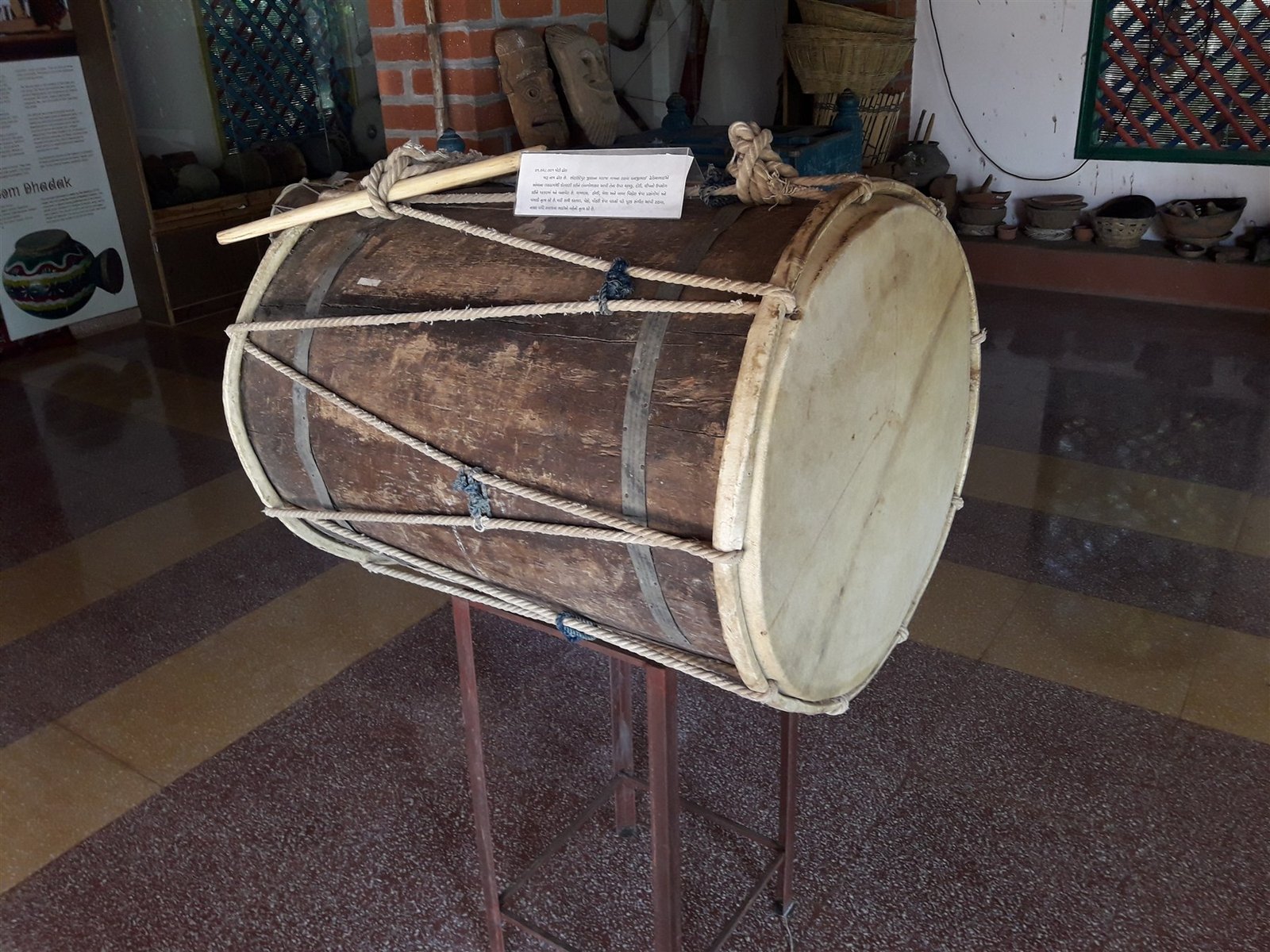
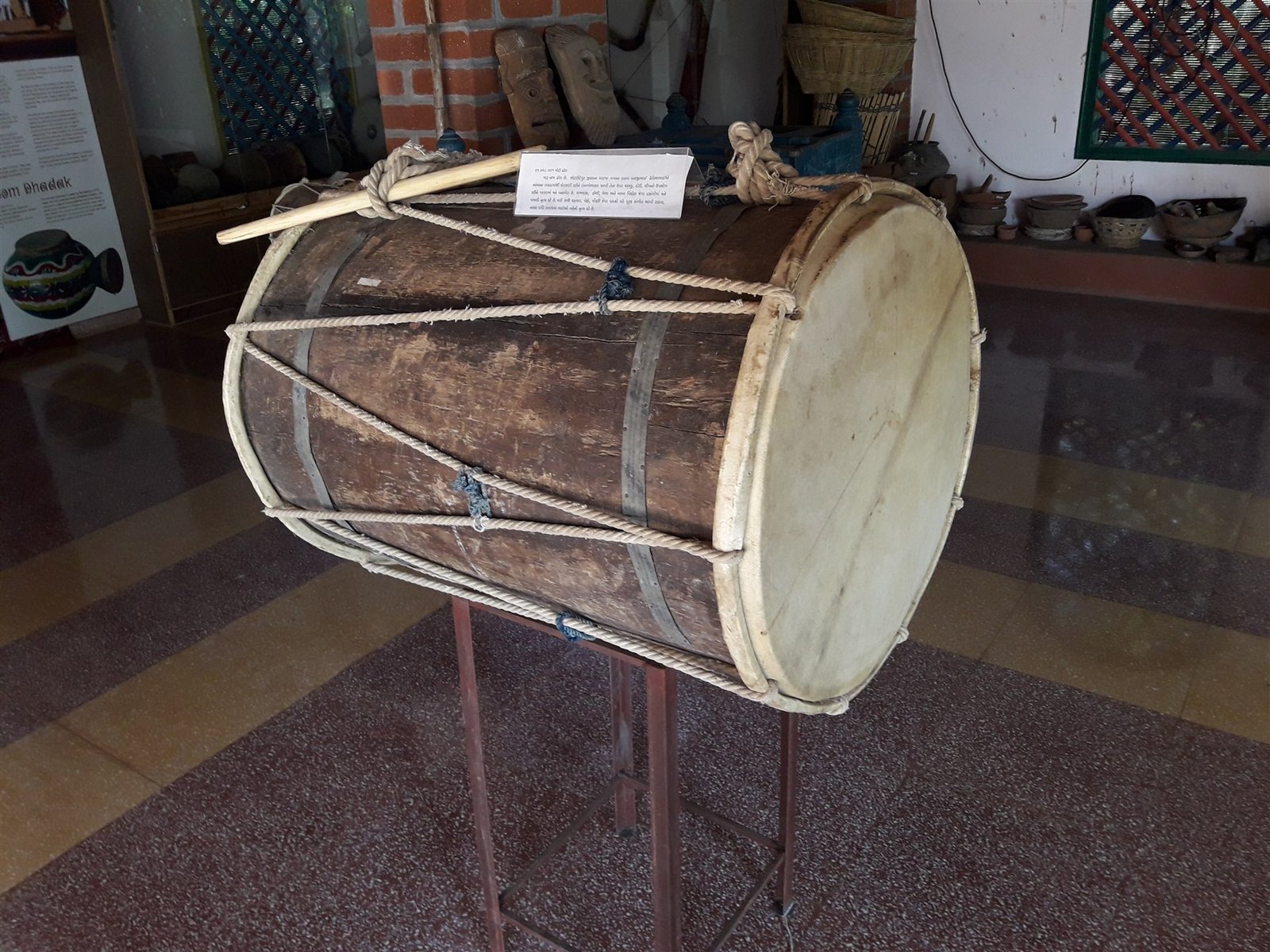
Adivasi dhol — the tribal drum of eastern Gujarat.
Traditional Adivasi dhol — tribal drum of Gujarat.
State tribal research institute.
Decades of field collection.
Central to the display.
Gujarat's leading Adivasi museum.
Best tribal context.
Original paintings.
Tribal music.
Silver and textile.
Before village visits.
Rathwa and Bhil.
Tribal music.
Sacred art.
The dhol, flute and rhythm of eastern Gujarat.
Pithora art in its documented ritual context.
Traditional Adivasi dress and jewellery.
Agricultural, hunting and domestic craft.
Context first — start here before heading out to the villages.
Original paintings, the museum's centrepiece collection.
The dhol and other traditional tribal instruments.
Silver jewellery and woven textile on display.
Festival context for the region's great tribal gathering.
Pick one up at the museum, if available.
Adivasi dhol — tribal instrument, eastern Gujarat.
The TRTI museum collects and displays material from all of Gujarat’s Adivasi communities, but its core strength is the eastern Gujarat tribes — particularly Rathwa and Bhil. The Pithora collection is the museum’s centerpiece, including both historical paintings and documentation of the ritual context.
Operated by the Tribal Research and Training Institute, the museum gathers decades of field-collected material into one place. Check current opening hours before visiting, as access and photography may be restricted inside the galleries.
Tribal Research and Training Institute museum
Comprehensive Rathwa and Bhil material culture
Pithora paintings — historical and contemporary
Traditional instruments, dress, tools and ritual objects
Cool & clear — ideal. Comfortable all day and perfect for unhurried wandering through the galleries.
Lush, with a minor flooding risk on rural roads. Green and atmospheric, but check conditions first.
Hot in eastern Gujarat. Still doable — come in the early mornings before the heat builds.
⏰ October to February is ideal for Chhota Udaipur.
Vadodara airport is the nearest, about 100 km away, with onward road connections into Chhota Udaipur.
Bodeli and Chhota Udaipur are the nearest railheads, linked onward by road to the town and museum.
NH-56 from Vadodara is the main approach; the museum sits in Chhota Udaipur town itself.
CHECK BEFORE YOU SHOOT
Photography may be restricted inside; check with staff before shooting in the galleries.
The Pithora paintings, instruments and dress make the strongest frames, where permitted.
These are sacred and cultural objects — shoot quietly and never use flash near fragile work.
Outdoor approaches and the town read best in the cool, clear winter light.
Comfort home cooking.
Forest produce & millet.
Tribal staple.
Beyond the thali, look for forest honey and millet dishes from the Adivasi villages.
The TRTI tribal heritage museum in Chhota Udaipur — Gujarat's most important Adivasi cultural collection.
Pithora art, traditional instruments, dress, tools and ritual objects of eastern Gujarat's tribes.
Check current hours at the gate — it is run by TRTI and timings can vary.
Ask first — photography may be restricted inside the galleries.
One to two hours is comfortable for the full collection.
Visit the museum before village trips, for context on Pithora art and tribal life.
October to February, when Chhota Udaipur is cool and clear.
Via NH-56 from Vadodara (about 100 km), with Bodeli and Chhota Udaipur as the nearest railheads.
Ritual bathing where rivers meet the sea
Sweet sugar-cane & chikoo country
A Shiva shrine at the Saraswati's source
Thousands of traditional utensils
Ruins of a colossal Shiva temple in Sidhpur
A 16th-century riverside fort by the Tapi
WHERE TO STAY
Compare live prices across the big booking sites and reserve in a few taps. Booking happens securely on the partner's site — we may earn a small commission at no extra cost to you.
SHOP THE REGION
Hand-picked crafts and trip gear, available on Amazon.