Bharuch is one of the oldest continuously inhabited cities in India and one of the least visited. It stands on the north bank of the Narmada, a few kilometres from where the river reaches the Gulf of Khambhat, and it has been a port for well over two thousand years — appearing in Greek and Roman sources as Barygaza, trading cotton, spices, ivory and semi-precious stones with Egypt and the Mediterranean, and turning up in Buddhist and Jain texts as Bharukachchha.
Almost nothing of that survives above ground, which is part of why the city gets so little attention. What Bharuch has instead is an atmosphere of long, worn, working antiquity: a hill of dense old lanes above the river, a temple to the sage the city is named after, an iron bridge from 1881 that locals call golden, the tombs of Dutch and English traders, and the general condition of a place that was very important for a very long time and is now a mid-sized industrial city that trains rush through.
A port that traded with Rome
The evidence for ancient Bharuch is textual rather than architectural. The Periplus of the Erythraean Sea, a first-century Greek merchant's handbook to the Indian Ocean, describes Barygaza in detail: its difficult approach up the Narmada estuary, the local pilots who guided ships through the tidal bore, the goods traded, and the kingdom behind it. Ptolemy mentions it. Indian sources going back much earlier refer to Bharukachchha as a major port, and it appears repeatedly in Jain and Buddhist literature.
That estuary is the key to everything. The Narmada's mouth gave inland Gujarat and, through it, the whole trade network of northern and central India access to the sea, and Bharuch sat at the hinge. It remained a significant port through the medieval period, was fought over by the Sultans of Gujarat, the Mughals and the Marathas, and became a British possession — by which time silting and the growth of Surat and later Bombay were already reducing its commercial importance.
What a visitor sees of this is the shape of the city rather than its monuments: a fortified core on high ground above the river, lanes descending towards the water, the remains of the old fort walls and gateways in places, and a riverfront that is obviously the reason the place exists. It requires imagination. Reading a page about Barygaza before you arrive changes the visit completely.
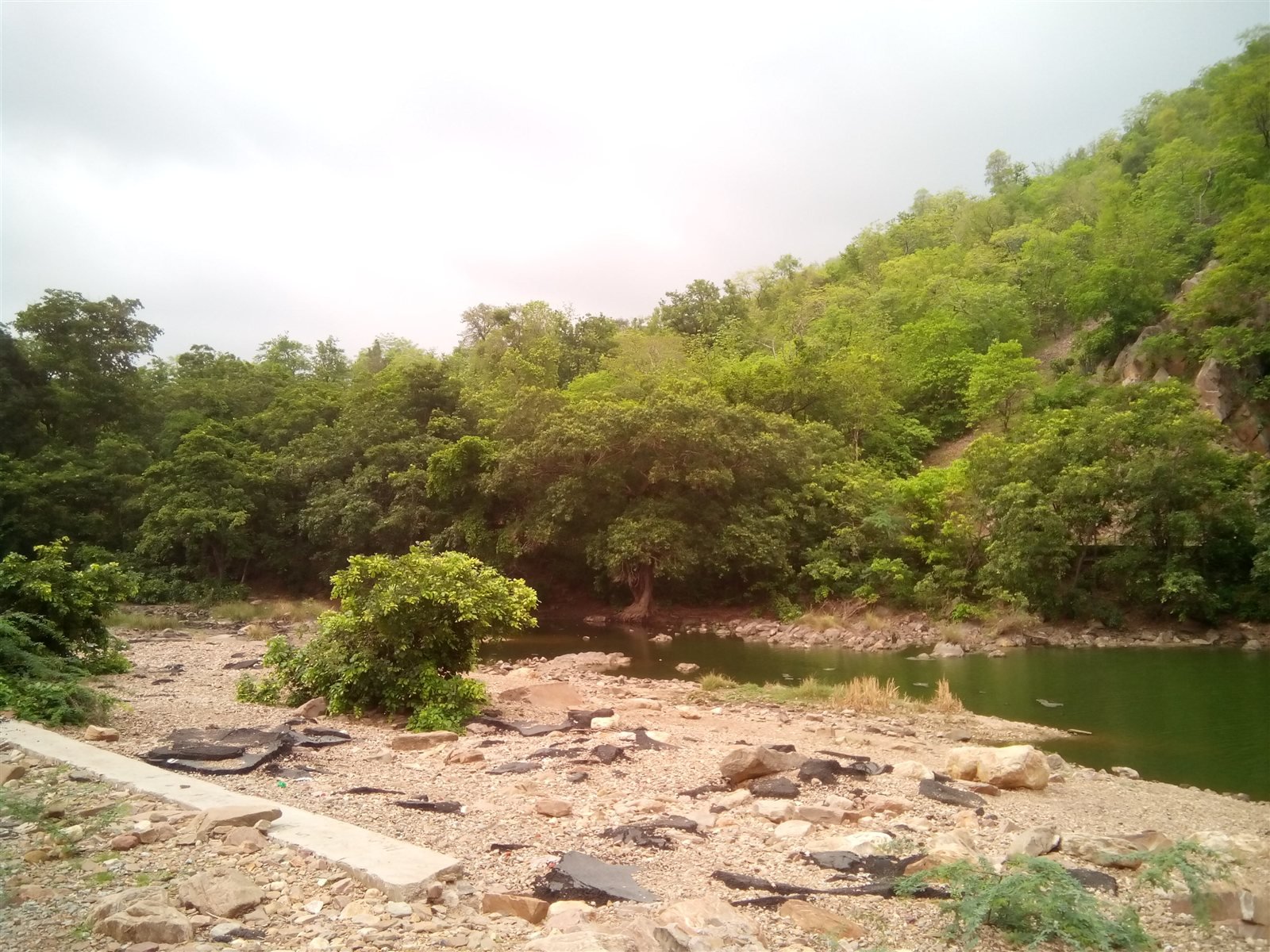
An 1881 iron bridge over the Narmada, in a city that was trading with Rome.
The Golden Bridge
The most recognisable thing in Bharuch is a piece of Victorian engineering. The Golden Bridge, opened in 1881, carries the road and formerly the railway across the Narmada on iron spans brought from England, and it was a substantial undertaking — the river here is wide, tidal and prone to violent floods. The name is generally explained by the enormous cost of the project, spectacular by the standards of the time, though the low sun on the ironwork does the story no harm.
Named golden for what it cost, not what it is made of — an 1881 iron bridge across a wide, tidal, flood-prone river
It is still there and still striking, particularly from the riverbank or from the newer bridges alongside, and the view along it at either end of the day is the best photograph in Bharuch. The bridge also carries a good deal of local pride, and it appears on more or less everything the city produces by way of promotional material. For anyone interested in colonial-era engineering it is a genuinely significant structure, and it is entirely uncelebrated by the wider tourism industry.
Just as interesting, and much odder, are the European tombs. Bharuch had Dutch and English trading factories, and the cemeteries hold the graves of merchants and their families from the seventeenth and eighteenth centuries — substantial, decaying, occasionally grand monuments to people who came a very long way to trade cotton and died of fever. They are not always easy to access and they are not maintained as attractions, but they are among the most evocative things in the city.
Bhrigu Rishi, and the name of the city
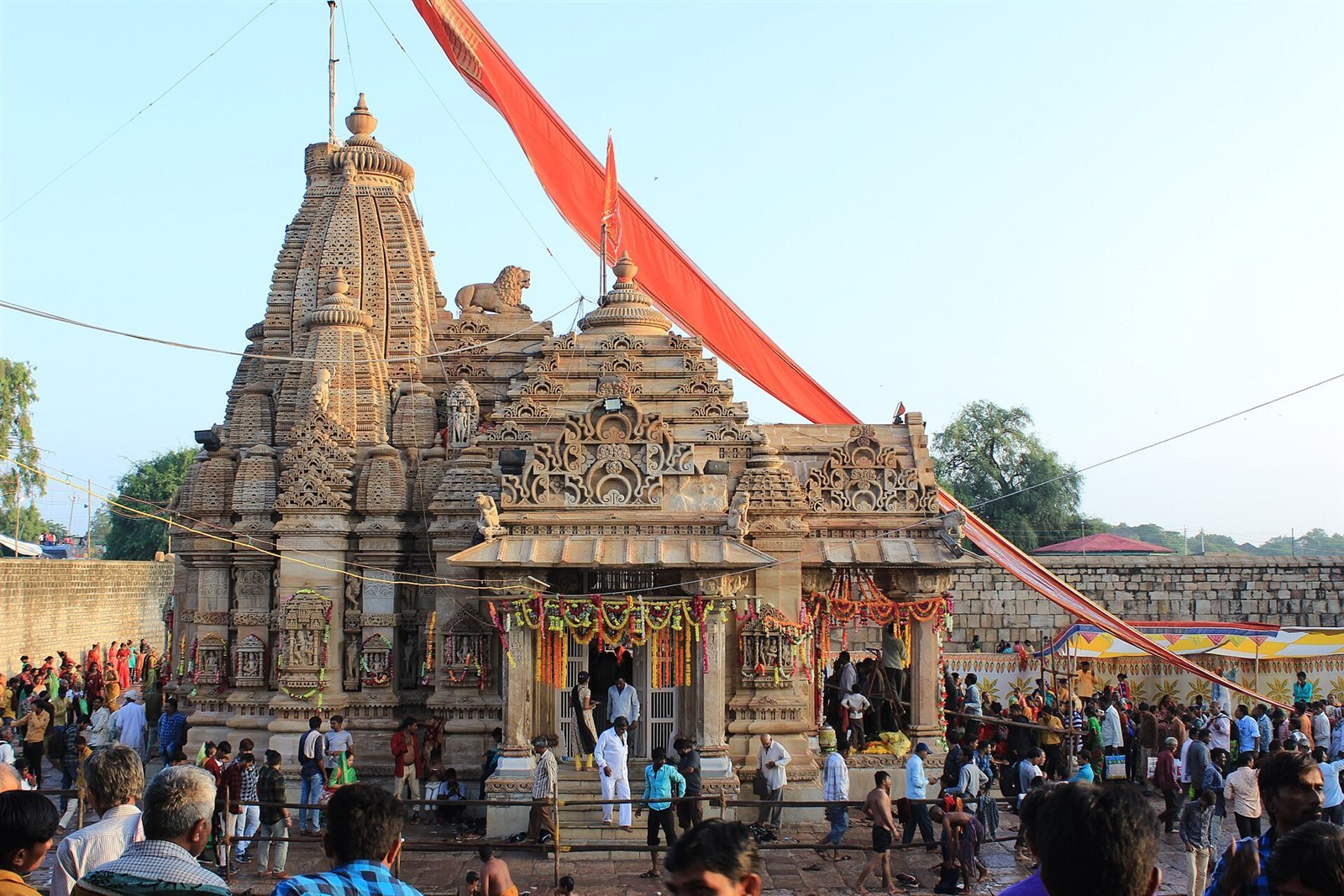
Bharuch takes its name, by tradition, from the sage Bhrigu — Bhrigukachchha, the shore of Bhrigu, worn down over centuries into Bharuch — and there is a temple to him above the river in the old city. It is a modest, active, locally important shrine rather than a grand monument, and its interest is largely in the direct link between a living temple and the etymology of a two-thousand-year-old city name.
The rest of the old city rewards a walk. There is the Jama Masjid, built using material from earlier structures as was common across Gujarat; the fort area on the high ground with its views over the Narmada; old havelis and dense bazaar lanes; and the ghats on the river. Bharuch is also known for its sing dana, the local groundnuts, and for khaman and other Gujarati farsan of a good standard. None of it is packaged; all of it is walkable in a morning.
Practicalities and what is nearby
Bharuch is exceptionally easy to reach and that is its great advantage: it sits on the main Mumbai–Delhi railway line with frequent express services, on the national highway, roughly 200 km from Ahmedabad, 70 km from both Surat and Vadodara, and 300 km from Mumbai. Vadodara and Surat have the nearest airports. Within the city, auto-rickshaws cover everything.
Two or three hours does the old city, the bridge and the temple. To justify the stop properly, add Kabirvad — the great banyan on its Narmada island, reached by boat from Shuklatirth about 20 km east — and, if you have a day, push on to Rajpipla, Garudeshwar and the Statue of Unity, all within a couple of hours. October to March is the comfortable season; the monsoon makes the river dramatic and the humidity unpleasant. Accommodation in Bharuch and neighbouring Ankleshwar is functional business-hotel stock, adequate rather than appealing.
If you go
- Read a page on Barygaza before you arrive. Bharuch's antiquity is textual rather than architectural, and context is everything here.
- Photograph the Golden Bridge early or late from the riverbank or an adjacent bridge — it is the city's best view.
- Ask locally about the Dutch and English tombs; they are unmaintained and hard to find but the most evocative thing in town.
- Walk the fort-area lanes and the ghats, and stop for khaman and the local groundnuts.
- Combine with Kabirvad's great banyan 20 km east, and continue to Rajpipla and the Statue of Unity if you have a day.
Bharuch is a city to read your way into. There is no monument that announces two thousand years of trade with Rome and Egypt; there is a hill of worn lanes above a tidal river, a temple to the sage the city is named for, the graves of Dutch merchants, and a magnificent iron bridge from 1881 that the locals call golden because of what it cost. Give it a morning, add the great banyan at Kabirvad, and you have one of the most underrated days in Gujarat.