Home › Ahmedabad › Sidi Saiyyed Mosque
HERITAGE LANDMARKThe little mosque with the world-famous window — Ahmedabad's 'tree of life' carved from a single sheet of stone.
Small, low and easy to miss, the Sidi Saiyyed Mosque holds one of India’s most copied images. In its rear wall, ten semicircular stone screens are pierced into lacework — and one, the ‘tree of life’, spreads a single palm and its tangled tendrils across the stone with astonishing delicacy.
Built in 1572–73, in the dying years of the Gujarat Sultanate, the mosque was endowed by Sidi Saiyed, an Abyssinian noble in the service of the Sultanate. The carving is its glory: jaali screens so fine they read more like embroidery than masonry.
That tree-of-life window is now everywhere — the emblem of the city, the logo of the Indian Institute of Management Ahmedabad, and a motif on everything from saris to souvenirs. Step inside, look up at the light filtering through the stone, and you understand why.
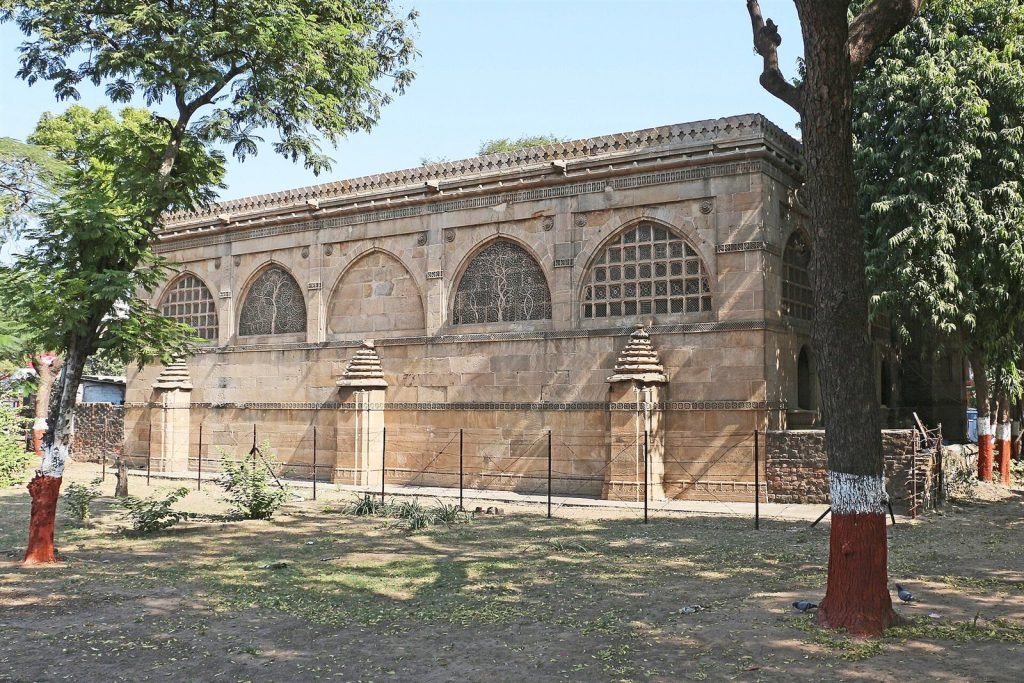
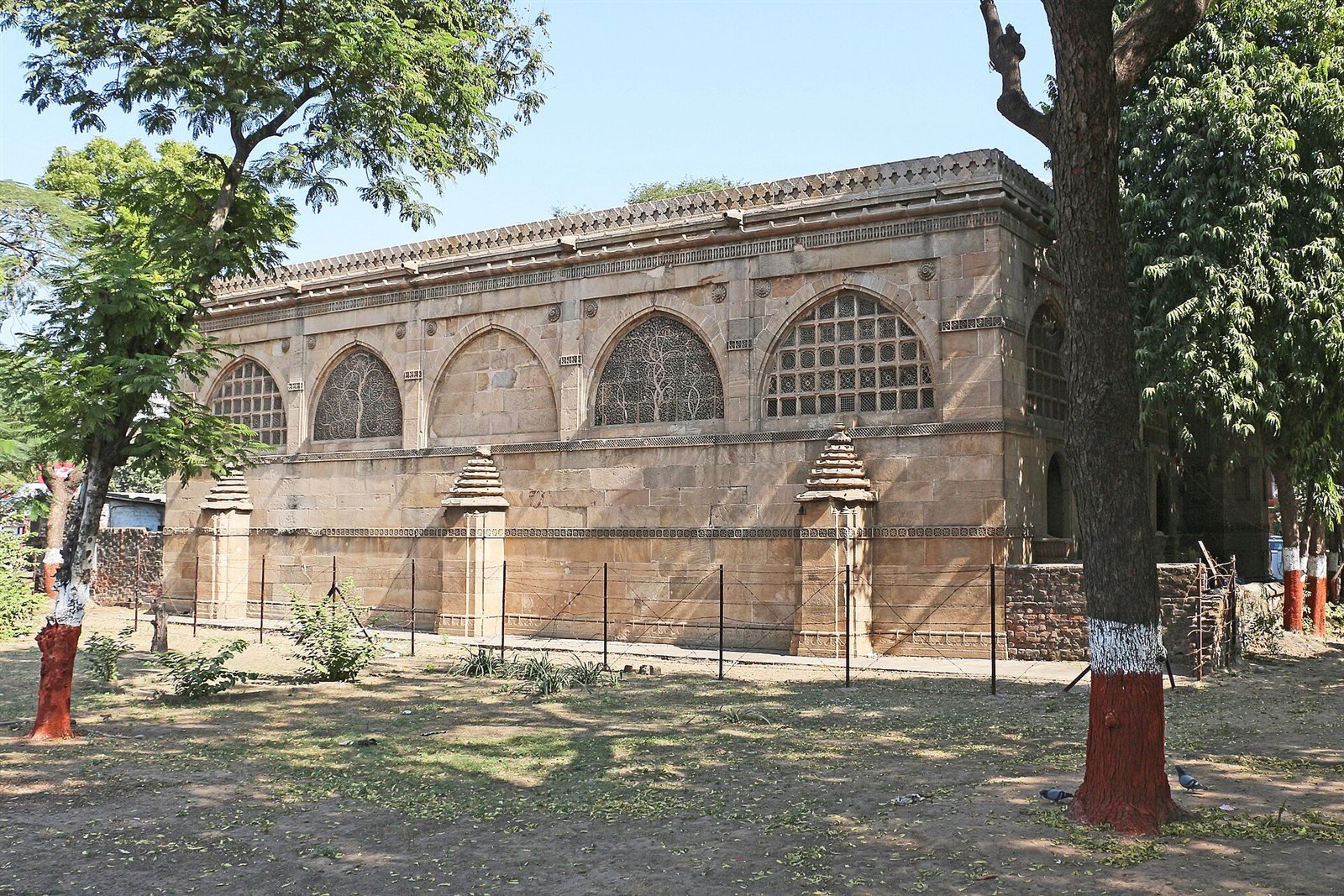
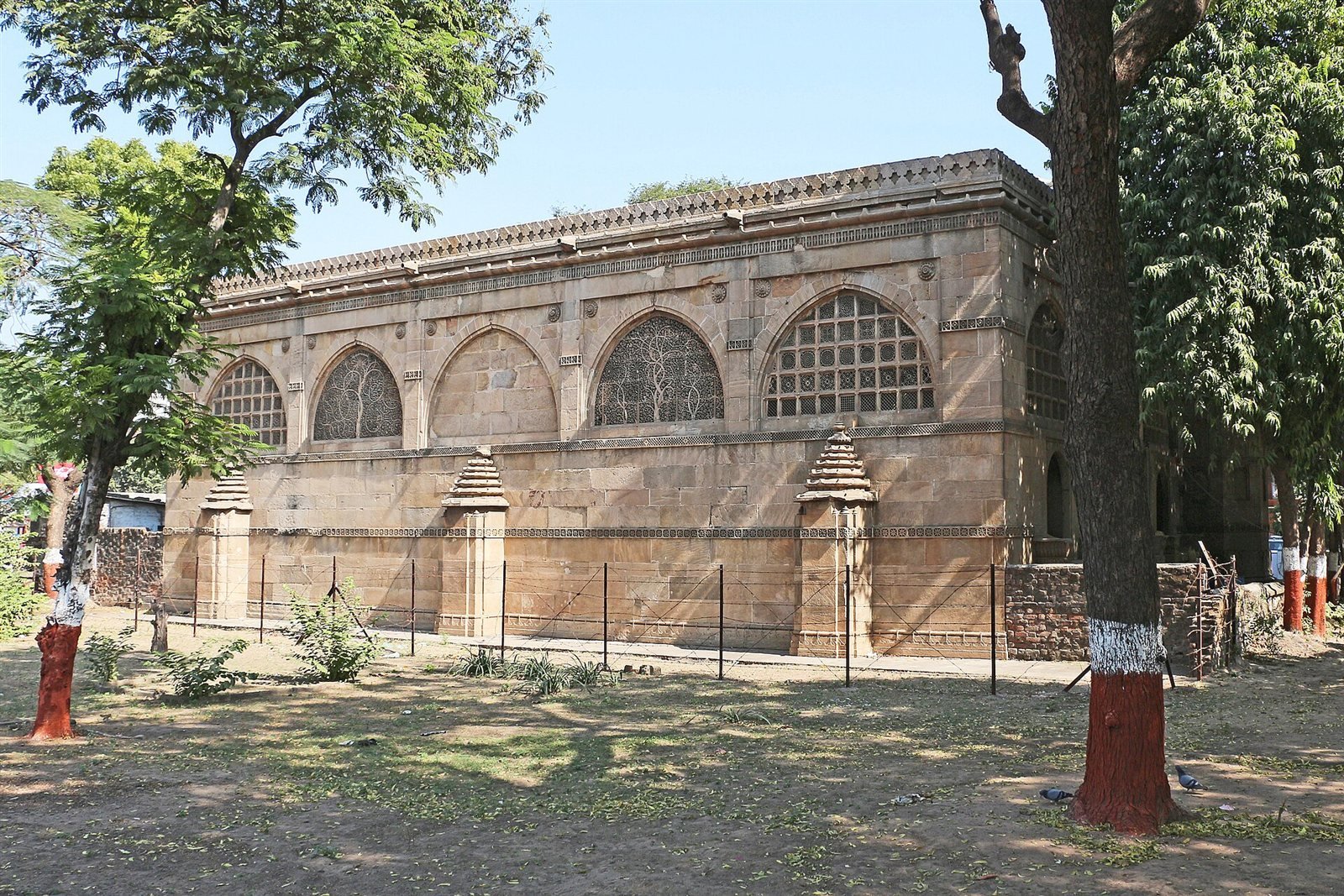
Arched bays of the late-Sultanate mosque.
The mosque endures in the heart of the walled city.
Sidi Saiyed, a noble of the Gujarat Sultanate, endows the mosque in its final years.
Mughal emperor Akbar annexes Gujarat soon after; the mosque survives the transition.
The 'tree of life' jaali is admired worldwide and copied as a decorative motif.
Its lattice becomes the emblem of Ahmedabad and the logo of IIM Ahmedabad.
See the original of the carving copied onto a thousand logos and souvenirs.
Ten jaali screens so fine they look woven rather than cut.
Right in the walled city, open to all, with no ticket.
Backlit lattice and pools of patterned light reward a patient lens.
Half an hour here adds a highlight to any old-city walk.
A working mosque and a national monument in one modest building.
The carved window that became a city's symbol.
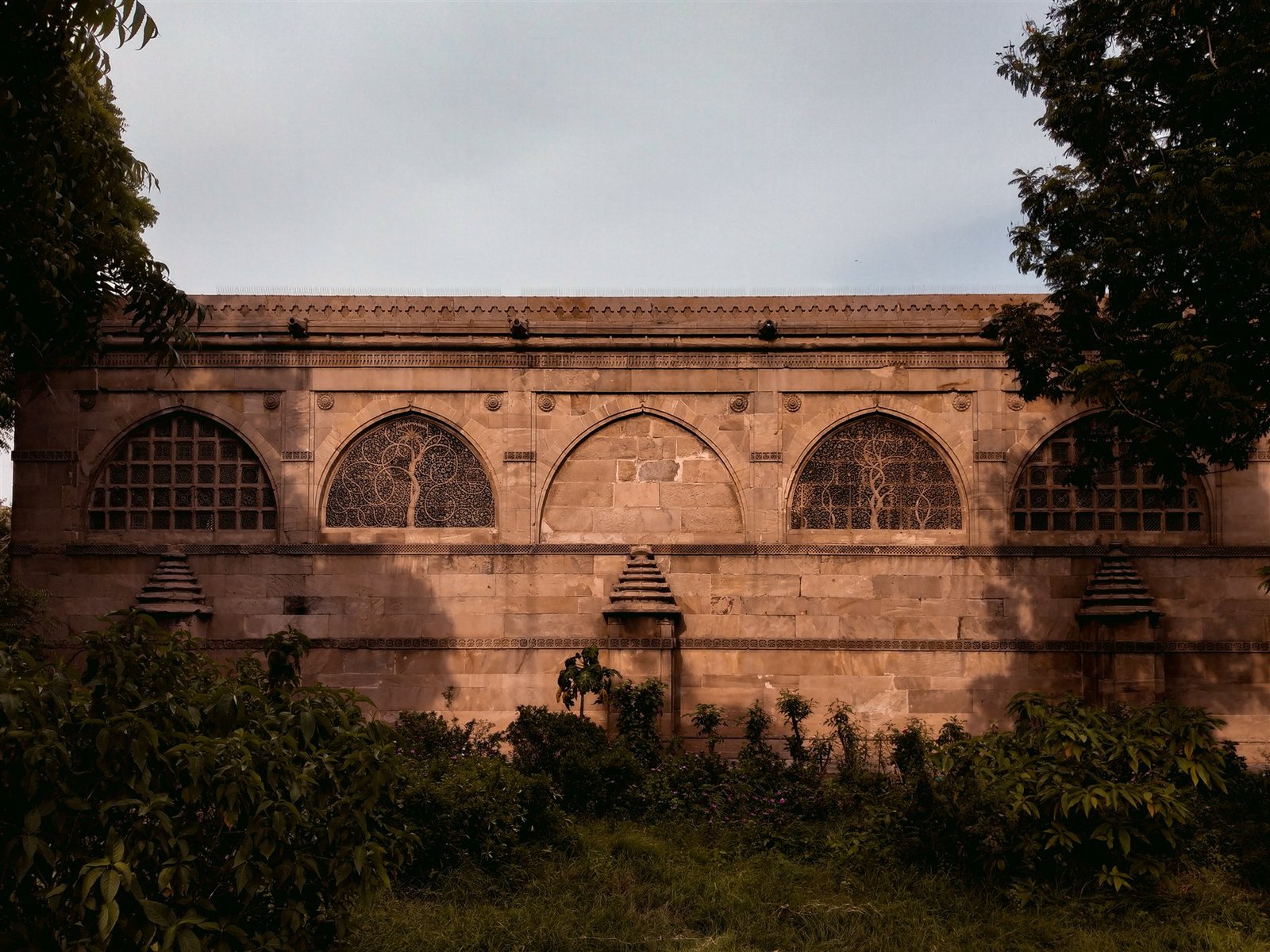
A modest late-Sultanate structure in yellow stone.
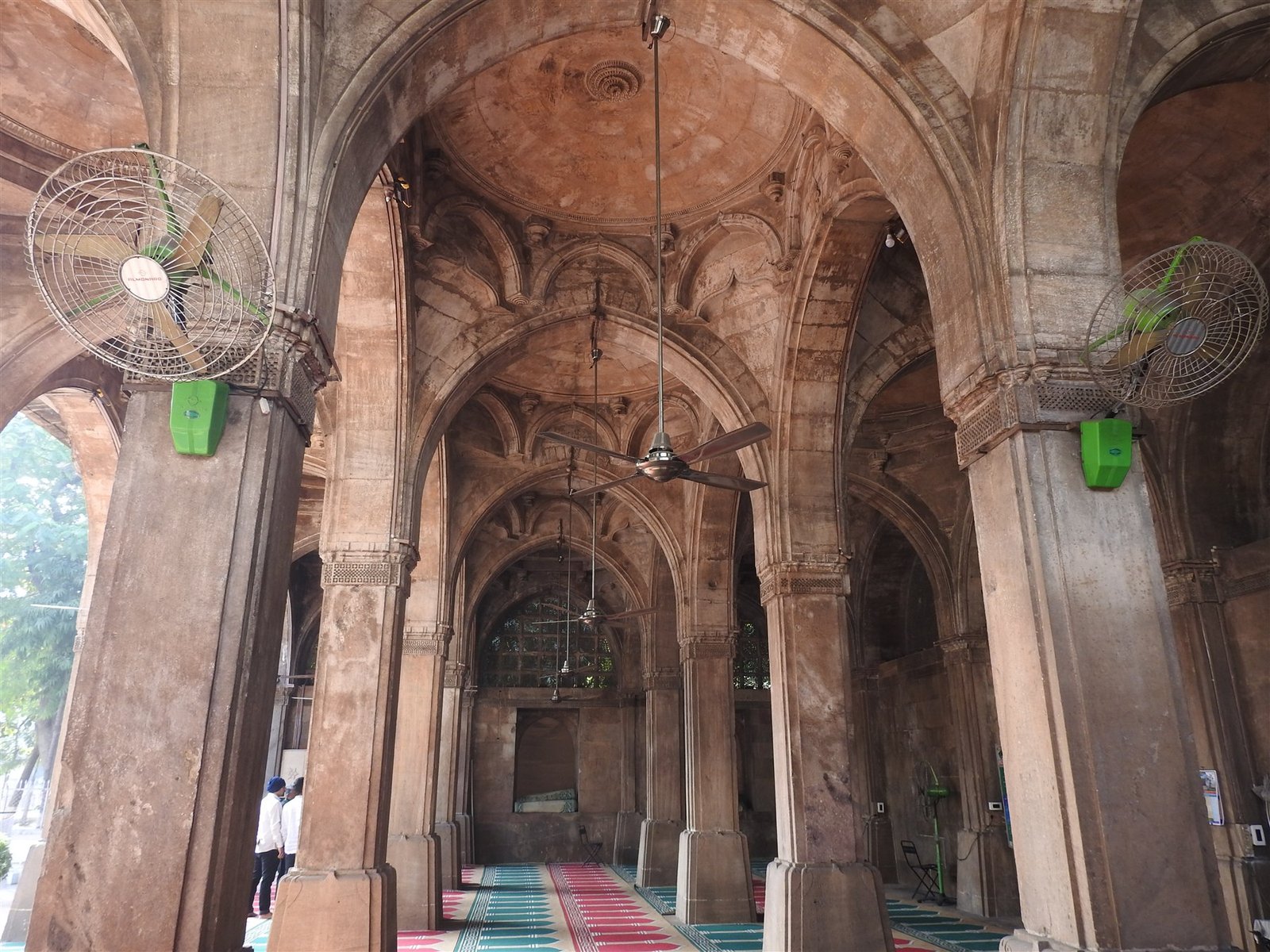
Light filtering through the pierced stone.
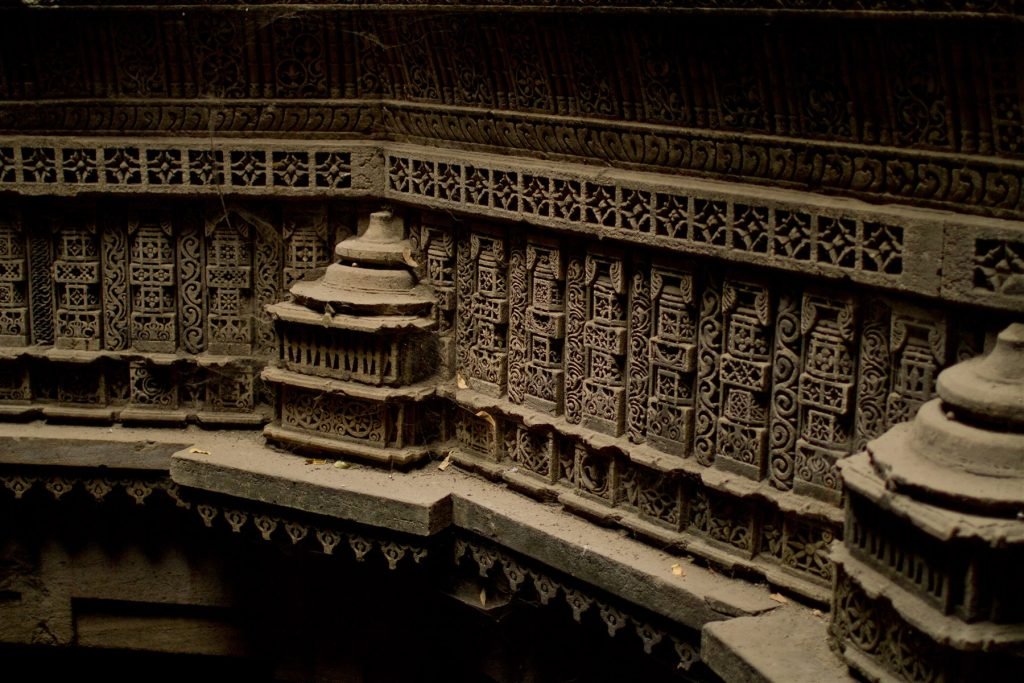
Head to the rear wall for the famous jaali and let your eyes follow every tendril.
See how the sun throws the lattice pattern across the floor as the day moves.
Compare all ten windows — each is a different study in pierced stone.
Shoot from inside looking out for the classic glowing-lattice frame.
Learn how an Abyssinian noble's endowment became a global design icon.
Pair it with Teen Darwaza and the heritage lanes a few minutes away.
Yellow-sandstone walls and finely pierced screens.
The mosque is built of warm yellow sandstone in the restrained late-Sultanate style. Its fame rests entirely on the jaali — the perforated stone screens of the rear wall. Where most jaalis use geometric grids, here the carvers attempted something organic: an intertwined tree with curling branches, leaves and palm fronds, all rendered in shallow, flawless relief.
The achievement is technical as much as artistic. To pierce a single slab into such a fine, unbroken web without it cracking demanded extraordinary control. The result feels weightless — stone pretending to be lace — and has never quite been equalled.
Ten pierced jaali screens
The organic ‘tree of life’ design
Warm yellow-sandstone walls
Late Gujarat-Sultanate style
Cool and bright — the most pleasant time to be out across Ahmedabad.
The city greens up and the heat breaks with brief, refreshing showers.
Hot and dry, often 40°C+. Best enjoyed early morning or after sunset.
⏰ Visit in the morning, when softer light comes through the eastern screens and the old-city lanes are calmer.
SVP International Airport is about 9 km away — roughly a 25-minute cab ride.
Ahmedabad Junction (Kalupur) is around 3 km from the walled city.
Lal Darwaza, the city's main bus hub, is a short walk; autos reach it easily.
A STUDY IN LIGHT
Morning sun through the eastern screens gives the cleanest backlit lattice.
The tree-of-life window, the cast shadow patterns and the carving detail.
Shoot the jaali straight-on to keep the delicate pattern crisp and true.
It's a working mosque — keep quiet and avoid shooting during prayers.
Gujarat's largest wetland — flamingos & pelicans (~60 km)
An older, atmospheric living shrine
Quiet 15th-century octagonal stepwell
Serene Sufi tomb & mosque complex
In-city lakefront, gardens, zoo & birdlife
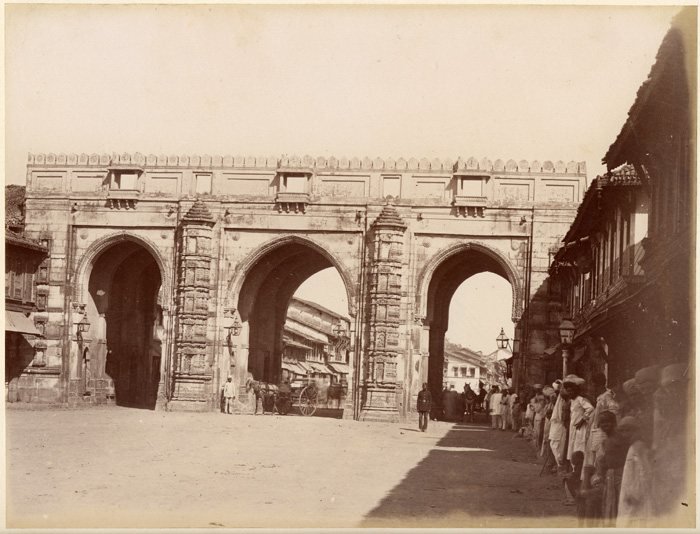
The city's 1411 triple gateway & bazaar
By night the old jewellers' square turns into a buzzing street-food bazaar.

An evening lane of carts serving Gujarati chaat, sandwiches and sweets.

Fresh fafda-jalebi, dabeli and khaman in the lanes of the walled city.
Ahmedabad is famously veg-friendly — expect superb thalis and farsan.
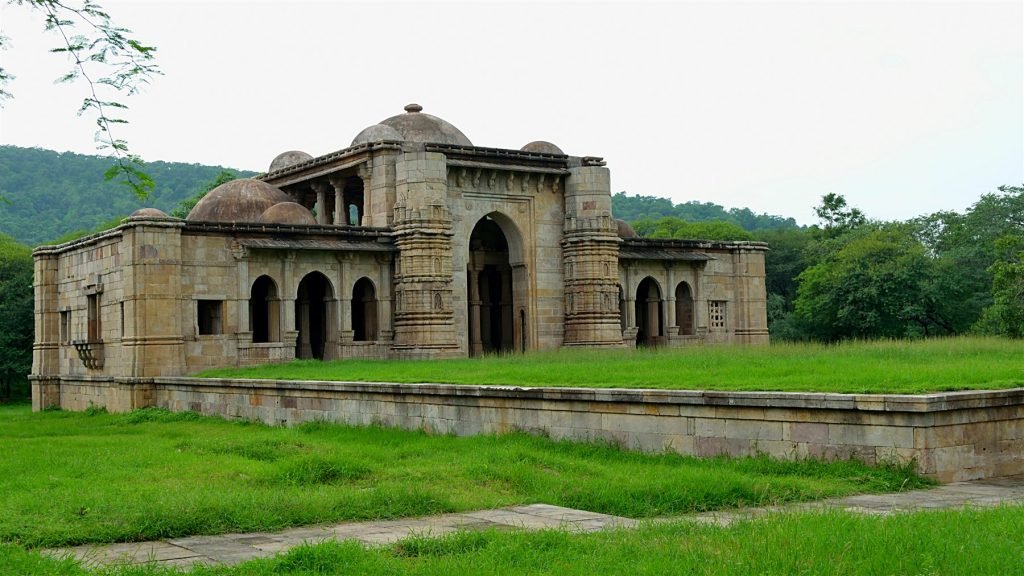
In the walled city near Lal Darwaza, central Ahmedabad, about 3 km from the main railway station.
For its 'tree of life' jaali — a stone lattice window that became the emblem of Ahmedabad and the IIM-A logo.
No, entry is free for all visitors.
It's open through the day, outside the five daily prayer times.
Yes, visitors are welcome outside prayer times; dress modestly and remove footwear.
About 30–45 minutes is plenty to see the screens and carvings.
Yes; the backlit jaali is the classic shot. Avoid shooting during prayers.
Modest clothing covering shoulders and knees is appropriate.
Lal Darwaza bus hub is a short walk; the railway station is ~3 km away.
Teen Darwaza, Bhadra Fort and Jama Masjid are all within a short walk.
A grand stepwell & temples of a lost capital
A forest cascade near a hill shrine
A boulder climb to panoramic views
~230 km
A serene beach famed for its spring fair
Forest trails, watchtowers and riverside camps
WHERE TO STAY
Compare live prices across the big booking sites and reserve in a few taps. Booking happens securely on the partner's site — we may earn a small commission at no extra cost to you.
SHOP THE REGION
Hand-picked crafts and trip gear, available on Amazon.