I have walked into a lot of monuments that ask you to look up. Gujarat stepwells do the opposite, and that reversal is the whole point. You arrive at a plain rectangle in the ground, take one step down, and the noise of the day just falls away behind you.
The first time it happened to me was at Patan, on a flat afternoon in April when the heat sat on everything. I expected a well. What I got was an upside-down temple, seven storeys of carved stone sinking into the earth, and a sudden drop in temperature that felt like someone had opened a fridge.
Why anyone dug a palace into the ground
Gujarat stepwells, or vavs, were not built to be pretty, at least not at first. This is dry country, and for centuries the monsoon was a gamble you could not afford to lose. A stepwell let people walk down to the water table as it rose and fell through the year, so the well stayed useful in June and in January alike. The stairs were the plumbing.
But somewhere along the way the builders decided that a place people visited every single day, out of the sun, might as well be worth visiting. So they carved. Every pillar, every landing, every bracket became a surface for gods, dancers, elephants and small jokes in stone. Function came first, and then generations of stubborn artistry piled on top of it.
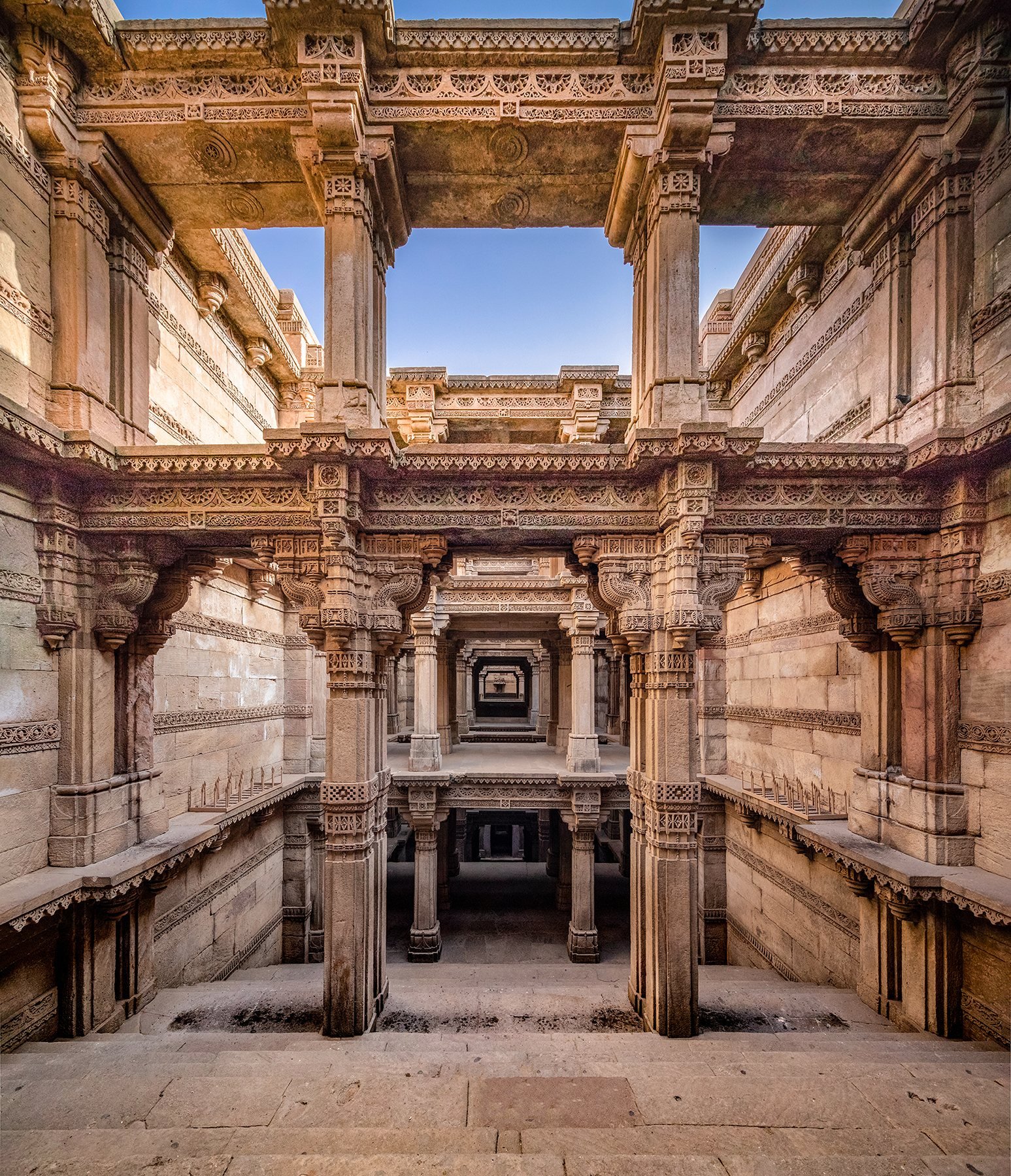
The Adalaj stepwell near Gandhinagar, where five storeys drop into cool shade.
Rani ki Vav, the one that earns the queue
Rani ki Vav in Patan is the headline act, and honestly it deserves the fuss. An eleventh-century queen named Udayamati built it in memory of her husband, and the Saraswati river later buried the whole thing in silt, which is the reason the carving survived so crisply. When it was dug back out, over five hundred sculptures came up almost untouched, most of them versions of Vishnu, plus rows of slender women doing entirely human things.
You do not look at a stepwell so much as descend into it, one cool step at a time
Go early. By mid-morning the tour groups arrive and the lower levels get tight, and the magic of a stepwell is partly the silence. Stand on the third landing, look back up at the rectangle of hot white sky, and you understand why it is on the currency note and the UNESCO list both.
Adalaj, closer to the city and just as strange
If Patan is a day trip, Adalaj is an easy hour from Ahmedabad and I think it is the more atmospheric of the two. Five storeys, octagonal landings, and light that comes down in a single soft shaft so the carvings glow rather than glare. There is a sad story attached, about a queen and a king who never got to live there, and a small inscription that reads almost like an apology. It is cooler at the bottom by a good few degrees, and you will not want to climb back out.
If you go
- Rani ki Vav is in Patan, roughly a two-hour drive from Ahmedabad; pair it with the nearby Modhera Sun Temple in one day.
- Adalaj sits just north of Gandhinagar and works as a half-day trip from Ahmedabad.
- Arrive at opening time, around 8am, to beat both the heat and the tour buses.
- Wear grippy shoes; the stone steps are smooth, uneven and slightly damp lower down.
- Carry water and skip the flash photography, the low light is the whole mood.
I have been back to both wells more than once now, and the pull is always the same. You go down to get away from the sun, and you come up a little quieter than you went in. In a state full of things that reach for the sky, there is something honest about a monument that just asks you to step down and pay attention.