I reached Dwarka a little after dawn, when the town smells of frangipani, wet stone and the sea all at once. The streets near the temple were already busy with families carrying steel tiffins and priests in ochre calling out morning prayers. This is one of the four holy dhams that a devout Hindu tries to visit in a lifetime, and you feel that weight the moment you turn a corner and the temple spire fills the sky. I had come partly out of faith and partly out of plain curiosity, and both were rewarded.
What surprised me was how ordinary and how grand Dwarka feels in the same breath. Cows wander past shops selling conch shells and coconut. Then you look up and the Dwarkadhish temple, five storeys of carved sandstone, is holding a flag the size of a bedsheet against the wind. Krishna is said to have built his kingdom here, a city that later sank beneath the Arabian Sea. Standing on the Gomti ghat, watching the water, that old story stopped feeling like a story.
The temple and its restless flag
The main shrine, Dwarkadhish, is dedicated to Krishna as the king of Dwarka. You enter through the Swarg Dwar, the gate of heaven, after climbing a flight of steps up from the Gomti creek. Photography is not allowed inside and phones are deposited outside, which I ended up grateful for. Without a screen between us, the crowd moved as one slow current toward the dark inner sanctum where the deity stands in black stone, dressed and garlanded, lit by oil lamps.
The detail everyone talks about is the flag. High on the spire flies a huge triangular pennant, and it is changed by hand up to five times a day. A family sponsors each flag, sometimes booking years in advance, and a designated group of climbers scales the tower to swap it. I watched one changeover from the ghat below. The old flag came down, the new one caught the sea wind and cracked open like a sail, and a small cheer went up. It is the kind of living ritual that no museum can give you.
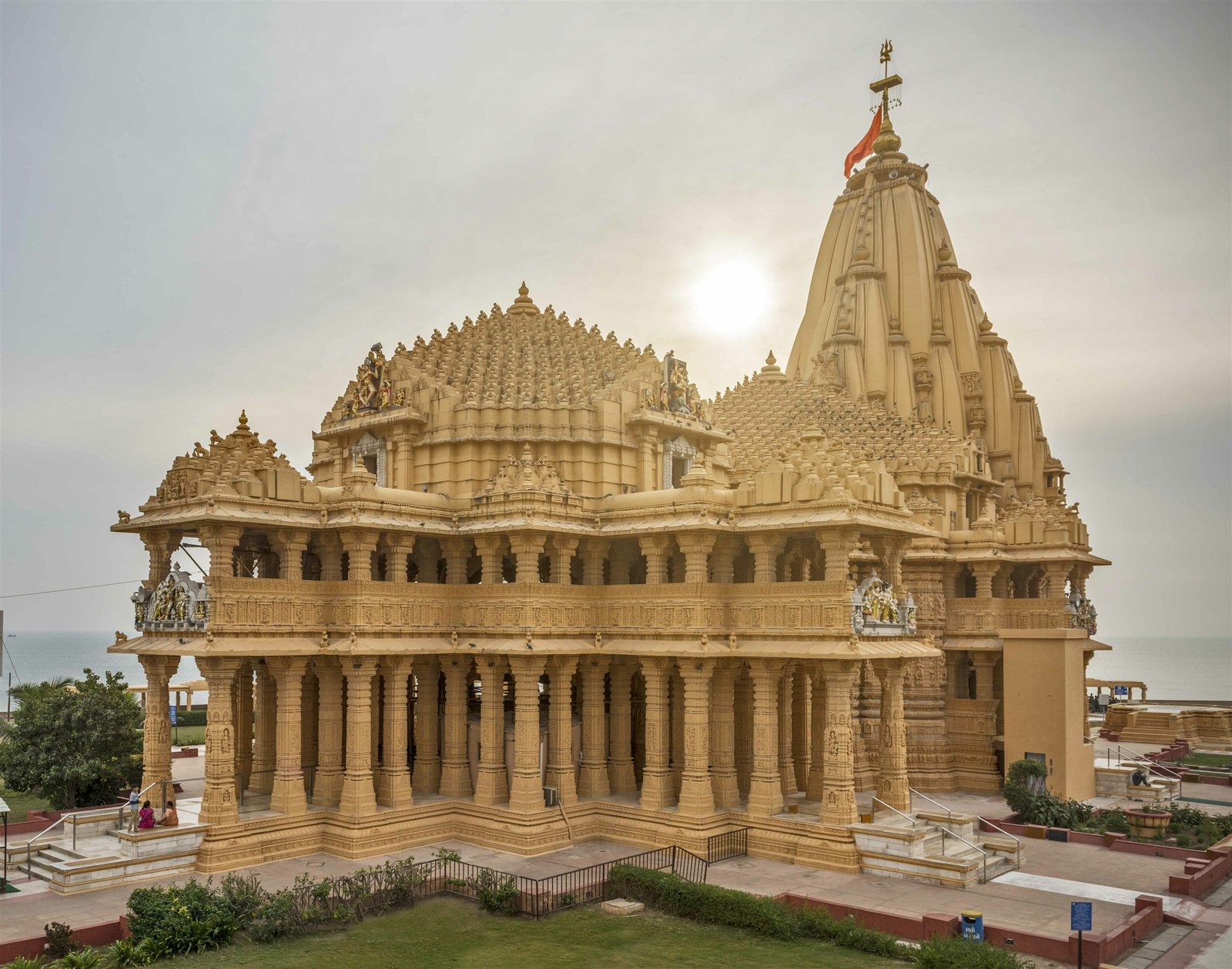
The five-storey Dwarkadhish temple rises above the Gomti creek on Gujarat's far west coast.
Aarti, the ghat, and the boat to Bet Dwarka
Time your visit around an aarti if you can. The morning and evening lamp ceremonies fill the temple with bells, drums and the low roar of hundreds of voices. I found the evening one more moving, when the day cools and the lamps seem brighter against the dark. Afterwards I walked down to the Gomti ghat, where pilgrims bathe at the meeting of the creek and the sea, and small boats bob waiting for the next group.
You do not so much visit Dwarka as get pulled into its daily rhythm of bells, tides and flags.
Thirty kilometres north is Bet Dwarka, an island reached by a short, crowded ferry from Okha. The crossing takes ten or fifteen minutes on a wooden boat packed with pilgrims, gulls wheeling overhead for the snacks people toss them. The island holds another Krishna temple, believed to mark where he lived with his family. It is less polished than the main town and I liked it more for that. A new signature bridge now also links the mainland to the island if you would rather drive.
The city beneath the water
Every guide in Dwarka will tell you about the sunken city. In the old accounts Krishna's golden capital was reclaimed by the sea after he left the mortal world, and marine surveys off this coast have indeed found submerged stone structures that keep the legend alive and argued over. I am not the person to settle whether the ruins are the Dwarka of scripture. But sitting on the ghat at dusk, with the temple flag snapping overhead and the tide sliding in, the line between history and faith felt thinner than usual, and that is really why people come here.
If you go
- The nearest railhead is Dwarka station; Jamnagar airport is the closest airport, about two hours by road.
- Dress modestly for the temple and be ready to leave phones and shoes at the entrance counters.
- Check aarti timings on arrival, as they shift with the season, and reach early because queues build fast.
- For Bet Dwarka, carry small cash for the ferry and go in the morning before the midday heat and crowds.
- October to March is the kindest weather; summers on this coast are hot and glaring.
I left Dwarka on a mid-morning train, salt still in my hair from the ghat. What stays with me is not one grand sight but the texture of the place, the flag climbers, the ferry gulls, the black stone deity in the lamplight. Whether or not a city sleeps under that sea, Dwarka gives you something solid to hold: an old faith still lived out loud, every single day, at the edge of the water.