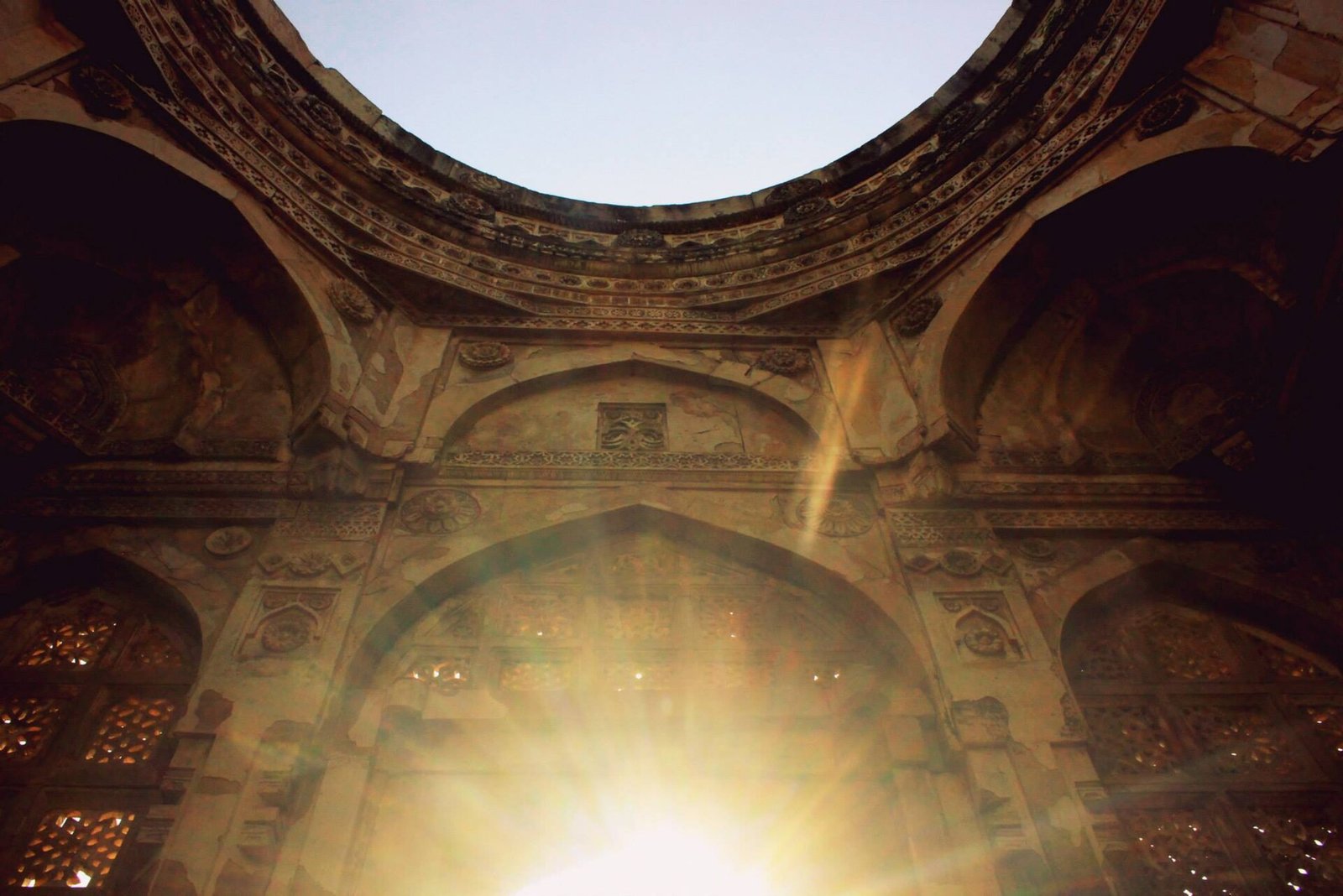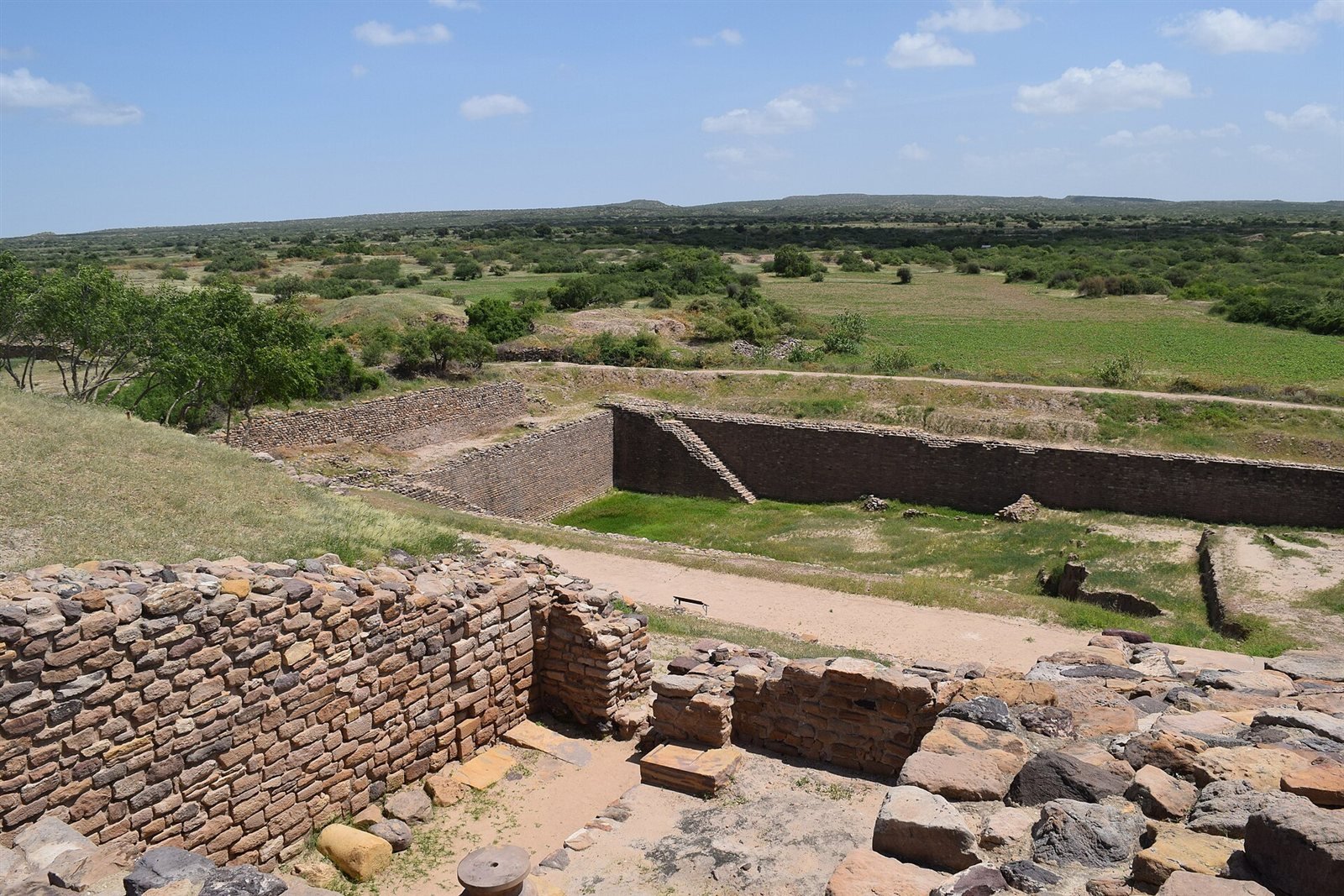
I got to Modhera in the flat light of late afternoon, when the sandstone turns the colour of honey. The Sun Temple sits on the edge of a quiet village in the Mehsana district, and from the road it does not announce itself. Then you walk through the gate and the ground drops away into a vast stepped tank, geometry falling in tiers toward a green square of water. I actually stopped walking. It is close to a thousand years old, built under the Solanki dynasty in the early eleventh century, and it has aged into something spare and beautiful.
The temple is dedicated to Surya, the sun god, and everything about its design bends toward light. Unlike the big living temples of Gujarat, no worship happens here now; the shrine was damaged centuries ago and stands empty. That emptiness is part of the appeal. You can wander the halls slowly, run your hand over the carving, and read the building itself instead of jostling through a crowd. I spent nearly three hours and could happily have stayed until dark.
The Surya Kund, a tank made of steps
The first thing you meet is the Surya Kund, a rectangular reservoir cut into descending terraces of stone. Small shrines are set into the steps, dozens of them, so that the whole tank reads like a temple turned inside out and laid flat. Pilgrims once used it for ritual bathing before entering the main shrine. I climbed down to the water's edge and looked back up; from there the temple halls rise above the rim, framed and reflected, and you understand that the tank was designed as much for the eye as for washing.
What I loved was the human scale of it. Local kids were using the terraces as a hangout, groups of students sketched the arches, and an older couple sat quietly on a step out of the sun. A monument this old could feel like a mausoleum, but Modhera stays companionable. The carving on the little shrines rewards a slow look, with tiny figures, deities and patterns worn soft by centuries of weather.
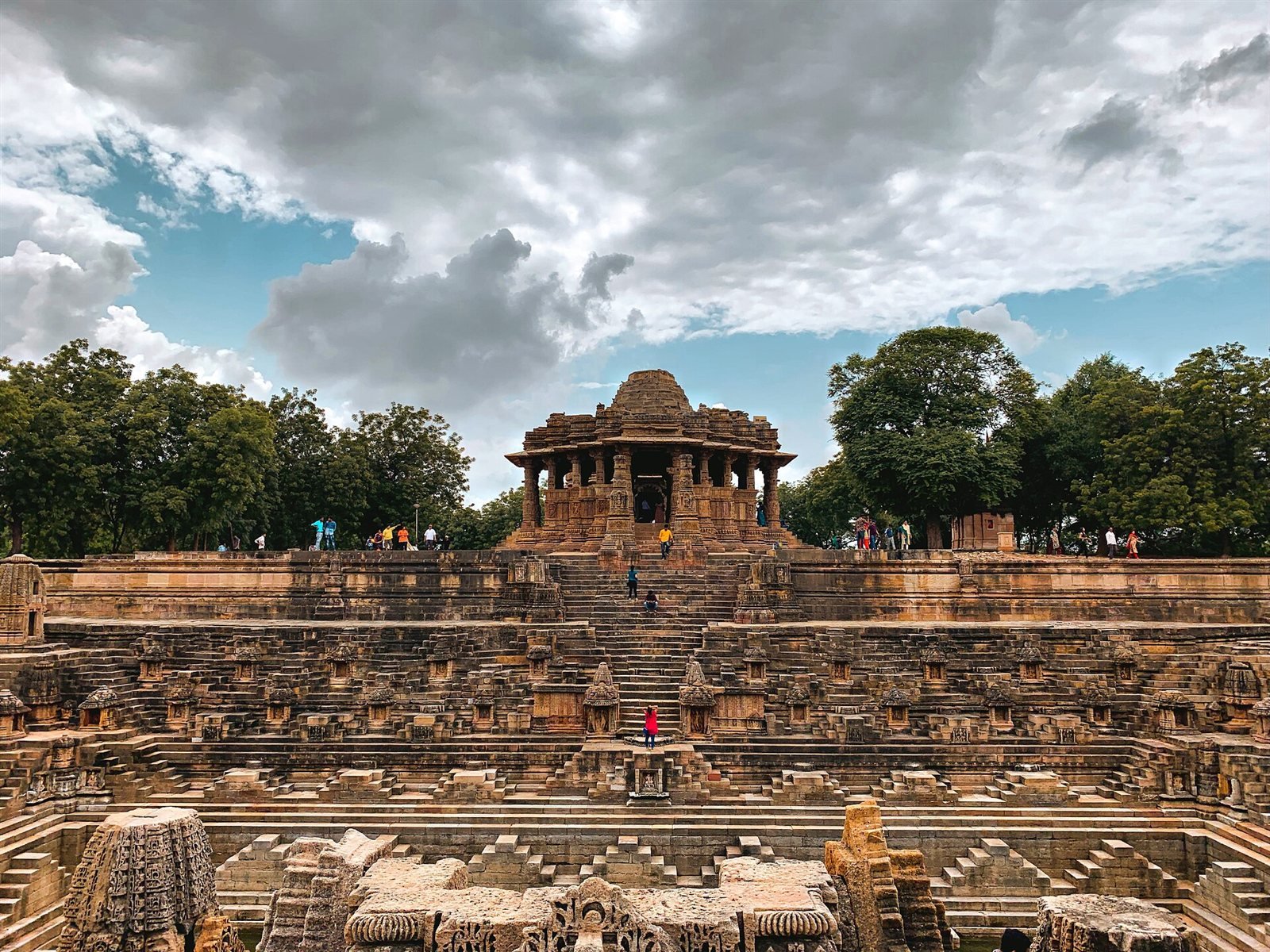
The stepped Surya Kund tank mirrors the sabha mandapa at Modhera in northern Gujarat.
Into the assembly hall
Across from the tank is the sabha mandapa, an open pillared hall that once welcomed pilgrims and gatherings. Its columns are covered in carving from base to bracket, every surface busy with dancers, musicians, elephants and floral bands. The roof is gone in places, so light pours straight down between the pillars and throws long striped shadows across the floor. I walked its edges twice, once fast for the shape of it and once slowly for the detail.
The whole temple is really a machine for catching the sun, built by people who tracked the sky with care.
Beyond the hall a bridge of stone leads to the main shrine, the garbhagriha, which now stands without its idol. The building is aligned so that around the equinoxes the rising sun sends light deep along the axis toward the sanctum. I did not visit at the exact equinox, but even on an ordinary evening you can feel the intent: doorways line up, the axis runs true, and the low sun reaches in as if invited.
The dance festival and the modern night
Once a year, usually in January, Modhera hosts a classical dance festival, the Uttarardh Mahotsav, and dancers perform against the lit temple in the cool of the evening. If your dates line up it is worth planning around, because the architecture and the movement seem made for each other. In recent years the village has also been developed as a solar-powered showcase, which feels fitting for a place built to honour the sun. Ask locally about evening illumination timings before you commit.
If you go
- Modhera is about 100 km from Ahmedabad, an easy half-day or day trip by car.
- Pair it with Patan's Rani ki Vav stepwell, roughly 35 km away, for a full heritage day.
- Come in late afternoon so the low sun lights the carving and the tank reflects the halls.
- Wear a hat and carry water; there is little shade around the open tank at midday.
- Aim for the January dance festival or an equinox visit if you can plan that far ahead.
I stayed at Modhera until the guards began their evening rounds, and the last light turned the pillars amber. There is no incense here, no bells, no queue, just a very old idea rendered in stone: that a building could be shaped around the path of the sun. It left me quieter than most famous monuments do. If you have any love for architecture or history, give Modhera a slow afternoon and let it do its work.