Champaner is one of those places you can have almost to yourself, which is strange for a UNESCO World Heritage Site. I arrived on a weekday morning and shared the great Jama Masjid with a groundskeeper and a pair of goats. For a brief while in the early sixteenth century this was the capital of Gujarat, a planned city at the foot of Pavagadh hill, before the sultanate moved on and the jungle quietly took it back. Today it is a scatter of mosques, gates, walls and stepwells among fields and forest, about 50 km from Vadodara.
Rising behind the ruins is Pavagadh, a steep volcanic hill crowned by the Kalika Mata temple, one of the most visited shrines in Gujarat. So the site is really two experiences stitched together: a silent medieval city below and a busy, living pilgrimage above. I did both in a single long day and my legs told me about it afterwards, but I would not change the plan. The contrast is the whole point.
The city the forest kept
Start with the Jama Masjid, and give it time. It is one of the finest mosques of its era, a wide prayer hall under a forest of carved pillars, with two tall minarets flanking the main entrance and delicate stone screens filtering the light. What struck me is how the design blends Islamic form with local Hindu and Jain craft traditions; the carving feels of this soil. Standing under the central dome in the quiet, with sunlight coming through the jali windows, I understood why the site earned its listing.
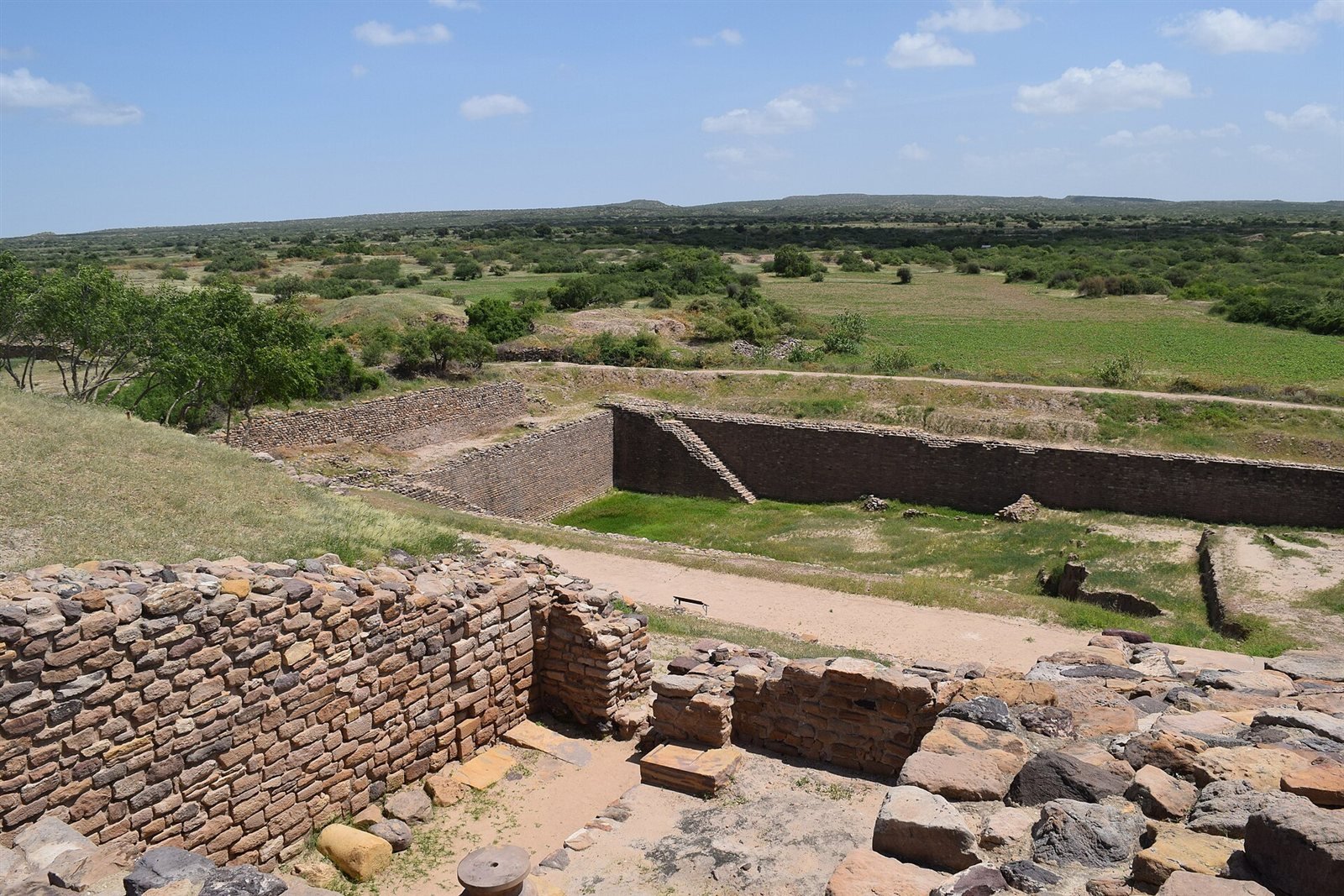
From there the ruins spread out. There are smaller mosques, the Nagina Masjid and Kevada Masjid among them, city gates and long stretches of fortification wall running up into the trees. There are also stepwells, stone-lined tanks that once supplied the town, cool and green at the bottom. Very little is signposted, which can be frustrating, but it also means you stumble on things: a doorway in the undergrowth, a carved bracket, a well full of pigeons. Hire a local guide at the entrance if you want the history joined up.
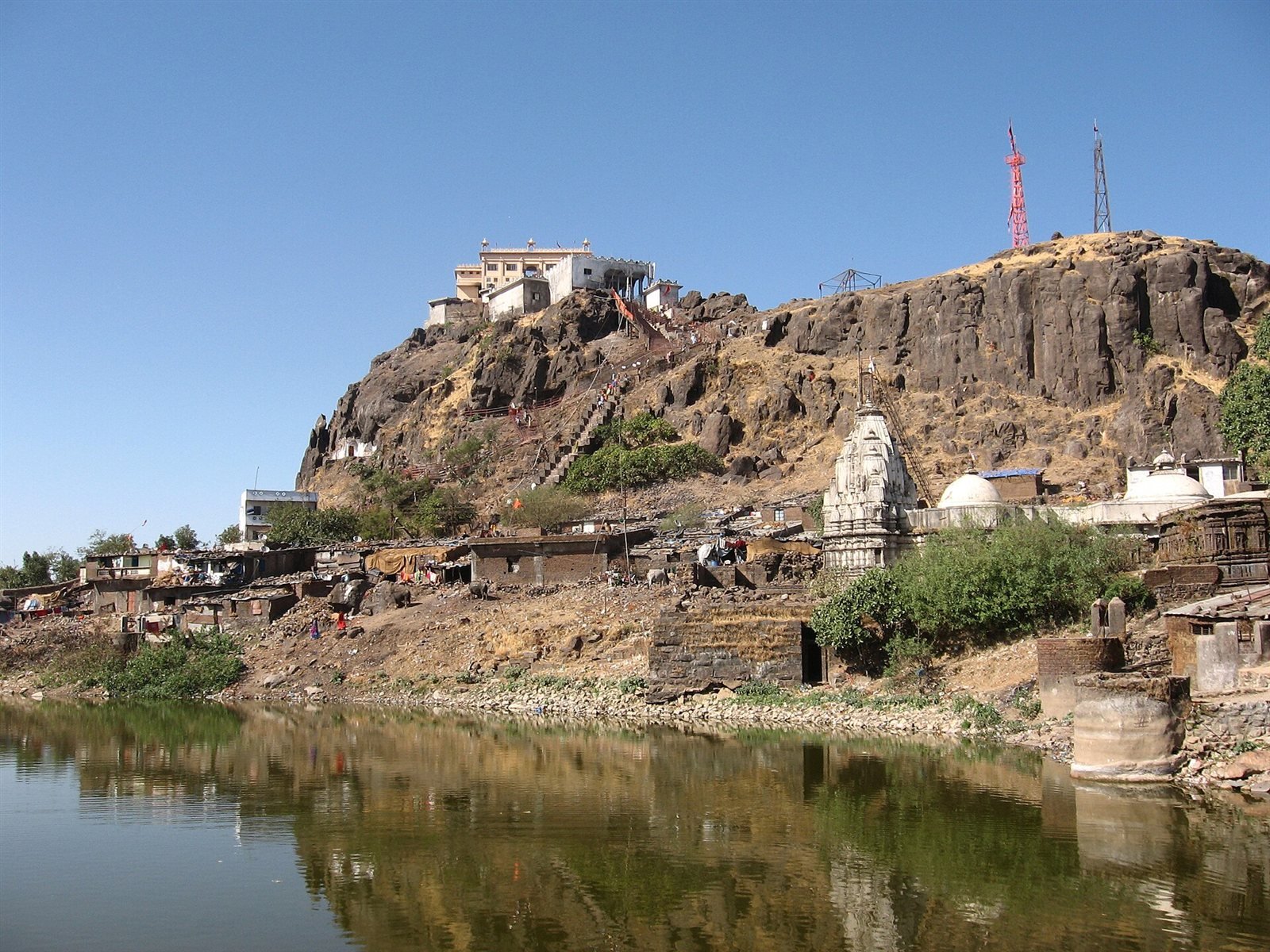
The domes of Champaner's Jama Masjid sit below the rising bulk of Pavagadh hill.
Up Pavagadh to Kalika Mata
Pavagadh is a serious hill, and the Kalika Mata temple sits near its summit. You have two ways up. A ropeway, a cable car that swings you over the forested slope in a few minutes, does most of the climbing; then a stepped path and, more recently, an escalator system carry you the rest of the way to the shrine. Or you can walk the old pilgrim route the whole way, a long stone stairway past smaller temples, tea stalls and viewpoints. I took the ropeway up and walked part of the way down to feel the hill properly.
Below you the ruined capital sleeps in the fields while above you the goddess draws a river of pilgrims every single day.
The temple itself is small, ancient and packed. Kalika Mata is a powerful mother goddess and the shrine is one of the Shakti Pithas, so the queue moves in a devout crush toward the sanctum. A restored shikhara now tops the temple after long negotiations, and a golden finial catches the sun. Whatever your beliefs, the energy is real, and the view from the top over the plains of central Gujarat is enormous on a clear day.
Making sense of two worlds
What makes Champaner-Pavagadh special is exactly this doubling: a dead city and a living faith on the same rock. The archaeological park protects the Solanki-era and sultanate remains below, while the goddess on the summit keeps drawing crowds as she has for centuries. Most visitors only do the temple and skip the ruins entirely, which is a shame. Give the lower city at least a couple of hours before or after your climb, and the day resolves into something richer than either half alone.
If you go
- Base yourself in Vadodara, about 50 km away, or Halol, which is closer to the site.
- Do the ruins early when it is cool and quiet, then tackle Pavagadh, or reverse it to beat temple crowds.
- Buy ropeway tickets on arrival and expect queues on weekends and during festivals.
- Wear proper shoes; there is real walking and stair climbing whichever way you go up.
- Carry water and cash, and consider a guide at the entrance to connect the scattered monuments.
I came down off Pavagadh at dusk, temple bells fading behind me, and drove back past the dark shapes of the ruined city. Few sites in Gujarat pack so much into one day: world-class architecture standing empty in the fields and a hilltop goddess pulling pilgrims up a volcano. It asks a bit of effort and rewards it fully. Go with a full water bottle, an early start and no fixed schedule, and let Champaner and Pavagadh unfold at their own pace.