Home › Chhota Udaipur › Narmada Backwaters
RESERVOIR · NARMADA · QUIET WATERSStill waters where the river meets the dam — the Narmada backwaters in Chhota Udaipur district, where the Sardar Sarovar reservoir reaches into the forested eastern valleys, creating a quiet inland sea in the tribal heartland.
The Narmada backwaters in Chhota Udaipur district are the upstream reaches of the Sardar Sarovar reservoir — the vast inland water body created by the Sardar Sarovar Dam in Narmada district to the west, which extends its still waters east into the forested tribal landscape of Chhota Udaipur.
In Chhota Udaipur, the backwaters appear as long, still inlets threading between the forested hills — a landscape unlike anything else in Gujarat, where the blue-green water of the reservoir contrasts with the dark green of the surrounding forest and the red-brown of the laterite hills. The backwaters are home to fishing communities, some of whom are Adivasi, and the ecological tension between the reservoir’s creation and the displacement of tribal communities is part of the complex story of this landscape.
The setting is beautiful and quiet, particularly at dawn and dusk when the water reflects the forest light. Boat access is possible in places — ask locally for the nearest ghat. (Check water levels seasonally; best October to February.)
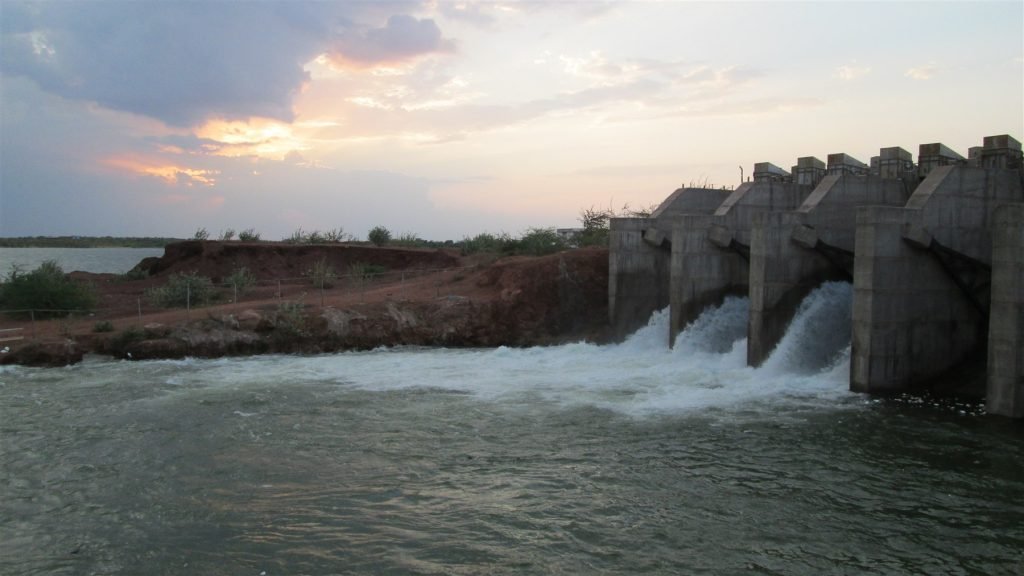
Illustration — Narmada backwaters, Chhota Udaipur.
Illustration — Narmada backwaters.
The Narmada flowed through the tribal territory of eastern Gujarat long before the dam, threading between forested hills.
The Sardar Sarovar Dam in Narmada district to the west impounds the river, creating a vast inland reservoir.
The rising waters displace Adivasi communities, a complex and contested chapter in the landscape's story.
The backwaters now reach east into Chhota Udaipur as a still, forest-fringed inland sea.
Quiet reservoir — a vast, still inland water body in the tribal heartland.
Hills and water meet, where dark forest frames the blue-green reservoir.
Ghat access in places — ask locally to find the nearest landing point.
Reflective light at dawn and dusk, when the water mirrors the forest.
Local communities, some Adivasi, work the waterside inlets.
A reservoir panorama unlike anything else in Gujarat.
Still forest inlets threading between the hills.
Boat access points along the waterside — ask locally.
Ask locally for the nearest ghat — landing points are scattered along the reservoir's forested edges.
Explore the inlets by boat where one can be arranged — the still water threads deep between the hills.
Reflective water at dawn and dusk turns the reservoir into a mirror of forest and sky.
Adivasi fisherfolk work the waterside; their presence is part of the living landscape.
Forest and water meet at the shore — a quiet walk rewards an unhurried eye.
October to February is the ideal window, when water levels are stable and the air is cool.
Illustration — Narmada backwaters.
The Narmada backwaters are the upstream reach of the Sardar Sarovar reservoir, extending east into the Chhota Udaipur tribal landscape as a series of still, forest-fringed inlets.
The water is typically calm and very clear — the catchment forests of eastern Gujarat produce minimal runoff sediment compared to agricultural plains. (Check water levels; ask locally for ghat access points.)
Sardar Sarovar reservoir backwaters in tribal forest
Long still inlets between forested hills
Adivasi fishing communities on the waterside
Dawn reflections — exceptional photography
Cool & clear — ideal. Stable water levels and comfortable days for unhurried exploring.
Lush; roads may flood. The forest greens up, but access can be difficult after heavy rain.
Hot; early mornings only. Come right at dawn before the heat builds over the open water.
⏰ October to March is ideal for Chhota Udaipur.
Vadodara airport sits about 100 km away, the nearest with regular domestic flights, roughly a two-hour drive.
Bodeli and Chhota Udaipur are the nearest railheads, connected to Vadodara on the regional network.
NH-56 from Vadodara leads east into the tribal belt; Kawant is the closest small town to the backwaters.
DAWN-REFLECTION FRIENDLY
Come at dawn or dusk — the still reservoir mirrors the forest and the low light is at its softest.
The long inlets between forested hills, the laterite shoreline, and reflections off the calm water.
Keep a respectful distance from fishing communities and their boats; ask before photographing people.
A mid-range zoom suits the panoramas; bring a polariser to manage glare off the water.
A serene Shiva temple by the great river
Watch ritual horse-paintings come alive on village walls
The Rathwa deity of the Pithora paintings
Sacred groves of the Rathwa people
Rathwa ritual wall paintings around Kawant
Comfort home cooking — an unlimited vegetarian spread of dal, sabzi and rotla.
Forest produce and millet, the everyday cooking of the Rathwa Adivasi community.
A tribal staple — coarse pearl-millet flatbread, hearty and warming.
Wild honey gathered from Adivasi villages in the surrounding forest.
Expect simple, vegetarian millet-based meals and forest produce in the Chhota Udaipur belt.
The Sardar Sarovar reservoir in tribal forest — the upstream waters of the dam reaching east into Chhota Udaipur.
Find a local ghat — ask in Kawant or Chhota Udaipur for the nearest landing point.
Sometimes available — ask locally; boats can occasionally be arranged at the ghats.
October to February — water levels are stable and the weather is cool and clear.
Water birds and fish eagles frequent the inlets and forested shoreline.
None. The waterside is open access, though boat hire is arranged separately.
WHERE TO STAY
Compare live prices across the big booking sites and reserve in a few taps. Booking happens securely on the partner's site — we may earn a small commission at no extra cost to you.
SHOP THE REGION
Hand-picked crafts and trip gear, available on Amazon.