Best time
Nov–Feb, comfortable for craft-village travel
Ideal duration
3–5 days across Patan & Kutch
Good for
Shoppers, textile lovers, slow travel
Region
North Gujarat & Kutch
Gujarat is one of the great textile regions of the world, and not by accident. Centuries of trade through its ports carried dyeing and weaving skills in and out, and dry-climate villages turned handwork into an inheritance passed down through families. The result is a concentration of living crafts — many still made by hand exactly as they were generations ago — that you can seek out at the source rather than only in a museum case.
This guide covers the textiles and crafts worth travelling for, what makes each one genuine, and how to buy without being sold a machine-made copy. The pleasure here is partly in the object and partly in meeting the people who make it, often in the villages where the technique has always lived.
Why buying at the source matters
The most famous Gujarati textiles are also the most imitated. A power-loom print can mimic the look of hand block-printing, and cheaper factory ikat borrows the name Patola without the technique. Buying near the source — in Patan for Patola, in the craft villages around Bhuj for Kutch embroidery, Ajrakh and Rogan — gets you closer to the makers, often lets you watch the process, and supports the families keeping these skills alive. It usually costs more than a city emporium markup, but you know what you are paying for, and many of these pieces are the work of days or weeks, not minutes.
A double-ikat Patola in progress on a traditional loom in Patan.
The crafts worth seeking out
- Patan Patola (double ikat)A silk sari where both warp and weft are tie-dyed before weaving so the pattern appears identically on both sides. Made by only a handful of families in Patan, it can take months and is priced accordingly. The Patan Patola Heritage centre lets you watch it woven.
- Bandhani (tie-dye)Thousands of tiny dots tied by hand before dyeing, producing intricate patterns on cloth. Jamnagar and Bhuj are the traditional centres. Genuine bandhani has slightly irregular, hand-tied dots and often arrives folded, still knotted.
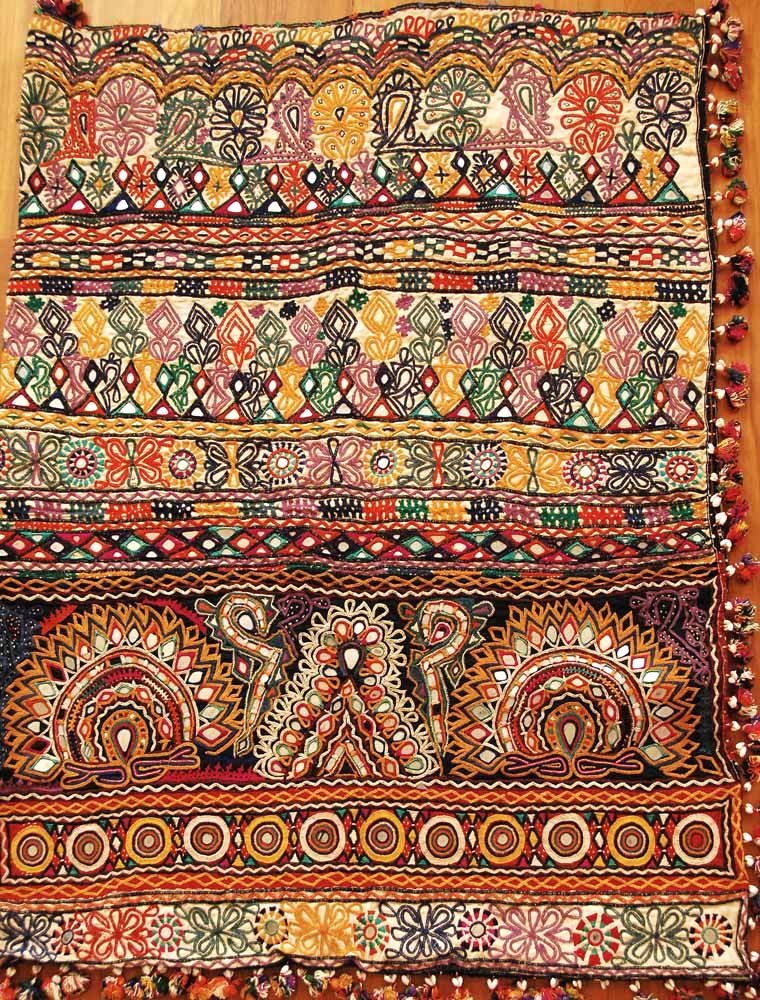
- Kutch embroideryA family of dense, mirror-studded hand embroidery styles — each community has its own — found in the villages around Bhuj such as Nirona, Bhujodi and Ajrakhpur. Look for even, fine stitching and buy directly from artisan collectives.
- Ajrakh block-printA complex resist-and-natural-dye process in deep indigo and madder red, printed by hand in multiple stages, centred on Ajrakhpur near Bhuj. Real Ajrakh smells faintly of natural dye and shows slight registration variations.
- Rogan art & TangaliyaRogan is a rare painting technique using thick castor-oil paint drawn onto cloth, kept alive largely by one family in Nirona village. Tangaliya is a distinctive dotted-weave shawl craft from the Surendranagar area. Both are small, specialised traditions worth the detour.
How to plan around it
Two areas anchor a textile trip. Patan, in north Gujarat, is reachable as a day trip or overnight from Ahmedabad and pairs well with the Rani ki Vav stepwell and the nearby Modhera Sun Temple. Kutch is the richer craft region: base yourself in Bhuj and radius out to the surrounding villages — Bhujodi, Ajrakhpur and Nirona are all within easy reach and each specialises in different work. A local driver or an organised craft tour makes the village-hopping far simpler, since public transport to these hamlets is sparse. Give Kutch at least two full days if crafts are your reason for coming.
Where to stay
Bhuj is the practical base for Kutch, with everything from simple guesthouses to comfortable mid-range hotels, and some heritage and rural-craft stays sit closer to the villages themselves for a more immersive night. Several artisan communities and NGOs run homestays or craft resorts that put you within walking distance of the looms and embroidery workshops — a good choice if you want unhurried access to the makers. For Patan, most travellers stay in Ahmedabad and visit on a day trip, though Patan and nearby Mehsana have basic hotels if you prefer to break the journey.
When to go
November to February is the window: Kutch and north Gujarat are hot for much of the year, and the cool season makes village travel bearable. This also overlaps with Rann Utsav, when Kutch is at its liveliest and craft villages see the most visitors — convenient for access, though prices and crowds rise. If you want quieter workshops and more unhurried time with artisans, aim for the early or late edges of the season rather than the festival peak.
Practical tips
- Ask to see the process — genuine makers are usually happy to show you, and it teaches you what authentic work looks like.
- Real Patola shows the same pattern on both faces of the cloth; if one side is faded, it is not double ikat.
- Natural-dye pieces like Ajrakh may bleed slightly on first wash — wash separately in cold water.
- Carry enough cash; many village artisans do not take cards, though UPI is spreading.
- Buy from artisan collectives or GI-tagged sources when you can, to be sure the maker is paid fairly.
Frequently asked questions
What is Gujarat most famous for in textiles?
Patan Patola double-ikat silk and Kutch's hand embroidery, block-printing (Ajrakh) and Bandhani tie-dye are the most celebrated, along with rare crafts like Rogan art.
Where can I buy authentic Patola?
In Patan itself, from the weaving families and the Patola Heritage centre, where you can watch it being made. Genuine pieces are expensive and take months to weave.
Is Kutch good for craft shopping?
Yes — the villages around Bhuj (Bhujodi, Ajrakhpur, Nirona) are the richest craft cluster in the state, each specialising in different embroidery, printing and painting techniques.
How do I avoid buying machine-made copies?
Buy at the source or from artisan collectives, ask to see the process, check for hand-work irregularities, and look for GI-tag or cooperative certification.
These crafts survive because people keep buying them and because families keep teaching them. Travel to Patan and Kutch, watch a Patola come off the loom or a mirror get stitched into place, and the piece you carry home stops being a souvenir and becomes a small connection to the people who made it. Buy carefully, buy at the source, and you help keep the tradition breathing.