Best time
October to March
Ideal duration
5 to 7 days for a temple circuit
Good for
Pilgrimage, architecture, history
Region
Saurashtra, north and central Gujarat
Gujarat sits at the heart of several of Hinduism's and Jainism's most important pilgrimages. Two of the twelve sacred Jyotirlinga shrines of Shiva are here, one of the four Char Dham dwellings of Krishna is here, and the holiest hill in the Jain world rises out of the Saurashtra plain. Alongside these living pilgrimage sites stand pure architectural marvels like the Modhera Sun Temple, where worship stopped centuries ago but the stone still stuns.
That mix, deeply active shrines and quiet masterpieces, is what makes temple travel in Gujarat rich. You can join thousands at a seaside aarti one evening and have a carved 11th-century hall almost to yourself the next morning. This guide covers the essential temples, explains the pilgrim circuits they belong to, and offers the etiquette and practicalities that make visiting them smoother and more respectful.
Reading Gujarat's sacred map
The big sites cluster mostly around Saurashtra and the north. On the southwest coast, Somnath and Dwarka anchor the major Hindu pilgrimages, often done together. Inland from Bhavnagar, Palitana's Shatrunjaya hill is the supreme Jain pilgrimage. In the north, Ambaji is one of the great Shakti Peeth shrines to the goddess, while Modhera near Patan is the architectural jewel. Near the capital, Akshardham in Gandhinagar represents the modern, monumental Swaminarayan tradition. Understanding which faith and circuit each belongs to helps you plan a route and know what to expect on arrival.
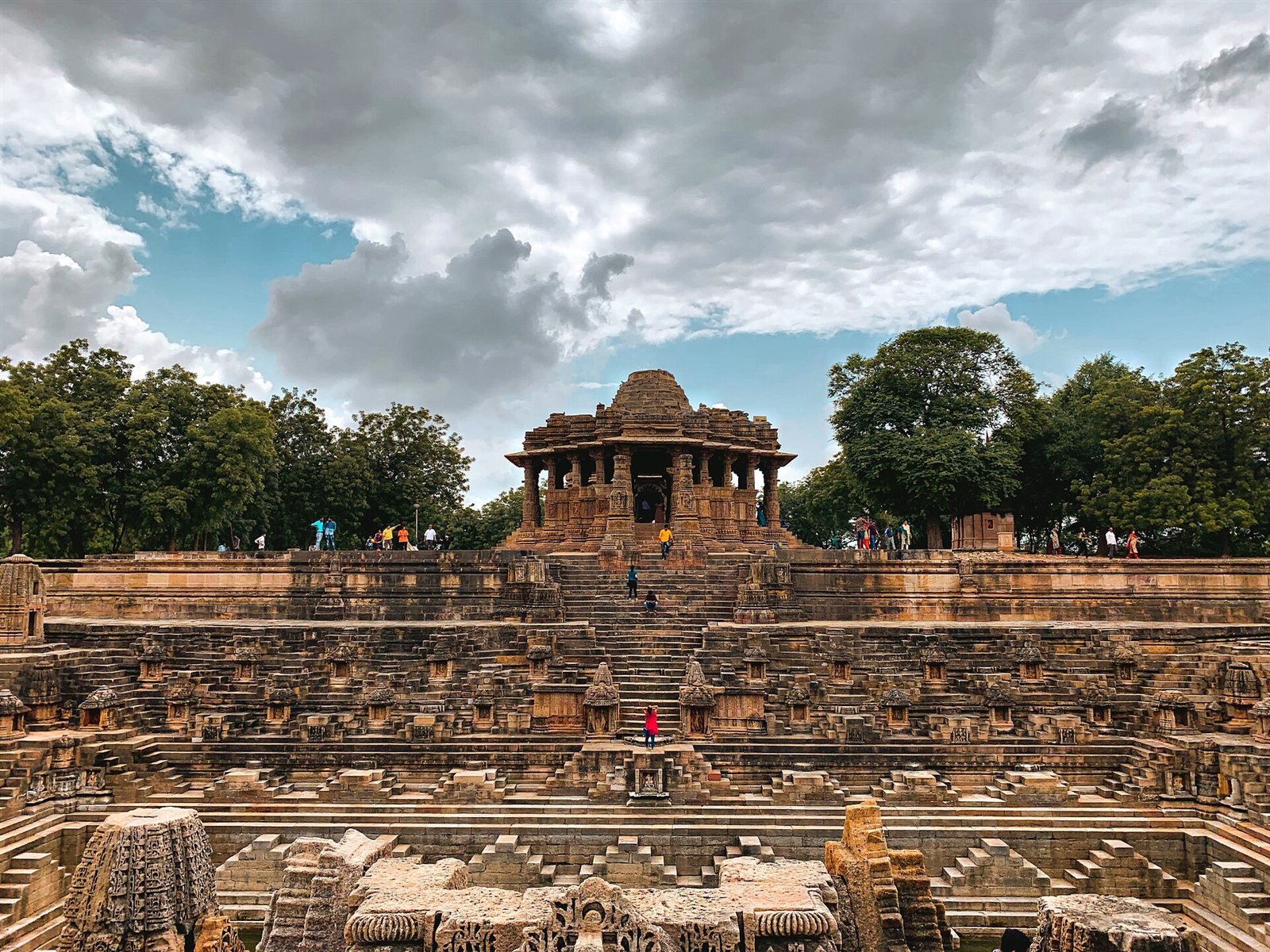
The 11th-century Sun Temple at Modhera, aligned so the rising sun once lit the sanctum at the equinox.
The temples not to miss
- Somnath TempleOne of the twelve Jyotirlingas of Shiva, standing on the Arabian Sea coast. Destroyed and rebuilt many times across history, the present temple dates from the 1950s and draws huge crowds for its evening aarti and sound-and-light show. The setting, right above the waves, is unforgettable.
- Dwarka (Dwarkadhish Temple)One of the four Char Dham pilgrimage sites and believed to be the ancient kingdom of Krishna. The tall, flag-topped Dwarkadhish temple is the centre, with the island shrine of Bet Dwarka a short boat ride away. A cornerstone of Krishna devotion.
- Palitana (Shatrunjaya)The holiest Jain pilgrimage, a hill crowned with more than 800 marble temples reached by climbing some 3,500 steps. Pilgrims ascend barefoot at dawn; nothing, not even the temples, may be eaten or stayed on the summit overnight. An extraordinary, demanding, deeply moving climb.
- Modhera Sun TempleAn 11th-century Solanki temple to the sun god Surya, famous for its stepped tank, carved assembly hall and precise solar alignment. Worship ceased long ago, so it is enjoyed as a monument, at its best in the low morning light. Pairs perfectly with Patan and Rani ki Vav.
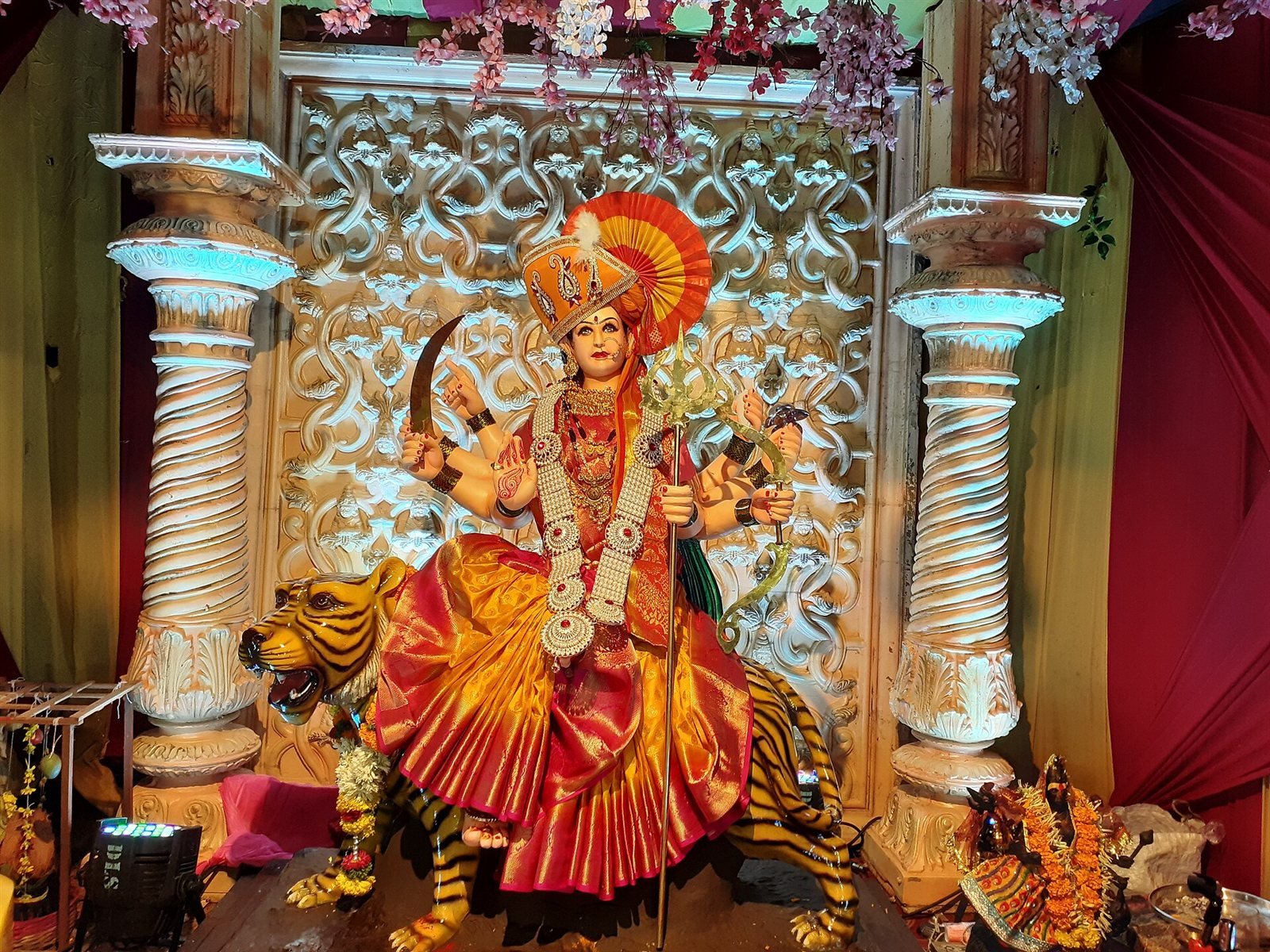
- Ambaji and AkshardhamAmbaji in the north is a major Shakti Peeth where the goddess is worshipped as a sacred symbol rather than an image, thronged during Navratri. Akshardham in Gandhinagar is a vast modern Swaminarayan complex of intricately carved stone with exhibitions and gardens, a different but impressive experience.
How to get around
The Saurashtra temples form a natural loop. Somnath and Dwarka are on the western coast, connected by road in about four to five hours, with Veraval and Jamnagar as the nearest rail and air links. Palitana is reached from Bhavnagar, roughly an hour by road, which has its own airport and station. In the north, Modhera and Ambaji are day trips or an overnight from Ahmedabad, with Modhera near Patan about two and a half hours from the city. Akshardham sits in Gandhinagar, just half an hour from Ahmedabad. A hired car is easiest for the coastal and northern circuits, though buses and trains connect the major towns for budget travellers.
Where to base yourself
Both Somnath and Dwarka have plenty of pilgrim accommodation, from dharamshalas and trust guesthouses to comfortable hotels, so you can sleep at each and catch the evening and morning rituals. For Palitana, stay in Palitana town or Bhavnagar and start the climb before dawn to beat the heat. Ahmedabad and Gandhinagar cover Akshardham and make a base for Modhera and even Ambaji, though Ambaji town itself has pilgrim lodgings if you want to be there for the evening aarti. Book well ahead around major festivals and Navratri, when pilgrim towns fill completely.
Best time to visit
October to March brings the most comfortable weather for temple travel, especially for the barefoot climb at Palitana, which is brutal in summer heat. Festivals add atmosphere but also crowds: Maha Shivratri electrifies Somnath, Janmashtami fills Dwarka for Krishna's birthday, and Navratri packs Ambaji. Decide whether you want the intensity of a festival or the calm of an ordinary day. For Modhera, any clear winter morning is ideal, and the annual dance festival there is a highlight if the dates align.
Practical tips
- Dress modestly, covering shoulders and knees, and be ready to remove shoes and leather items before entering shrines. Many temples provide shoe-keeping stalls.
- Phones and cameras are often banned inside the main sanctums, particularly at Somnath and Dwarka, where security is tight. Leave them in a locker or the car.
- For Palitana, start the climb before sunrise, carry water, and hire a doli (chair carried by porters) if the 3,500 steps are too much. Nothing may be eaten on the hill.
- Time your visit for the aarti. The evening ritual at Somnath and the darshan schedule at Dwarka are the emotional heart of a visit, so check the timings in advance.
- Respect queue systems and local customs, and consider a small donation. During festivals, expect long lines and plan extra time for security and darshan.
Frequently asked questions
Which famous temples are in Gujarat?
Somnath and Dwarka on the coast, the Jain hill of Palitana, the Modhera Sun Temple, the goddess shrine of Ambaji and the modern Akshardham in Gandhinagar are the essential ones.
Is Somnath one of the Jyotirlingas?
Yes. Somnath is regarded as the first of the twelve Jyotirlinga shrines of Shiva, and its seaside location and evening aarti make it one of Gujarat's most visited pilgrimage sites.
How many steps are there at Palitana?
Around 3,500 stone steps lead up Shatrunjaya hill to the summit temples. Pilgrims climb barefoot, usually starting before dawn, and porter-carried chairs are available for those who cannot climb.
What should I wear when visiting Gujarat temples?
Modest clothing that covers shoulders and knees. You will need to remove shoes and leather items before entering, and many sanctums prohibit phones and cameras, so plan accordingly.
A temple journey through Gujarat moves between devotion and design: the crash of the sea below Somnath, the barefoot dawn climb at Palitana, the mathematical grace of Modhera at first light. Whether you come as a pilgrim or simply as a traveller drawn to great buildings, these sites reward respect, an early start and a little planning with some of the most moving experiences the state offers.