Gujarat's stepwell tourism runs on two names. Rani ki Vav at Patan has UNESCO inscription, a place on the hundred-rupee note and a car park; Adalaj, half an hour from Ahmedabad, has a steady flow of visitors all day. Both are magnificent and both are entirely deserving. But the region built hundreds of these things, and a great many of the survivors stand in villages and small towns with no ticket office, no signage and no visitors at all.
The Charotar — the fertile, prosperous tract of Kheda and Anand districts between Ahmedabad and Vadodara — and the country immediately around it hold a good number of them. They range from substantial Solanki-period structures of real architectural quality to modest village vavs, and finding them is a particular and rather addictive kind of travel: a day of small roads, wrong turnings, asking directions, and then descending a flight of eight-hundred-year-old steps that somebody's goats are standing on.
What you are looking for
The vav — stepwell — solved a specific problem. Gujarat and Rajasthan receive their water in a few violent months and then go without, and the water table falls steadily through the dry season. A well you lower a bucket into becomes progressively harder to use; a well you walk into, by way of a long descending stair, simply requires you to go further down. Hundreds were built across the region from roughly the eleventh century onwards, funded by rulers, merchants and, strikingly often, by women.
They were also social and religious spaces. The lower levels stayed several degrees cooler than the surface, which in this climate made them the most comfortable public rooms available, and they were shaded, semi-private and used heavily by women fetching water. Niches held images; small rituals were performed; travellers on trade routes rested. The architecture reflects all of that: pavilions, benches, carved brackets, sculpture programmes, and a general seriousness of design far beyond what a water source requires.
The related form is the kund, a stepped tank — square or rectangular, with flights of steps descending on all sides in geometric tiers to a pool at the centre. The Sun Temple at Modhera has the most famous one, and the Batris Kotha Vav complex at Kapadvanj has another. If you develop a taste for stepwells, kunds are the obvious second course.
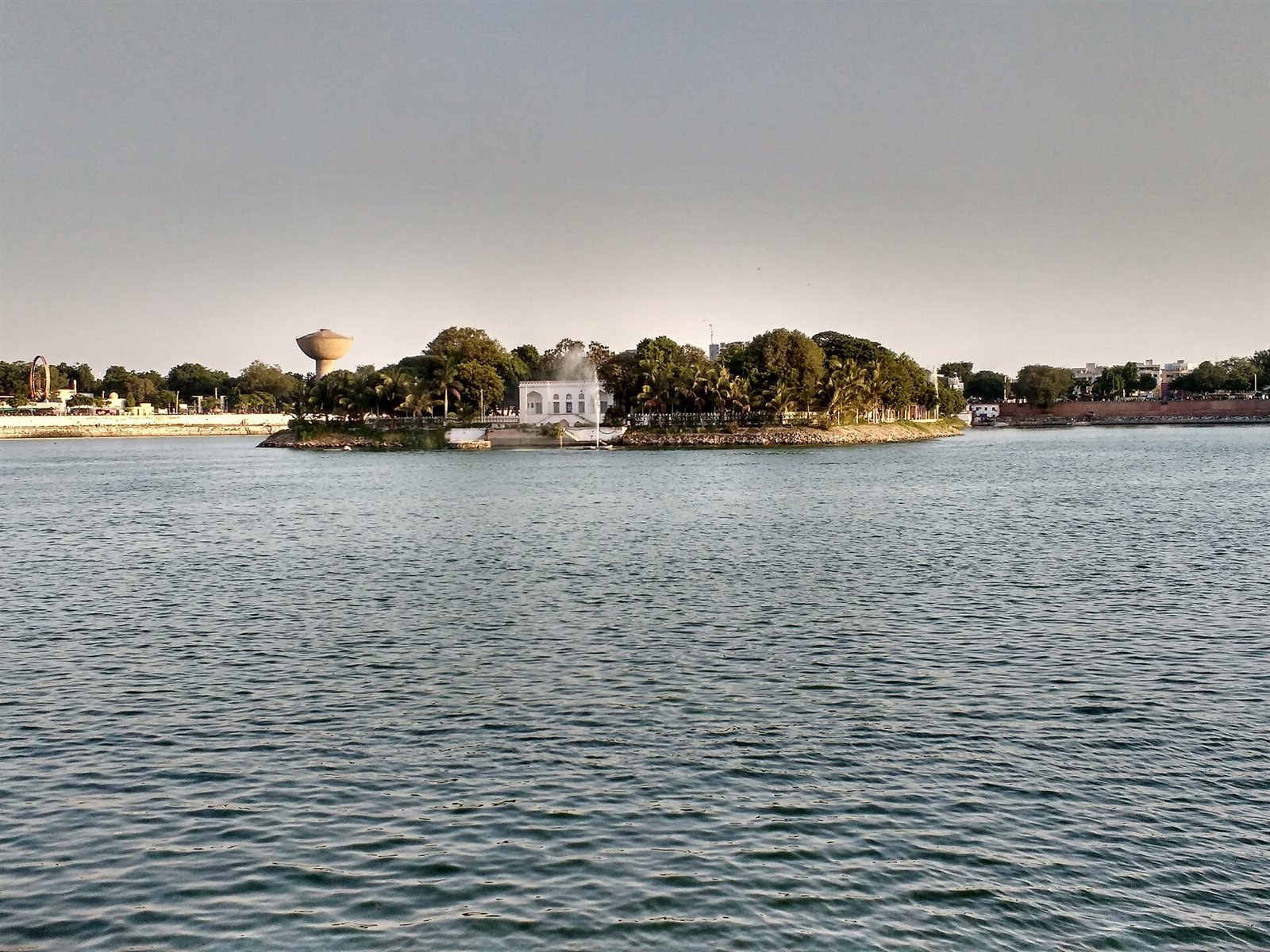
The famous stepwells get the visitors. There are dozens more standing in fields and back lanes.
Where to actually go
The single best target in this region is Kapadvanj in Kheda district, where the Batris Kotha Vav — the thirty-two-cornered or thirty-two-pillared stepwell, depending on whose translation you prefer — is an eleventh-century Solanki structure of real quality, standing alongside a stepped kund and a torana gateway. Kapadvanj was an important medieval town and its cluster of monuments makes it the most rewarding stop for anyone doing a stepwell day in central Gujarat.
The lower levels stayed several degrees cooler than the street, which made a stepwell the most comfortable public room in the village
Beyond it, the field is genuinely open. There are stepwells at Mahudha and other Kheda towns, in villages across Anand district, and scattered through the country between Ahmedabad, Nadiad and Vadodara — some documented by the Archaeological Survey or the state, many not. Condition varies enormously: some are maintained, some are silted, some are used as rubbish tips, and a few have been restored by local initiative. Asking locally is the method, because published lists are incomplete and often out of date.
Two nearby comparators are worth building into the same trip. Dada Harir Vav at Asarwa in Ahmedabad is a fine five-storey structure contemporary with Adalaj, far quieter than Adalaj, and inside the city. And if you are prepared to range slightly further, the vavs of north Gujarat around Patan and Mehsana — beyond Rani ki Vav itself — include several substantial and little-visited examples. A stepwell-hunting trip through central and north Gujarat can easily fill three days.
How to hunt them
This is a car-and-patience exercise. You need your own vehicle, a tolerance for narrow village roads, offline maps, and a willingness to stop and ask — the last is the important one, because a great many of these structures are not signposted, not marked on maps, and known to everyone within a kilometre. The Gujarati word to use is vav, and pointing at a phone photograph of a stepwell works remarkably well.
Some practical warnings. Many unmaintained vavs are genuinely hazardous: crumbling steps, no railings, deep water at the bottom, and occasionally bees or snakes in the niches. Do not descend alone, test your footing, and do not go down into standing water. Some are locked or gated and may need a caretaker found. And treat them as living village property rather than as ruins: they are often adjacent to houses, still used for washing or watering animals, and the people around them are entitled to their privacy.
Building the day
The Charotar is between Ahmedabad and Vadodara, both of which make comfortable bases with airports, main-line railway stations and a full range of hotels; Nadiad and Anand are the local towns. A stepwell day from either city can take in Kapadvanj's vav, kund and torana, one or two village vavs found by asking, and then something else entirely — Dakor's great Krishna temple, Nadiad's Santram Mandir, or the Amul dairy museum at Anand.
October to March is the season, for the usual reason that you will be doing a good deal of walking and driving in open country. One genuine advantage of stepwells is that they are the coolest places available, so even in the hot months the bottom of a vav is a refuge — but getting to it is not. Avoid the monsoon: many vavs fill with water, access is muddy, and the interiors are dark and slippery. Early morning and late afternoon give the best light down the shafts.
Who built them, and why women recur
One pattern becomes obvious once you have seen a few: an unusual number of stepwells were commissioned by women. Rani ki Vav was built by Queen Udayamati; Adalaj was completed under Queen Rudadevi; Dada Harir Vav in Ahmedabad is attributed to a woman of Mahmud Begada's household. The explanation usually offered is straightforward and convincing — the vav was the space women used most, for the daily labour of fetching water, and endowing one was both a work of public utility and an act of merit within reach of a woman with resources.
That gives the buildings a particular character. They are not triumphal, they are not axial, and they do not demand to be looked up at. They are cool, shaded, inward-facing and designed for people standing about in them, with the sculpture placed where somebody resting on a landing would actually see it. Once you have noticed that, the smaller unvisited vavs stop looking like lesser versions of the famous ones and start looking like what they are: ordinary public architecture, built to a standard we would now consider extraordinary.
If you go
- Start at Kapadvanj in Kheda — the Batris Kotha Vav, its kund and the torana make the best single stop in the region.
- Ask locally rather than trusting maps. Use the word vav; most unlisted stepwells are known to everyone nearby.
- Be careful descending unmaintained wells: crumbling steps, no railings, deep water, and occasionally bees or snakes.
- Add Dada Harir Vav at Asarwa in Ahmedabad — a fine contemporary of Adalaj and far quieter.
- Come October to March, go early or late for light down the shaft, and avoid the monsoon when many vavs flood.
Everybody sees Rani ki Vav and Adalaj, and they should. But the region that built those built hundreds more, and a surprising number are still standing in Charotar villages with goats on the steps and no sign at the road. Take a car, start at Kapadvanj, learn the word vav, ask your way from there, watch your footing on the way down, and spend a day in central Gujarat looking at architecture that nobody has thought to charge you for.