Home › Kutch › Aina Mahal
PALACE · HERITAGEThe 'Palace of Mirrors' — an 18th-century Kutchi fantasy of Venetian glass, chandeliers and a pleasure pool, dreamed up by a self-taught genius.
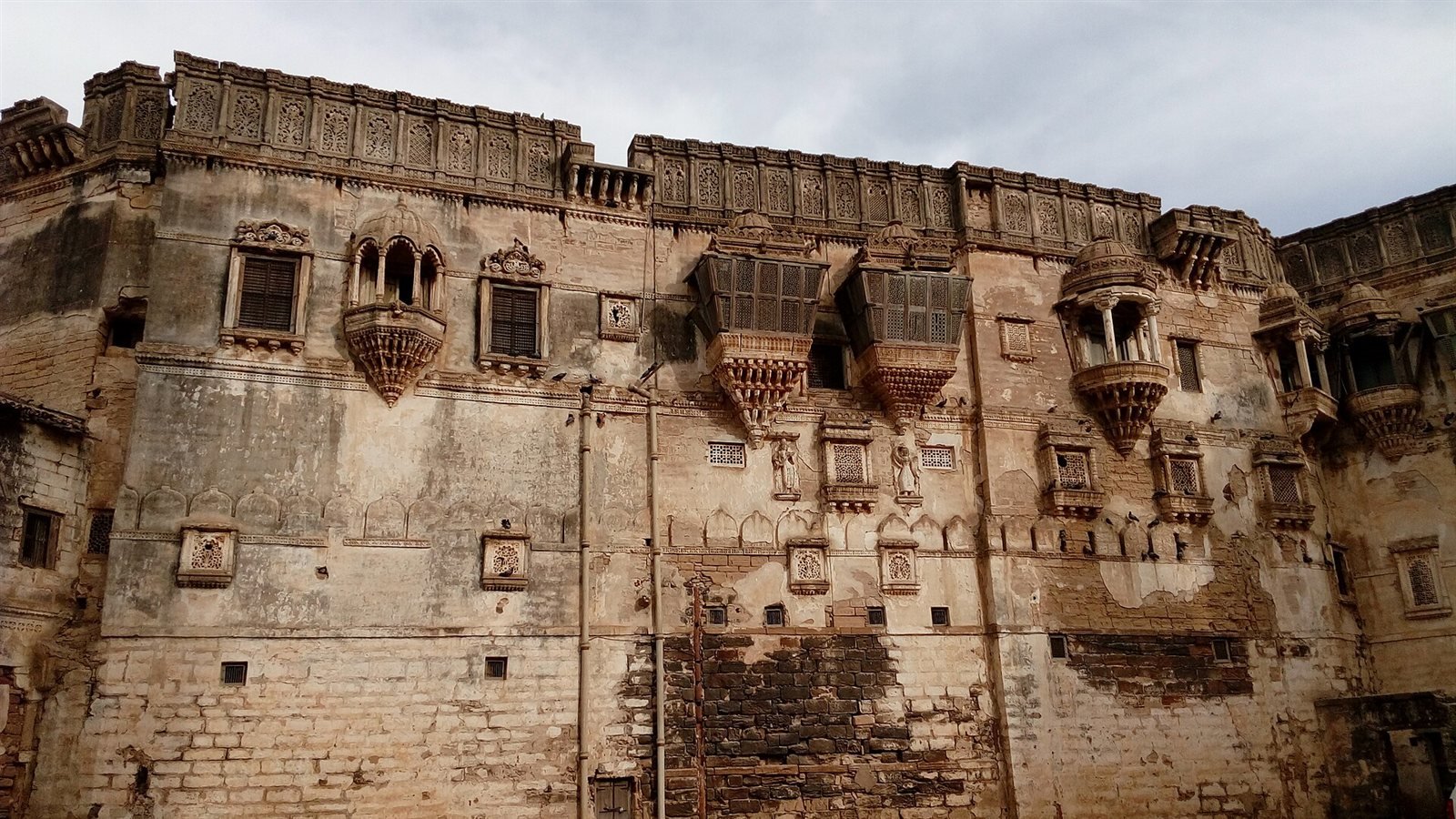
Hidden within Bhuj’s Darbargadh palace complex, the Aina Mahal is one of Gujarat’s most enchanting interiors. Built in the mid-18th century for Rao Lakhpatji, it is a pleasure-palace conceived as pure delight: walls sheathed in mirrors and white marble, Venetian glass and gilding everywhere, and a famous Hall of Mirrors where the ruler sat amid a shimmering pool ringed by fountains and candlelight.
Its magic owes everything to one remarkable man — Ram Singh Malam, a Kutchi craftsman who, the story goes, was shipwrecked and spent years in Europe mastering glass-making, enamelling and clockwork before returning to lavish his skills here.
Though shaken by the 2001 earthquake, the Aina Mahal survives as a museum, its treasures, curios and shimmering halls a window into the playful, cosmopolitan taste of Kutch’s royal court.
Mirrorwork and chandeliers fill the palace halls.
An 18th-century pleasure-palace of glass.
Rao Lakhpatji commissions a lavish pleasure-palace at Bhuj.
The Kutchi craftsman returns from Europe with glass and enamel skills to build it.
The Aina Mahal becomes a treasured royal residence and museum.
The earthquake damages the palace; much of it is conserved and reopened.
Mirrored walls and a fountain-ringed pool.
The European-trained craft of Ram Singh Malam.
Clocks, paintings, glass and courtly treasures.
A jewel-box palace, not a vast pile.
The shipwreck-to-master-craftsman legend.
Steps from Prag Mahal and the Darbargadh.
Mirrored walls and the pleasure pool.
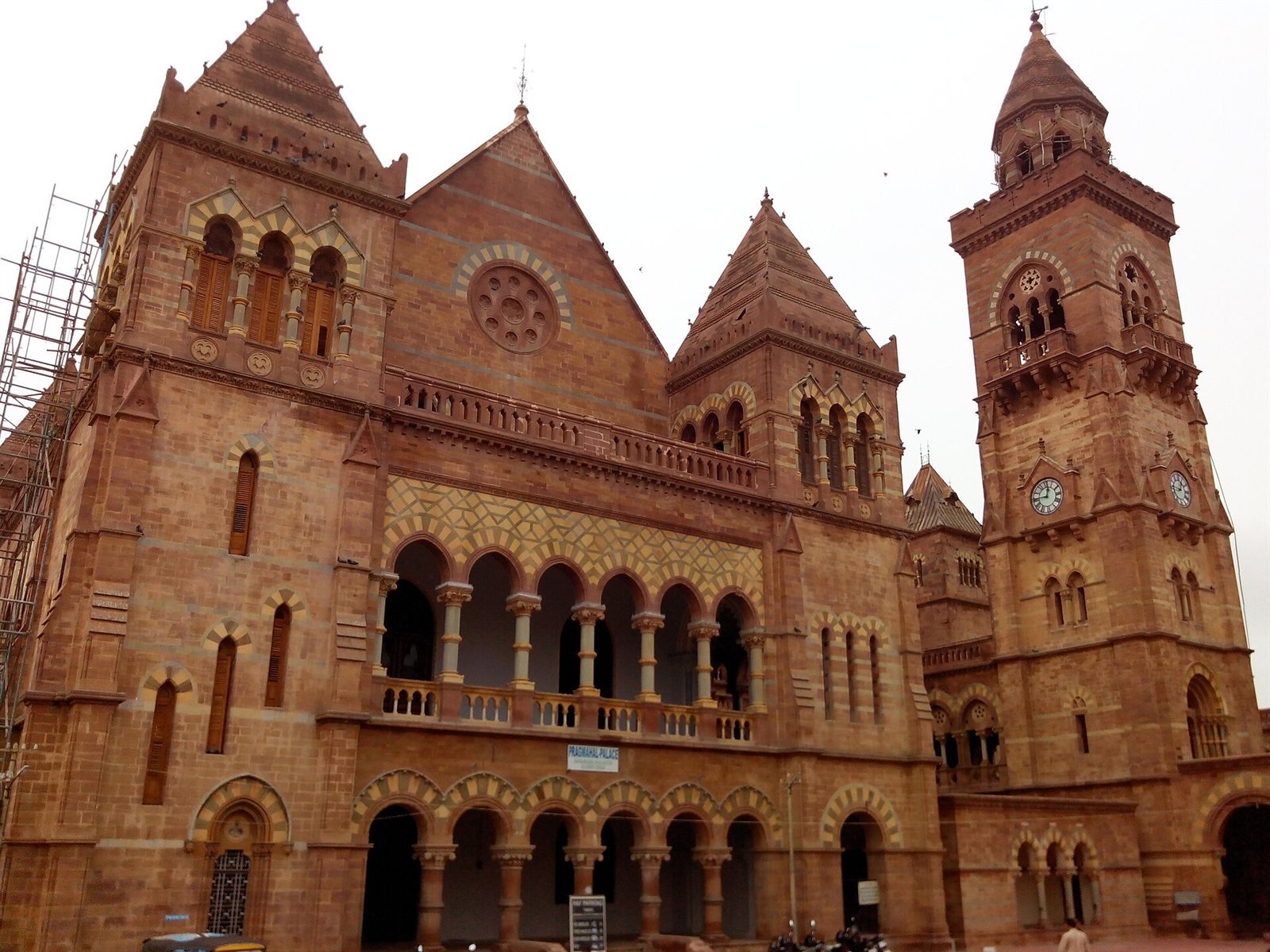
The Gothic palace in the same complex.
Take in the shimmering centrepiece of the palace.
See the fountain-ringed platform where the Rao sat.
Look closely at the glass, enamel and tile-work.
Examine clocks, paintings and royal oddments.
Hear the tale of Ram Singh Malam's European years.
Continue to Prag Mahal in the same complex.
Mirrors, marble, glass and gilding.
The Aina Mahal blends Indian palace planning with European decorative arts in a way found nowhere else in Gujarat. Rooms are lined with mirrors and white marble, hung with Venetian-glass chandeliers and finished in gilded, enamelled detail — much of it made locally using techniques Ram Singh Malam brought from Europe.
The celebrated Aina Mahal proper is a hall where mirrored walls multiply candlelight around a marble platform in a shallow, fountain-fed pool — a space for music, poetry and pleasure. It is small, dense and dazzling, an intimate counterpoint to the grand Prag Mahal beside it.
Mirror-lined Hall of Mirrors
Venetian glass & chandeliers
Marble pleasure pool & fountains
Locally made European-style craft
Cool, dry and clear — by far the best window for Kutch.
Green but humid; the Rann floods and some sites are hard to reach.
Fierce desert heat, often 45°C; only for the very early or hardy.
⏰ Visit in the morning light and pair it with Prag Mahal next door in the same Darbargadh complex.
Bhuj Airport is about 5 km from the Darbargadh.
Bhuj station is around 6 km from the old city.
In the heart of old Bhuj; autos reach the Darbargadh easily.
GLASS & LIGHT
The Hall of Mirrors, the pool platform and chandeliers.
Interiors are dim — steady your camera; avoid flash on glass.
Close-ups of enamel, glass and tile reward the effort.
Follow the museum's photography guidelines.
Shrine of Kutch's guardian goddess
A walled ghost-town on the edge of the Rann
◐ Mirror-hall interiors
Kutch's highest point, gazing over the white Rann
Rogan art, copper bells & lacquer woodwork
Italian-Gothic palace with a clock-tower climb
The spicy-sweet potato bun born in Mandvi.
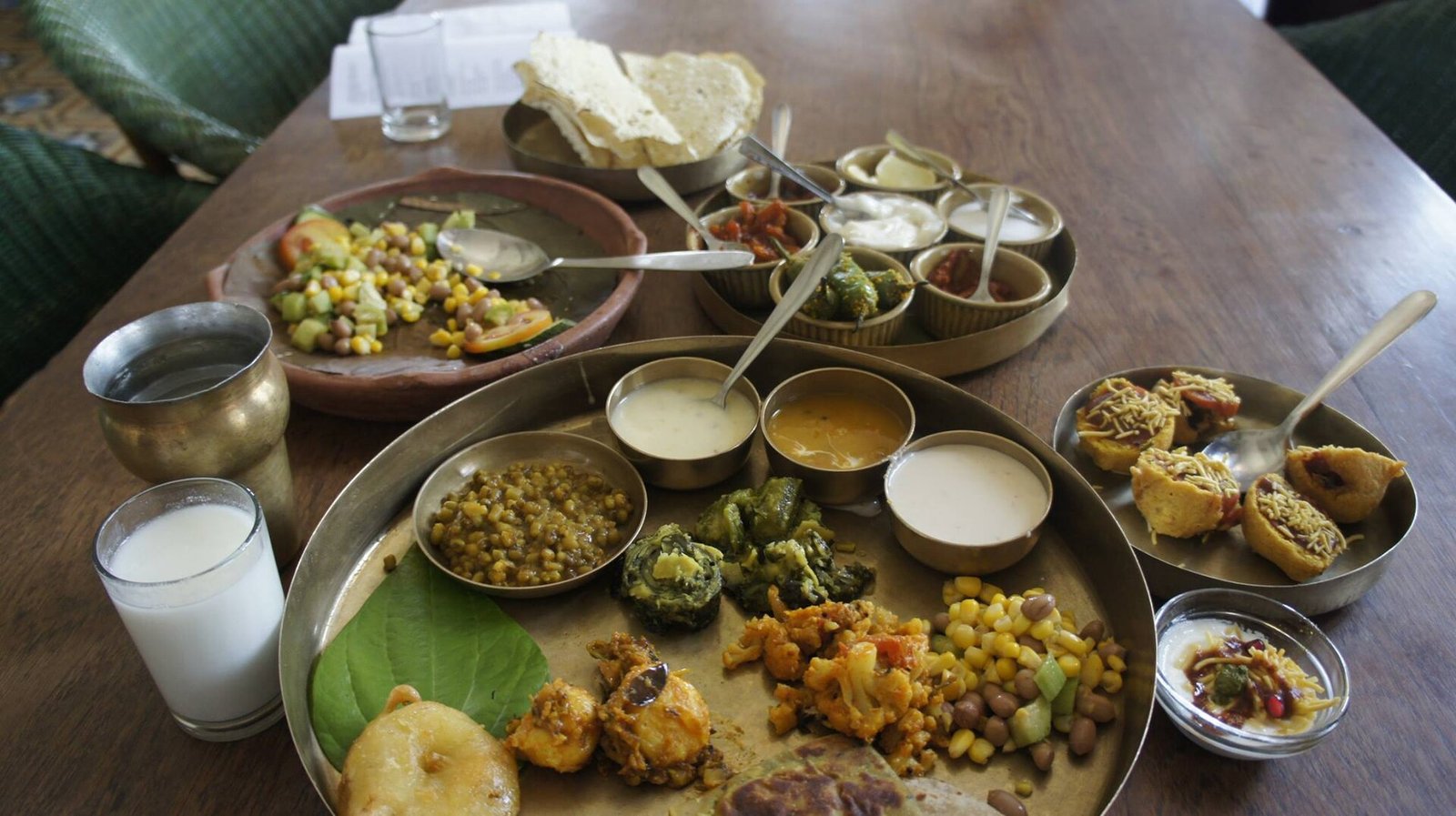
Bajra rotla, kadhi and ghee-rich local fare.
Dabeli, bhungra-bateta and Kutchi sweets.
Kutch is mostly veg — carry water on desert trips.
In the Darbargadh palace complex in old Bhuj, Kutch.
'Palace of Mirrors', for its mirror-lined halls.
Rao Lakhpatji in the mid-18th century, crafted by Ram Singh Malam.
A Kutchi craftsman who learned glass and enamel arts in Europe.
Yes, a modest ticket, with a possible small camera fee.
Roughly 9 AM–12 and 3–6 PM, often closed one day a week.
Usually yes, without flash; follow museum rules.
About 45 minutes.
It was hit in 2001 but conserved and reopened.
Prag Mahal, in the same Darbargadh complex.
Stumble on carved shrines half-hidden in the forest
Living Bhil tribal hamlets
A constellation of historic derasars
A monsoon cascade hidden inside a wildlife sanctuary.
Blackbuck, Indian wolves & harrier roosts
A grand convention & exhibition complex
WHERE TO STAY
Compare live prices across the big booking sites and reserve in a few taps. Booking happens securely on the partner's site — we may earn a small commission at no extra cost to you.
SHOP THE REGION
Hand-picked crafts and trip gear, available on Amazon.