
Region
Khambhat, Anand district
Best time
October to February
Ideal duration
One to two hours
Good for
Pilgrims and temple-architecture enthusiasts
The Khambhat Jain Cluster refers to the group of Jain temples that the old port town is known for, reflecting a strong and long-standing Jain community. Khambhat has been an important centre for the faith for centuries, and its temples range from richly decorated shrines to quieter neighbourhood places of worship. Together they form one of the town's most distinctive layers of heritage.
Visiting the cluster gives you a feel for the devotion and craftsmanship woven into Khambhat's daily life. You will find marble halls, carved detailing and calm interiors maintained by the community. Because these are living temples, the mood is reverent and orderly, so treat a visit as much a cultural encounter as a sightseeing stop.
What to see and do at the Khambhat Jain Cluster
Move between the temples to compare their scale and decoration, from ornate carved ceilings to serene idol shrines. The care taken in maintaining these spaces is part of what makes them memorable.
Combine the temples with a walk through the surrounding lanes, where you can sense how the Jain community and its trading history have shaped the town. Local guidance can help you understand the significance of particular shrines.
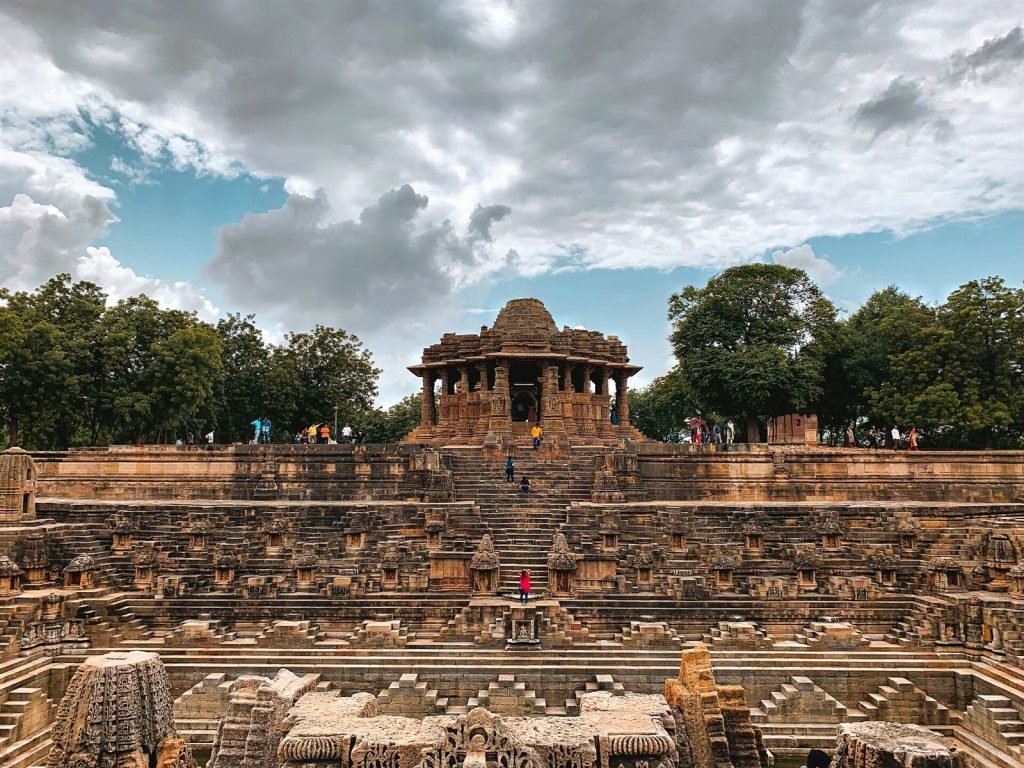
Khambhat Jain Cluster
How to get there
The temples lie within Khambhat town in Anand district, accessed by road from Anand, Nadiad or Vadodara. Within the old town the temples are fairly close together, so they are best explored on foot or with short local rides between clusters.
Best time to visit the Khambhat Jain Cluster
The winter months from October to February are the most pleasant for temple-hopping on foot. Jain festival days can bring larger crowds and a heightened atmosphere, so consider whether you would prefer a busier or quieter experience when planning.
Good to know
- Dress modestly and follow temple rules on footwear and photography.
- Certain items such as leather may not be permitted inside.
- Keep noise low, as these are active places of worship.
- Ask before photographing shrines or worshippers.
Frequently asked questions
Are visitors allowed inside the Jain temples?
Respectful visitors are usually welcome, but each temple may have its own rules, so follow posted guidance and any instructions from staff.
How many temples are there?
Khambhat has several Jain temples of varying size; treat the cluster as a group to explore rather than a fixed single site.
Is photography allowed?
It varies by temple and is often restricted inside shrine areas, so always check before taking pictures.
Why Khambhat has great Jain temples
Khambhat — Cambay, as the traders knew it — was one of the great ports of the medieval Indian Ocean, and for centuries much of Gujarat's trade wealth flowed through it. Jain merchant families were at the centre of that trade, and as they prospered they built: temples, upashrayas and manuscript libraries, generation after generation. When the gulf silted and the port declined, the trade left, but the temples stayed.
The result is a town with a remarkable density of Jain shrines — dozens of them threaded through the old quarters, ranging from grand marble halls to small neighbourhood derasar tucked between houses. Khambhat remains an important Jain centre, and several of its images and shrines are objects of pilgrimage in their own right.
What to see
The principal temple is the Chintamani Parshwanath derasar, whose image of Parshwanath is the town's most revered. Around it, the old Jain quarters — the streets around Jhakau and the bazaar lanes — carry shrine after shrine: carved doorways, marble interiors, painted ceilings and the quiet, swept cleanliness that marks a working derasar anywhere.
The pleasure here is cumulative rather than singular. No one temple is the monument; the cluster is. Walking the lanes from shrine to shrine, with the town's trading history visible in the havelis between them, is the actual experience.
Visiting the temples
These are working places of worship, not monuments. Dress modestly, remove footwear at each entrance, and leave leather items — belts and wallets included — outside. Photography inside a sanctum needs permission and is often declined; accept that. Mornings are the active time, when the temples are open, attended and at their best; many close through the afternoon and reopen towards evening.
A caretaker or local devotee will often walk a respectful visitor through — Khambhat sees few tourists, and genuine interest is usually met generously.
Making a day of it
The Jain cluster combines naturally with the rest of Khambhat: the Jami Masjid of 1325, one of Gujarat's earliest mosques; the agate and carnelian workshops that continue a bead craft running back to Harappan times; the old port quarter and the gulf shore. Lothal, the Harappan port site, lies on the road back towards Ahmedabad, and the two together make a full and coherent day — five thousand years of Gujarati trade in one loop.
October to March is the comfortable season. Khambhat is about two hours from Ahmedabad and ninety minutes from Vadodara, and it remains one of the most underrated day trips in central Gujarat — a town where the wealth of a vanished port is still standing, in stone, behind unassuming lanes.