Best time
December to March for most parks
Ideal duration
5 to 8 days for a full circuit
Good for
Safaris, birdwatching, photography
Region
Saurashtra, Kutch and central Gujarat
Gujarat holds two animals you cannot see in the wild anywhere else on the planet: the Asiatic lion and the Indian wild ass. That alone puts it on the map for serious wildlife travellers. But the range goes far beyond those headliners. This is a state of blackbuck sprinting across saline flats, of flamingos turning wetlands pink, of coral reefs in a marine park, and of one of the last homes of the great Indian bustard.
The catch is that Gujarat's wildlife is spread wide and the habitats are extreme, from the cracked white desert of the Rann to reed-fringed lakes and thorn forest. You cannot see it all in one visit or one region. This guide breaks the state's wildlife into its main destinations, tells you what each is famous for, and gives you the season and permit basics so you can build a realistic itinerary rather than a wish list.
How Gujarat's wild places fit together
Group the parks by geography. In the south of the Saurashtra peninsula sits Gir, the lion forest, with Velavadar and its blackbuck a few hours north near Bhavnagar. Central Gujarat, close to Ahmedabad, holds the great bird wetlands of Nalsarovar and Thol. The vast Rann of Kutch splits in two: the Little Rann in the east for wild ass, and the Greater Rann with its grasslands and bustards. Off the Jamnagar coast lies the Marine National Park, India's first. Because Gir, the Ranns and the wetlands sit in different corners, most people pick two or three and link them by road.
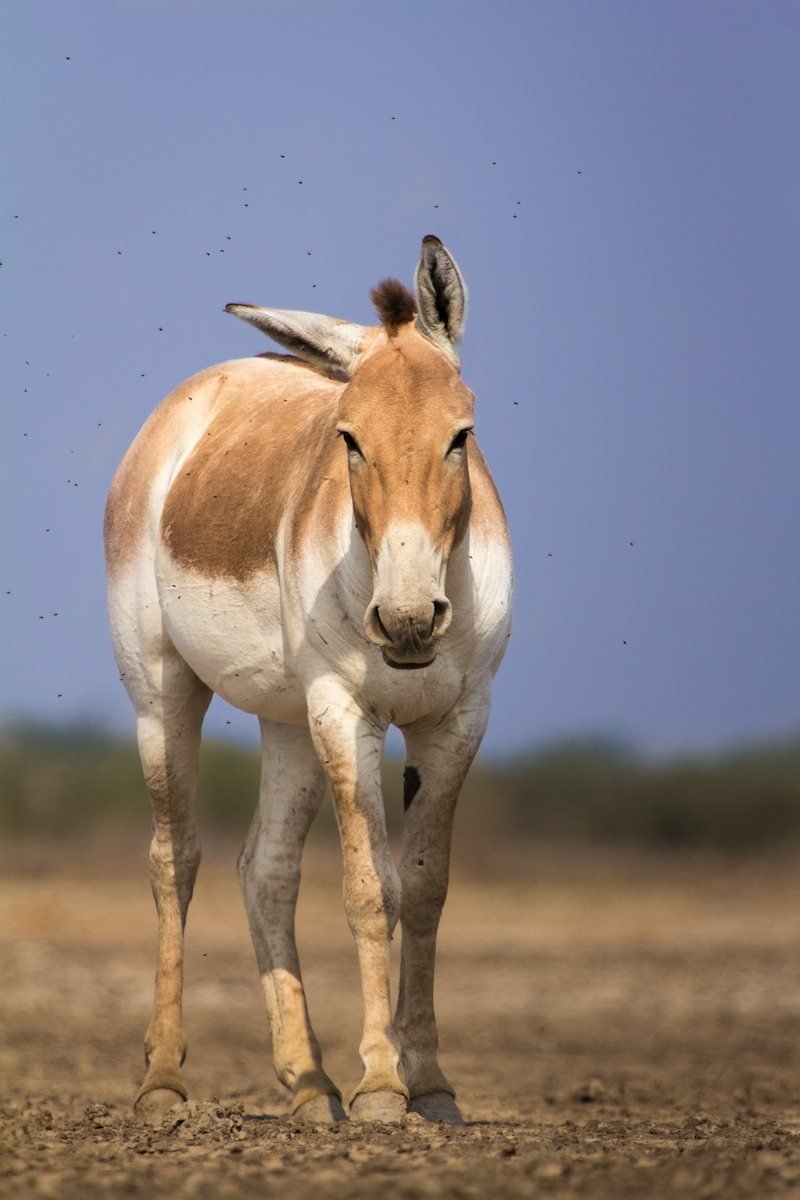
The Indian wild ass, or khur, found only in the Little Rann of Kutch and nowhere else in the world in this form.
The wildlife destinations that matter
- Gir National Park (Asiatic lions)The only wild population of Asiatic lions on earth, around 600 to 700 of them, in dry teak forest near Junagadh. Safaris run in open gypsies on booked permits, and sightings are good though never guaranteed. Leopards, sambar, crocodiles and rich birdlife round out the forest. This is the flagship.
- Little Rann of Kutch (Indian wild ass)A surreal expanse of saline desert that floods in monsoon and cracks white in winter. Home to the khur, the Indian wild ass, plus nilgai, foxes, wolves and huge flocks of wintering birds including flamingos and cranes. Safaris cross the open flats, and the light is extraordinary.
- Velavadar Blackbuck National ParkA compact grassland near Bhavnagar where blackbuck antelope reach one of their highest densities in India. It is also a stronghold for the striped hyena, wolves and, in winter, one of the world's largest harrier roosts. Flat, open and easy to photograph.
- Nalsarovar and Thol bird sanctuariesTwo wetlands within easy reach of Ahmedabad. Nalsarovar is a broad shallow lake alive with flamingos, pelicans and waders, best explored by boat at dawn. Thol is smaller and closer to the city, excellent for a half-day of birding. Both peak in winter.
- Marine National Park, Gulf of KutchIndia's first marine national park, off Jamnagar. At low tide you can walk out onto exposed reefs to see coral, octopus, starfish and sponges, with dolphins and migratory shorebirds offshore. A completely different kind of wildlife outing, timed entirely by the tide.
How to get around
Distances are large, so plan road transfers carefully. Gir is reached via Junagadh or Veraval, both on the rail network, then a short drive to Sasan Gir village where the lodges and safari gate cluster. The Little Rann is accessed from Dhrangadhra or the village of Zainabad, roughly two to three hours from Ahmedabad. Velavadar is about a ninety-minute drive from Bhavnagar. Nalsarovar and Thol are day trips from Ahmedabad, an hour or so each. The Marine National Park is reached from Jamnagar. A hired car with a driver who knows these routes is by far the most practical way to link parks, since public transport to the gates is thin.
Where to base yourself
For Gir, stay at Sasan Gir where lodges range from forest department options to comfortable jungle resorts near the safari gate. For the Little Rann, the classic base is the cluster of desert camps around Zainabad and Dasada that run their own safaris. Bhavnagar is the comfortable city base for Velavadar, with a wildlife lodge at the park edge for early starts. Ahmedabad works as a hub for the two bird sanctuaries. Jamnagar is the base for the marine park. If you are doing a circuit, a common flow is Ahmedabad, then the Little Rann, then down to Gir, picking up Velavadar or Nalsarovar along the way.
Best time to visit
December to March is the sweet spot for almost everything. Winter brings migratory birds in huge numbers, comfortable safari temperatures and clear air over the Rann. Gir stays open from mid-October to mid-June and closes during the monsoon, with the cooler months best for both comfort and sightings, though the hot pre-monsoon weeks concentrate animals around water. The Ranns are impassable in the rains and only firm up from October. The Marine National Park depends on tide timings rather than season, so check the low-tide schedule before you go.
Practical tips
- Book Gir safari permits well in advance online, as slots are limited and sell out in peak season. Carry the photo ID used for booking.
- For the best light and activity, take the earliest morning safari slot everywhere; animals and birds are far more active at dawn.
- Bring binoculars and a long lens. Much of Gujarat's wildlife, especially birds and blackbuck, is seen at distance across open ground.
- Dress in muted colours, carry sun protection and water, and expect cold early mornings in winter, particularly out on the Rann.
- Hire a naturalist or a camp's own guide for the Ranns. The flats look empty until someone who knows them shows you the wolves, foxes and flamingo lines.
Frequently asked questions
Where can I see Asiatic lions in Gujarat?
Only at Gir National Park and the surrounding sanctuary near Junagadh in Saurashtra. This is the last wild population of Asiatic lions in the world, seen on booked jeep safaris.
What is special about the Little Rann of Kutch?
It is the only home of the Indian wild ass, or khur, and a vast winter refuge for flamingos, cranes and other migratory birds. The saline desert landscape itself is a major draw.
When is the best season for birdwatching in Gujarat?
November to February, when migratory birds arrive in huge numbers at wetlands like Nalsarovar and Thol and across the Rann. Winter also offers the most comfortable weather for long hours outdoors.
Do I need permits for Gujarat's wildlife parks?
Yes for the main parks. Gir requires a booked safari permit, and most reserves charge entry and vehicle fees. It is best to book Gir online ahead of time and arrange others through your lodge or camp.
A Gujarat wildlife trip rewards patience and planning. Give it a week, link two or three habitats, and you can stand before wild lions, cross a desert full of wild ass, and watch a wetland turn pink with flamingos, all in one journey. Few places in India offer that range, and fewer still let you feel you have it mostly to yourself.