
Home › Gir Somnath › Gir National Park
WILDLIFE · ASIATIC LIONGir National Park
The last refuge of the wild Asiatic lion — a vast forest of teak and acacia where the king of the jungle still roams, with leopards, deer and 300+ birds.
Where the lion still rules
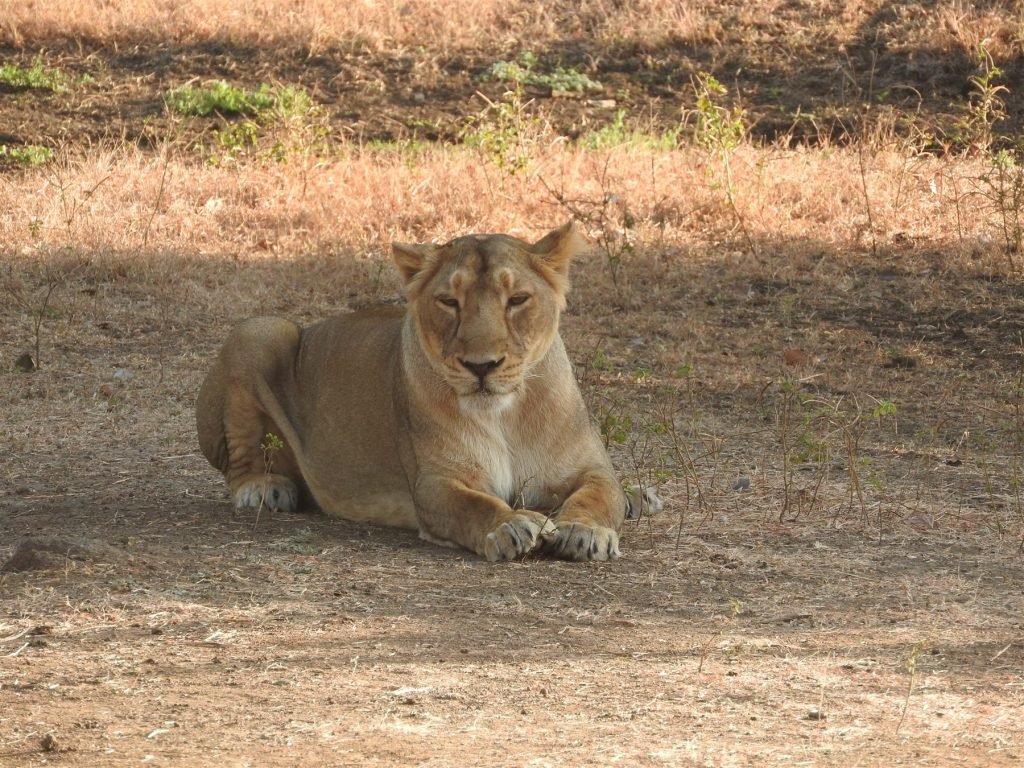
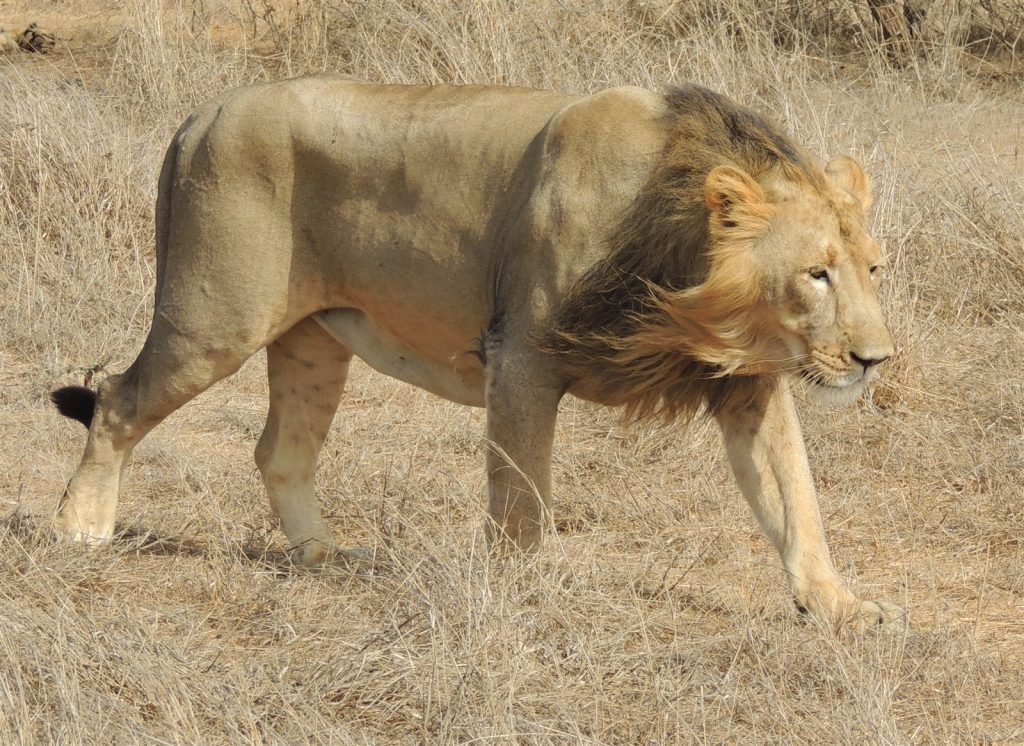
Gir is one of the great conservation success stories of the world — the only place on earth where the majestic Asiatic lion still survives in the wild. Once hunted to the very brink, the lions were saved by the Nawab of Junagadh, and now several hundred range across this rugged sanctuary of dry teak forest, acacia scrub, rivers and grassland.
A jeep safari through Gir offers the thrill of tracking lions in their natural home, but the park teems with far more: leopards, striped hyenas, jackals, chital and sambar deer, nilgai, crocodiles in its rivers, and over 300 species of birds. The Devalia Interpretation Zone offers a quicker, near-guaranteed glimpse for those short on time.
Wild, sun-baked and gloriously alive, Gir is an unmissable encounter with India’s natural heritage — the wild heart of Saurashtra.
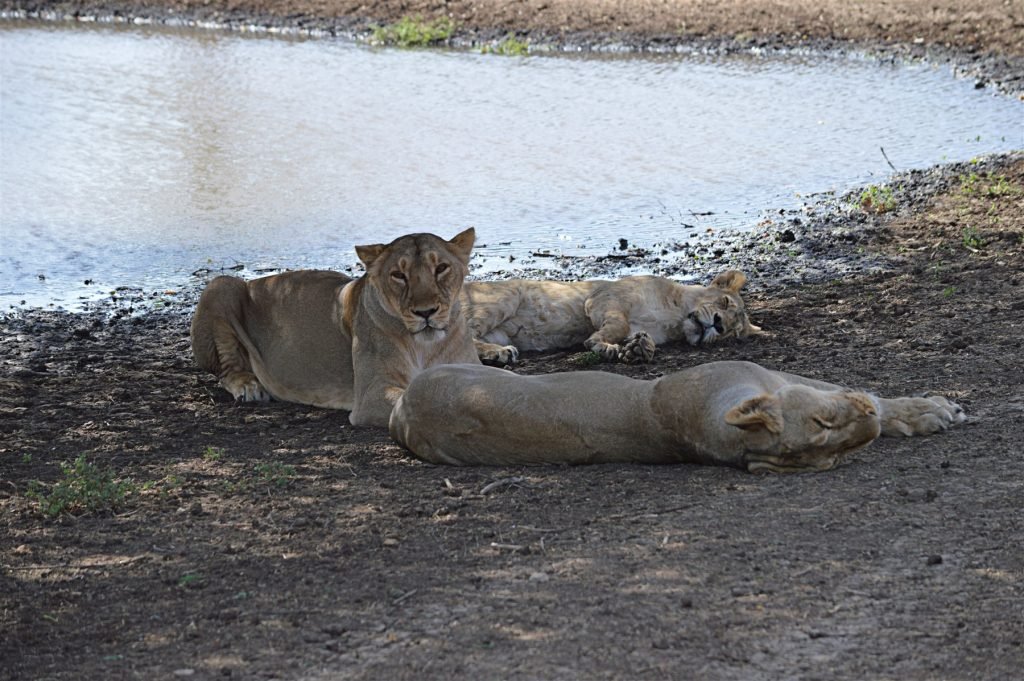
Asiatic lions resting in Gir.
From near extinction to the last wild pride
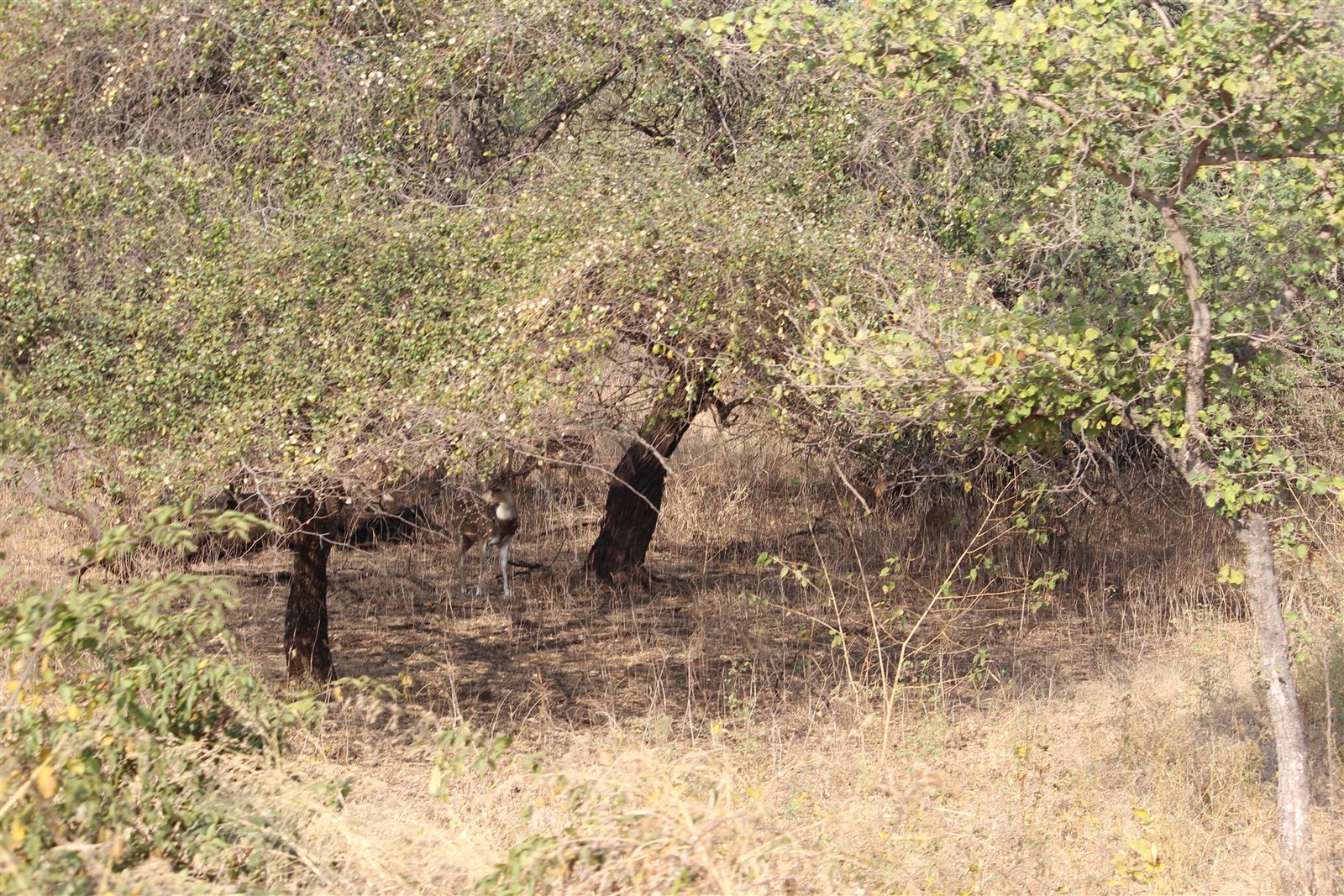
A chital stag in the Gir forest.
By the early twentieth century hunting had reduced the Asiatic lion to a few dozen animals surviving in the Gir forest and nowhere else.
The Nawab of Junagadh banned lion hunting on his territory, and that single decision is why the subspecies exists at all today.
Gir was declared a sanctuary in 1965 and a national park a decade later, covering some 1,400 square kilometres of dry deciduous forest.
The population now runs to several hundred inside the park and several hundred more across the wider Gir landscape beyond it.
Reasons to make the time
Asiatic lions
This is the only place on earth where the Asiatic lion still lives wild, which is what makes a Gir safari different from any other.
Jeep safari
Safaris follow assigned routes through the forest with a guide and a driver, tracking on alarm calls and fresh sign.
Leopards & more
Leopard, striped hyena, chital, sambar, nilgai, chowsingha and jackal all share the forest with the lions.
300+ birds
More than 300 bird species have been recorded here, including several vultures now critically endangered elsewhere in India.
Crocodiles
Marsh crocodiles live in the park's rivers and at the Kamleshwar dam, which is worth the detour on its own.
Conservation
Gir is cited worldwide as a conservation success — a species brought back from a few dozen animals to a viable population.
What to look for inside
 LIONS
LIONSAsiatic lions
The only wild population anywhere, in the forest they were saved in.
 DEER
DEERChital and sambar
Abundant grazing herds — the prey base that makes the whole system work.
How to spend an hour or two
Book a permit
Reserve a jeep safari through the official Gujarat forest portal well ahead; permits are limited per slot and sell out in season.
Go at dawn
Take the dawn slot. Lions move at first light and lie up in shade through the middle of the day.
Track the lions
Follow your guide's lead through the assigned zone. Routes are allotted, and the guides read alarm calls better than you will.
Spot the others
Look beyond the lions — leopard, hyena, crocodile and the birdlife are what fill the drive between sightings.
Try Devalia
Add Devalia if you want a near-certain sighting; it is 12 km away and takes under an hour.
Respect the wild
Keep quiet and keep your distance. Noise costs everyone the sighting, and pressure costs the animal more.
The dry deciduous Gir forest.
A forest of teak and lions
Gir is a mosaic of dry deciduous teak forest, thorny acacia scrub, open grassland (vidis), rivers and reservoirs, spread over some 1,400 square kilometres of rugged Saurashtra. This varied habitat is what supports such a wealth of wildlife, from the apex Asiatic lion down to its prey and the birds of the canopy.
Visitor access is by permit-controlled jeep safari through designated routes and zones from the Sasan Gir gate, with the separate Devalia Interpretation Zone offering a fenced, bus/jeep tour for a quicker encounter. The forest, not architecture, is the wonder here.
Planning more of the area? Our Gir Somnath guide covers the whole district.
If this is what you travel for, browse wildlife across Gujarat.
Our Gir National Park guide covers timings, tickets and how to get there.
Dry teak & acacia forest
Rivers and reservoirs
Permit-controlled safari zones
Devalia Interpretation Zone
When to go
December to March is the most comfortable season — cool mornings, good light and pleasant conditions in the forest.
The park closes for the monsoon breeding season, roughly mid-June to mid-October; Devalia is the option in those months.
April to early June is punishing but gives the best sightings, as animals concentrate at the remaining water.
⏰ Book safari permits well ahead via the official forest portal; December–March is ideal, summer best for sightings.
Timings & entry
- Safaris run in morning and afternoon slots
- Park closed mid-June to mid-October (monsoon)
- Permits and a guide are mandatory
- Allow a half day per safari
- Book jeep permits via the official portal
- A registered guide accompanies each jeep
- This is NOT a booking site — book officially
- Carry ID matching your permit
Getting there
By Air
Diu (~75 km), Rajkot and Keshod airports.
By Rail
Sasan Gir and Junagadh stations serve the park.
By Road
Sasan Gir is ~45 km from Somnath, ~60 km from Junagadh.
On safari
LION & FOREST
The wild Asiatic lion in its home
What to shoot
Lions in the dry forest at dawn.
Wildlife
Leopard, deer and the park's birdlife.
Reach
A long lens earns its weight; cats are often distant.
Etiquette
No flash, no noise, and never ask the driver to get closer.
Know before you go
More to see close by
 PILGRIMAGE
Gir Wildlife & Birding
A serene shrine wrapped in Krishna legend
 SAFARI
Devalia Safari Park
A fenced zone for reliable lion sightings
 RIVER
RIVERHiran & Kamleshwar
Gir’s lifeline river, dam & birdlife
 BEACH
BEACHSomnath Beach
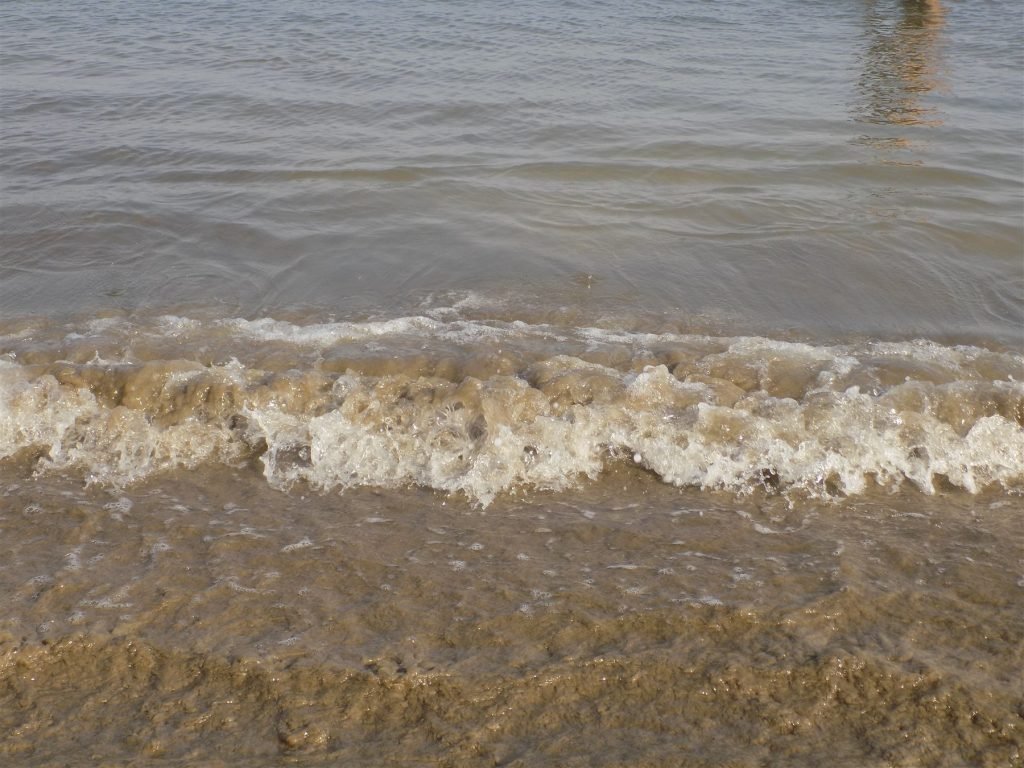
Golden sands beside the great temple
 PORT
PORTVeraval
One of India’s busiest fishing ports
Tulsishyam
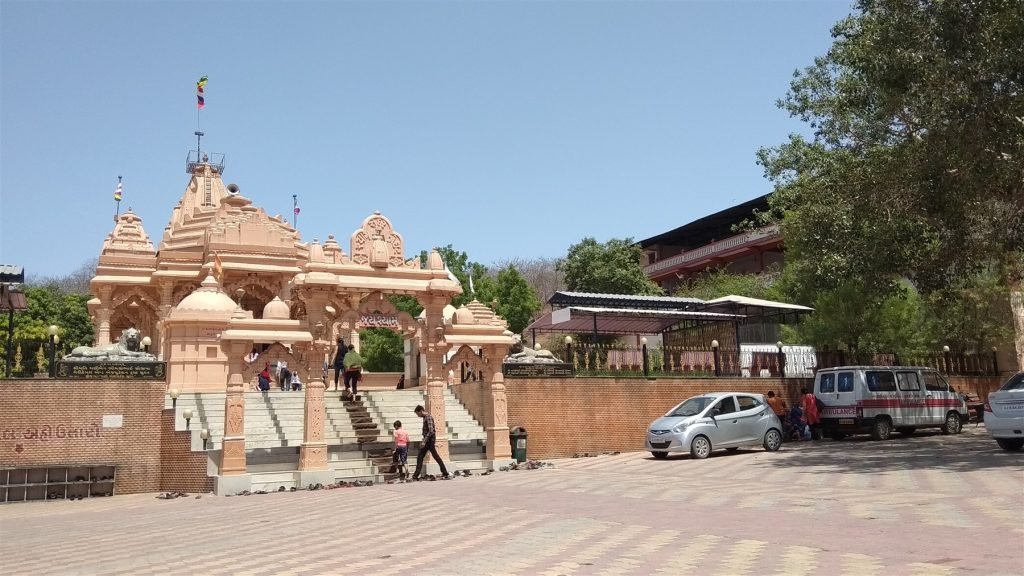
The first Jyotirlinga, rebuilt at the ocean’s edge
Where to eat near Gir National Park
 THALI
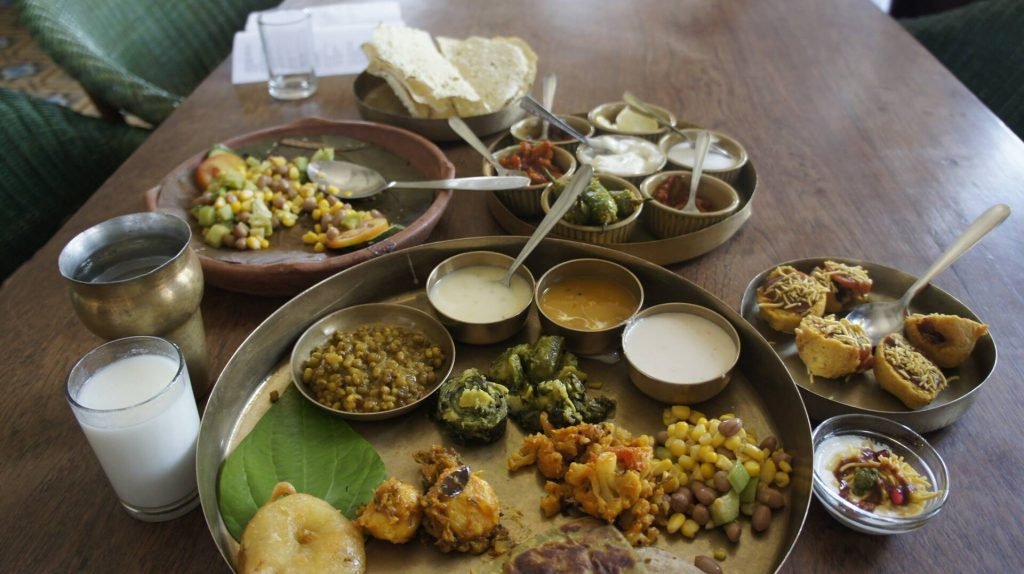
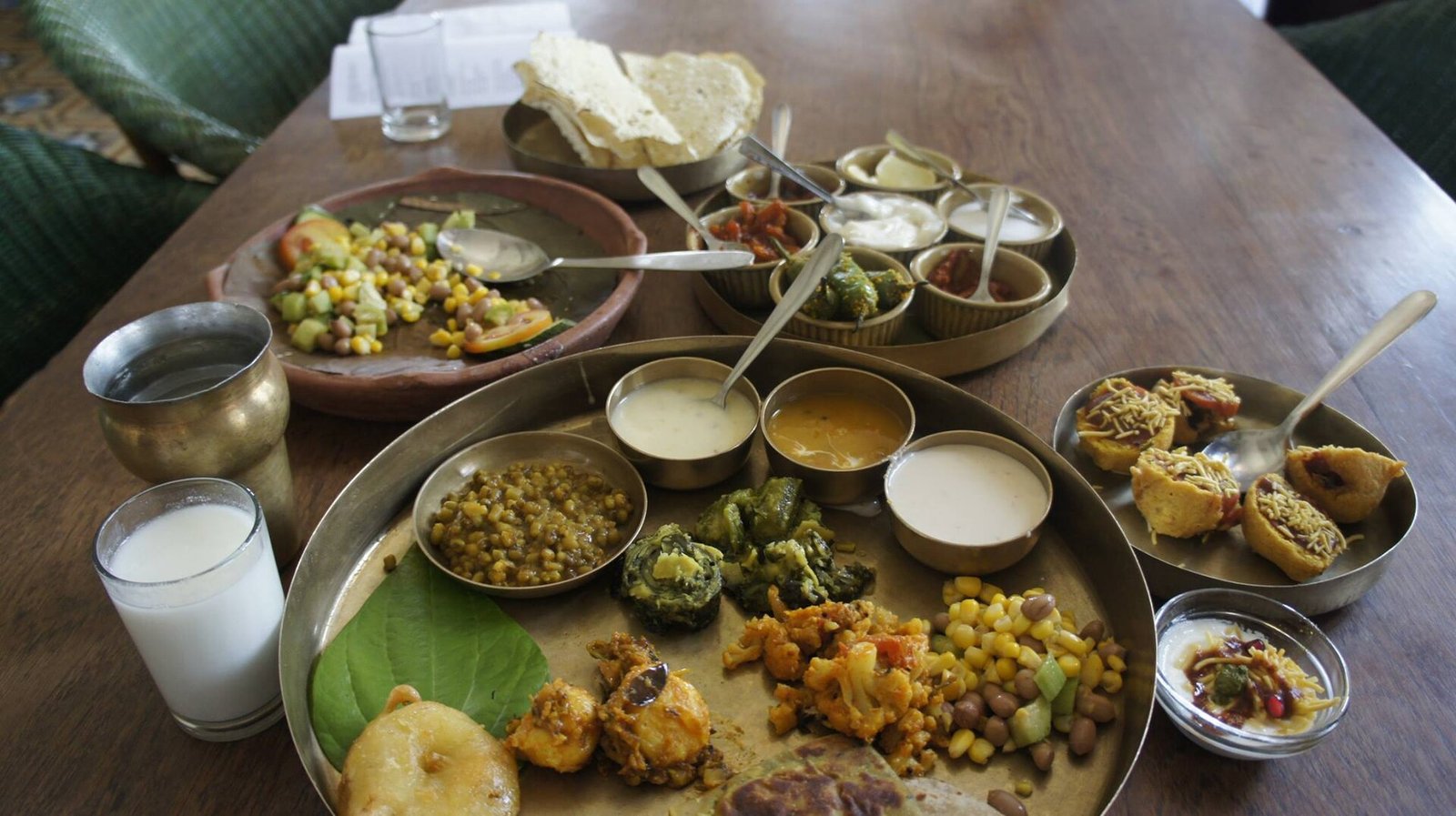
THALIKathiawadi Thali
Rotla, kadhi, shaak and ghee-rich fare.
 SNACKS
Ganthiya & fafda
Saurashtra's beloved fried snacks.
 PRASAD
Temple-town bites
Sweets and snacks near Somnath.
Pure-veg & Kesar
Pilgrim-town veg fare; Gir Kesar mangoes in summer.
Gir National Park FAQ
What is Gir famous for?
It is the only place on earth where the Asiatic lion survives in the wild. Every wild Asiatic lion alive descends from the remnant population saved in this forest.
How do I see the lions?
On a permit-controlled jeep safari from Sasan Gir, booked through the official Gujarat forest department portal. Permits are limited per slot, and a guide and driver come with the vehicle.
When is Gir open?
Roughly mid-October to mid-June. The park closes through the monsoon for the breeding season, and Devalia is the alternative in those months.
When is the best time?
December to March for comfortable conditions; April and May for the best sightings, when animals concentrate around water — though the heat is severe.
What else lives there?
Leopard, striped hyena, chital, sambar, nilgai, chowsingha, jackal and marsh crocodile, along with more than 300 bird species including several endangered vultures.
What is Devalia?
A fenced interpretation zone about 12 km from Sasan, offering a short guided circuit with near-guaranteed sightings. It complements the core safari rather than replacing it.
Do I need a permit?
Yes. Permits and a forest department guide are both mandatory, and bookings should be made officially rather than through touts at the gate.
How far is it from Somnath?
About 45 km from Somnath, which is why the two are so often combined into one trip through southern Saurashtra.
Related places across Gujarat
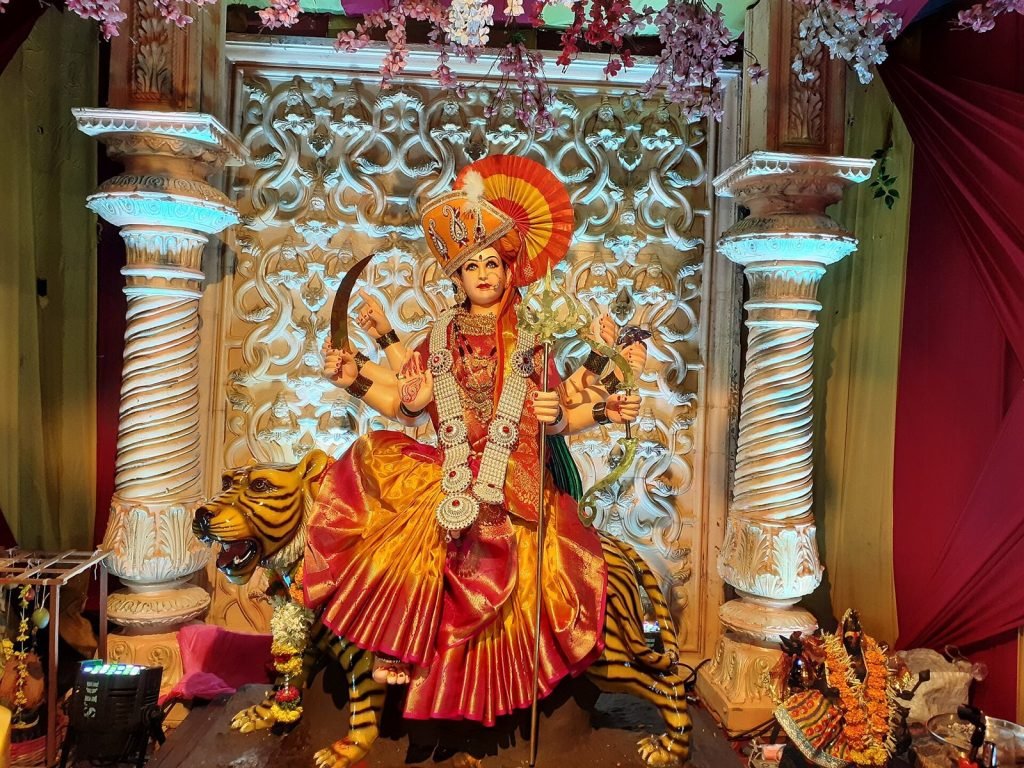 FAIR
FAIRMadhavpur Mela
Krishna-Rukmini’s celebrated spring wedding fair

Chhota Udaipur Town Temples
Old shrines of Chhota Udaipur
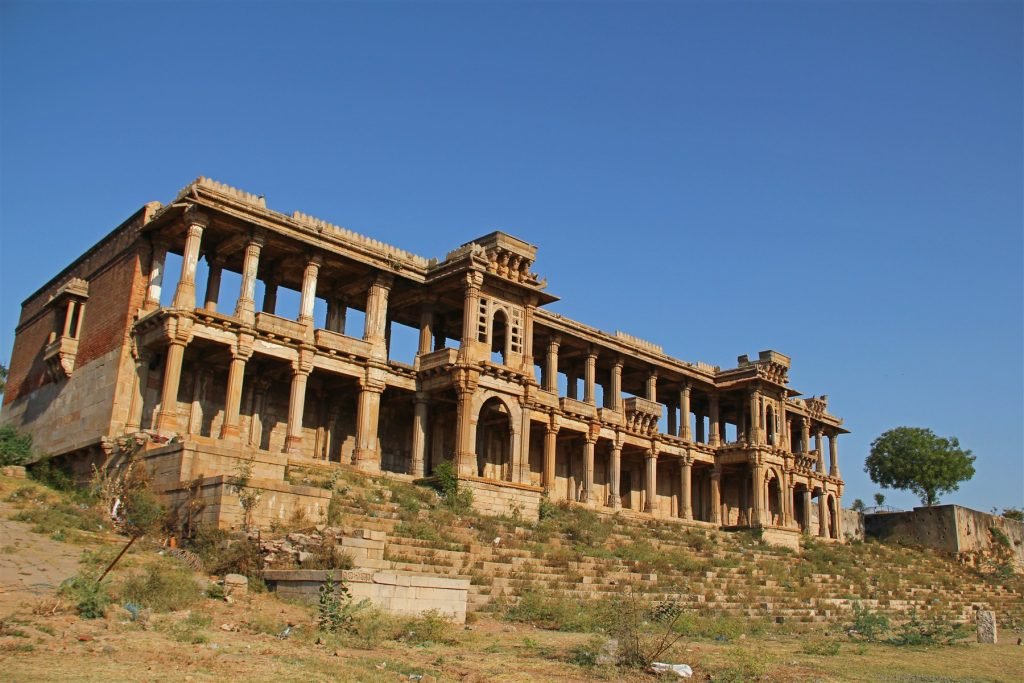 HERITAGE
Sarkhej Roza
The serene ‘Acropolis of Ahmedabad’

Ambaji Shakti Peeth
One of India’s 51 holiest Goddess shrines
 PALACE
Kusum Vilas Palace
The elegant royal residence of the town
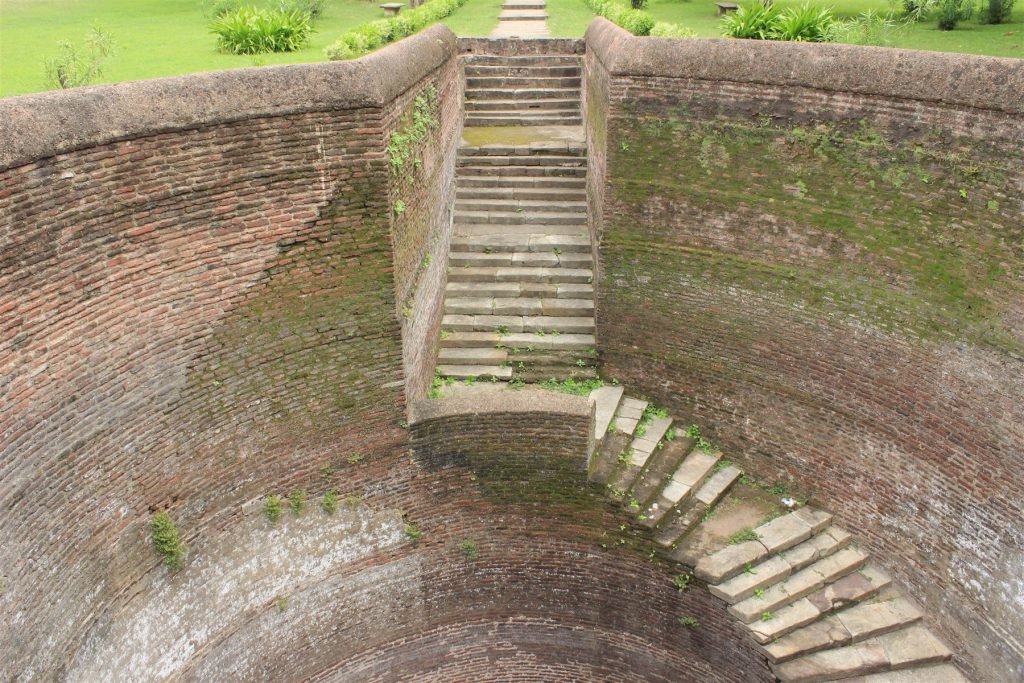 STEPWELL
Helical Stepwell
A rare spiralling water structure
WHERE TO STAY
Find your stay in Gujarat
Compare live prices across the big booking sites and reserve in a few taps. Booking happens securely on the partner's site — we may earn a small commission at no extra cost to you.
Book directly on our partner sites — tap a provider to see live Gujarat hotels & prices:
SHOP THE REGION
Bring home Gujarat — & travel essentials
Hand-picked crafts and trip gear, available on Amazon.
Published 24 June 2026 · Updated 24 August 2026
We’re an independent group of writers and travellers documenting every corner of Gujarat — one place, plate and festival at a time.