
Gujarat is the last home of the Asiatic lion, but the state's wildlife runs far wider than Gir — from the wild asses of the Little Rann to the flamingo flats of the coast and the blackbuck grasslands of Velavadar.
Here are the parks, sanctuaries and honest field guides to help you plan a wildlife trip and time it to the right season.
Why Gujarat wildlife stands apart in India
The story of Gujarat wildlife begins with a single fact no other place can claim: the Gir forest holds the last free-ranging Asiatic lions on Earth, roughly 670 of them across a dry teak-and-acacia landscape spread over Junagadh and Amreli. But lions are only the headline. Drive north-west and the ground turns to cracked white salt, where the world's last wild asses gallop in loose herds across the Little Rann of Kutch. Down on the coast, the Marine National Park near Jamnagar protects coral and octopus on tidal flats. Few states pack so many species found nowhere else into a day's drive of one another.
What ties these places together is contrast. In a single trip you can watch a lion pad across a firebreak at dawn, then stand on a salt flat at noon while a khur kicks up dust on the horizon. The blackbuck grasslands of Velavadar add a third texture entirely: knee-high golden grass, harriers dropping to roost at dusk, and the corkscrew horns of males cutting the skyline. Each habitat asks for a different pace and a different eye, and each rewards the traveller who slows down enough to read the small signs, the alarm calls, the fresh pugmarks, the shifting light.
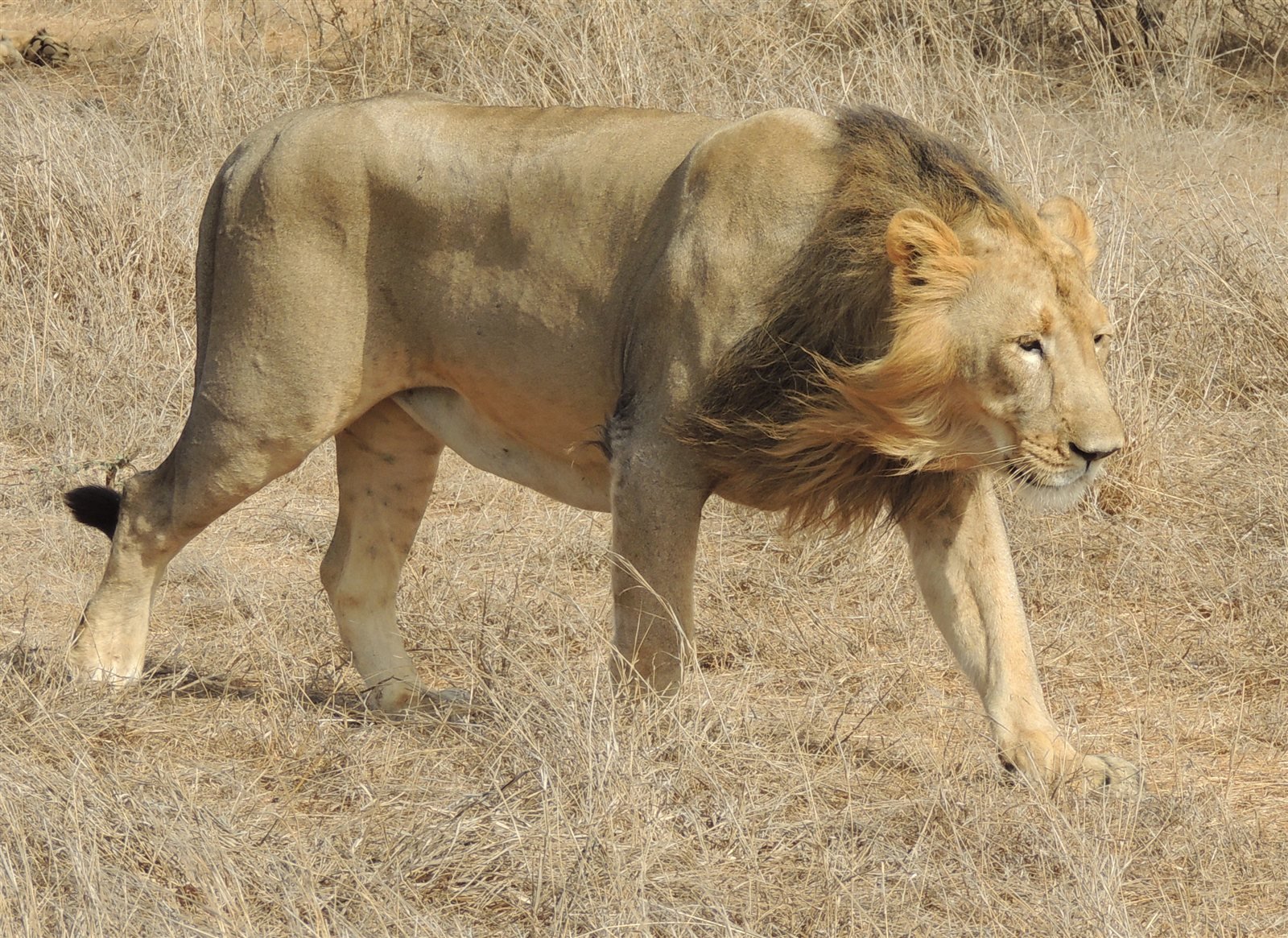
Lions, wild asses, blackbuck and a million birds — where to see wild Gujarat.
Grasslands, salt flats and the birds between them
Velavadar's Blackbuck National Park runs on the rhythm of its grass. Winter mornings bring one of Asia's largest harrier roosts, and the open plains make wolves and striped hyenas genuinely possible to spot if you are patient. Nal Sarovar and Thol, both wetlands ringing Ahmedabad, fill with flamingos, pelicans and cranes from November onward, best seen by shallow boat in the first hour of light before the glare hardens. Off the Jamnagar coast, the Marine National Park lets you walk tidal mudflats at low water with a guide, turning over rocks to find starfish, sea anemones and mangrove crabs among the coral.
Timing matters more here than almost anywhere else in India. Gir's gates open in mid-October and close on 15 June for the monsoon breeding season, so plan lion safaris for the cool December-to-March window when animals move in daylight. Permits for Gir are booked online in advance and are strictly slot-limited, with gypsies leaving Sasan Gir on fixed morning and afternoon rounds; the separate Devalia interpretation zone offers a near-guaranteed sighting for anyone short on time. The Little Rann and Velavadar are also best from October to March, before the summer heat empties the plains and closes the season down.
Explore Wildlife
Wildlife of Gujarat: Lions, Wild Ass and a Million Birds
A Gujarat wildlife guide to Gir lions, the Little Rann's wild ass, Velavadar blackbuck…
Gir National Park: Complete Safari Guide
A practical Gir National Park guide to the last wild Asiatic lions: safari permits,…
The Little Rann of Kutch: Salt, Sky and the Last Wild Ass
A complete Little Rann of Kutch guide: wild ass safaris, flamingos, salt-pan life and…
Devalia Safari: The Honest Way to See a Gir Lion
A frank Devalia Gir safari guide: how the fenced lion zone differs from the…
The Lions of Gir: What a Safari Is Really Like
An honest first-person guide to the Gir lion safari: permits, the best season, what…
Dawn at Nalsarovar: Flamingos on a Silver Wetland
A first-person Nalsarovar Bird Sanctuary guide near Ahmedabad: dawn boat rides, winter flamingos and…
Planning a wildlife trip to Gujarat
Four protected areas carry most of the state's wildlife interest, and they are far enough apart that choosing between them matters. Gir in the south-west is the only place on earth to see Asiatic lions in the wild, with permit-booked jeep safaris from Sasan; the Little Rann of Kutch holds the world's population of the khur, the Indian wild ass, reached from Bajana, Zainabad or Dhrangadhra; Velavadar near Bhavnagar protects a rare tropical grassland with blackbuck in thousands, breeding Indian wolves and one of the world's largest winter harrier roosts; and the Marine National Park off Jamnagar opens its coral flats to low-tide reef walks by permit.
Beyond the flagships, the state carries the sloth-bear forests of Jessore and Ratanmahal, the teak and bamboo of Shoolpaneshwar and Jambughoda, the Dangs' Sahyadri forests at Vansda and Purna, and wetlands at Nal Sarovar, Khijadiya and Thol that fill each winter with migratory birds. Chhari Dhand in Kutch has a raptor density few sites in India can match.
Seasons and booking
The wildlife season runs broadly from October to March. Gir closes for the monsoon from mid-June to mid-October; the Little Rann floods and its safaris pause; Velavadar's harrier roost peaks from November, while its lesser florican displays belong to the monsoon months instead. Safari permits for Gir, Velavadar and the other state parks are booked through the Gujarat forest department's official online portal, and Gir slots in particular sell out well ahead in peak season, so book before fixing travel dates rather than after.
Practical points apply everywhere: stay in the vehicle, keep to allotted zones and timings, hire the assigned guide, and treat dawn and dusk as the productive hours. Carry binoculars, since much of Gujarat's best wildlife watching is across open grassland and salt flat where sightings come at distance rather than at the roadside.
Our Gujarat wildlife guide covers timings, tickets and how to get there.