
Region
Gir landscape, Saurashtra
Best time
Winter, December to March
Ideal duration
A half day
Good for
Nature lovers and quiet scenery
Hiran and Kamleshwar refer to the Hiran river and the Kamleshwar reservoir that sit within the Gir landscape, the famous lion country of Saurashtra. Together they form a gentler, watery counterpoint to the dry teak forest around them. The reservoir gathers water behind a dam, and the river threads through the terrain, so this corner of Gir tends to feel green and calm compared with the scrub elsewhere.
Wildlife often concentrates near water, which is part of what makes this area appealing, though sightings are never guaranteed and access to core forest zones is controlled. Expect wooded slopes, open water, birdlife along the banks and the general hush of a protected landscape. It is a place to slow down and take in the setting rather than tick off a list of specific sights.
What to see and do around Hiran and Kamleshwar
The scenery itself is the attraction: forest reflected in still water, birds working the shallows, and the possibility of animals drawn to drink. Photographers tend to love the reflections in the softer light of morning and evening.
Most visits to this part of Gir happen within organised arrangements, since much of the area is protected. Check what is currently open, and consider pairing the visit with a wider Gir safari if you are exploring the region for its wildlife.
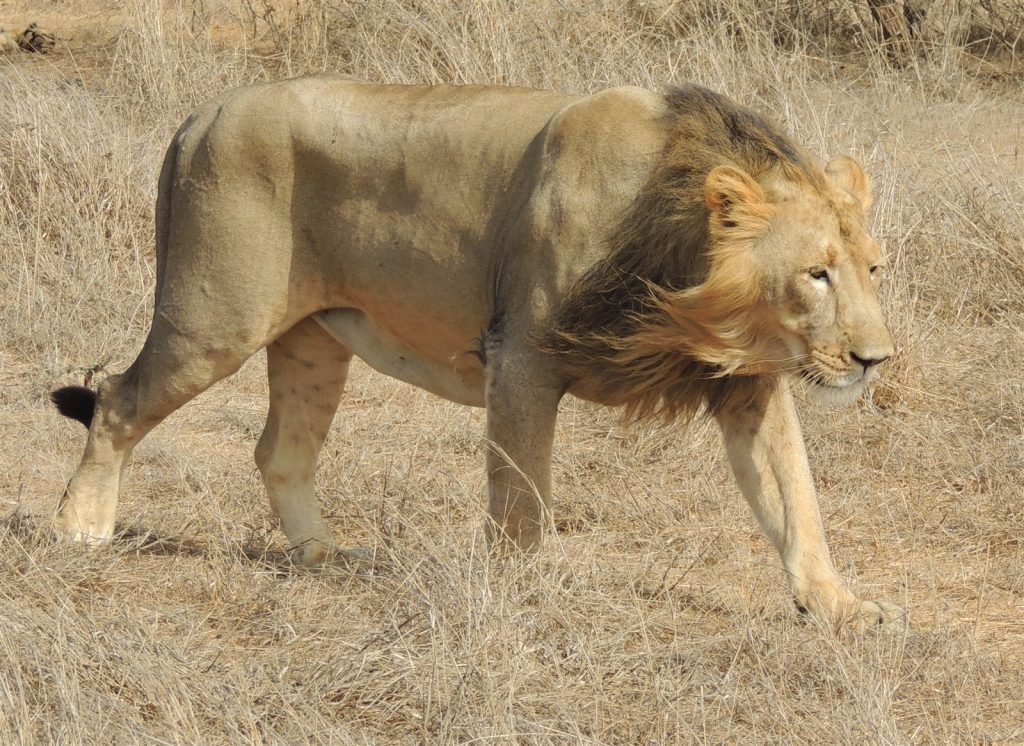
Hiran & Kamleshwar
How to get there
This area lies within the broader Gir region of Saurashtra, reached by road from towns such as Sasan Gir, Junagadh and Veraval. Because it falls inside a protected landscape, access can depend on forest rules and permits, so plan through recognised channels.
Best time to visit Hiran and Kamleshwar
Winter, roughly December to March, is generally the most pleasant time in the Gir landscape, with cooler days and good chances of activity near water. Parts of protected areas can close seasonally, so confirm before travelling.
Good to know
- Check forest access and permit rules in advance.
- Carry binoculars for birds and distant wildlife.
- Keep noise low near the water.
- Combine with a wider Gir visit if possible.
Frequently asked questions
Is this where I can see lions?
It is part of the wider Gir landscape, but lion sightings depend on organised safaris and are never guaranteed.
Is the reservoir accessible year round?
Access can vary with season and forest rules, so check current conditions before you go.
What will I see if there is no wildlife?
Forest, water and birdlife make it a peaceful, scenic spot even on a quiet day.
Where the forest meets still water
The Hiran is one of Gir's own rivers — it rises in the forested hills and runs south-west through the sanctuary before finding the sea at Somnath. At Kamleshwar, deep in the Gir landscape, it is held behind a dam built in the 1950s, and the reservoir that formed there has become something unplanned: the largest body of still water in the lion forest, and the ecological heart of the park's western half.
Officially the dam is Kamleshwar; the water it holds is also called the Hiran-I reservoir. For visitors the names matter less than the fact: open water inside a dry deciduous forest changes everything around it.
The crocodile capital of Gujarat
Kamleshwar's fame among naturalists rests on its mugger crocodiles. The reservoir holds one of the largest breeding populations of marsh crocodile in India, and basking muggers on the banks — sometimes dozens visible at once in the cool months — are as close to a guaranteed sighting as Gir offers. The forest department has run crocodile conservation here since the 1970s, and the population is the programme's success story.
The water pulls in everything else too. Chital, sambar and wild boar come down to drink; lions and leopards follow the prey, and the dam area is a productive stretch on safari routes for exactly that reason. Winter brings waterbirds — cormorants, darters, storks, kingfishers — to a forest otherwise short of them.
How you actually see it
Kamleshwar lies inside the sanctuary, so there is no independent access: you see it on a Gir safari from Sasan, when your allotted route passes the dam, or from the designated viewpoints the forest department permits. You cannot walk the banks freely — this is lion forest with a dense crocodile population, and the restrictions are not bureaucratic caution.
The Hiran downstream is a different matter. Beyond the sanctuary it runs through open country to Somnath, where it joins the Kapila and Saraswati at the Triveni Sangam — sacred ground, and the river's second life as a pilgrimage water.
Practical notes
Access is by booked Gir safari from Sasan; whether your route passes Kamleshwar depends on the allotment, so mention the interest when booking and take the dawn slot regardless. December to March is the comfortable season and the best for basking crocodiles; April and May concentrate everything at the water but are punishing; the park closes for the monsoon, roughly mid-June to mid-October.
Binoculars matter here more than at most Gir stops — the crocodiles are often across the water — and the usual forest rules apply without exception: stay in the vehicle, keep quiet, and never press the driver toward the banks.