
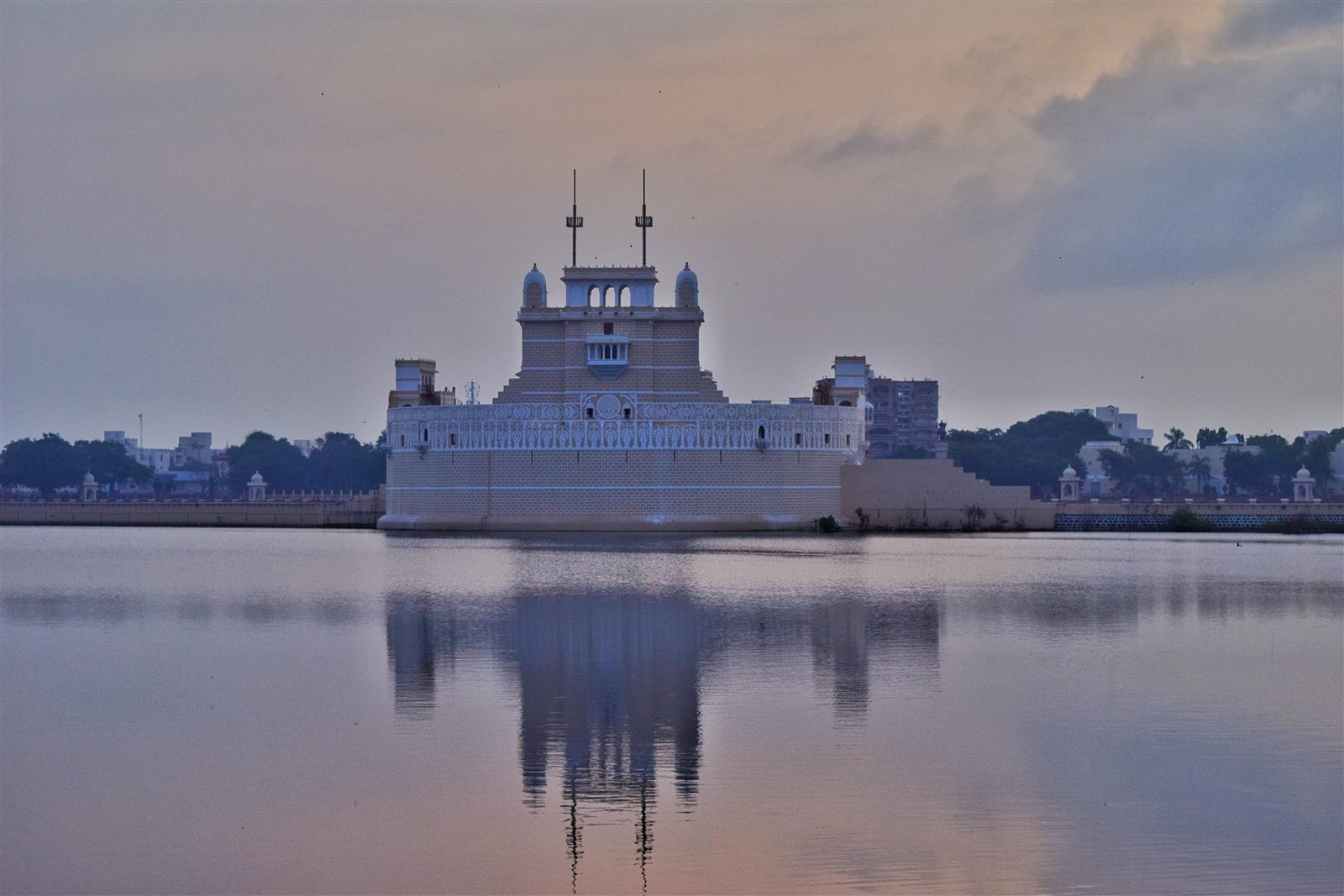
The palace on the water
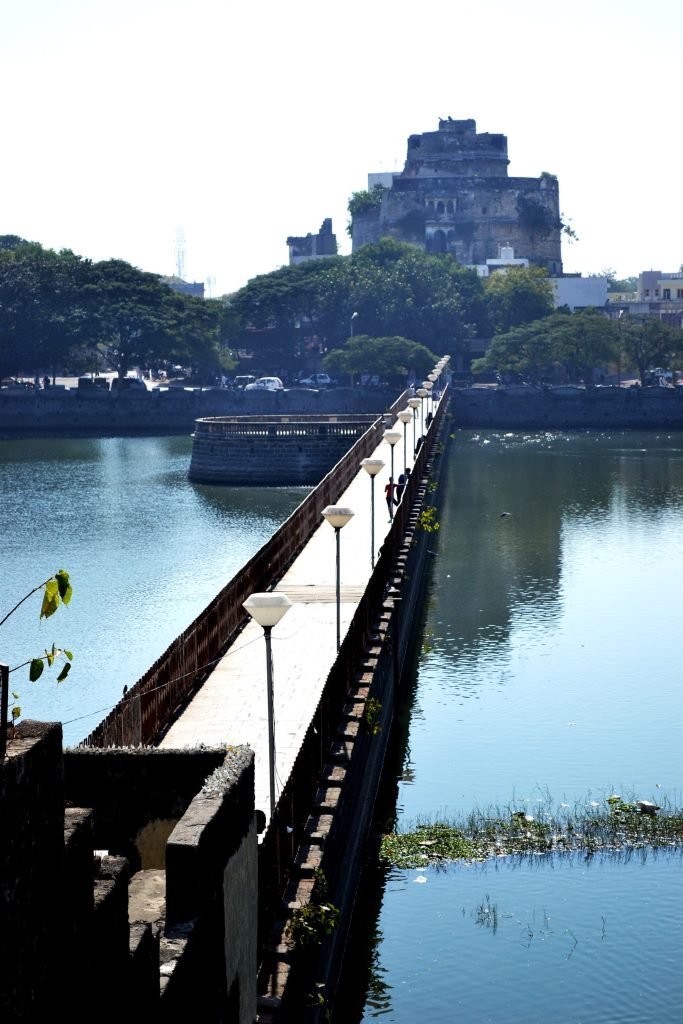
At the very heart of Jamnagar lies Ranmal Lake, and on an island within it stands the Lakhota Palace — a circular, fortified palace reached by a stone causeway, built in the 19th century by Jam Ranmalji II. Once a refuge in times of drought and siege (its construction is said to have given famine relief through employment), it now houses the Lakhota Museum, with sculptures, pottery, weapons and relics of the old Nawanagar state.
The museum inside the round fort keeps Nawanagar’s attic: sculpture gathered from the state’s medieval sites, arms and armour from the Jam dynasty’s campaigns, coins, pottery and the skeleton of a whale beached on the state’s coast — an eccentric, likeable collection displayed in the cool of the old halls. The building is the better exhibit: gun turrets commanding the water in every direction, a guardroom of matchlocks and powder flasks, and the causeway approach that once made the fort the city’s last refuge.
Give the lakefront the full evening ritual: museum in the late afternoon, then the promenade circuit as Jamnagar comes out to walk — vendors, pelicans drifting in for the night, the Bala Hanuman temple across the water keeping its round-the-clock Ram dhun that has run since 1964. Sunset does the rest. October to March brings the flamingos and the best light; the museum keeps standard hours with a token ticket and closes on public holidays.
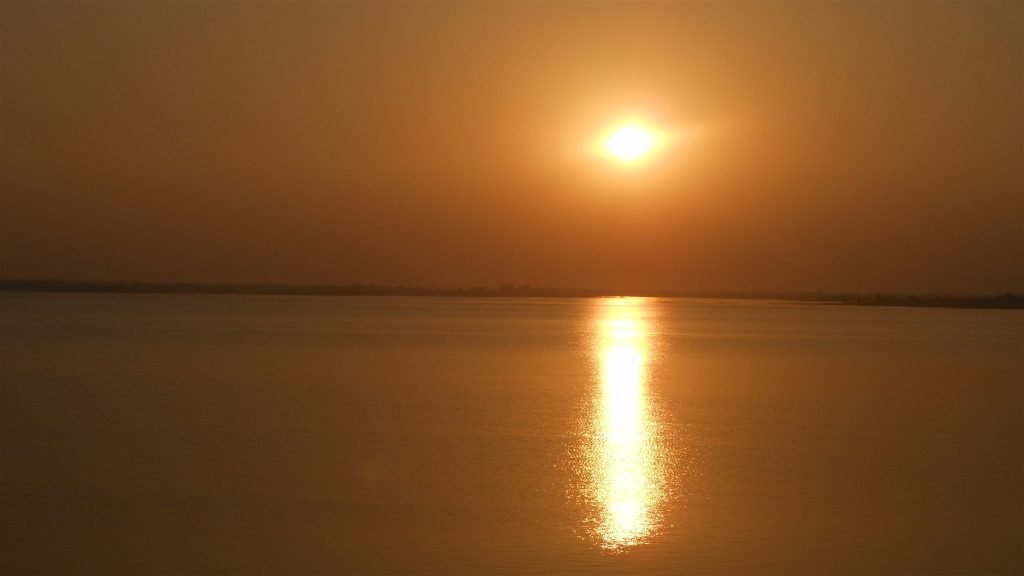
The lake itself is the city’s beloved promenade. Families stroll its edge at dusk, pelicans and flamingos gather on the water, and the whole scene — palace, water and sky — turns to gold at sunset.
With the round Bhujio Kotho tower standing guard nearby, the Lakhota lakefront is the blue-green heart of the Brass City, and the natural place to begin any visit to Jamnagar.
Lakhota lake and palace at golden hour.
A famine relief project that became a palace
The circular Lakhota palace-fort.
Jam Ranmalji II builds the island palace-fort on Ranmal Lake.
Its construction is said to have given famine-era employment.
The fort served as a store and stronghold in hard times.
It houses the Lakhota Museum at the heart of the city.
Reasons to make the time
Island fort
A circular palace-fort on the lake.
Lakhota Museum
Relics of the Nawanagar state.
Birdlife
Pelicans and flamingos on the water.
Golden hour
Glorious sunsets over the lake.
City promenade
Jamnagar's favourite evening walk.
Bhujio Kotho
The old tower stands close by.
What to look for inside
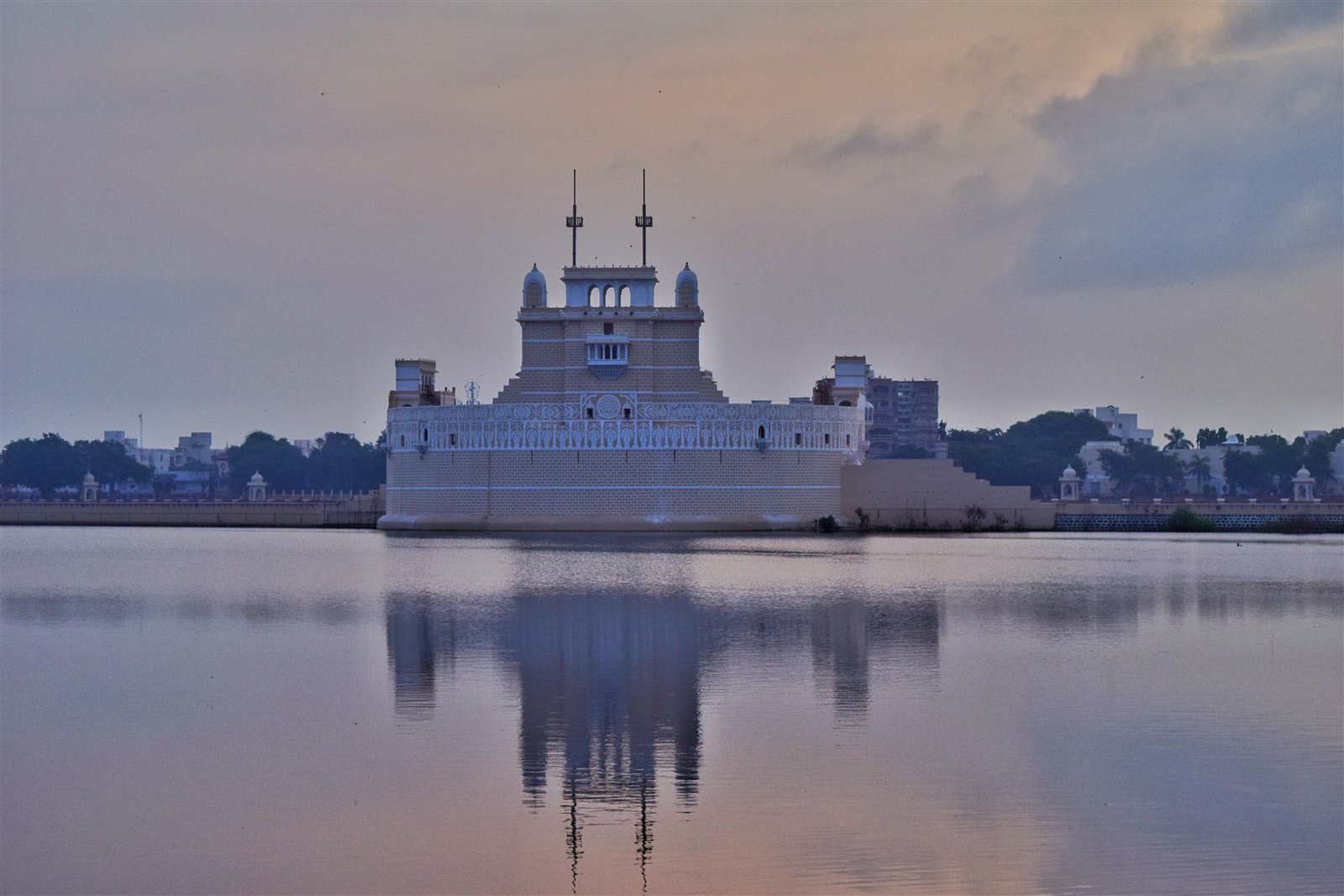 THE PALACE
Lakhota fort
The island palace-fort at the end of its stone causeway.
 THE LAKE
Golden hour
Ranmal Lake at sunset.
How to spend an hour or two
Cross the causeway
Walk out to the island palace.
Visit the museum
See the Nawanagar-era collection.
Walk the lakefront
Join the evening promenade.
Watch the birds
Spot pelicans and flamingos.
Catch the sunset
Stay for golden hour on the water.
See Bhujio Kotho
Visit the old tower nearby.
The fortified circular palace.
A round fort on an island
The Lakhota Palace is unusual in form: a compact, circular fortified structure set on an island in Ranmal Lake, linked to the shore by a stone causeway and ringed by a low rampart with bastions. Built to double as a stronghold and a store, it has thick walls, a guardroom and even openings designed for defence.
Inside, its rooms now serve as the Lakhota Museum. The whole composition — round fort, water and the nearby tower — makes a striking, much-loved silhouette at the centre of the city.
For everything else the district holds, see our Jamnagar travel guide.
Circular fortified palace
Island-and-causeway setting
Bastioned ramparts
Now the Lakhota Museum
When to go
Cool and pleasant — the best season to explore Jamnagar.
Lush and green; the wetlands and lakes brim with birds.
Hot and dry — sightsee early or late in the day.
⏰ Come in the late afternoon: tour the museum, then stay on the promenade for sunset over the lake.
Timings & entry
- The Lakhota Museum opens in the daytime
- Usually closed on Wednesdays and holidays
- The lakefront is lovely any evening
- Allow 1–2 hours including the walk
- A modest museum entry fee applies
- The lakefront promenade is free
- Photography rules vary inside the museum
- Evenings are best for the lake itself
Getting there
By Air
Jamnagar Airport (~10 km) is close.
By Rail
Jamnagar station is well connected; a short ride.
By Road
Central Jamnagar — walkable from the old city.
Shooting the lake
WATER & WALLS
A round fort mirrored in the lake
Best light
Sunset and golden hour over the water.
What to shoot
The palace reflected in Ranmal Lake.
Wildlife
Pelicans and flamingos at the edges.
Composition
Frame the fort with Bhujio Kotho.
Know before you go
More to see close by
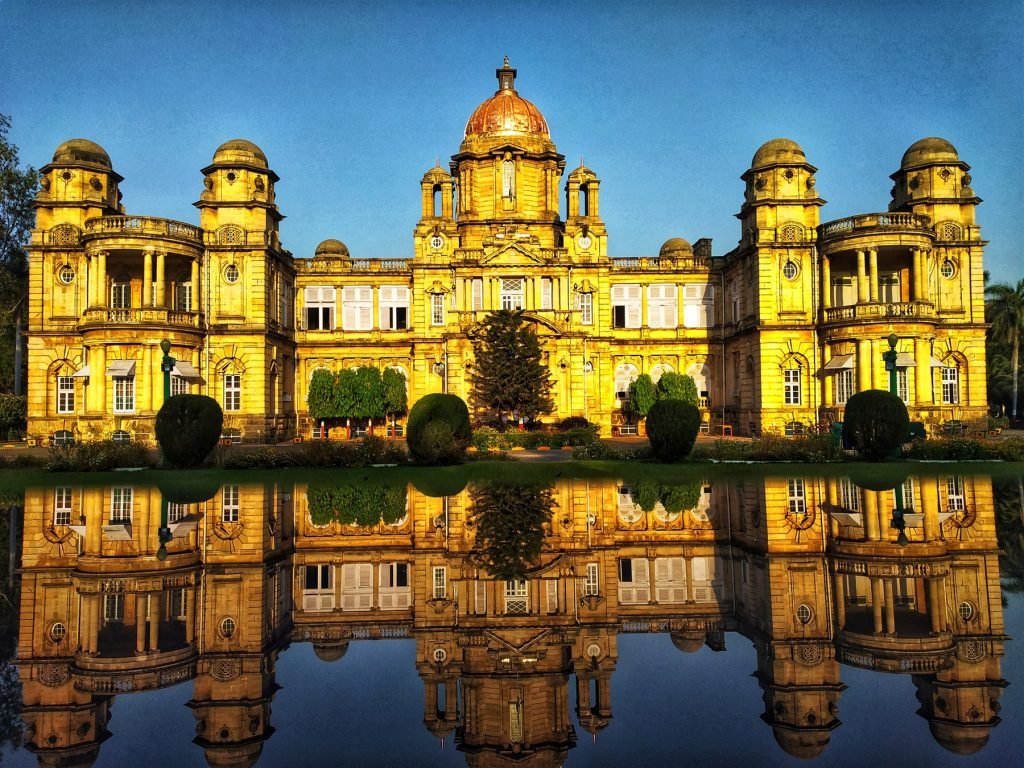 PALACE
Pratap Vilas Palace
A grand European-style royal palace
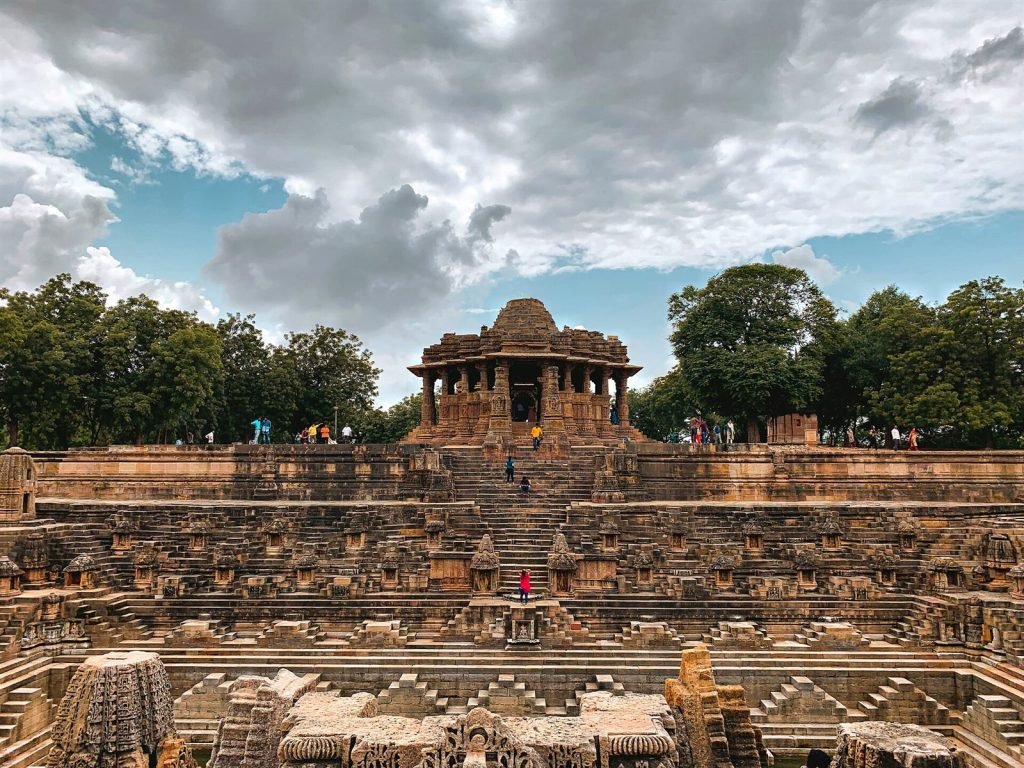
Siddhnath Mahadev
An old lakeside Shiva temple
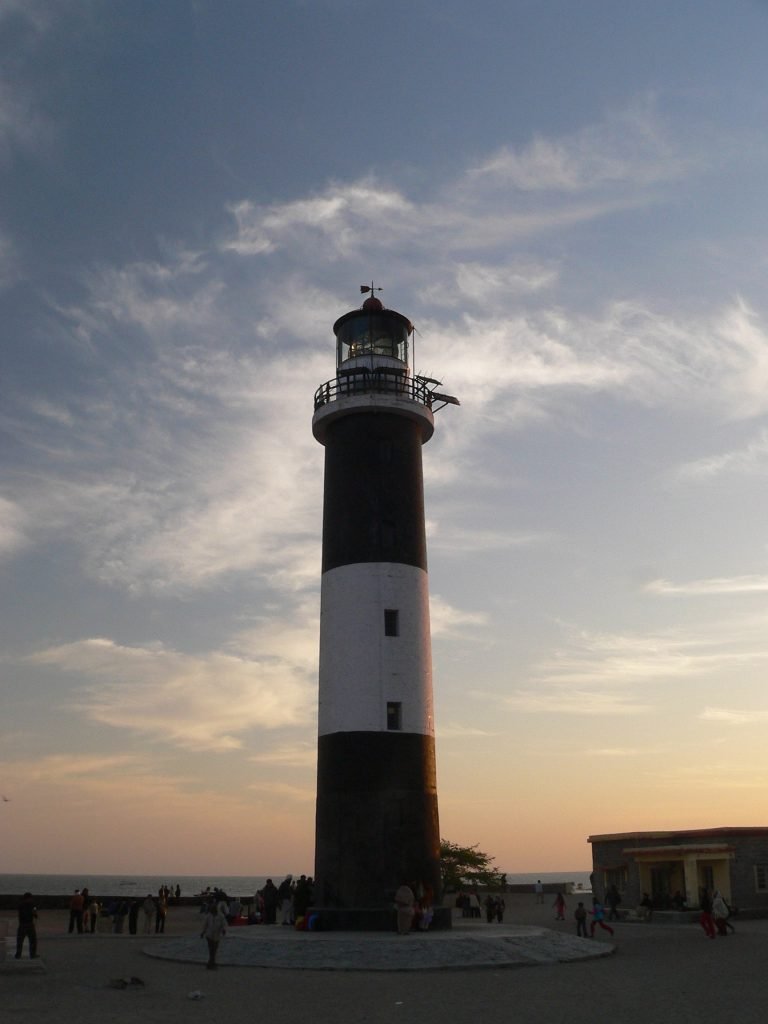 ISLAND
Pirotan Island
Coral reefs & mangroves in the Gulf
 CRAFT
CRAFTBrass Bazaars
Lanes of gleaming hand-beaten brassware
 COAST
COASTGulf Coast & Beaches
Quiet shores & flamingo-rich mudflats
 LAKE
LAKEOsham Hill
The scenic heart of the old city
Where to eat near Lakhota Lake & Palace
 THALI
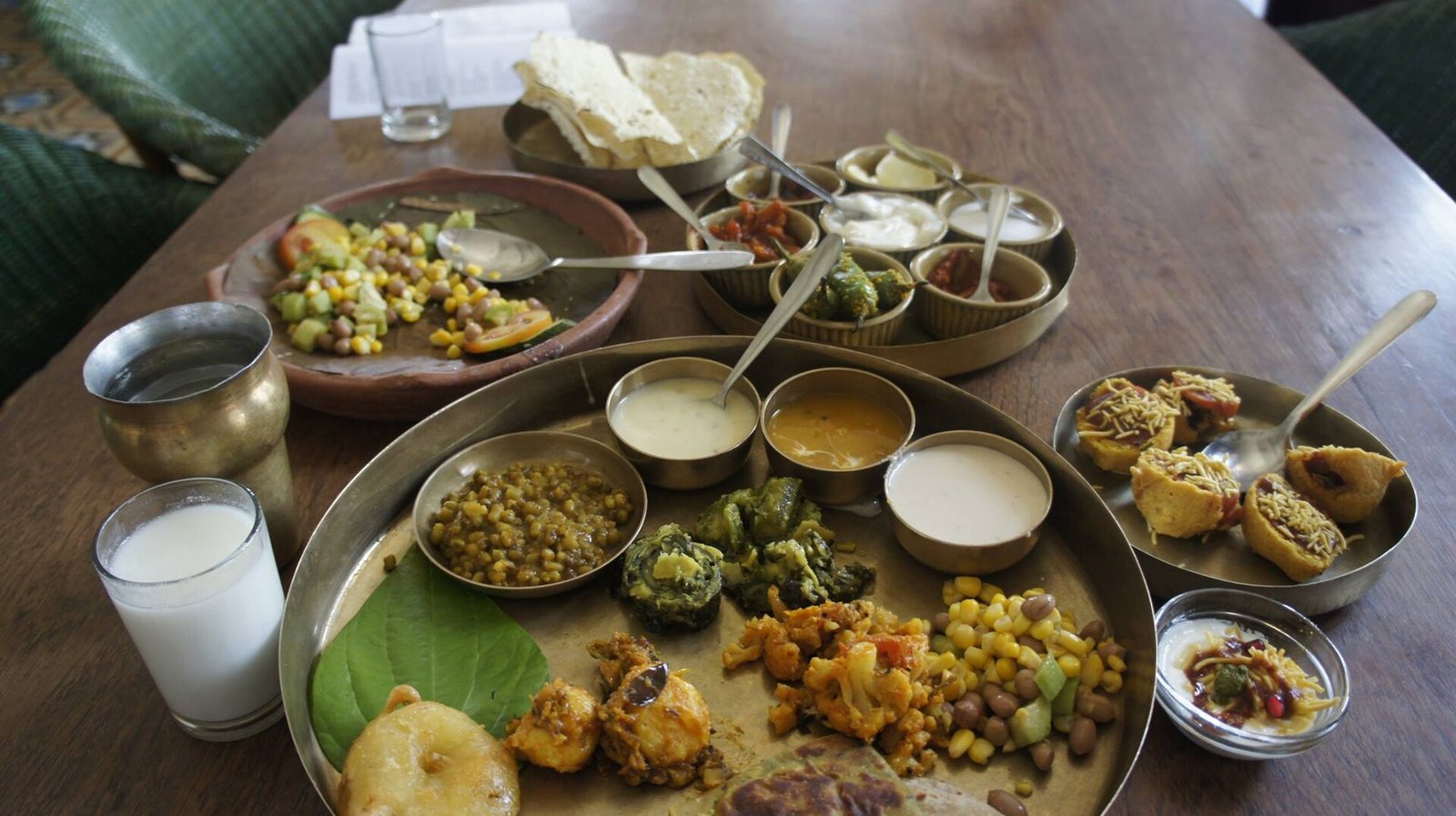
THALIKathiawadi Thali
Rotla, kadhi, shaak and ghee-rich fare.
 SNACKS
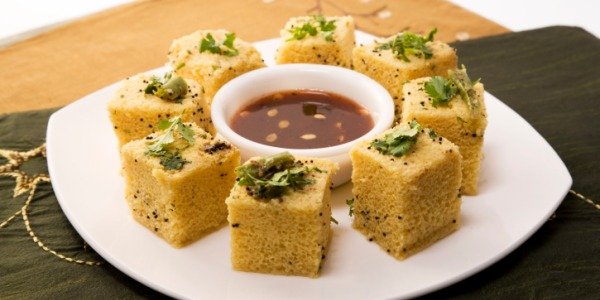
Ganthiya & fafda
Gathiya and farsan, a Saurashtra staple.
 STREET FOOD
Kachori & chaat
The old city's bustling bazaar snacks.
Pure-veg city
Jamnagar's food is largely vegetarian.
Lakhota Lake & Palace FAQ
What is Lakhota Palace?
A 19th-century circular fortified palace on an island in Jamnagar's Ranmal Lake, now a museum.
Who built it?
Jam Ranmalji II of Nawanagar.
What's inside?
The Lakhota Museum, with sculptures, pottery, weapons and state relics.
Is there an entry fee?
A small fee for the museum; the lakefront is free.
When is the museum open?
Daytime hours, usually closed on Wednesdays.
What's the best time?
Late afternoon into sunset, for the museum and the lake.
What's nearby?
Bhujio Kotho tower, Darbargadh and Bala Hanuman temple.
Can I see birds?
Yes — pelicans and flamingos frequent the lake.
Related places across Gujarat
 SEAFOOD
Dumas Food Street
Famous bhajiya, locho and sea breeze
 HERITAGE
Bhujio Kotho
A historic fortified tower & water system
 ISLAND
Bet Dwarka
The sacred island where Krishna is said to have lived
 PALACE
Wankaner
A hilltop fantasy of Indo-European design
 HERITAGE
Surendranagar-Wadhwan
The twin royal town of the district
 INDUSTRY
Vapi
A bustling industrial gateway town
WHERE TO STAY
Find your stay in Gujarat
Compare live prices across the big booking sites and reserve in a few taps. Booking happens securely on the partner's site — we may earn a small commission at no extra cost to you.
Book directly on our partner sites — tap a provider to see live Gujarat hotels & prices:
SHOP THE REGION
Bring home Gujarat — & travel essentials
Hand-picked crafts and trip gear, available on Amazon.
Published 24 June 2026 · Updated 24 August 2026
We’re an independent group of writers and travellers documenting every corner of Gujarat — one place, plate and festival at a time.