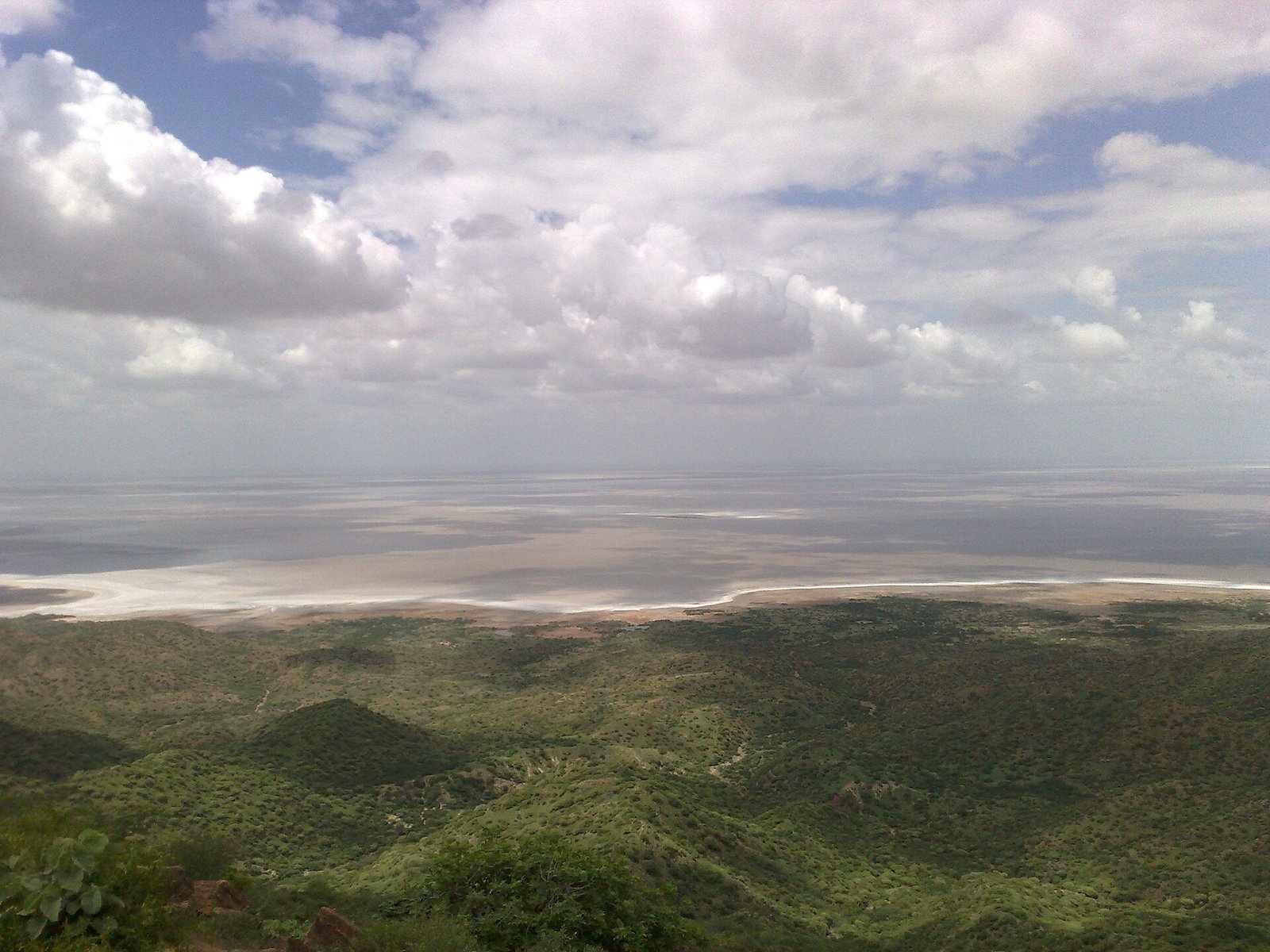
Twelve kilometres out of Jamnagar, along a road that gives no warning at all, there is a low earth bank with a freshwater marsh on one side and the salt creeks of the Gulf of Kachchh on the other. Stand on it at seven in the morning in January and you can look left at pheasant-tailed jacanas walking on lily pads, then look right at a line of flamingos working a mudflat. Two entirely different worlds of bird, a hundred metres apart, and almost nobody there to see it.
Khijadiya Bird Sanctuary is small — around a dozen square kilometres — and it holds more than three hundred recorded bird species. It became a Ramsar wetland of international importance in 2021, it costs almost nothing to enter, and it can be done properly in a single morning. Among Indian birdwatchers it is quietly famous. Among visitors to Gujarat it barely registers, which is why on most winter mornings you will have the bunds to yourself.
An accident that became a masterpiece
Khijadiya was not designed as a sanctuary. Decades ago, bunds were thrown up along this stretch of coast to stop tidal salt water from ruining farmland inland. They worked — and they also trapped monsoon runoff behind them, creating shallow freshwater marshes sitting directly against the existing saline creeks, mudflats and mangrove scrub. Nobody planned an internationally important wetland. One got built anyway.
The result is a mosaic packed into a very small area: open fresh water, reedbed, marsh, saline flat, tidal creek, mangrove and scrub, all within walking distance of each other. In most wetlands, water chemistry sorts the birds into one broad community. At Khijadiya you get two communities overlapping, plus everything that likes the edges. That is the whole secret, and it explains a species list that looks implausible for the size of the place.
It also makes for unusually efficient birdwatching. The terrain is flat, the bunds are walkable, and there are watchtowers at useful points. You are not thrashing through forest hoping for a glimpse; you are standing still on a raised path with open sightlines in both directions, letting the birds come to you.
A bund with fresh water on one side and salt on the other — the accident of engineering that made Khijadiya extraordinary.
The birds people come for
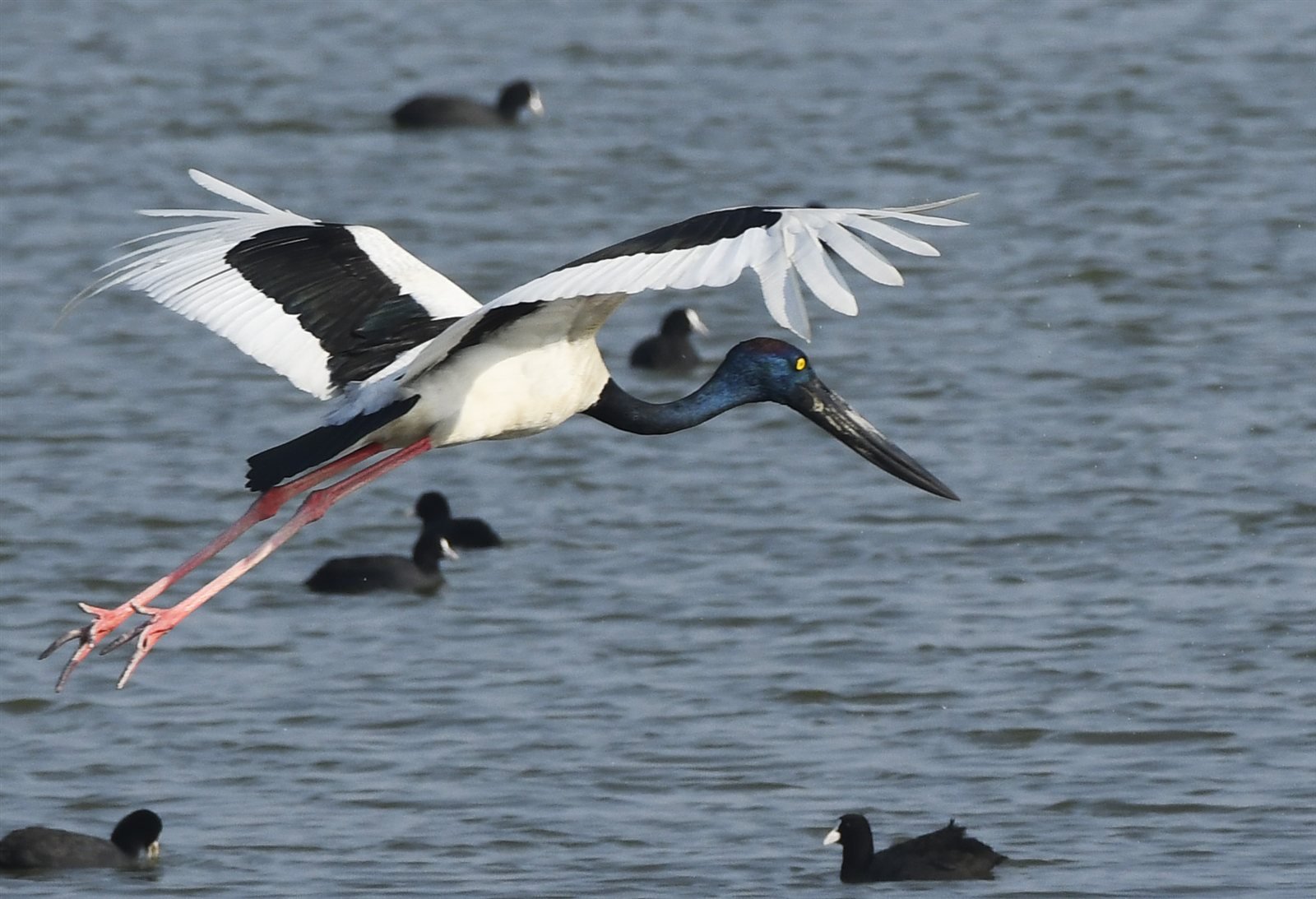
The headline species are genuinely good. Dalmatian pelicans, globally near-threatened and enormous, are regular here in winter. Indian skimmers, with their absurd drooping orange bills, turn up on the open water. Black-necked storks stalk the shallows, painted storks and spoonbills gather in the trees and margins, and both greater and lesser flamingos work the saline side in numbers that can run into the hundreds.
Pheasant-tailed jacanas on one side of the bund, flamingos on the other — species that would normally need two separate trips
Around those headliners sits an enormous supporting cast: common and demoiselle cranes, a long list of ducks including garganey, pintail and shoveler, waders from black-winged stilts and avocets to stints and plovers, marsh harriers cruising the reedbeds, ospreys, purple swamphens, jacanas, bitterns, and the herons and egrets that seem to occupy every available inch. Rarities appear often enough that Indian birders keep a close eye on the sanctuary's reports.
None of this requires expertise to enjoy, but it does require optics. This is open-water viewing, and without binoculars a good deal of what is out there stays a white smudge. If you own a spotting scope, bring it — the difference between suspecting a Dalmatian pelican and watching one is entirely a matter of glass.
How to spend the morning
Be at the gate when it opens. The first two hours after sunrise are worth more than the rest of the day put together: the birds are feeding, the light is low and warm, and the heat has not yet flattened everything into stillness. Pay the entry fee at the sanctuary office, take a local guide if one is available — they know which pool is holding the skimmers this week, which is not information you can work out for yourself — and then walk slowly.
The mistake most first-timers make is covering ground. Khijadiya rewards sitting still. Climb a watchtower, settle, and give it twenty minutes rather than three; over a flat wetland, elevation and patience are worth far more than distance. Work the bunds where the two water types sit side by side, scan both directions, and let the morning run. By about ten the activity drops sharply and you can be back in Jamnagar for a late breakfast.
Fitting it into a Saurashtra trip
Jamnagar is the base and it is an easy one — an airport with domestic flights, a station on the Ahmedabad–Dwarka line, and hotels across the range. The city itself deserves a day: Lakhota Lake and its museum sit in the middle of town, the brass and bandhani bazaars are genuinely interesting, and Bala Hanuman temple is known for a chant that has run continuously for decades. Khijadiya is a twenty-minute drive from all of it.
The natural pairing is with Marine National Park at Narara, about an hour further west, where you can walk out onto an exposed coral reef on the right low tide. Do Khijadiya at dawn and Narara at mid-morning on a good tide day and you have had two entirely different wildlife experiences before lunch. Push on west and you reach Dwarka and Shivrajpur's Blue Flag beach; head east and you are on the road to Rajkot. Two nights in Jamnagar is the sweet spot.
A Ramsar listing, and why it mattered
In 2021 Khijadiya was designated a Ramsar site — a wetland of international importance under the convention signed in Iran in 1971 — alongside Thol Lake in the same round. The listing does not create new restrictions of its own so much as commit the state to managing the wetland's ecological character and reporting on it, and for a small sanctuary hemmed in by farmland, salt works and an industrialising coastline, that recognition carries real weight in the arguments about water, land and development that decide its future.
Those arguments are not abstract here. The freshwater marshes exist only because the bunds hold, and they depend on monsoon runoff that agriculture upstream also wants. The saline side is part of a Gulf of Kachchh coast crowded with ports, refineries and salt production. Invasive prosopis scrub encroaches on the margins, and water levels in any given winter swing with the previous monsoon. Khijadiya is a genuinely great wetland that exists on a narrow margin, which is worth knowing while you are standing on the bund watching a pelican — and a reasonable argument for going now rather than eventually.
If you go
- Come between November and February, and be at the gate at opening time — the first two hours are the whole visit.
- Bring binoculars at minimum; a spotting scope turns distant smudges into pelicans and skimmers.
- Take a guide at the sanctuary office. They know which pool is holding the good birds that week.
- Walk the bunds that keep fresh water on one side and salt on the other. That contrast is Khijadiya's entire point.
- Base yourself in Jamnagar for two nights and pair Khijadiya with the Narara reef walk on a suitable low tide.
Khijadiya is what happens when a piece of flood-control engineering accidentally creates one of the best small wetlands in India. Three hundred species, a Ramsar listing, flat walkable bunds, a twenty-minute drive from a city with an airport, and on most mornings a complete absence of other visitors. Come in winter, arrive at first light, bring glass, and give it the unhurried morning it deserves.