
Gujarat's heritage stretches from Solanki-era temples and stepwells to walled cities, princely palaces and an entire forgotten medieval capital at Champaner.
Start with these guides to the state's greatest monuments and the cities that hold them.
A short journey through Gujarat heritage
Gujarat heritage is unusually layered because the state was never a backwater. Trade money from the Arabian Sea coast paid for temples, mosques and stepwells, and successive rulers, from the Solanki kings to the Sultans of Ahmedabad to the Gaekwads of Baroda, left their signatures in stone. Three UNESCO World Heritage listings anchor the story: the ruined medieval city of Champaner-Pavagadh, the carved stepwell of Rani ki Vav at Patan, and the walled old city of Ahmedabad, India's first UNESCO World Heritage City. Around them sit dozens of lesser-known forts, temples and havelis that most itineraries never reach but that reward a curious detour.
Ahmedabad's old city rewards walking above all. Its pol houses, narrow wooden-fronted neighbourhoods built around shared courtyards, hidden water tanks and secret passages, sit a short stroll from the Jama Masjid and the delicate stone tracery of the Sidi Saiyyed jali screen. Many hotels and the municipal corporation run early-morning heritage walks that thread from a Hindu temple to a Jain derasar to a mosque within a few hundred metres, a compact lesson in how communities lived shoulder to shoulder for six centuries. Go at dawn, before the traffic wakes, and the carved facades read clearly in the soft light.
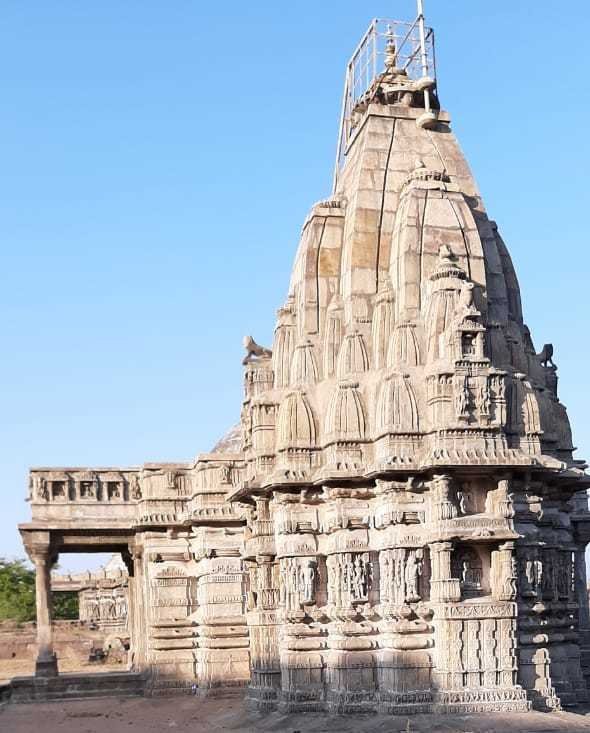
UNESCO sites, forts, palaces and forgotten capitals across the state.
Temples, forts and princely palaces
The Solanki dynasty set a high bar in the eleventh century. Their Sun Temple at Modhera aligns to the equinox dawn, its stepped tank and pillared hall carved down to the smallest bracket, while Rani ki Vav descends seven storeys with more than 500 principal sculptures lining the walls. Champaner adds a different flavour again: Jain and Hindu shrines climbing Pavagadh hill give way to the Sultanate mosques on the plain below, where Hindu craftsmen carved Islamic forms and produced something wholly Gujarati. Standing in the Jami Masjid there, you can see two building traditions merge in a single wall of stone.
Later centuries turned to display. The Gaekwads built Laxmi Vilas Palace in Vadodara at roughly four times the footprint of Buckingham Palace, its Indo-Saracenic domes and Venetian mosaic floors still lived in by the royal family today. Forts such as Junagadh's Uparkot, cut with rock-hewn stepwells, Buddhist caves and old cannon, and the hilltop bastions of Idar and Pavagadh, trace far older struggles for control of these trade routes. Together they give a traveller the full sweep, from devotional carving to imperial swagger, often within a single district, and usually with fewer crowds than the famous sites of Rajasthan next door.
Explore Heritage
Champaner-Pavagadh: A Forgotten Capital and a Sacred Hill
A Champaner Pavagadh guide to the UNESCO archaeological park, Jama Masjid, hilltop Kalika Mata…
The Stepwells of Gujarat: Descending Into Cool Stone
A Gujarat stepwells guide to Rani ki Vav, Adalaj, Dada Harir, Ghumli and Champaner,…
Patan & Modhera: The Sun Temple and the Queen’s Stepwell
A Patan Modhera guide to the Sun Temple, Surya Kund and UNESCO stepwell Rani…
Vadodara (Baroda): Complete Travel Guide
A Vadodara travel guide to royal Baroda: Laxmi Vilas Palace, the Gaekwad legacy, Sursagar…
Junagadh & Girnar: Complete Travel Guide
A Junagadh Girnar guide to the 10,000-step sacred climb, Uparkot Fort, Ashoka's edicts and…
Stepping Down in Time: Gujarat’s Stepwells
A first-person guide to Gujarat stepwells, from the carved storeys of Rani ki Vav…
Gujarat's heritage in four layers
The state's built history separates usefully into periods, and knowing which layer you are looking at makes the sites far more legible. The Harappan layer is the oldest and the most surprising: Dholavira in Kutch, a UNESCO World Heritage Site reached across the Rann, preserves a five-thousand-year-old city with a water-management system of reservoirs and drains that remains its most remarkable feature, with Lothal near Ahmedabad holding a dockyard of the same civilisation.
The Solanki layer, from roughly the tenth to thirteenth centuries, produced the finest stone carving in western India — the Sun Temple at Modhera with its stepped Surya Kund, the queen's stepwell Rani ki Vav at Patan, and the marble Jain temples at Kumbhariya. The Sultanate layer that followed fused those craft traditions with Islamic form, most completely at Champaner-Pavagadh, a UNESCO site and an entire abandoned capital, and across the mosques, gates and stepwells of the walled city of Ahmedabad, itself India's first UNESCO World Heritage City.
The princely layer, and how to plan
The last layer is the most visible and the least appreciated: the palaces, museums, libraries and civic buildings raised by the dozens of princely states that made up Kathiawad before 1947 — Laxmi Vilas at Vadodara, Prag Mahal and Aina Mahal at Bhuj, Mani Mandir at Morbi, Vijay Vilas at Mandvi, and the Gaekwad and Gohil institutions at Vadodara and Bhavnagar.
Because the sites are spread across the state, most visitors build a circuit rather than a base. A common route runs Ahmedabad and its stepwells, then Modhera and Patan to the north, Champaner east toward Vadodara, and Kutch or Saurashtra for the palaces and the coast. October to March is the season throughout; Archaeological Survey monuments generally open sunrise to sunset with modest tickets.