Gujarat has one of the longest coastlines in India and, for years, a reputation for not making much of it. The beaches were there — long, flat, often beautiful — but they came with litter, no shade, no lifeguards and nowhere to change. Then in 2020 a stretch of sand twelve kilometres from Dwarka was awarded Blue Flag certification, one of the first eight beaches in India to get it, and the conversation shifted.
Shivrajpur is now the beach Gujarat points at. The water is clear and shallow, the sand is genuinely clean, there are showers and changing rooms and marked swimming zones, and it sits close enough to Dwarka that you can go from one of the holiest temples in India to a swim in the Arabian Sea in under half an hour. Whether that makes it the state's best beach is arguable. That it is the state's most usable beach is not.
What a Blue Flag actually means
The Blue Flag is an international certification run by the Foundation for Environmental Education, and it is not handed out for scenery. A beach has to meet a long list of criteria across water quality, environmental management, safety and services, and it has to keep meeting them — the certification is reviewed, and beaches lose it. That is why the award mattered here: it committed the authorities to sustained water testing, waste management, lifeguards, signage and facilities rather than a one-off clean-up.
In practice, what you notice is the absence of the things that spoil Indian beaches. There is very little plastic. There are bins and they get emptied. There are proper toilets, changing rooms and freshwater showers. Swimming is confined to a marked and patrolled zone, which is a real safety improvement on a coast with unpredictable currents. There is shaded seating, a boardwalk over the sand, and a solar-powered element to the site's servicing.
It is worth being clear-eyed: a certified beach is a managed beach, and managed means developed. Shivrajpur is not a secret cove. There is a car park, a ticketed entry, food stalls and, at weekends and holidays, a substantial crowd of domestic visitors. If your ideal is empty wilderness, the coast further along at Okhamadhi or towards Positra is quieter. If your ideal is a swim, a shower and a plate of something fried afterwards, this is the place.
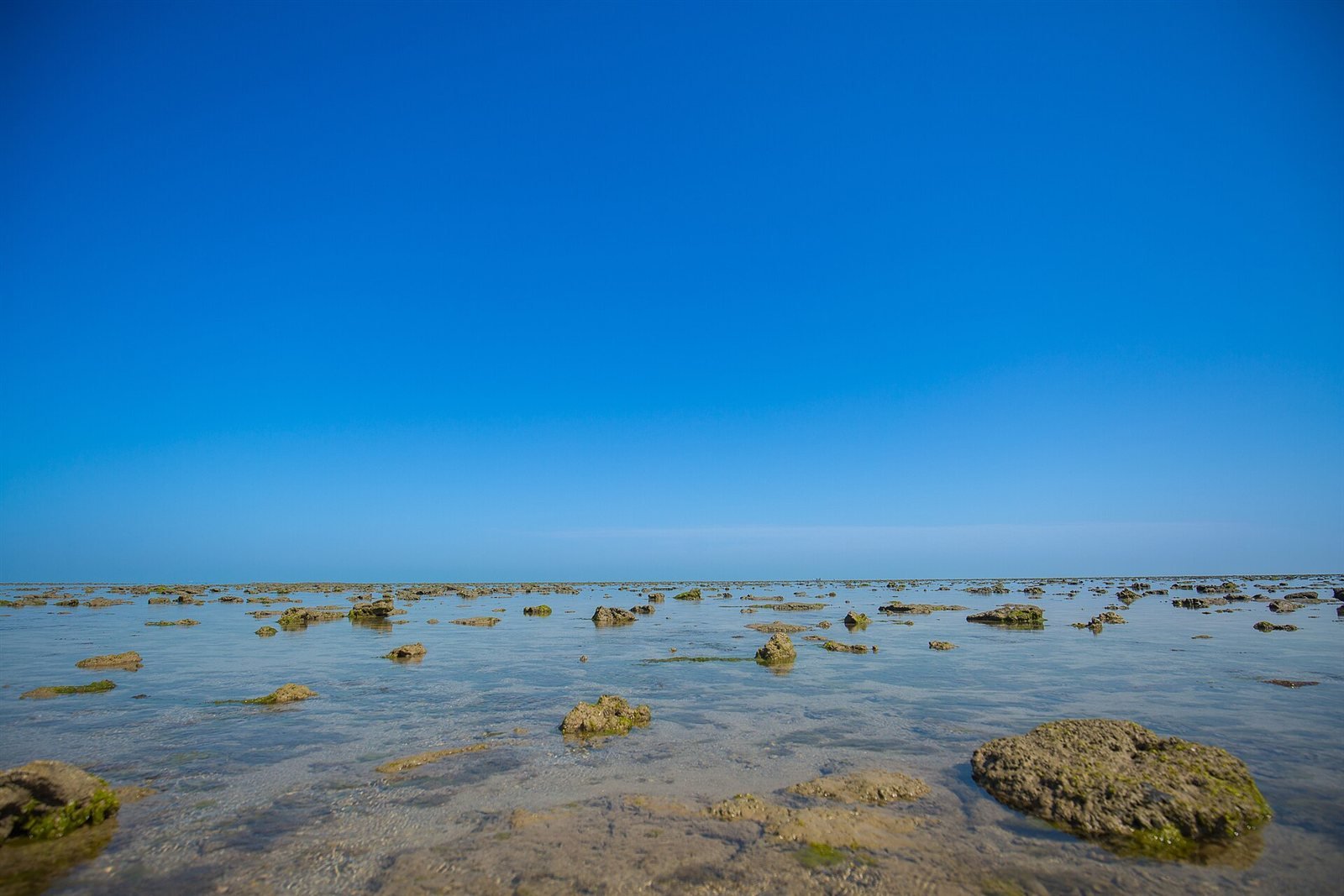
Clean sand, calm water and actual facilities — Shivrajpur is not what most people expect of a Gujarati beach.
Swimming, snorkelling and what is under the water
The swimming is the main event and the conditions are unusually kind. The beach shelves gently, the water is clear by the standards of India's west coast, and the marked zone with lifeguards means you can actually relax. Mornings are calmest. Water sports operators run jet skis, banana boats and parasailing in season, which is either a bonus or a nuisance depending on your temperament — the swimming zone is kept separate from them.
Twelve kilometres from one of the four holiest temples in Hinduism, and you can be in clean sea water by mid-morning
There is also a genuine marine attraction offshore. This stretch of the Gulf of Kachchh coast holds coral and a scatter of reef life, and boat operators run snorkelling trips out from Shivrajpur towards nearby reef patches when conditions allow. It is not the Andamans — visibility varies a great deal and the season is narrow — but on a calm winter morning it is a real and unexpected pleasure on the Gujarat coast. Ask locally about conditions rather than booking blind, and check the operator's equipment before you commit.
Just offshore sits the small, empty island of Bet Shankhodhar, and the wider coastline here forms part of the Gulf of Kachchh's protected marine zone. That protection is part of why the water is worth swimming in. It also means the usual rules apply about not standing on coral, not collecting shells and not buying anything that was recently alive.
Dwarka, twelve kilometres away
You will almost certainly be here because you are in Dwarka, and that is the right way round. Dwarka is one of the Char Dham, one of the seven sacred puris, and home to the Dwarkadhish temple with its towering five-storey shikhara and the flag that is changed several times a day. It is a busy, intense, deeply devotional town, and the contrast of walking out of morning darshan and being on a quiet beach an hour later is one of the genuine pleasures of this corner of Gujarat.
Beyond the temple there is plenty to fill a day or two: Bet Dwarka, reached by boat across a short channel; the Gomti ghat where the river meets the sea; Rukmini Devi temple a few kilometres out of town; Nageshwar, one of the twelve Jyotirlingas; and the Dwarka lighthouse, which you can usually climb in the late afternoon for a view along the coast. Shivrajpur is the place to decompress between all of it.
Getting there and when to come
Shivrajpur is about 12 km north of Dwarka, an easy fifteen to twenty minute drive, and both auto-rickshaws and taxis run out from town. Dwarka itself is well connected: it has a railway station on the Ahmedabad–Okha line with direct trains from Ahmedabad and beyond, and the nearest airports are Jamnagar, roughly 130 km away, and Porbandar to the south. If you are driving the Saurashtra coast, Dwarka and Shivrajpur sit naturally between Jamnagar and Porbandar.
Come between October and March. Winter gives you warm days, calm sea and comfortable evenings, and it is also when snorkelling conditions are at their best. April and May are hot but the sea is still swimmable early in the day. The monsoon, from late June to September, brings rough water and closed swimming zones, and the beach is at its least appealing. Avoid the big Hindu festival dates and long weekends if you want space on the sand, because Dwarka fills up and Shivrajpur is where everyone goes to cool off.
If you go
- Visit between October and March for calm water and the best snorkelling conditions; the monsoon closes swimming.
- Swim inside the marked, patrolled zone — the facilities and lifeguards are the entire point of the Blue Flag certification.
- Go early. Mornings are calmer, cooler and far less crowded than afternoons, especially at weekends.
- Ask locally before booking a snorkelling trip; conditions and operators vary and visibility is not guaranteed.
- Pair it with Dwarka — morning darshan at Dwarkadhish, then the beach, then Bet Dwarka or the lighthouse.
Shivrajpur is the beach that changed what people expect from the Gujarat coast: clean water, marked swimming, real facilities, and an international certification that has to be re-earned. It is not wild and it is not empty, and on a holiday weekend it is frankly busy. But you can swim safely in clear sea, snorkel over coral if the day is right, and do all of it twelve kilometres from one of the four holiest temples in Hinduism. For a state that spent decades ignoring its shoreline, that is a genuine achievement.