
Region
Sabarkantha, North Gujarat
Best time
September to February
Ideal duration
A few hours
Good for
Picnics, birds, quiet views
Hathmati and Guhai are two rivers in the Sabarkantha district, each with a dam and reservoir that together shape the water and farmland of the area around Himatnagar. Built to store water and support irrigation, these reservoirs have become easy-going spots where local families come for picnics, fresh air and open views. They are not formal tourist attractions, so the appeal lies in the calm water, the embankments and the birdlife that gathers here.
For travellers passing through North Gujarat, the Hathmati and Guhai dams make a pleasant, low-key halt. After the monsoon the reservoirs fill and the surroundings turn green, which is when they look their best. You will mostly share the space with local visitors rather than tourists. Bring a snack, find a shaded spot on the bank, and enjoy a slow hour or two by the water.
What to see and do at Hathmati and Guhai
The main pleasure is simply being by the water. You can walk along the dam embankments, watch the reservoir stretch toward the far bank, and take in the wide sky. When the water is high, the setting is especially photogenic at sunrise and sunset. Birdwatchers often spot waterfowl and waders around the edges, particularly in the cooler months.
These dams work well combined with other sights in the Sabarkantha and Idar region, since they are close to Himatnagar. There are no big facilities, so plan for a self-contained visit. Locals treat the reservoirs as picnic and relaxation spots, and joining that unhurried mood is the best way to enjoy them.
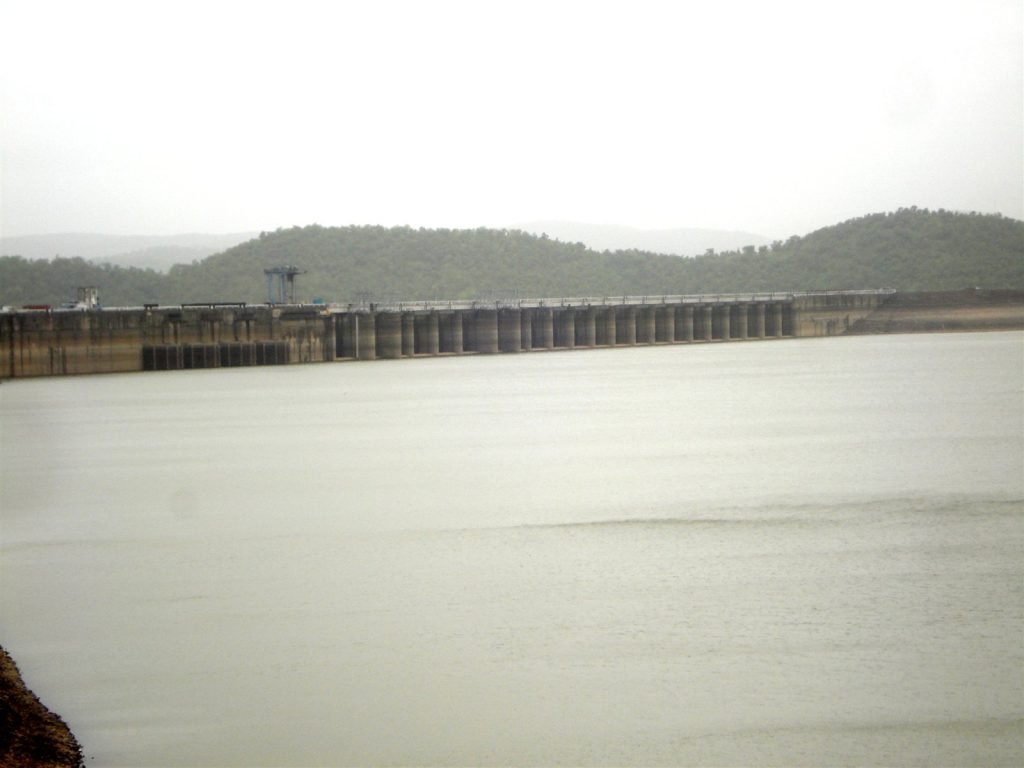
Hathmati & Guhai
How to get there
The Hathmati and Guhai dams lie near Himatnagar in Sabarkantha and are reached by road. Most visitors drive from Himatnagar or Ahmedabad, with local roads leading to the reservoirs. There is no direct rail or air link at the dams themselves, so a private vehicle is the easiest way to reach and move between the two sites.
Best time to visit
The best time to visit Hathmati and Guhai is after the monsoon through winter, roughly September to February, when the reservoirs are full and the weather is pleasant. Summers can be hot and water levels lower. Early morning and late afternoon offer the softest light and the most bird activity around the banks.
Good to know
- Carry your own food and water, as stalls are limited.
- Take binoculars if you enjoy watching water birds.
- Keep a safe distance from dam structures and deep water.
- Visit around sunrise or sunset for the best light.
Frequently asked questions
Are Hathmati and Guhai worth visiting?
They suit travellers who like quiet water views and picnics rather than big attractions, and pair well with nearby heritage.
Can I swim in the reservoirs?
Swimming is not advised near dams due to safety concerns. Enjoy the banks and views instead.
How far apart are the two dams?
Both lie in the Himatnagar area of Sabarkantha and can usually be combined in a single outing by car.
Two waters above Himatnagar
The Hathmati and the Guhai are Sabarkantha's working rivers — Aravalli-born streams dammed above Himatnagar to water the district's fields — and their reservoirs have quietly become the area's best outings. Neither is a 'sight' in the ticketed sense: they are open water in rolling country, with dam crests to walk, winter birds to find, and the kind of unhurried local evenings that make a district feel like home.
Hathmati, the larger and older, spreads its reservoir west of the Himatnagar–Idar road, its long earthen dam giving an elevated walk with the water on one side and canal country on the other. Guhai, to the east, is more intimate — a smaller bowl among low hills, quieter shores, and the better of the two for birding solitude.
The winter birds
Both reservoirs earn their binoculars from November to February: rafts of migratory duck on the open water, waders working the drawdown margins, kingfishers and bee-eaters along the canals, and raptors — marsh harrier, osprey on good days — patrolling the whole. Dawn gives the activity; the causeway approaches and the quieter eastern shores give the access.
Practical notes
Both dams lie within an easy half hour of Himatnagar, reached by district roads that reward asking directions once. There are no facilities beyond the villages — carry water and take litter home — and the dam structures themselves are working infrastructure: keep to the open crests and viewpoints, and respect any barred sections.
The monsoon turns both reservoirs dramatic, spillways running and the Aravalli slopes green; winter gives the birds and the comfortable walking. Pair the waters with Idar's rock-fort town to the north or the Polo Forest road beyond — the same countryside, rising into the hills.