
Region
Gir, Saurashtra
Best time
Winter to spring (park season)
Ideal duration
One to two days
Good for
Wildlife safaris, nature lovers, photographers
The Asiatic lion survives in the wild in just one place on earth: the Gir forest and its surroundings in Saurashtra, Gujarat. Seeing these magnificent big cats in their natural habitat is one of India's great wildlife experiences and the reason travellers from around the world make their way to Gir. Slightly different from their African cousins, the Asiatic lions here represent a genuine conservation success, having been brought back from the brink within this protected landscape.
A visit centres on wildlife safaris through the dry deciduous forest, where lions share the habitat with leopards, deer, antelope and abundant birdlife. Sightings are never guaranteed, as this is wild country and the animals move freely, but the thrill of tracking them adds to the experience. The forest itself, with its teak, grassland and seasonal rivers, is beautiful in its own right. Come prepared to follow park rules closely, as protecting the lions is what keeps this remarkable place alive.
What to see and do to spot the Asiatic lion
The main activity is a guided safari through the protected forest, your best chance to see Asiatic lions along with leopards, deer, antelope and rich birdlife. Safaris run on a permit system with fixed routes and timings, so book ahead and follow your guide's instructions.
Beyond lions, the Gir landscape itself rewards attention, from teak forest to open grassland and seasonal waterholes where wildlife gathers. Bring binoculars and a good camera, keep noise to a minimum, and manage expectations, since wild sightings depend on luck as much as timing.
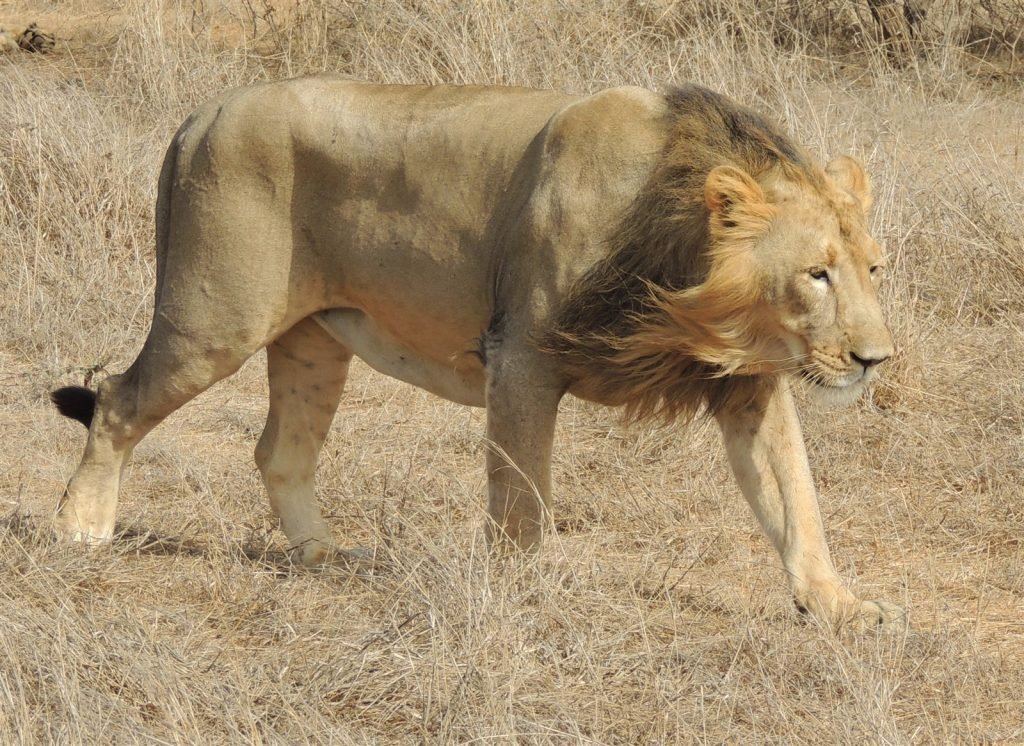
Asiatic Lion
How to get there
The Gir region is reached by road from towns across Saurashtra, with the nearest railheads and airports in larger regional cities providing onward connections. Most visitors base themselves at accommodation near the park and arrange safaris locally. A hired vehicle makes the journey and the area easier to manage. Because access is regulated, arrange safari permits and timings in advance through the proper channels.
Best time to visit for the Asiatic lion
The park operates seasonally and is generally open through the cooler winter and into spring, which is also the most comfortable time to visit; it typically closes during the monsoon. Wildlife is often more visible in the drier months as animals gather near water. Confirm current park dates and safari availability before planning, as these are fixed and can change.
Good to know
- Book safari permits and timings well in advance.
- Carry binoculars and a camera with a zoom lens.
- Follow all park rules and your guide's instructions.
- Accept that wild sightings are never guaranteed.
Frequently asked questions
Where can I see Asiatic lions in the wild?
Only in the Gir forest region of Saurashtra, Gujarat, the last remaining natural home of the Asiatic lion.
Are lion sightings guaranteed?
No. These are wild animals in a large forest, so sightings depend on luck and timing, though guided safaris improve your chances.
When is the park open?
It runs seasonally, generally through the cooler months and usually closes in the monsoon. Confirm current dates before you travel.
Four places to see a wild lion, and what each one gives you
Gujarat has four practical options, and they are genuinely different experiences rather than four gates onto the same thing. Choosing badly is the single most common mistake visitors make.
Sasan Gir core zone is the real one — open forest, a permit-controlled jeep safari, a guide reading alarm calls, and no promise of anything. Sightings are common but never assured. This is the drive to take if what you want is to look for a lion rather than to be shown one.
Devalia, about 12 km from Sasan, is a large fenced interpretation zone holding the same habitat and species. The circuit runs 30 to 45 minutes in the park's own vehicle and a lion sighting is close to certain. It suits families, older travellers, tight schedules, and anyone who failed to get a core-zone permit.
Ambardi, near Dhari in Amreli district, covers the eastern lions. It is far quieter than Sasan and gets a fraction of the traffic, which is much of its appeal.
Girnar, above Junagadh, holds lions too, though it is climbed for the temples rather than driven for the wildlife.
How a sighting actually happens
Very little of a safari is spent looking at lions. Most of it is spent reading the forest. Guides work on alarm calls — chital and langur both call when a predator moves — on fresh pugmarks in the dust of the track, and on radio traffic between vehicles in the same zone.
When a sighting comes it is often brief and often partly obscured. A lion asleep in shade forty metres back through thorn scrub is a normal, good sighting; the open-ground portrait is the exception. Set expectations accordingly and the drive becomes far more rewarding.
Telling an Asiatic lion from an African one
The mane is the immediate difference — sparser here, and the ears usually stay visible through it, which is almost never true of an African male. The animals are somewhat smaller overall. The reliable structural marker is a longitudinal fold of skin running along the belly, which African lions do not have. Prides are smaller too, and males tend to associate with females around mating and kills rather than living with them permanently.
Watching responsibly
Stay in the vehicle, keep your voice down, and never ask a driver to move closer or block a moving animal — drivers are under pressure from tourists all day and it is on the passenger not to add to it. No flash, ever. Do not feed anything. If a sighting draws a queue of vehicles, take your turn and move on rather than holding the position.
These lions live alongside farms and villages across Amreli and Bhavnagar, and that coexistence is the reason the population has grown. It depends on local tolerance, and pressure from tourism is one of the things that can erode it.
Planning notes
Book core-zone permits through the official Gujarat forest department portal, well ahead — in season the good dawn slots go weeks out. Avoid touts at the gate. The core zone closes for the monsoon, roughly mid-June to mid-October, when Devalia is the option. December to March is the comfortable window; April and May are severe but give the best sightings, as animals concentrate at the last water.