
Home › Devbhumi Dwarka › Dwarkadhish Temple
TEMPLE · CHAR DHAMDwarkadhish Temple
Krishna's majestic five-storey temple above the Gomti — one of Hinduism's holiest Char Dham shrines, crowned by a flag rehoisted five times a day.
Krishna's golden city, crowned by its flag
Rising in golden sandstone above the Gomti creek, the Dwarkadhish Temple — the Jagat Mandir, ‘temple of the world’ — is one of Hinduism’s holiest sites: both a Char Dham and a Sapta Puri, sacred on two of the faith’s great pilgrim circuits. It honours Krishna as Dwarkadhish, the king of Dwarka.
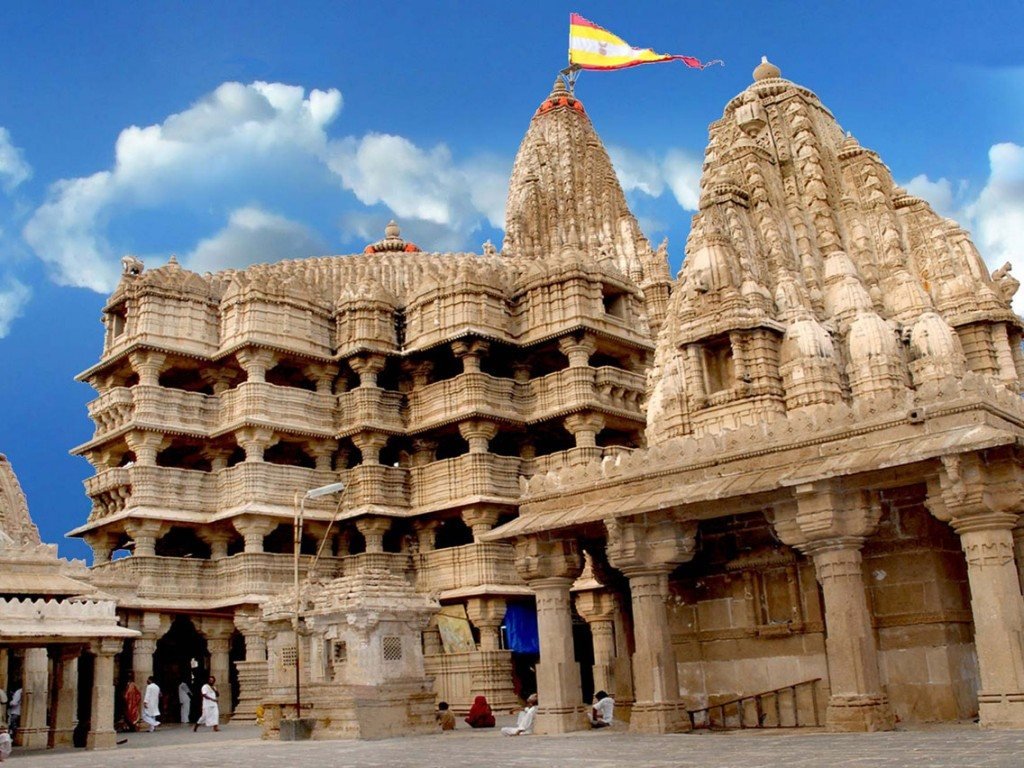
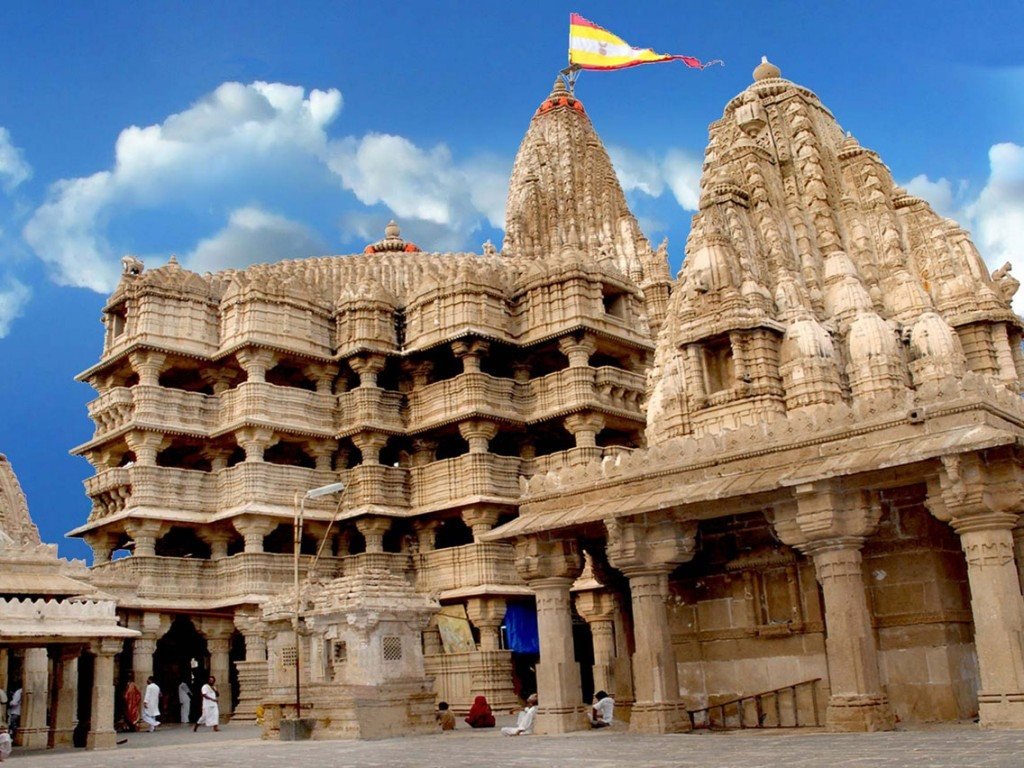
The temple soars five storeys on seventy-two pillars to a spire some seventy-eight metres high, topped by a vast multicoloured flag that is ceremonially changed up to five times a day — a ritual crowds gather to watch. Tradition holds that Krishna’s fabled city once stood here; the present structure dates largely to the 15th–16th centuries, on far older foundations.
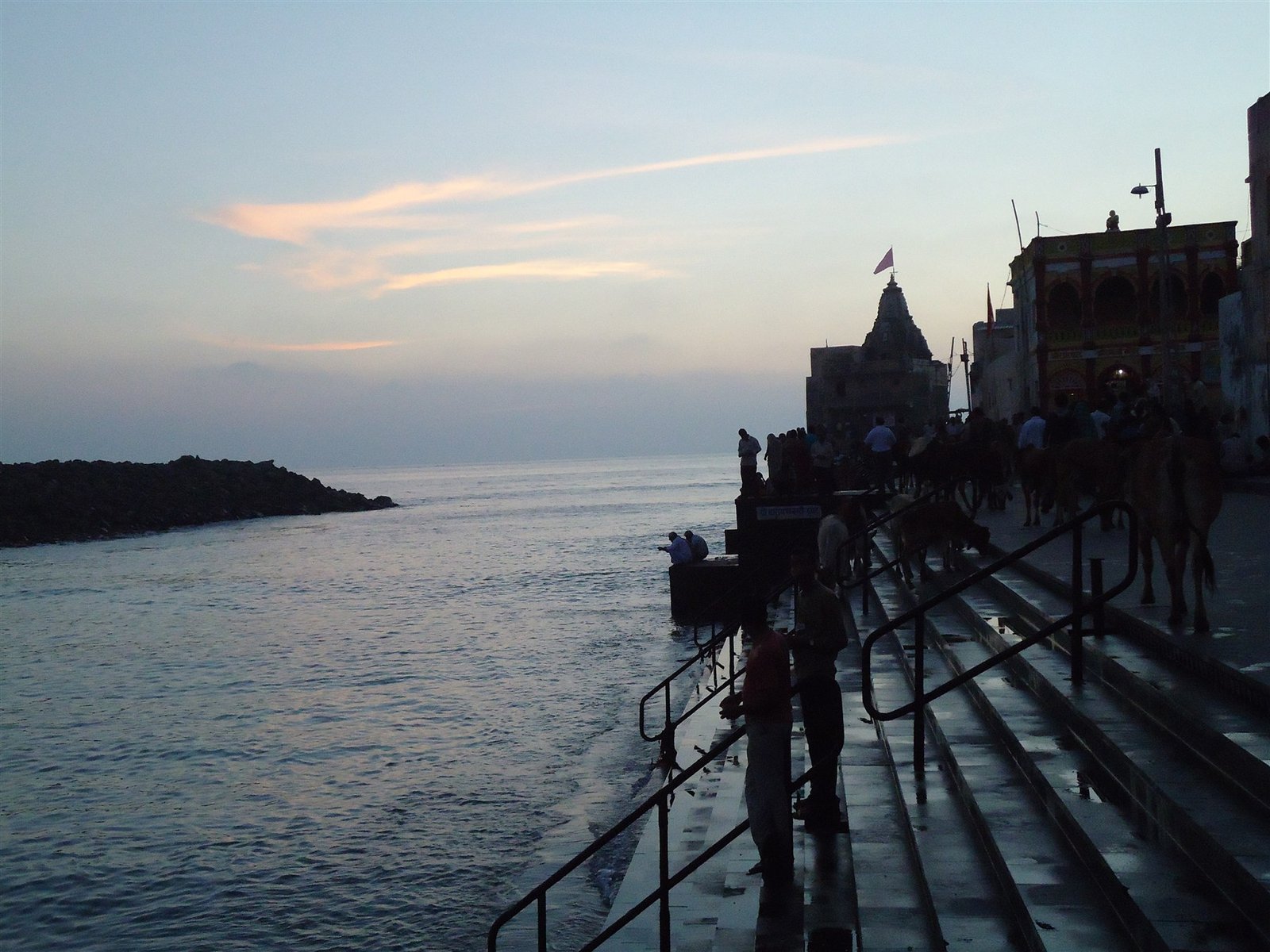
Below the temple, steps lead down to the Gomti ghat and the sea, where pilgrims bathe. Between the soaring shikhara, the fluttering flag and the constant tide of devotion, it is an unforgettable place.
The soaring five-storey Jagat Mandir spire.
Krishna's capital, and the flag raised five times a day
The Gomti ghat below the temple.
Krishna is said to have founded his capital of Dwarka on this coast after leaving Mathura, and the city is named for it.
Tradition holds the original temple was raised by Krishna's great-grandson Vajranabha over his residence.
The present five-storey structure, carried on seventy-two pillars, was built on those older foundations in the medieval period.
Adi Shankaracharya established one of his four monastic seats here, and Dwarka is one of the Char Dham.
Reasons to make the time
Char Dham
Dwarka is one of the Char Dham, the four holiest pilgrimage seats in Hinduism, and one of the seven sacred cities.
The flag ritual
The great flag is changed up to five times a day, hoisted by hand, and devotees book the sponsorship years ahead.
Soaring spire
The shikhara rises around 78 metres over a hall carried on seventy-two carved pillars.
Gomti ghat
Gomti Ghat runs down to the creek below the temple, where pilgrims bathe before darshan.
Living devotion
Aartis run several times daily and the temple is busy from before dawn until late evening.
Pilgrim circuit
It anchors a circuit — Nageshwar, Bet Dwarka, Shivrajpur and Somnath all fit around it.
What to look for inside
 THE TEMPLE
The Jagat Mandir
The five-storey spire above the Gomti creek, with its flag changed through the day.
 GHAT
GHATGomti Ghat
The bathing steps below the temple, where the creek meets the sea.
How to spend an hour or two
Take darshan
Take darshan of Krishna as Dwarkadhish in the main shrine, which is what almost everyone is here for.
Watch the flag change
Time your visit for the dhwaja ceremony, when the flag is changed by hand at the top of the spire.
Bathe at Gomti ghat
Go down the steps to the Gomti, where pilgrims bathe before entering the temple.
Attend an aarti
Attend an aarti, morning or evening; the temple is a different place during worship.
Walk the two gates
Enter by Swarg Dwar and leave by Moksha Dwar, as pilgrims have done for centuries.
Continue the circuit
Carry on to Nageshwar and Bet Dwarka, which complete the circuit and are both close.
Golden sandstone spire above the Gomti.
Five storeys on seventy-two pillars
The Jagat Mandir is a towering example of western-Indian temple architecture. Its sanctum is carried five storeys high on seventy-two intricately carved pillars, rising to a shikhara about seventy-eight metres tall, crowned by the great flag that is its signature.
Built of golden-hued sandstone and richly sculpted, the temple has two principal gateways — Swarg Dwar (gate of heaven), facing the Gomti, by which pilgrims enter, and Moksha Dwar (gate of liberation), by which they leave. The whole composition, perched above the creek and the sea, is designed to lift the eye and the spirit.
More places to visit across the district are gathered in our Devbhumi Dwarka travel guide.
More of the same kind is gathered in temples across Gujarat.
Five-storey sanctum
Seventy-two carved pillars
~78 m sandstone spire
Swarg & Moksha gateways
When to go
November to February is the season — cool, clear and by far the most comfortable time for the queues and the coast.
Janmashtami is the great festival here, and the town is completely full for it; book months ahead or avoid it.
April to June is hot and bright, though the sea breeze helps; go for the earliest darshan of the day.
⏰ Come for an aarti and the flag-changing ceremony; winter mornings are coolest and least crowded.
Timings & entry
- Open with a long midday break (1–5 PM)
- Aartis and the flag ceremony punctuate the day
- Remove footwear; phones/cameras restricted inside
- Allow 1–2 hours including the ghat
- No entry fee for darshan
- Cloakrooms for shoes and bags at the gates
- Photography is restricted within the temple
- Dress modestly; expect queues on festival days
Getting there
By Air
Jamnagar Airport (~135 km) is nearest; Rajkot is an alternative.
By Rail
Dwarka station is on the Ahmedabad–Okha line, a short walk away.
By Road
Well connected by highway to Jamnagar, Rajkot and Somnath.
Shooting the temple
SPIRE & FLAG
Golden sandstone, fluttering flag and the ghat
What to shoot
The spire and flag seen from the Gomti ghat below.
Best light
Early morning and sunset light over the creek.
Respect rules
No photography inside — the exterior and the ghat are where to shoot.
The ghat
Pilgrims, boats and the steps make the liveliest frames.
Know before you go
More to see close by
 TEMPLE
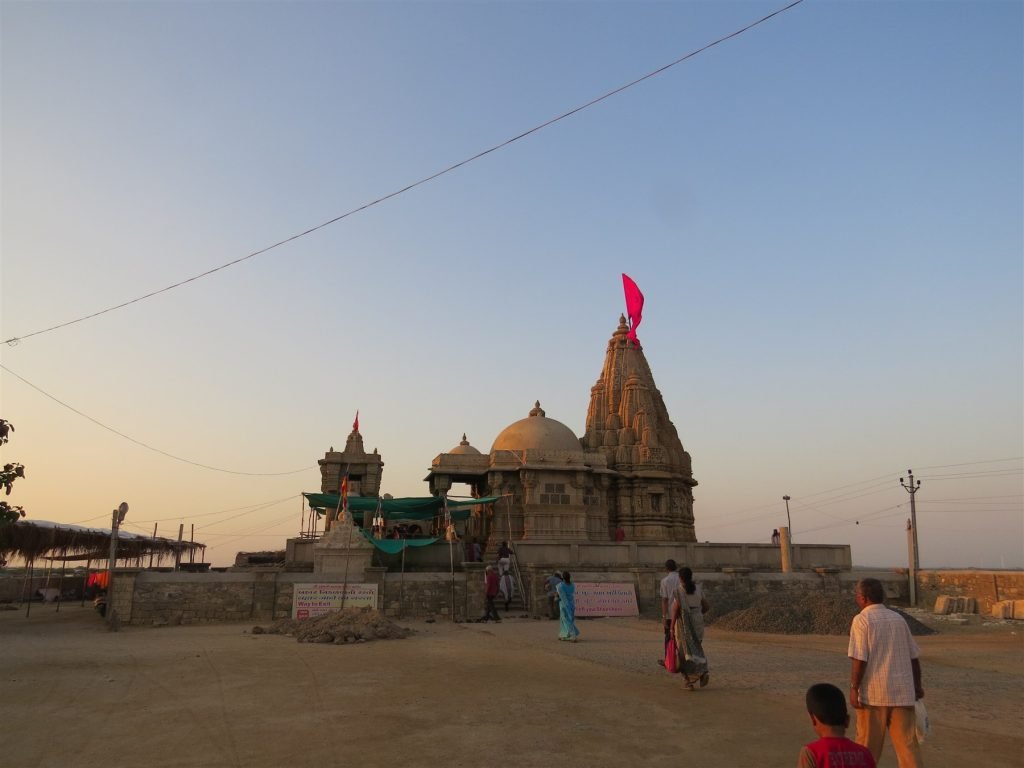
Rukmini Devi Temple
12th-century shrine to Krishna’s queen
 MARINE
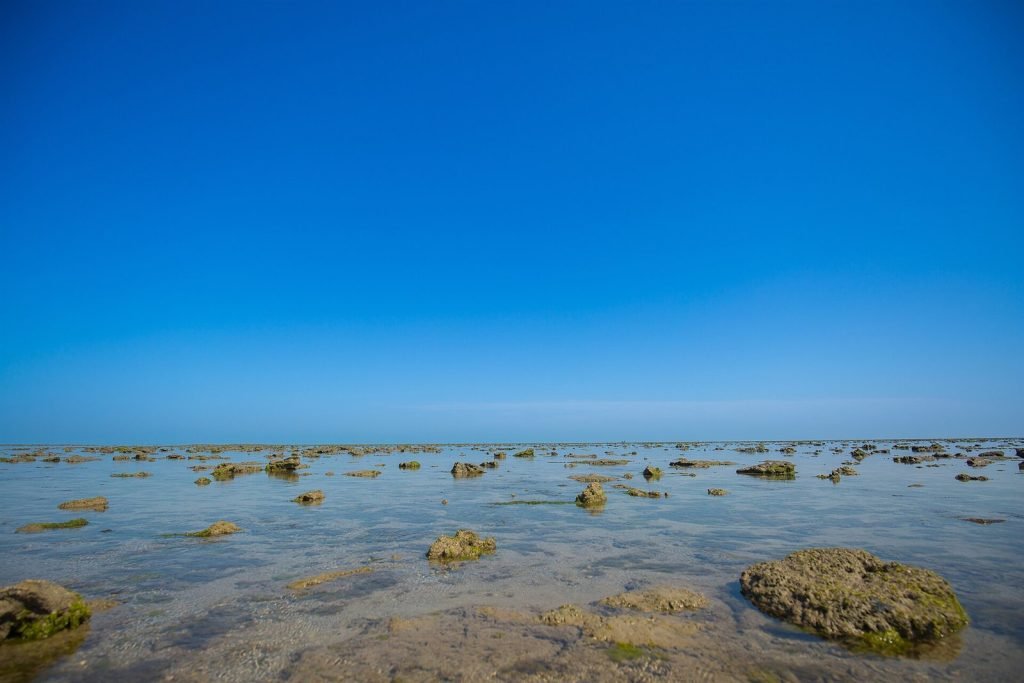
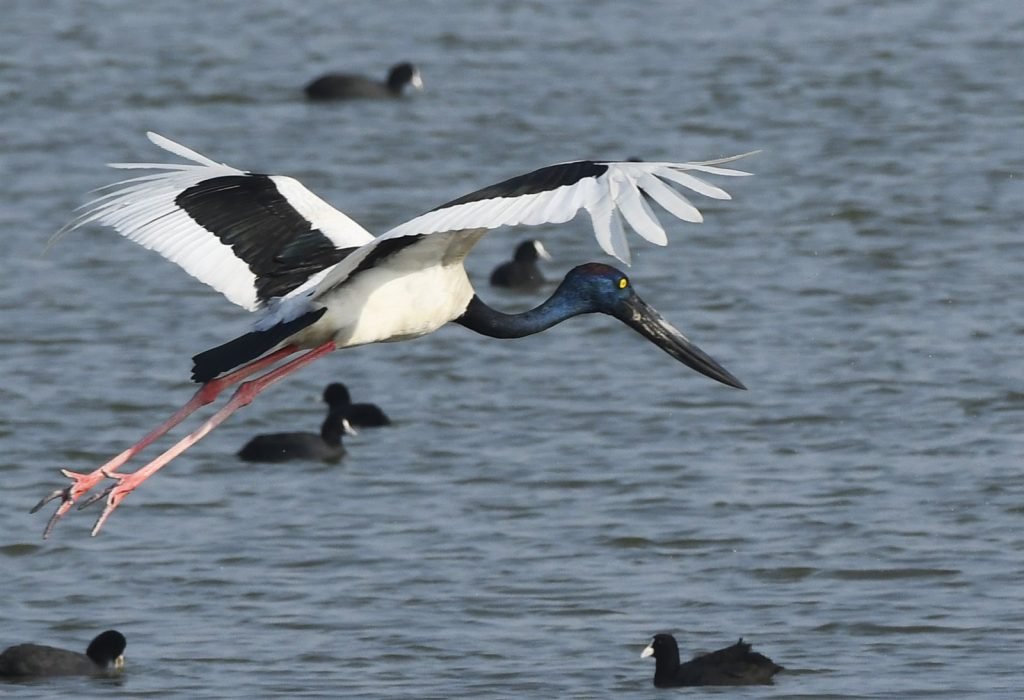
Marine National Park
Coral, dolphins & seabirds near Positra
 FOOTBRIDGE
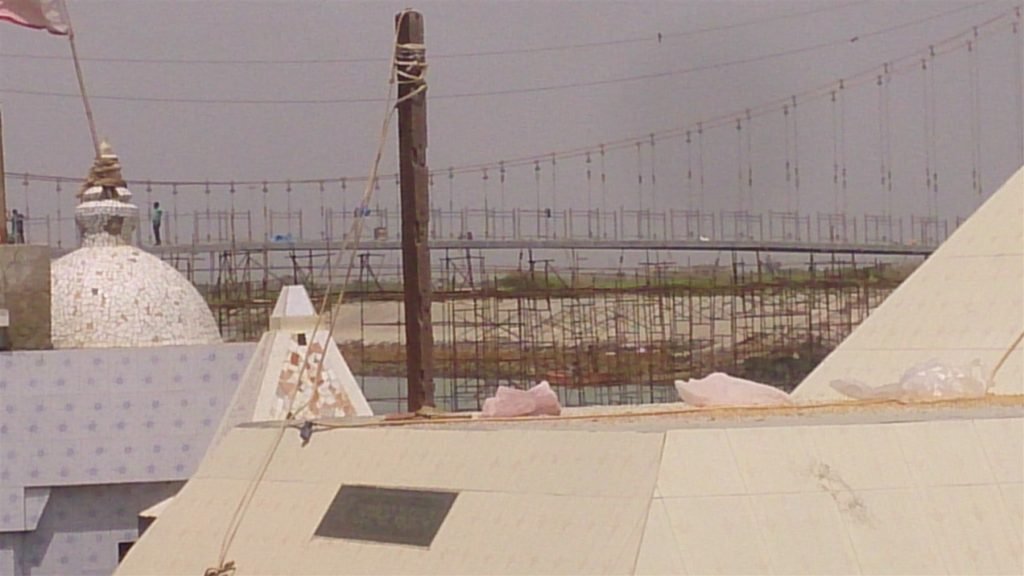
Sudama Setu
A swaying pedestrian bridge over the Gomti
 SACRED
Gopi Talav
A pond of fragrant golden gopi-chandan clay
 PORT
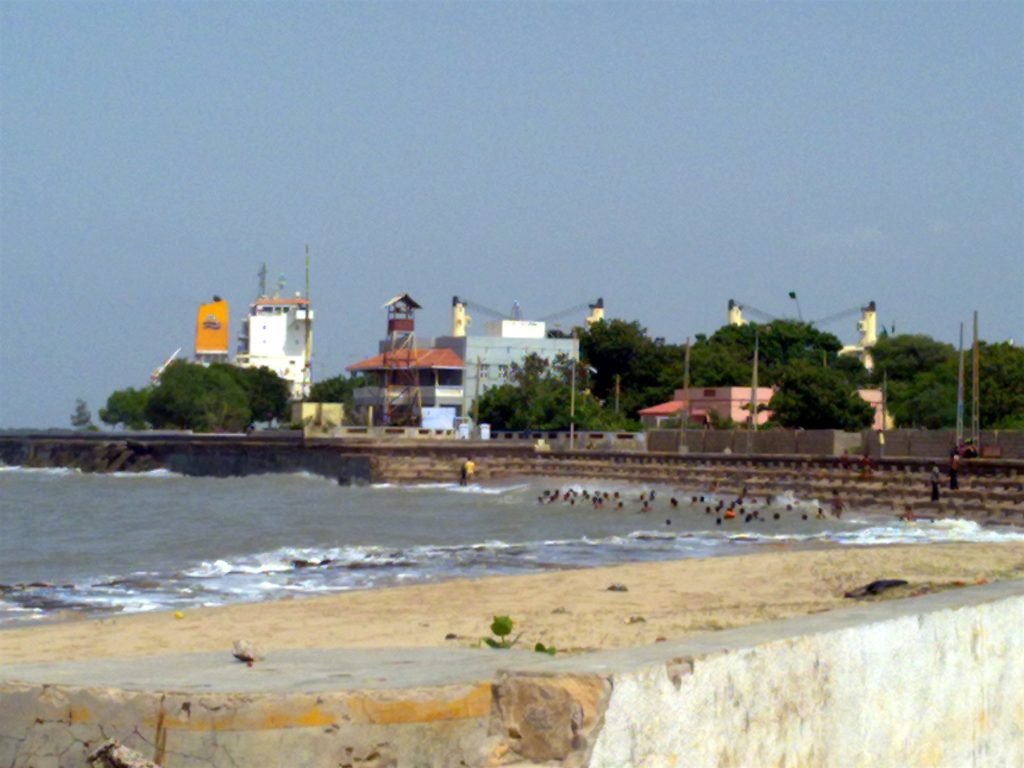
PORTOkha Harbour
The gateway port for Bet Dwarka ferries
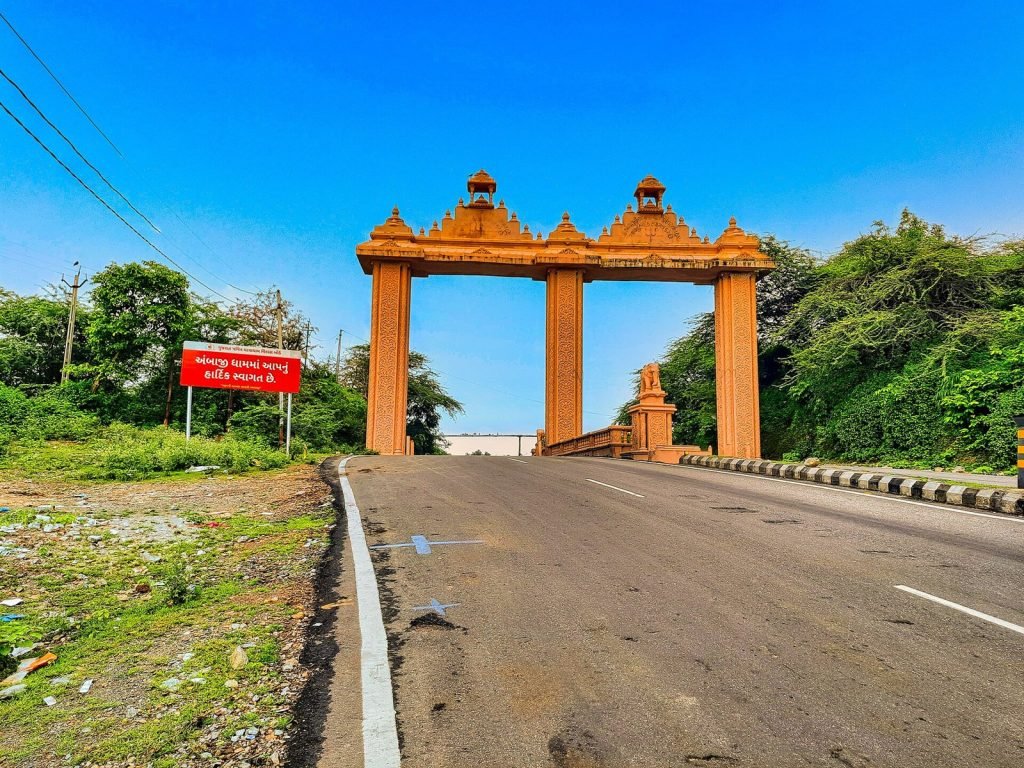
Hanuman Dandi
A 12th-century temple to Krishna’s queen
Where to eat near Dwarkadhish Temple
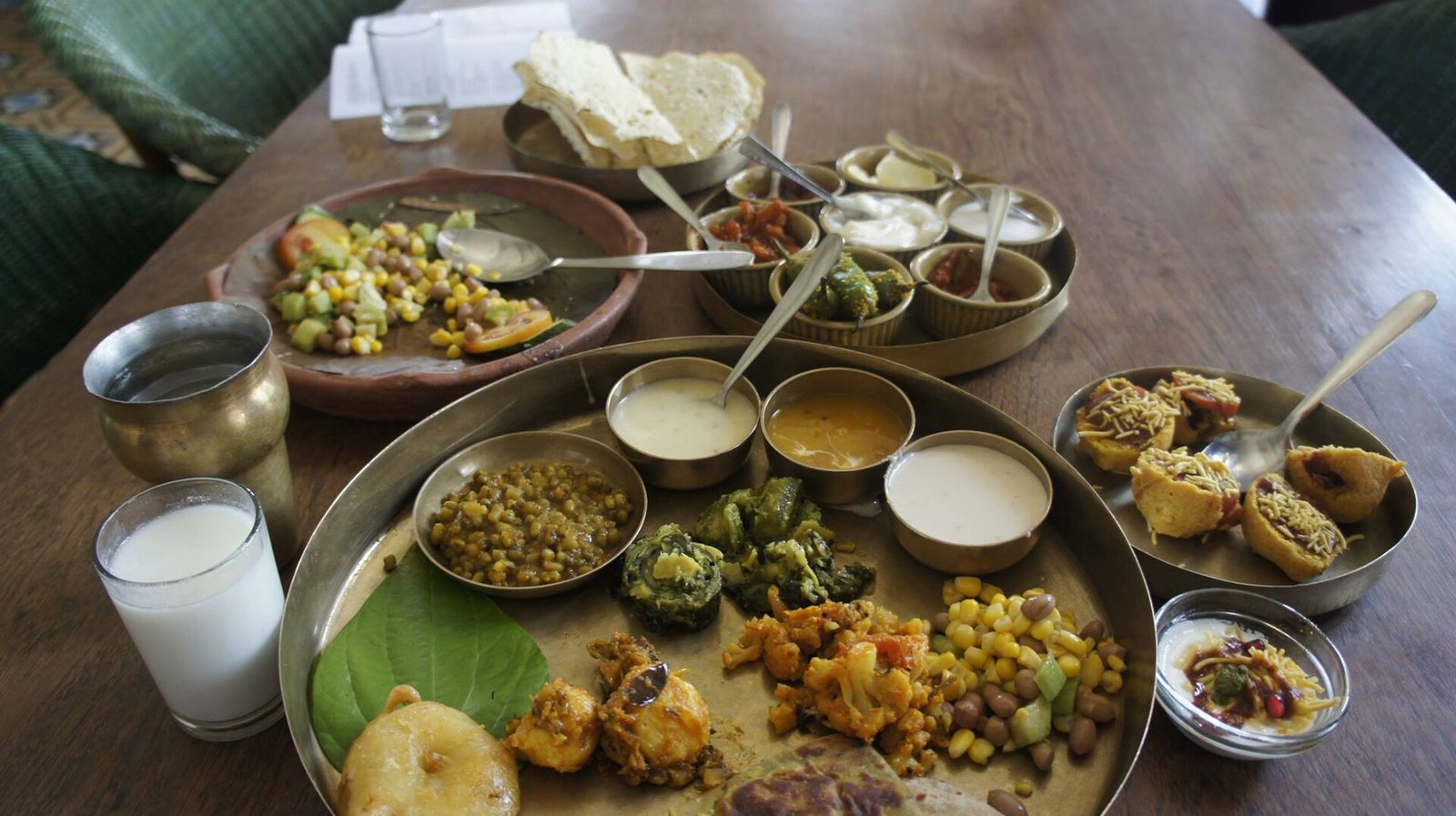 THALI
THALIKathiawadi Thali
Unlimited rotla, kadhi, shaak and ghee-rich fare.
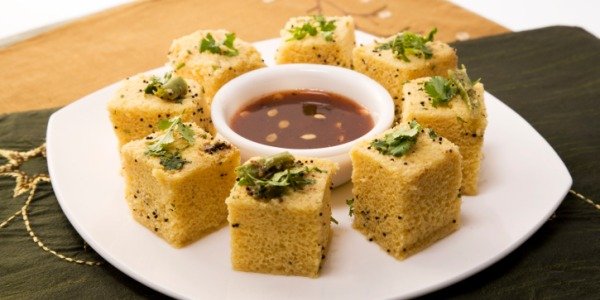 SNACKS
Ganthiya & farsan
Sev, ganthiya and fried snacks in the bazaars.
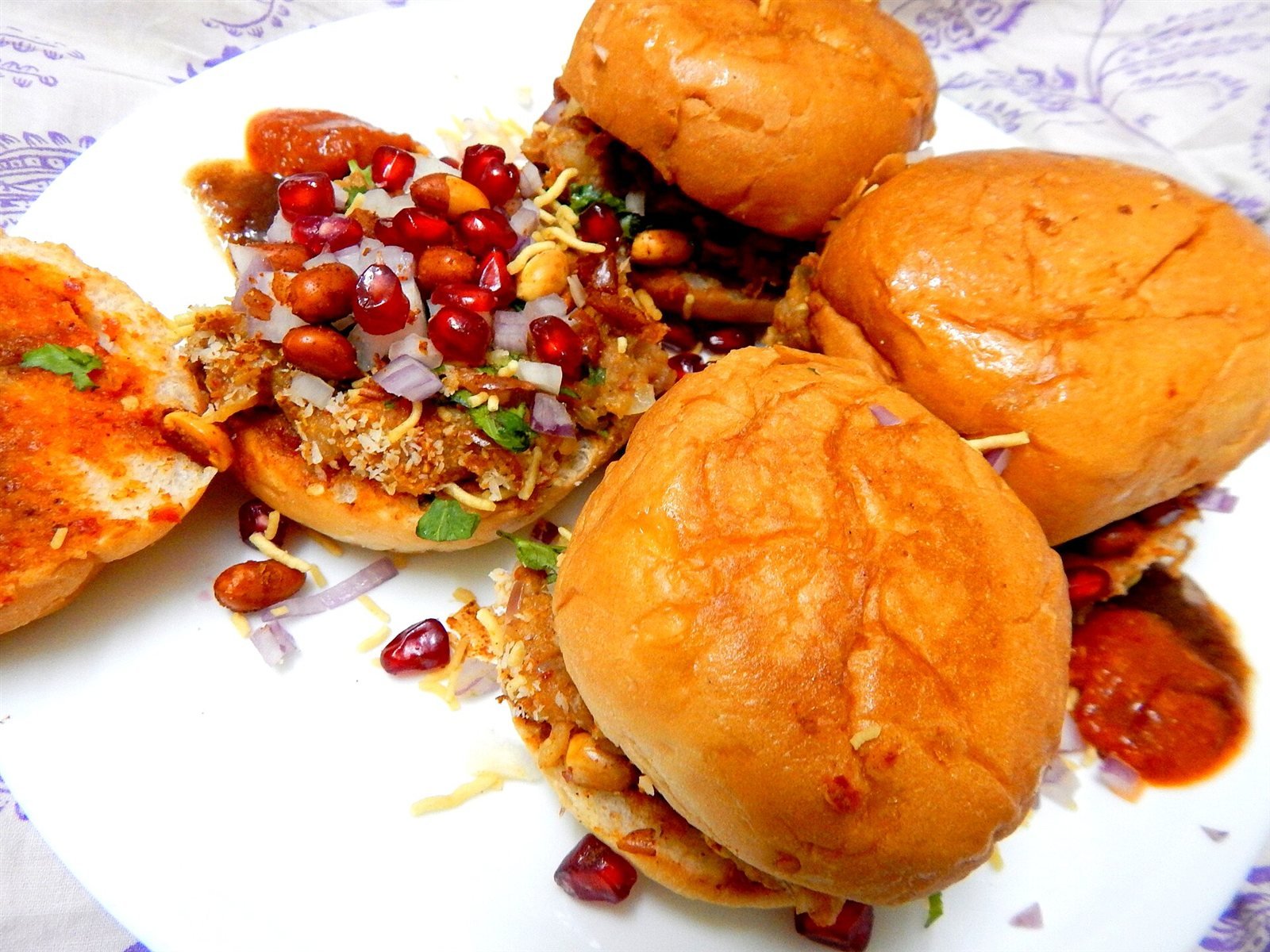 STREET FOOD
Temple-town bites
Chaat, kachori and sweets near the temple.
Pure-veg & prasad
Dwarka is largely vegetarian; temple prasad is offered.
Dwarkadhish Temple FAQ
Where is the Dwarkadhish Temple?
In Dwarka town, standing above the Gomti creek where it meets the Arabian Sea, on the far west coast of Saurashtra.
Why is it important?
It is one of the Char Dham and one of the Sapta Puri — among the holiest sites in Hinduism — dedicated to Krishna as Dwarkadhish, lord of Dwarka. Adi Shankaracharya established one of his four monastic seats here.
What is the flag ceremony?
The great flag, the dhwaja, is ceremonially changed up to five times a day. It is hoisted by hand to the top of the spire, and families sponsor the ceremony years in advance.
Is there an entry fee?
No, darshan is free. Special-entry arrangements exist at busy times and carry a charge.
What are the darshan timings?
Roughly from early morning until early afternoon, then again from late afternoon until night, with a midday closure. Confirm the current timings locally, as they shift seasonally.
Can I take photos inside?
No. Photography is restricted inside the temple, and phones and cameras must be left at the cloakroom before you enter.
How do I get there?
Dwarka has its own railway station on the Ahmedabad-Okha line. The nearest airport is Jamnagar, about 135 km away.
What should I wear?
Modest clothing covering shoulders and legs. Footwear comes off at the gates, where there are stands to leave it.
What's nearby?
Gomti Ghat directly below, the Nageshwar Jyotirlinga, Bet Dwarka across the strait, the lighthouse, and Shivrajpur beach.
When is it busiest?
Janmashtami above all, along with Holi and the major Krishna festivals, when crowds are very large and the town fills completely.
Related places across Gujarat
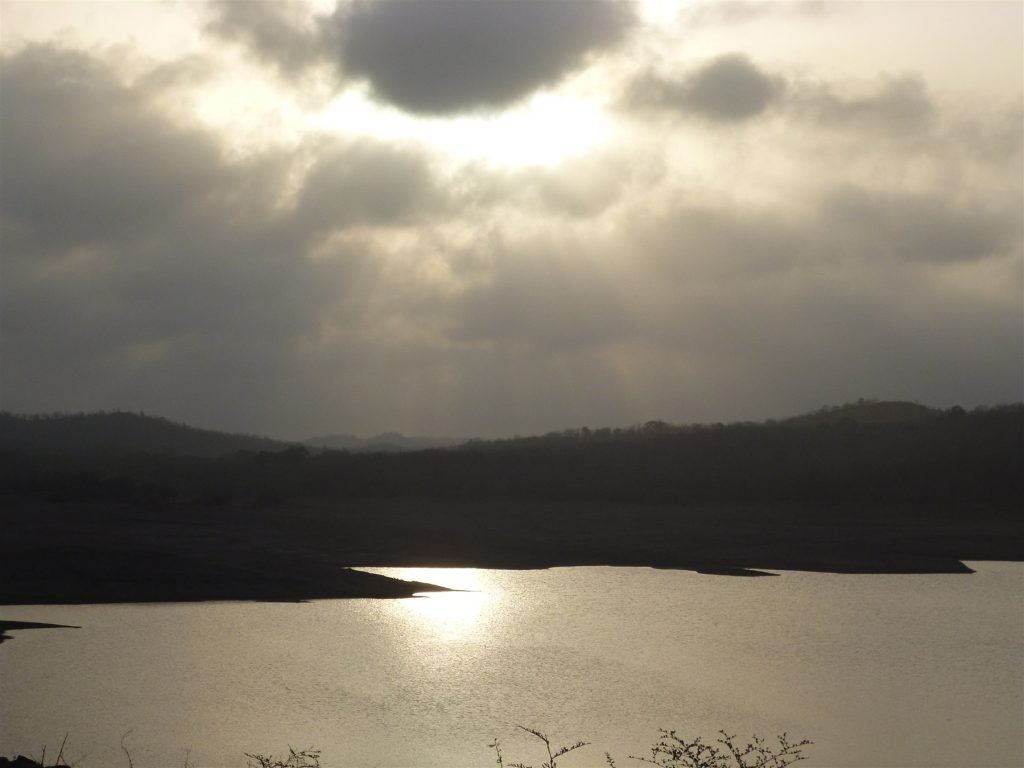 CONFLUENCE
Kamleshwar Dam
Ritual bathing where rivers meet the sea
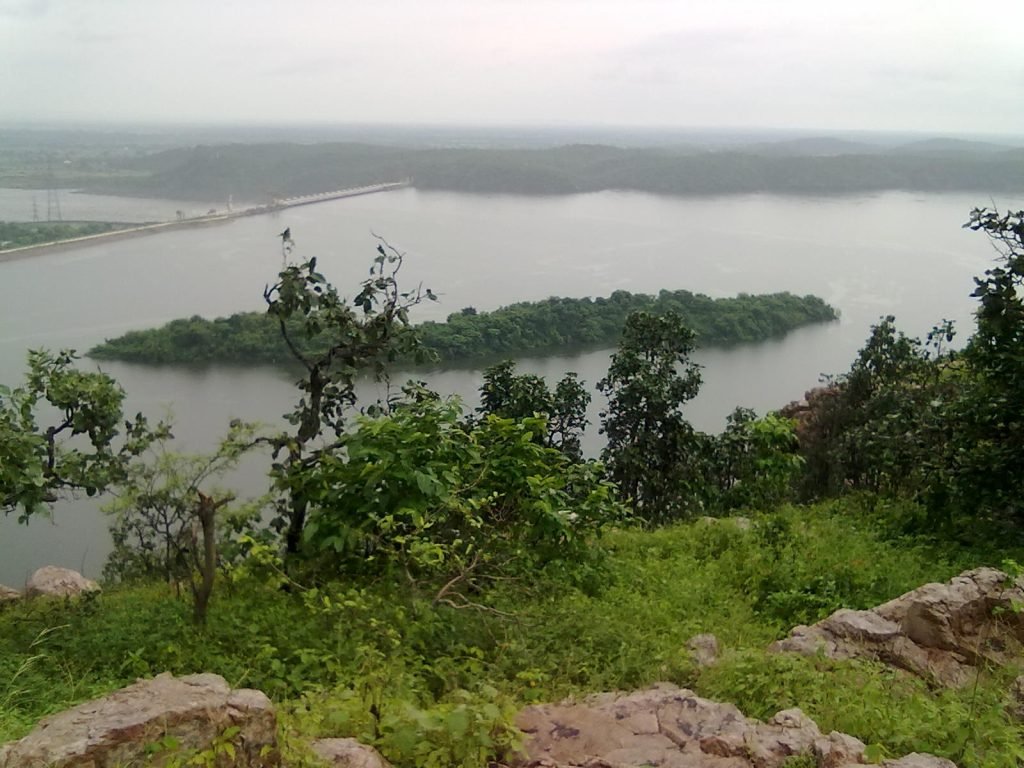 DAM
DAMKadana Dam
A mighty reservoir on the Mahi river
 GARDEN
Sarita Udyan
Riverside gardens with a deer park
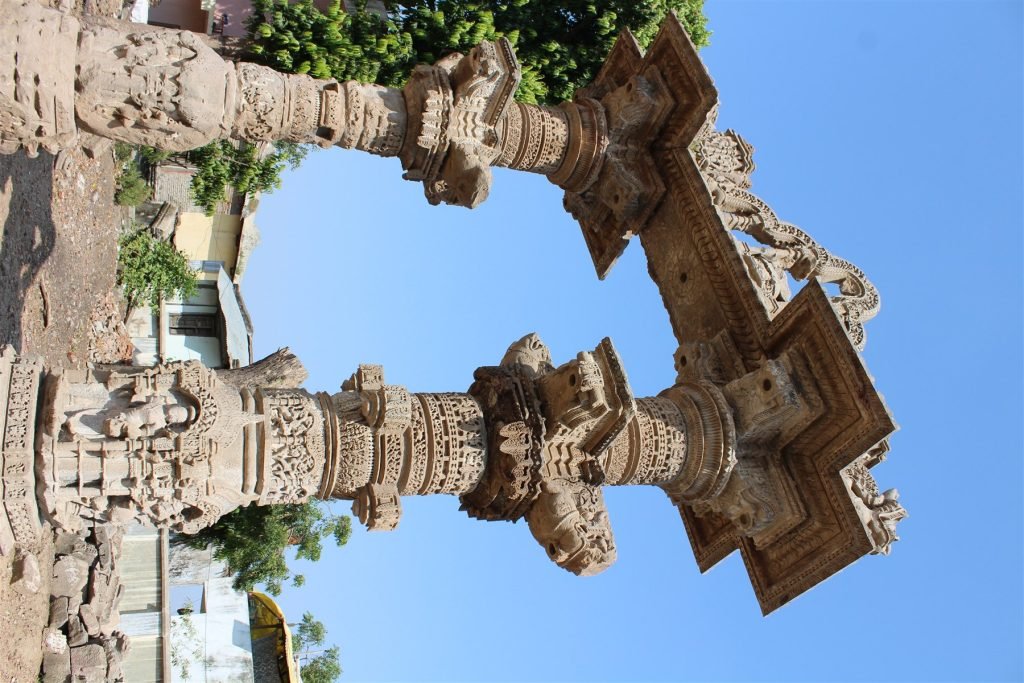 SIDHPUR
Rudra Mahalaya
Ruins of a colossal Shiva temple in Sidhpur
 NATURE
Bhiloda
A forested town in the Aravallis

Babo Pithoro Shrine
The Rathwa deity of the Pithora paintings
WHERE TO STAY
Find your stay in Gujarat
Compare live prices across the big booking sites and reserve in a few taps. Booking happens securely on the partner's site — we may earn a small commission at no extra cost to you.
Book directly on our partner sites — tap a provider to see live Gujarat hotels & prices:
SHOP THE REGION
Bring home Gujarat — & travel essentials
Hand-picked crafts and trip gear, available on Amazon.
Published 24 June 2026 · Updated 24 August 2026
We’re an independent group of writers and travellers documenting every corner of Gujarat — one place, plate and festival at a time.