
Region
Eastern Gir, Saurashtra
Best time
December to March
Ideal duration
Half a day
Good for
Nature lovers and off-track explorers
The eastern Gir trails cover the quieter, less-visited fringes on the eastern side of the Gir forest region in Saurashtra. Away from the busiest safari zones, this part of the landscape offers dry forest, open scrub and rural country where wildlife and village life meet. For travellers who want a calmer, more exploratory feel than the main tourist circuit, these eastern reaches hold real appeal.
Exploring here is about slow travel through a natural landscape rather than guaranteed big sightings. You may encounter birdlife, deer and the atmosphere of the forest edge, along with small settlements that depend on the land. Access to protected areas is governed by rules and timings, so plan carefully and lean on local knowledge to make the most of this lesser-known side of Gir.
What to see and do on the eastern Gir trails
Take in the dry forest, scrub and rural scenery of Gir's eastern edge, keeping an eye out for birds and other wildlife. The quiet, uncrowded atmosphere is the main reward here.
Where routes pass near protected zones, follow all access rules and consider going with a local guide. Combining the trails with nearby temples, villages or safari areas builds a fuller regional day.
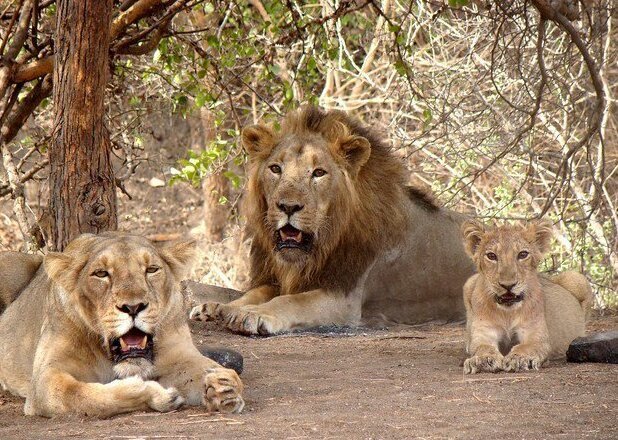
Eastern Gir Trails
How to get there
The eastern Gir area is reached by road from towns around the district, including hubs on the eastern side of the forest region. Because routes can be rural and partly within protected land, a private vehicle and local guidance are the most practical way to explore safely and lawfully.
Best time to visit the eastern Gir trails
The cooler, drier months, especially December to March, are best for comfortable travel and wildlife activity. Parts of the forest region typically close during the monsoon, so confirm seasonal access before planning routes through or near protected areas.
Good to know
- Respect all protected-area rules and timings.
- Go with a local guide for the best and safest experience.
- Bring binoculars for birds and wildlife.
- Carry water and supplies for rural stretches.
Frequently asked questions
What are the eastern Gir trails?
They are the quieter routes and landscapes on the eastern side of the Gir forest region, away from the busiest safari zones.
Will I see lions here?
Sightings are never guaranteed anywhere in Gir, and these fringe areas are more about quiet forest scenery than assured wildlife.
Do I need a guide?
For protected stretches, local guidance is strongly recommended to navigate rules, timings and terrain.
The other side of the lion forest
Most of Gir's traffic enters from the west, at Sasan, where the permits, the lodges and the queues are. The eastern side of the landscape — the forest and farmland around Dhari, Amreli and the Shetrunji river — carries far fewer visitors and, increasingly, a large share of the lions. As the population has grown past what the core sanctuary holds, prides have settled the eastern corridor permanently, living among mango orchards, riverbeds and village margins.
Eastern Gir is therefore not a lesser version of Sasan; it is a different experience. The forest is drier and more broken, the sightings are less managed, and the setting is a working countryside rather than a gated park.
Where the trails actually are
Ambardi Safari Park, near Dhari, is the organised heart of the east: a large fenced reserve on the Shetrunji's bank where lion sightings on the vehicle circuit are close to assured, with a fraction of Sasan's crowd. Book through the forest department and take the early slot.
The Shetrunji river country between Dhari and Khodiyar dam is the east's scenic spine — riverbed, crocodile pools, and forest edge where peacocks, nilgai and chital are constant and lion sign is common. The Khodiyar reservoir pulls in winter waterbirds and gives the best open views in the area. Further east, the Mitiyala sanctuary protects an outlying block of lion forest near Savarkundla — visits are possible with forest department permission and almost nobody makes them.
The coexistence story
What makes the east genuinely remarkable is visible from any village road: lions and people sharing ground at a density found nowhere else on earth. Maldhari herders graze buffalo in the same scrub the prides use; farmers sleep on machans over their fields in season; and the region's tolerance of big predators — losses are compensated, retaliation is rare — is the quiet reason the Asiatic lion recovered at all. Driving the Dhari–Tulsishyam road at dawn, you understand the statistic that a third of Gir's lions now live outside the protected area.
Practical notes
Base yourself at Dhari or Amreli — simple hotels, honest food, no tourism polish. Ambardi needs a booked permit; the open country needs only a car, an early start and restraint. Never approach a lion on foot, never follow one off the road, and treat every sighting outside the fenced park as a privilege to keep your distance from. A local driver who knows the roads doubles what you will see.
December to March is the comfortable window; April and May concentrate wildlife at water but are fierce; the monsoon greens everything and makes the river country beautiful, though Ambardi closes for part of it. Pair the east with Tulsishyam's hot springs in the forest, or drop south to the coast at Diu.