
Region
Bharuch, south Gujarat
Best time
November to February
Ideal duration
A few hours
Good for
River views, birding, quiet scenery
Narmada Mouth is the broad estuary where the sacred Narmada river empties into the Gulf of Khambhat near Bharuch, spreading across tidal flats and channels as fresh water meets the sea. This meeting point has shaped Bharuch's destiny as an ancient port, and the wide expanse of water and mud gives the area a calm, elemental character. Big tides move across the flats through the day, changing the shape of the shore.
The scenery here is about scale and light rather than drama, with low banks, open sky and rich birdlife drawn to the mixing waters. It is a rewarding spot for anyone who enjoys estuaries and water birds, and for quiet reflection beside a river held sacred across India. Facilities are minimal, so come prepared and enjoy the peace.
What to see and do
Find a riverbank vantage point near Bharuch to look out over the estuary and the tidal flats where the river meets the sea. Waders and water birds gather here, so bring binoculars.
Watch the tides shift the mudflats and enjoy the wide light over the water at dawn and dusk. This is a place for slow observation rather than facilities, so keep your plans simple and unhurried.
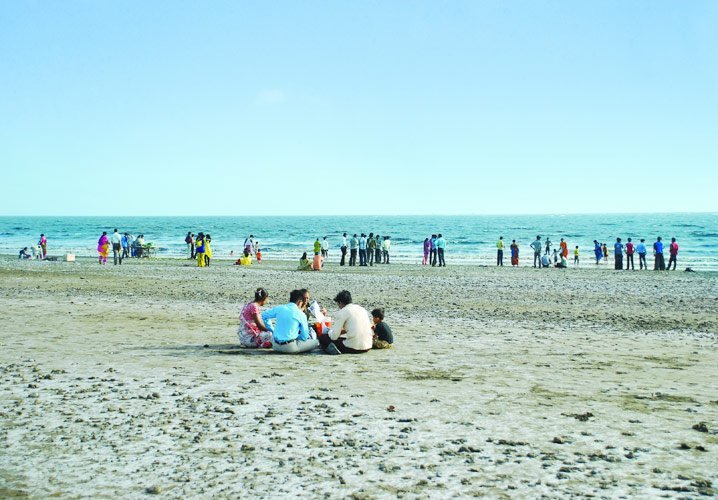
Narmada Mouth
How to get there
The river mouth is at Bharuch, on the main rail and highway route between Vadodara and Surat, so it is easy to reach by train or road. Vadodara and Surat have the nearest airports. From Bharuch town, a short taxi or auto-rickshaw ride takes you to riverside points where the estuary opens toward the gulf.
Best time to visit Narmada Mouth
The cool, dry season from November to February is best for comfort and for winter birdlife on the flats. Dawn and dusk bring the softest light and the most activity, while low tide exposes the widest expanse of mud. Avoid the monsoon, when high river flows and rain make the banks harder to reach.
Good to know
- Carry binoculars for the estuary birdlife.
- Check tide times to see the flats at their fullest.
- Come at dawn or dusk for the best light.
- Combine the visit with old Bharuch and its ghats.
Frequently asked questions
What is the Narmada mouth?
It is the wide estuary where the sacred Narmada river meets the Gulf of Khambhat near Bharuch.
Why is it significant?
This river-sea meeting point shaped Bharuch's long history as an ancient trading port.
Is it worth visiting for birds?
Yes, the tidal flats and mixing waters draw waders and water birds, especially in winter.
The river's last miles
Below Bharuch the Narmada gives up being a river by degrees. The channel widens past the city's ghats and the Golden Bridge, splits around sandbars, gathers a fringe of mangrove, and somewhere past Aliabet island becomes indistinguishable from the Gulf of Khambhat. This is the mouth — the end of a 1,300-kilometre journey from Amarkantak across the middle of India.
For Hindu tradition the ending matters as much as the source. The Narmada is held so sacred that her mere sight purifies — darshan alone, where other rivers ask for a bath — and the parikrama pilgrims who walk her full circuit turn at this mouth, crossing between banks to begin the return. The mouth is not scenery to them; it is a hinge of one of India's great pilgrimages.
What the mouth is like
Expect scale, not prettiness. The water is brown with the silt of half a subcontinent; the tidal range of the Gulf of Khambhat — among the highest in India — moves the whole estuary twice a day; and the horizons run flat to shipping and sky. At low water the flats and bars emerge for kilometres. At the flood the sea pushes far upriver, a reminder of why ancient Bharuch, forty kilometres inland, could function as a sea port.
Fishing settlements work the channels on the tide's schedule. Aliabet, the island in the mouth itself, is the strangest place in the geography — flat, bare, windswept, with the river on one side and the gulf on the other.
Birds and the winter season
The mudflats make the mouth a serious winter birding coast: waders in their thousands — godwits, curlews, plovers, sandpipers — flamingos on the wider flats, terns and gulls working the channels, and raptors over all of it. November to February is the window, at low tide, with binoculars; the distances are enormous and the birds keep to the far mud.
Visiting sensibly
There is no single gate. The practical approaches are the Bharuch riverfront for the upstream framing; the coastal villages off the Bharuch–Dahej road for the flats; and local boat arrangement for Aliabet, best made through Bharuch contacts. Go at low tide, early, and treat the mud with real caution — it is soft in patches, the tide floods fast across flat ground, and local advice is part of the equipment, not an option.
There are no facilities anywhere on the mouth. Carry water, sun cover and everything else. November to February is the season; the monsoon turns the river vast and shuts the boats down.
Pair the mouth with old Bharuch's lanes and ghats, Kabirvad's banyan island upstream, or the Narmada aarti at the city ghats in the evening — the river worshipped a few miles before she ends.