
Region
Bharuch, south Gujarat
Best time
November to February
Ideal duration
Half a day
Good for
Heritage walks, history, riverside views
Old Broach Lanes takes its name from Broach, the colonial spelling of Bharuch, one of the oldest continuously inhabited port towns in India, set on the north bank of the Narmada. The old quarters are a maze of narrow streets, old havelis, temples, mosques and riverside ghats that reflect centuries of trade with distant lands. Walking these lanes gives you a tangible sense of a town whose maritime story stretches back to antiquity.
Bharuch grew wealthy on cotton, textiles and sea trade, and the older neighbourhoods still carry that layered past in their architecture and street life. Expect a lived-in, working town rather than a polished heritage showpiece. The pleasures here are in wandering, noticing carved wooden facades and finding the ghats where the town meets its great river.
What to see and do
Wander the tangle of old lanes on foot, looking up at carved wooden balconies and old merchant houses that speak of past prosperity. Old temples and mosques punctuate the neighbourhoods, adding to the layered feel.
Make your way down to the riverside ghats and the fort area on the bluff above the Narmada for views over the water. Stop for local snacks and soak up the everyday rhythm of a historic trading town.
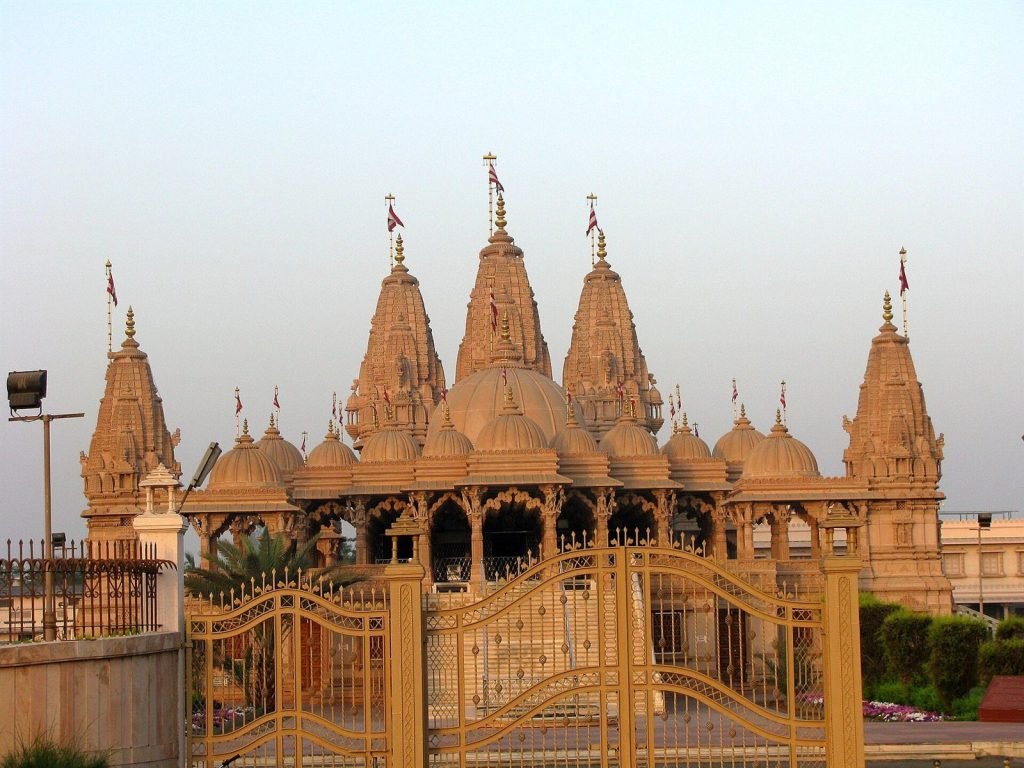
Old Broach Lanes
How to get there
Bharuch sits on the main railway and highway corridor between Vadodara and Surat, so it is easy to reach by train or road. The nearest major airports are at Vadodara and Surat, both a manageable drive away. Once in town, the old quarters are best explored on foot or by short auto-rickshaw hops through the narrow streets.
Best time to visit Old Broach Lanes
The cool, dry months from November to February are the most comfortable for walking the old lanes and riverside. Mornings and late afternoons are pleasant and good for photography in the narrow streets. Avoid the humid heat of the pre-monsoon months and the heavy rains, when walking the town is less enjoyable.
Good to know
- Explore on foot to appreciate the carved facades and lanes.
- Head to the ghats and fort bluff for river views.
- Try local snacks from the old-town eateries.
- Go in the cooler morning hours for comfortable walking.
Frequently asked questions
Is Broach the same as Bharuch?
Yes, Broach is the older colonial spelling of Bharuch, a very ancient port town on the Narmada.
What is there to see in the old lanes?
Expect old havelis, temples, mosques, carved facades and riverside ghats within a lived-in historic town.
How do I get around?
The old quarters are best explored on foot, with short auto-rickshaw rides for longer hops.
One of India's oldest working ports
Bharuch — Broach to the traders, Bharukachchha in the ancient texts, Barygaza to the Greeks — has been a port for well over two thousand years. The first-century Periplus of the Erythraean Sea describes its harbour, its tides and its trade in detail; Roman coins and amphorae have surfaced in the region; and for centuries the city was where the Narmada's cotton country met the Indian Ocean's shipping. Almost nothing else in India has been continuously mercantile for that long.
The old quarters above the river are that history's surviving fabric — not a preserved monument, but a worn, working old city where the layers show in every lane.
Walking the lanes
Start at the fort hill, where the citadel walls enclose the oldest core: the Jama Masjid built in the early fourteenth century from the fabric of a Jain temple — its pillared hall is one of Gujarat's most striking conversions — along with the Kot and views down over the Narmada and the Golden Bridge.
Below and around it run the merchant quarters: lanes of tall wooden-fronted houses with carved brackets and deep otlas, the havelis of the cotton and shipping fortunes. The Bohra mohallas add their own refined streetscapes, and the bazaars — cloth, hardware, sweets — still run where they always have. Bharuch's famous salted peanuts are the walking snack; buy them roasted fresh.
Down at the water, the Narmada ghats give the walk its ending: steps, shrines, evening aarti and the river traffic that founded everything above it.
Reading the layers
The pleasure of old Broach is stratigraphy. A Solanki-period fragment sits in a mosque wall; a Dutch and English trading past shows in odd colonial fronts (both East India Companies kept factories here); Maratha, Gaekwad and British administrations each left their courthouses and gates. No single building is the sight — the accumulation is.
Practical notes
The lanes are best walked early — seven to ten in the morning — when the bazaars are opening, the light is low and the traffic has not built. Allow two to three hours for fort hill, the merchant lanes and the ghats. Dress modestly for the mosque and temple stops, ask before photographing people or into doorways, and remember these are homes and shops, not a heritage set.
October to March is the season. Bharuch sits on the main rail and highway corridor, an easy stop between Vadodara and Surat; pair the lanes with Kabirvad's great banyan upstream, the Golden Bridge, or the Swaminarayan temple in the newer town.