
Region
Gulf of Kutch, near Okha
Best time
Winter; low-tide days
Ideal duration
A half day
Good for
Nature lovers and marine curiosity
The reefs off Okha lie within the Marine National Park in the Gulf of Kutch, an area of intertidal flats, coral patches and small islands near the port of Okha. At low tide, sections of reef and seabed are exposed, revealing corals, colourful invertebrates and other marine life that are usually hidden underwater. It is one of the more unusual natural experiences on the Gujarat coast, quite different from a typical beach outing.
This is a protected marine environment, so access is regulated and depends heavily on the tides, which uncover the reef only at certain times. Guided visits help both with timing and with understanding what you are looking at. Expect to walk carefully over slippery, uneven ground rather than swim. Come with realistic expectations, respect for a fragile habitat, and a sense of curiosity about coastal ecology.
What to see and do at the reefs off Okha
At low tide you can walk out toward the exposed reef and look for corals, sea stars, crabs, sponges and other intertidal life. A knowledgeable guide makes a big difference in spotting and identifying species without harming them.
The wider Marine National Park area, with its islands and birdlife, adds to the interest. Tread gently, avoid touching or removing anything, and follow the guidance of park staff and guides to protect the habitat.
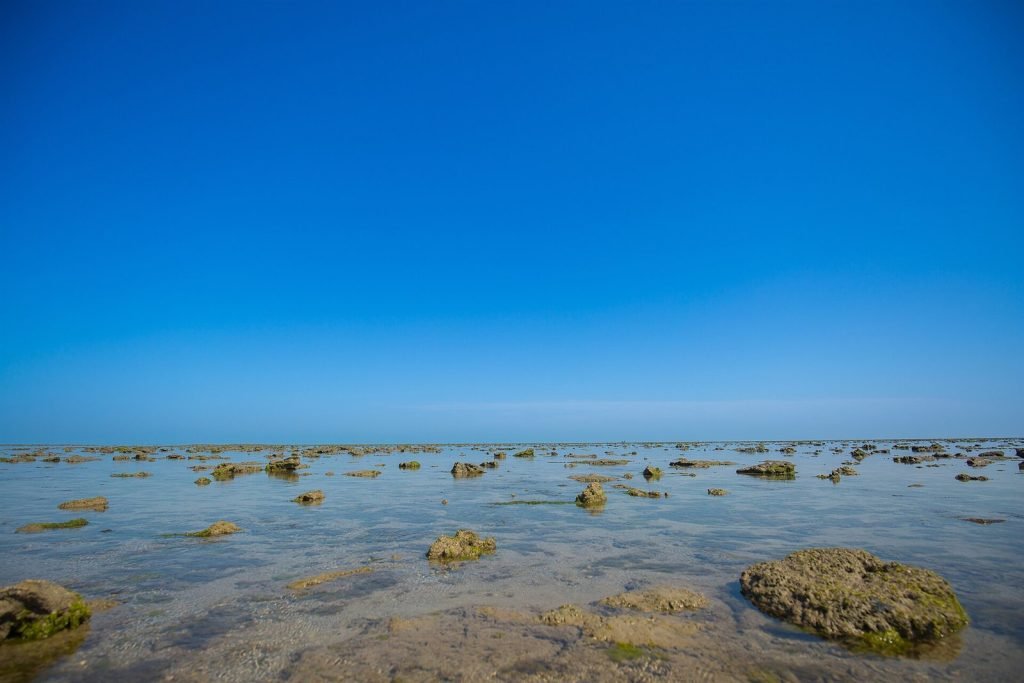
Reefs off Okha
How to get there
Okha sits near the far tip of the Saurashtra coast, reached by road and rail and close to Dwarka. Reef visits within the Marine National Park depend on tide timings and permissions, so arrange them through recognised guides or authorities and confirm access in advance.
Best time to visit the reefs off Okha
The cooler winter months are the most comfortable, and the crucial factor is the tide: visits are only possible when low tide exposes the reef. Timing is everything here, so plan around tide charts and local advice rather than a fixed hour.
Good to know
- Plan strictly around low-tide timings.
- Wear sturdy shoes for slippery, sharp ground.
- Do not touch or remove marine life.
- Go with a guide who knows the reef.
Frequently asked questions
Can I snorkel or dive at the reefs off Okha?
The experience is mostly intertidal reef walking at low tide rather than diving; check current activities locally.
Do I need permission to visit?
Yes, this is a protected marine area, so access depends on permits and tide timings.
Will I definitely see corals?
Sightings depend on tide, season and conditions, and a guide greatly improves what you find.
Coral in an unexpected sea
Few travellers associate Gujarat with coral, but the Gulf of Kutch holds India's northernmost reefs — hard-coral patches and reef flats scattered along the gulf's southern shore and its chain of low islands. The waters off Okha, at the gulf's mouth, are part of that system, protected since the early 1980s within the Gulf of Kutch Marine National Park and Sanctuary, the first marine park declared in India.
These are not the clear-water reefs of the Andamans. The gulf is silty, tidal and hard-working, and its corals live at the edge of what the species tolerate — which is precisely why scientists find them interesting, and why seeing them takes a little planning.
How the reefs are actually seen
The gulf's tidal range is enormous, and that is the visitor's way in: at low tide the sea withdraws hundreds of metres, exposing reef flats you can walk onto. Narara Bet, reachable by road along the coast towards Jamnagar, is the established reef-walk site — at low water its flats reveal corals, sea anemones, sponges, brittle stars, crabs, octopus and, with luck, seahorses, all seen on foot with a guide.
Pirotan Island, offshore near the shipping channel, is the classic reef island — richer, wilder, and reachable only by boat with forest-department permits, which take arranging. Off Okha itself and around Bet Dwarka, local boats offer glass-bottom rides and snorkelling in season, the easiest if shallowest look at the marine life.
What lives out there
The park protects hard corals of several genera, extensive seagrass and mudflat systems, and the mangroves that fringe the islands. The larger cast includes green sea turtles, dolphins along the channels, and — rarely seen — the dugong. Birdlife is constant: reef herons, terns, gulls and, in winter, big wader flocks working the exposed flats.
Every reef visit is tide-ruled. The window is roughly two hours either side of low water; outside it there is simply sea. Check tide tables before fixing anything, and let the guide set the route — the flats hold soft patches and sharp rock in equal measure.
Practical notes
Marine-park zones need permits from the forest department at Jamnagar; operators at Okha, Dwarka and Jamnagar arrange them along with boats. Wear shoes you can soak, carry water and sun cover — there is no shade on a reef flat — and never stand on or handle coral: it is living animal, decades in the growing, and a footstep kills it.
November to February is the season: calm seas, comfortable walking and the winter birds in. The monsoon closes boat operations and much of the access. Combine a reef morning with Dwarka's temples, the Okha fishing harbour or Shivrajpur's Blue Flag beach — all on the same short stretch of coast.