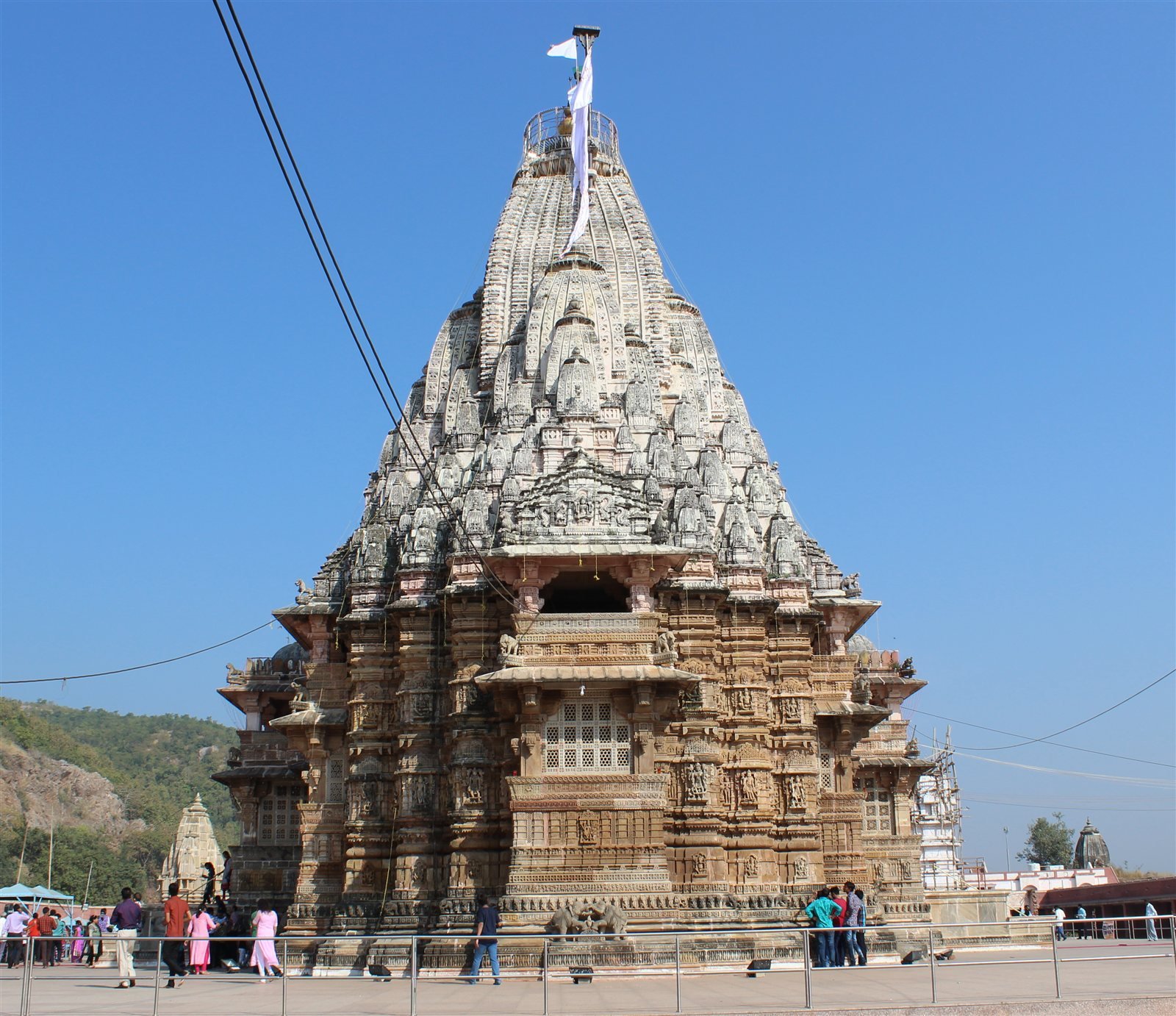
There is a reservoir in the Aravalli foothills of north-east Gujarat, near the temple town of Shamlaji, that looks like any other irrigation project — a dam, a spread of grey-green water, hills going back in layers behind it. Underneath it lies the most significant Buddhist site ever excavated in Gujarat, and one of the few places in India where archaeologists found a casket containing bone relics inscribed as those of the Buddha himself.
Dev ni Mori was dug between 1960 and 1963, just ahead of the reservoir that was going to drown it. What came out changed the map of early Indian Buddhism: a great brick stupa, a monastery, and inside the stupa a stone casket holding a smaller inscribed one, dated to the third or fourth century of the common era. Then the water came up. Visiting Dev ni Mori today is an odd and rather moving experience, because the site is not really there — but its story, and its contents, are entirely findable if you know where to look.
What the archaeologists found
The excavation, carried out by the Department of Archaeology at MS University in Vadodara under R. N. Mehta and S. N. Chowdhary, uncovered a substantial Buddhist establishment: a large brick mahastupa, a vihara or monastery with cells arranged around a courtyard, and quantities of pottery, coins, terracotta and sculpture. This was not a shrine but a working monastic complex, occupied over a considerable period in the early centuries of the common era, during and after the rule of the Western Kshatrapas in this region.
The sculpture alone would have made the dig important. Excavators recovered a series of seated Buddha figures in terracotta from niches around the stupa — calm, heavy-lidded, with the treatment of the robe and the modelling of the face showing clear kinship with the Gandhara and Mathura traditions further north. They are among the earliest Buddha images found anywhere in Gujarat, and they demonstrate that this corner of the subcontinent was connected to the main currents of Buddhist art rather than sitting outside them.
But the find that mattered most was inside the stupa. In a chamber at its core the excavators reached a stone box, and inside that a smaller inscribed casket of stone. The inscription, in Brahmi, records the enshrining of relics of the Buddha, names the reigning kings and gives a date in an era that places the deposit in the late third or early fourth century CE. Very few Indian excavations have produced a relic deposit with an inscription of this kind, and fewer still with a date attached.
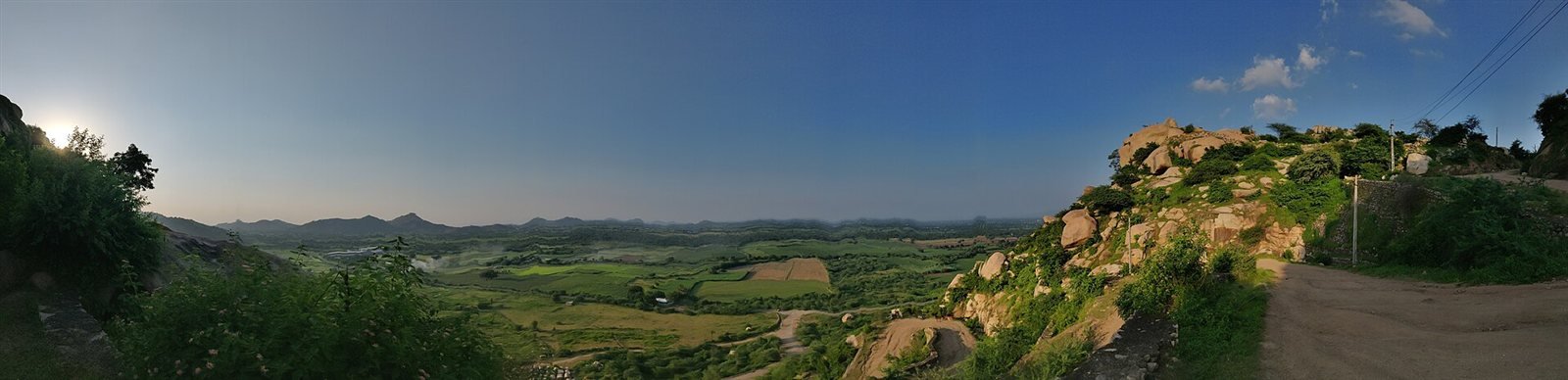
The water covers one of the most important Buddhist discoveries ever made in western India.
A dated inscription, which is rarer than it sounds
Indian archaeology has a chronic problem with chronology. Enormous quantities of material survive with no secure date, and much of the discipline consists of arguing sequences from style. An inscribed, dated relic casket from a stratified excavation is therefore worth a great deal more than its size suggests: it gives a fixed point that other material can be measured against. The Dev ni Mori casket dates the stupa, the stupa dates the sculpture, and the sculpture helps date comparable pieces elsewhere.
An inscribed, dated relic casket from a stratified dig — in Indian archaeology that is a fixed point in a discipline short of them
It also says something about the reach of Buddhism in western India. Gujarat is not where most people picture early Buddhism; the popular map runs from Bihar and Uttar Pradesh through Sanchi to the Deccan caves. Dev ni Mori, taken together with the excavated monastery at Vadnagar, the caves at Junagadh and Taranga's Taranmata hollows, sketches a Buddhist geography across north Gujarat that was substantial and is now almost entirely forgotten — not destroyed by anyone in particular, simply absorbed and built over as the region's religious life shifted to Shaivism, Vaishnavism and Jainism.
The relics themselves left the district. The casket and the principal finds went to the Department of Archaeology at MS University in Vadodara, where the collection has been studied and published, and where the casket has been displayed. Anyone genuinely interested in Dev ni Mori should treat Vadodara, not the reservoir, as the real destination — with the caveat that access to a university department collection is not the same as walking into a public museum, so enquire in advance rather than turning up.
Visiting a site that is under water
Be clear about what a trip here involves. The Meshwo reservoir, built in the 1960s, submerged the excavated area. In years of low water, parts of the site have reportedly become visible again as the level drops through the dry season, and there are periodic reports of brickwork emerging; in a normal year you are looking at a lake. There is no ticketed monument, no interpretation centre and no guided tour. What there is, is a landscape and a story.
Approached in that spirit it is worth an hour. The reservoir sits in attractive Aravalli foothill country, the dam and the water make a pleasant enough stop, and there is a genuine strangeness in standing on the bank knowing what is beneath it. Ask locally — people in the villages around Shamlaji know the site and its history, and the story of the dig is part of local memory. Go in the late dry season, around March to May, if you want the best chance of exposed ground, though that is a gamble rather than a plan.
How to get there and what else is nearby
Dev ni Mori lies close to Shamlaji in the Aravalli district of north-east Gujarat, roughly 130 to 140 km from Ahmedabad on or just off the highway towards Udaipur, and about 60 km from Himmatnagar. There is no public transport to the site as such; buses and shared taxis run to Shamlaji constantly on the busy Ahmedabad–Udaipur road, and from there it is a short local hop. A hired car is much the easiest approach.
The trip makes far more sense combined. Shamlaji itself, a few kilometres away, is a major Vishnu temple with a great Kartik Purnima fair and heavy tribal participation, and is worth seeing in its own right. Idar, with its extraordinary granite boulder hill and fort, is around 45 km west. The Polo Forest, with its ruined tenth-to-fifteenth-century Hindu and Jain temples in dry teak woodland, is roughly 60 km away and is one of the best short breaks in north Gujarat. String Shamlaji, Dev ni Mori, Idar and Polo Forest together and you have an excellent two-day loop out of Ahmedabad; do Dev ni Mori alone and you have driven three hours to look at a reservoir.
If you go
- Understand before you travel that the excavated site is submerged under the Meshwo reservoir — there is no monument to visit.
- Treat MS University's archaeology collection in Vadodara as the real destination for the casket and sculpture, and enquire about access in advance.
- Visit in the late dry season, roughly March to May, for the best chance that low water exposes part of the site.
- Ask in the villages around Shamlaji; local memory of the excavation is better than any signage, because there is none.
- Never come for Dev ni Mori alone — combine it with Shamlaji, Idar and the Polo Forest into a two-day north Gujarat loop.
Dev ni Mori is the strangest heritage destination in Gujarat: an excavation of real international importance, which produced an inscribed and dated casket of Buddha relics and some of the earliest Buddha images in western India, and which now lies under an irrigation reservoir. Go knowing that, combine it with Shamlaji, Idar and the Polo Forest, and spend an hour on the bank thinking about the forgotten Buddhist geography of north Gujarat. Then go and find the casket in Vadodara.