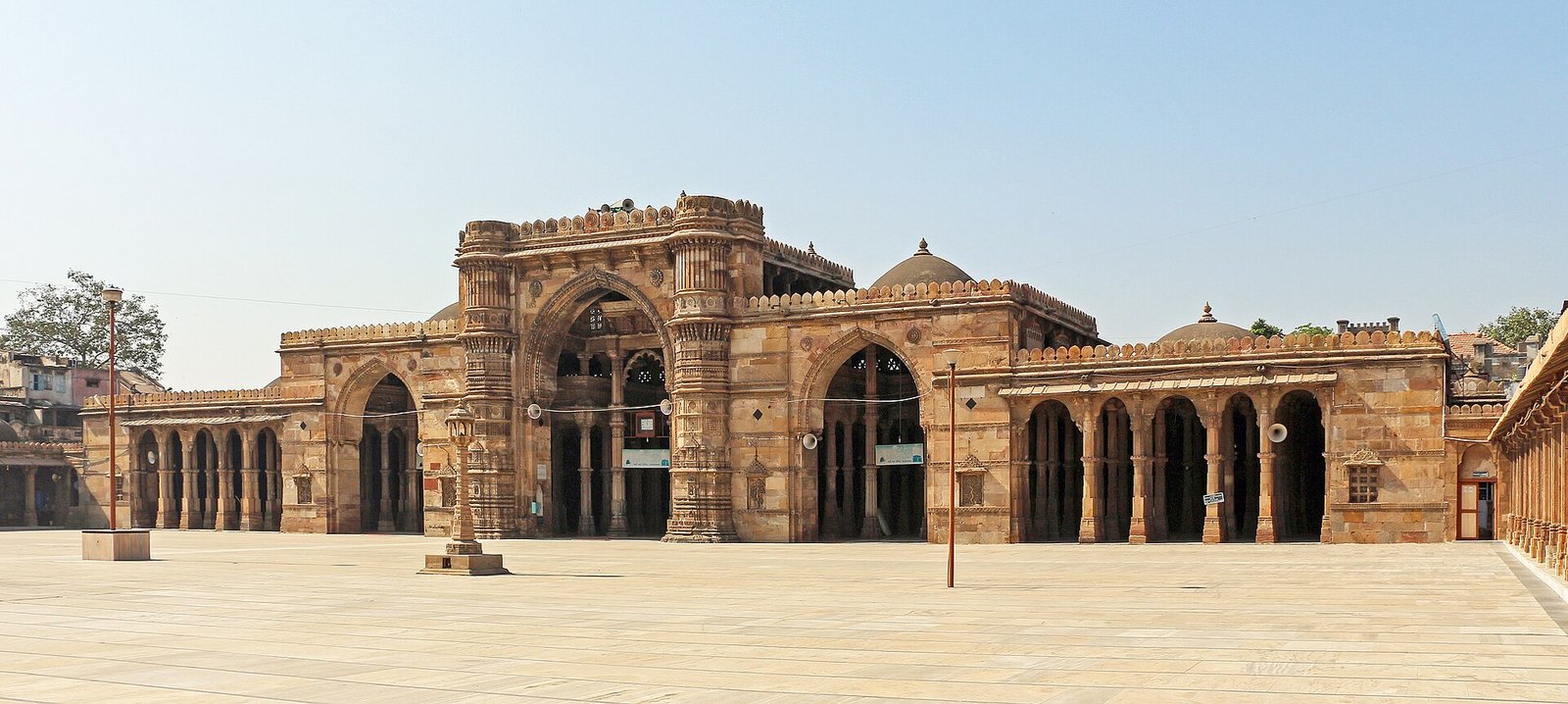
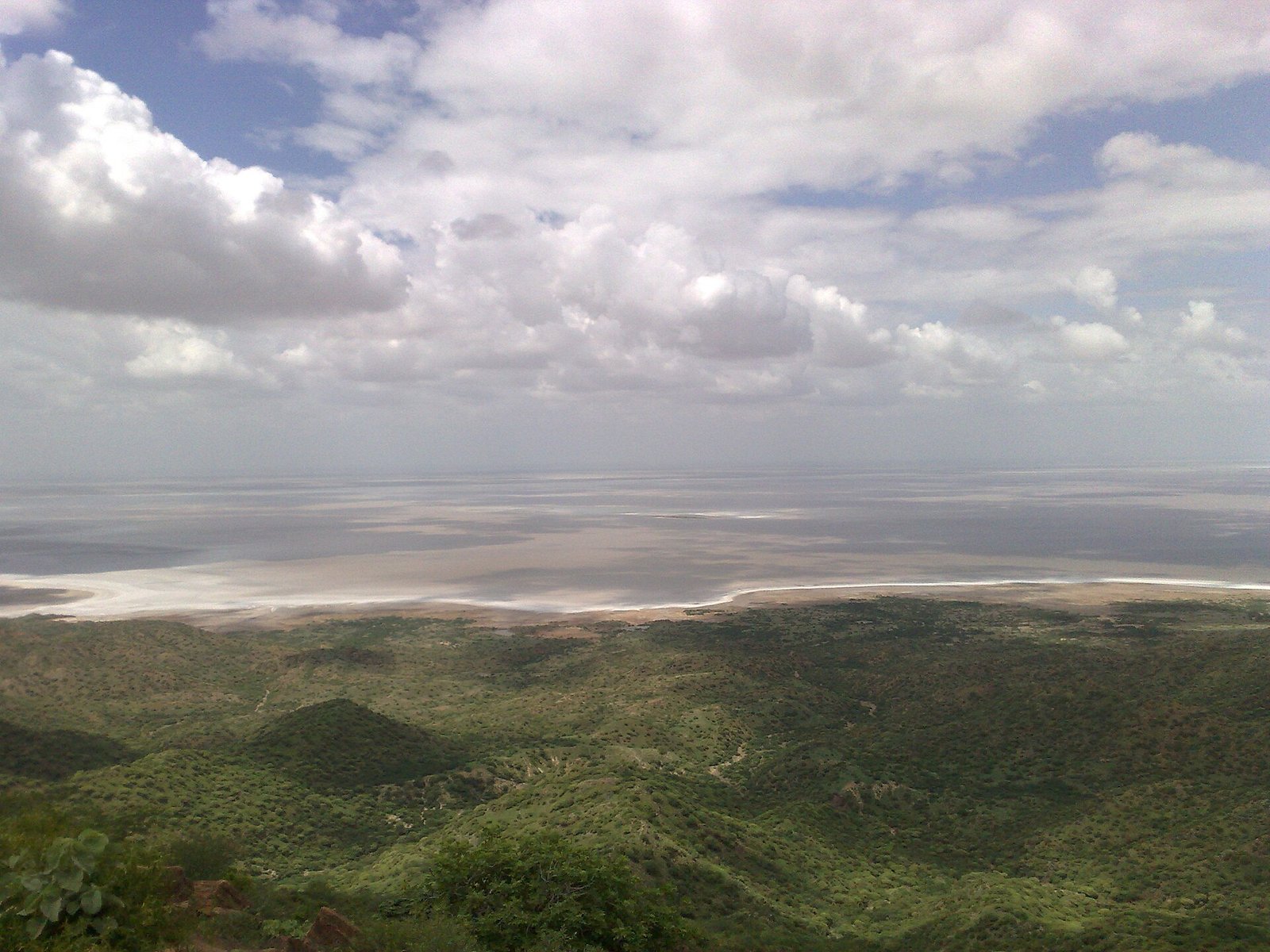
Drive north-east out of Bhuj for six hours, across a landscape that empties out until there is nothing but white salt and sky, and you arrive at an island in a desert. Khadir Bet rises out of the Great Rann of Kutch like the back of a whale, and on its western edge, laid out in dressed stone, is one of the largest and strangest cities of the ancient world. Dholavira was a working metropolis when Stonehenge was new, and walking its streets today is the closest thing Gujarat offers to time travel.
Most people have heard of Mohenjo-daro and Harappa. Far fewer know that one of the five great cities of the Indus Valley Civilisation sits inside Gujarat, that it was excavated only recently, and that it became a UNESCO World Heritage Site as late as 2021. Dholavira is remote, hot and almost entirely undeveloped for tourism, which is exactly why it is worth the effort. On most days you can have a 4,500-year-old city very nearly to yourself.
A city built of stone, not brick
The first thing an archaeologist will tell you about Dholavira is that it breaks the rules. The Indus cities of the Punjab and Sindh were built of standardised baked brick, mile after mile of it, and that uniformity is part of what makes the civilisation so eerie. Dholavira, sitting on an island of hard rock, was built instead of locally quarried stone, and the difference is visible everywhere: massive dressed-stone walls, stone drains, stone stairways worn smooth by feet that stopped walking here around 1500 BCE.
The city was laid out in three parts, and the plan is still legible on the ground. There is a heavily fortified citadel at the south, subdivided into a castle and an adjoining annexe; a middle town for what were presumably the officials and merchants; and a lower town where most people lived and worked. Between the citadel and the middle town lies a long, level rectangular ground that the excavators interpreted as a ceremonial arena or stadium, with terraced seating along one side. Nothing quite like it has been found at any other Harappan site.
The excavation was the life's work of the archaeologist R. S. Bisht, who dug here across sixteen seasons from 1989. What he uncovered was not a village that grew haphazardly but a settlement that was designed — walls aligned to the cardinal directions, gateways placed with intent, proportions repeated from one enclosure to the next. Standing on the citadel wall looking down over the grid, the impression is of a city that was drawn before it was built.
Dholavira's stone streets and reservoirs were laid out with a precision that still startles archaeologists.
Water, and the genius of surviving here
The real marvel of Dholavira is not its walls but its plumbing. This is one of the driest places in India; the two seasonal streams that flank the site, the Manhar and the Mansar, run only briefly after rain. The Harappans responded by turning the entire city into a water-harvesting machine. They threw dams across both streams, channelled the flow into a series of enormous rock-cut reservoirs that ring the settlement, and linked them with stone conduits so that overflow from one fed the next.
Sixteen reservoirs, some cut thirty feet into bedrock — a city that solved drought four and a half thousand years before anyone called it water management
Sixteen of these reservoirs have been identified, occupying something like a tenth of the walled area. Some are cut ten metres down into solid rock, with flights of steps descending to the water line, and one contains a rock-cut well whose shaft is still perfectly circular. When you understand that everything here — the population, the crafts, the trade — depended on catching a few weeks of unreliable rain and holding it for a year, the scale of the engineering stops being a curiosity and starts being the whole point of the city.
There is a lesson sitting in plain sight, too. Dholavira was eventually abandoned, and the leading explanation is climatic: the monsoon weakened, the streams failed more often, the sea that once brought trade retreated as the Rann silted up. A civilisation that had out-engineered aridity for a thousand years finally could not out-engineer a changing climate. In a district where villages still queue at water tankers each May, that ending does not feel especially ancient.
The signboard nobody can read
Near the northern gateway of the citadel, excavators found what is now the most famous object from the site: ten large characters of the Indus script, each around thirty-seven centimetres tall, inlaid in gypsum on a wooden plank that had fallen face-down and left its impression in the ground. It is the largest Indus inscription ever found, and it appears to have been mounted above the gate — a signboard announcing something to anyone entering the city.
Nobody knows what it says. The Indus script has never been deciphered; we have thousands of short inscriptions on seals and pots and not a single bilingual key. So the sign hangs there in the museum's reconstruction, ten symbols wide, plainly meant to be read at a distance by people who could read it, and completely mute to us. Of all the things to see at Dholavira, that small, patient failure of understanding is the one that tends to stay with visitors longest.
Getting there, and the road across the salt
Dholavira sits about 250 km from Bhuj and roughly 360 km from Ahmedabad, and there is no quick way to do it. The classic approach is the long drive north from Bhuj through Rapar, but the more spectacular option is the causeway from Khavda, a raised road running dead straight across the white Rann that locals have christened the Road to Heaven. In the dry season there is nothing on either side of you but salt to the horizon, and it is worth timing your arrival for late afternoon just to drive it in good light.
Because of the distances, Dholavira rewards an overnight stay rather than a day trip. There is a Gujarat Tourism resort at the site and a small but growing set of homestays and tented camps in Dholavira village, and staying puts you on the ruins at opening time, before the heat and the light both turn harsh. The on-site museum is genuinely good and worth an hour, and a short drive away is a fossil park where the rock preserves wood from a forest that stood here long before the Harappans did.
If you go
- Visit between October and February. From March the heat on the open, shadeless site becomes punishing, and there is almost no shelter among the ruins.
- Arrive at opening time or in the last two hours of daylight — the low sun picks out the stonework and the reservoir edges far better than midday glare.
- Stay overnight in Dholavira village rather than attempting a day trip from Bhuj; the round drive is twelve hours and you will see the site at its worst hour.
- Approach via the Khavda causeway across the white Rann if the season is dry, and give yourself time to stop on it. It is as memorable as the ruins.
- Carry water, a hat and sunscreen, and set aside an hour for the site museum, where the signboard reconstruction and the excavation photographs make sense of what you are walking on.
Dholavira asks more of a traveller than almost anywhere else in Gujarat: a long drive, a remote night, a walk in hard sun through low stone walls that need a little imagination to become a city. What it gives back is rarer. This was one of the great urban experiments of the ancient world, built on an island in a salt desert by people who worked out how to hold a year of water from a fortnight of rain, and who left behind a sign above their gate that we still cannot read. Go in winter, stay the night, and give it a full morning.