Dhrangadhra is a town in Surendranagar district that most people encounter as a name on the road between Ahmedabad and Kutch, and drive through without slowing. It was the capital of a princely state ruled by the Jhala Rajputs, it sits in stone-quarrying country on the eastern edge of the Little Rann of Kutch, and it has three things that make it worth an hour or a night: a palace and old town, an unexpectedly serious tradition of stone carving, and the most convenient access to the wild asses.
It is also a good place to understand what this part of Gujarat actually is — a transitional landscape where cultivated Saurashtra runs out into salt flat, where the ground is quarried for building stone, and where the economy runs on stone, salt, agriculture and, increasingly, wildlife tourism at the Rann's edge.
Stone town
Dhrangadhra sits on beds of sandstone, and quarrying and working that stone has been a local industry for a very long time. The stone from this area has been used in construction across Gujarat, and the town retains a tradition of carving that goes beyond the purely commercial: temple sculpture, architectural ornament and figurative work, produced by families who have done it for generations. It is not organised for visitors, but the quarries and the workshops are visible and enquiring locally will generally get you shown something.
The connection between quarrying and craft is direct and worth noticing. Where good building stone is cheap and abundant, carving traditions tend to persist, because there is a steady demand for architectural ornament and temple work and a local pool of people who know how to produce it. Dhrangadhra is one of the reasons that new temples across Gujarat can still be built with hand-carved stone, and the workshops supplying that trade are here.
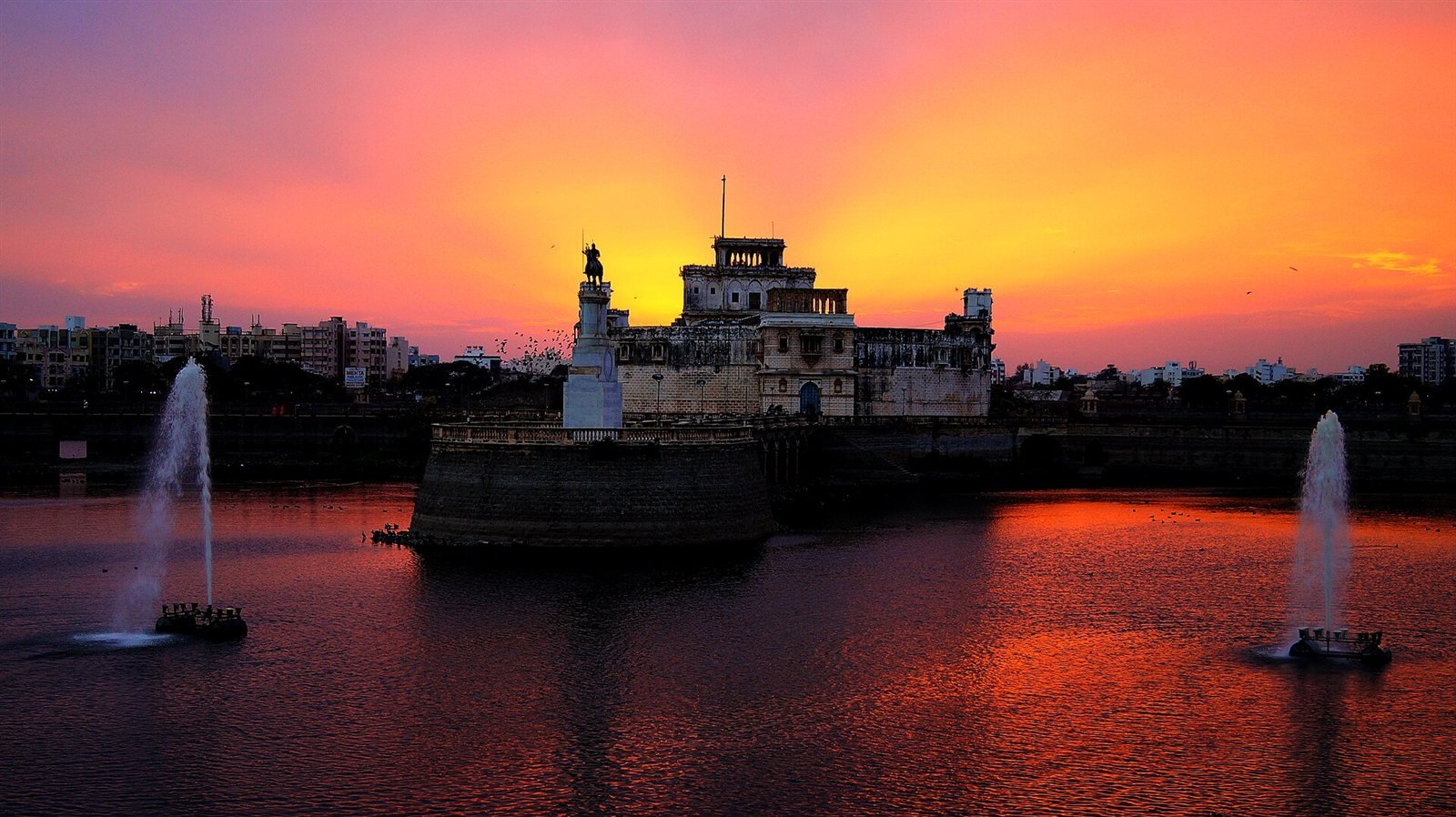
The town also has the residue of the princely state: a raj mahal and darbargadh area, old civic buildings, gateways, and the layout of a small capital. The Jhala rulers were a long-established Saurashtra dynasty and Dhrangadhra state was of reasonable standing. Little of this is maintained as heritage and none of it is ticketed; it is a walk through a town that used to matter more.
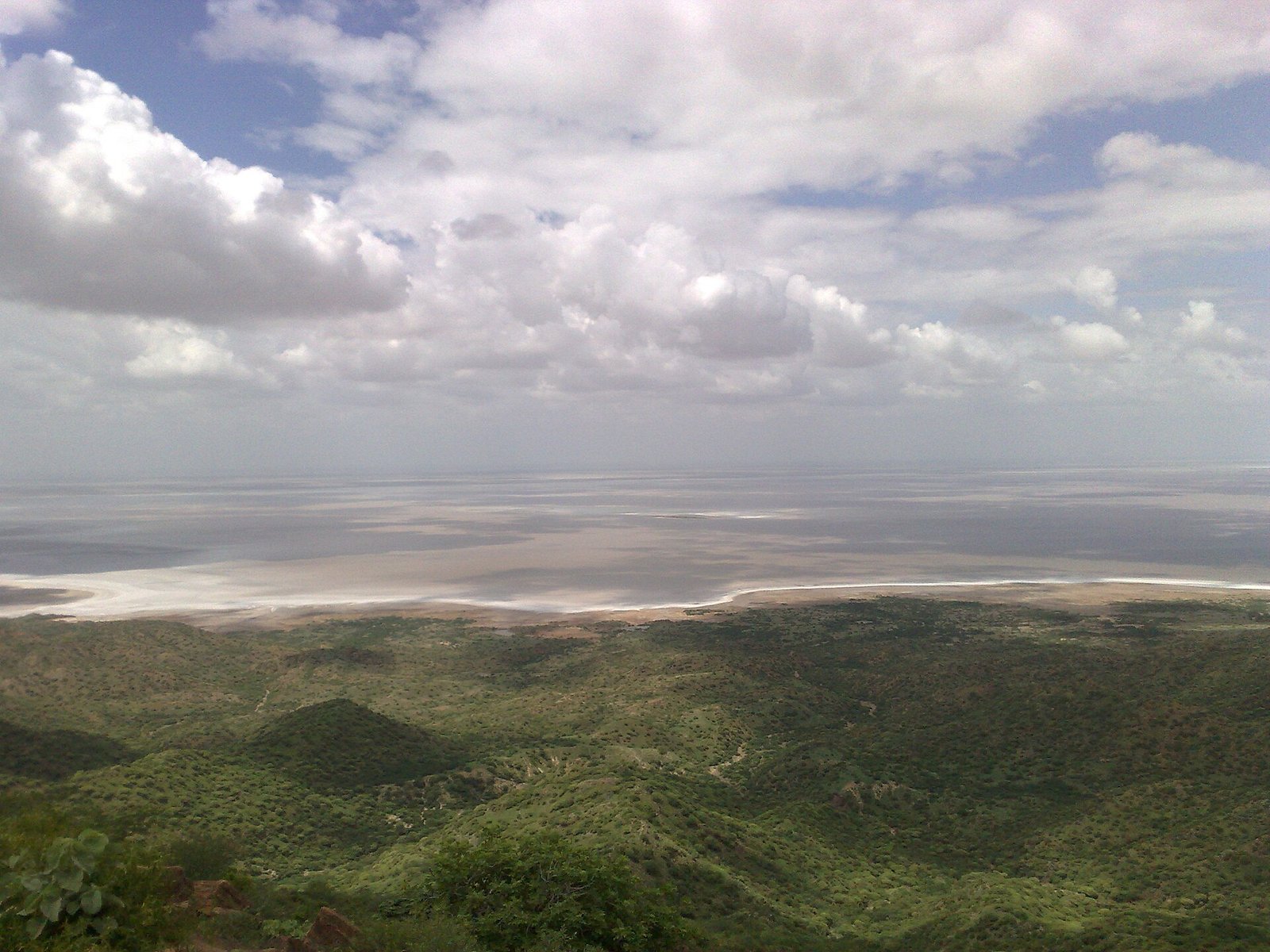
Quarried sandstone, salt pans and the beginning of the Little Rann.
The edge of the Little Rann
The practical reason to be in Dhrangadhra is what lies to the west. The Little Rann of Kutch is a vast seasonal salt flat, roughly five thousand square kilometres, studded with raised grassy islands called bets, and it is the last refuge of the Indian wild ass — the khur, a subspecies found nowhere else on earth. The Wild Ass Sanctuary protects it, and the flats also hold cranes, MacQueen's bustard, sandgrouse, larks, harriers, flamingos in wet years, and wolves and desert cats.
Five thousand square kilometres of seasonal salt flat, and the last wild asses on earth of their kind
Most wildlife visitors approach the Little Rann from Dasada or Bajana, where the specialist lodges and camps are concentrated and where the guiding is genuinely good. Dhrangadhra is another access point and is closer for anyone coming from the Rajkot or Morbi side. Either way, a safari means a vehicle out onto the flats and the bets with a guide, ideally at dawn or in the late afternoon, and permits and arrangements go through the forest department or your lodge.
There is a hard seasonal constraint. The Little Rann floods in the monsoon — this is a salt marsh, not a sand desert — and safaris run broadly from October to March, with the sanctuary generally closed or inaccessible in the wet months. Winter is also when the migratory birds are present, which makes the season doubly clear. Confirm dates locally rather than assuming.
Salt, and the people who make it
The other economy of the Little Rann's edge is salt, and it is one of the harder livelihoods in India. Agariya families move out onto the flats for months at a time in the dry season, pumping brine into shallow pans, raking and harvesting the salt by hand under extreme sun, living in temporary shelters with limited water. A substantial share of India's inland salt comes from here.
It is worth knowing about, and worth being careful about. The salt pans are visually spectacular — geometric, white, mirror-flat — and photographers are drawn to them, and the people working them are not an attraction. If you go out onto the pans, go with a guide who has a relationship there, ask before photographing anyone, buy something or contribute if that is appropriate, and do not treat extremely hard manual labour as a backdrop. Several organisations work on agariya rights and conditions, and reading a little about them before you go changes what you see.
Practicalities
Dhrangadhra is in Surendranagar district, roughly 130 km from Ahmedabad and about 100 km from Rajkot, on the road towards Kutch. It has a railway station on the Ahmedabad–Kutch line with reasonable services, which makes it one of the easier Little Rann access points to reach by train, and buses run frequently. A car is essential for anything beyond the town.
October to March is the season for both the Rann and general comfort; April to June is severely hot in this landscape and the monsoon floods the flats. Accommodation in Dhrangadhra is basic; the better options are the wildlife lodges and camps around Dasada and Bajana, an hour or so away, which are set up for exactly this and whose naturalists are the reason to use them. Combine the area with Wankaner and Morbi to the south, Chotila's hill temple on the highway, or the Tarnetar fair at Than if your dates fall right.
What the Little Rann actually is
The Little Rann is not a desert in the sand-dune sense and understanding that explains its whole seasonal rhythm. It is a salt marsh barely above sea level, and in the monsoon it floods — partly from the rivers draining into it from the east, partly from seawater pushing in from the Gulf of Kachchh. Through the autumn that water evaporates in the heat, leaving the dissolved salts behind as a hard crust, and by October the flats are dry enough to drive on.
Rising out of that expanse are the bets, low islands of grass and thorn scrub that never flood, and these are the key to the ecology. They give the wild ass, the chinkara, the wolf and the desert cat permanent ground, and they hold the vegetation that supports everything else. In wet years the shallow water attracts flamingos and pelicans in numbers; in dry years the flats are white and empty and the animals concentrate around what water remains. No two seasons are the same, which is part of why the naturalists at the Rann lodges are worth paying for.
If you go
- Come between October and March; the Little Rann floods in the monsoon and safaris do not run.
- Book a wildlife lodge around Dasada or Bajana for the guiding, rather than staying in Dhrangadhra town.
- Ask locally about the stone workshops — the carving tradition here is real and entirely unorganised for visitors.
- If you visit the salt pans, go with a guide who has a relationship there, and ask before photographing anyone working.
- Combine with Wankaner, Morbi, Chotila and — if the dates suit — the Tarnetar fair at Than.
Dhrangadhra is a stone town on the edge of a salt desert, and it is worth stopping in for three quite different reasons: a quarrying and carving tradition that still supplies hand-cut temple stone across Gujarat, the residue of a princely capital nobody maintains, and the most convenient road out onto five thousand square kilometres of flat where the last wild asses of their kind still run. Come in winter, sleep at a Rann lodge, and treat the salt workers as people rather than scenery.