Few states celebrate like Gujarat. Navratri turns entire cities into dance floors, Uttarayan fills the January sky with kites, and Rann Utsav lights up the salt desert through winter.
Browse the festival calendar and our first-person stories from the middle of it all.
The rhythm of Gujarat festivals through the year
Gujarat festivals run on a calendar you can almost feel in the air. The biggest is Navratri, nine nights in September or October when whole towns stay up dancing garba and dandiya in concentric circles around a central lamp, women in mirror-worked ghagras and men in kediyu spinning until the small hours. Ahmedabad and Vadodara host huge organised grounds with ticketed entry and live bands, but the older magic lives in neighbourhood squares where the beat is a single live dhol rather than a sound system, and anyone can slip into the outer ring and pick up the steps as they go.
Then comes Uttarayan on 14 January, the day the sun begins its northward climb. From dawn, rooftops across Ahmedabad, Surat and Nadiad fill with families flying paper kites, and the sky turns into a slow-motion battle of crossed strings and shouts of "kai po che" when a rival line is cut. Vendors sell spools of sharp manja thread on every corner, and the smell of undhiyu and jalebi drifts up from the terraces. At night, glowing tukkals and paper lanterns drift up in their thousands, while the International Kite Festival on the Sabarmati riverfront draws fliers from dozens of countries.
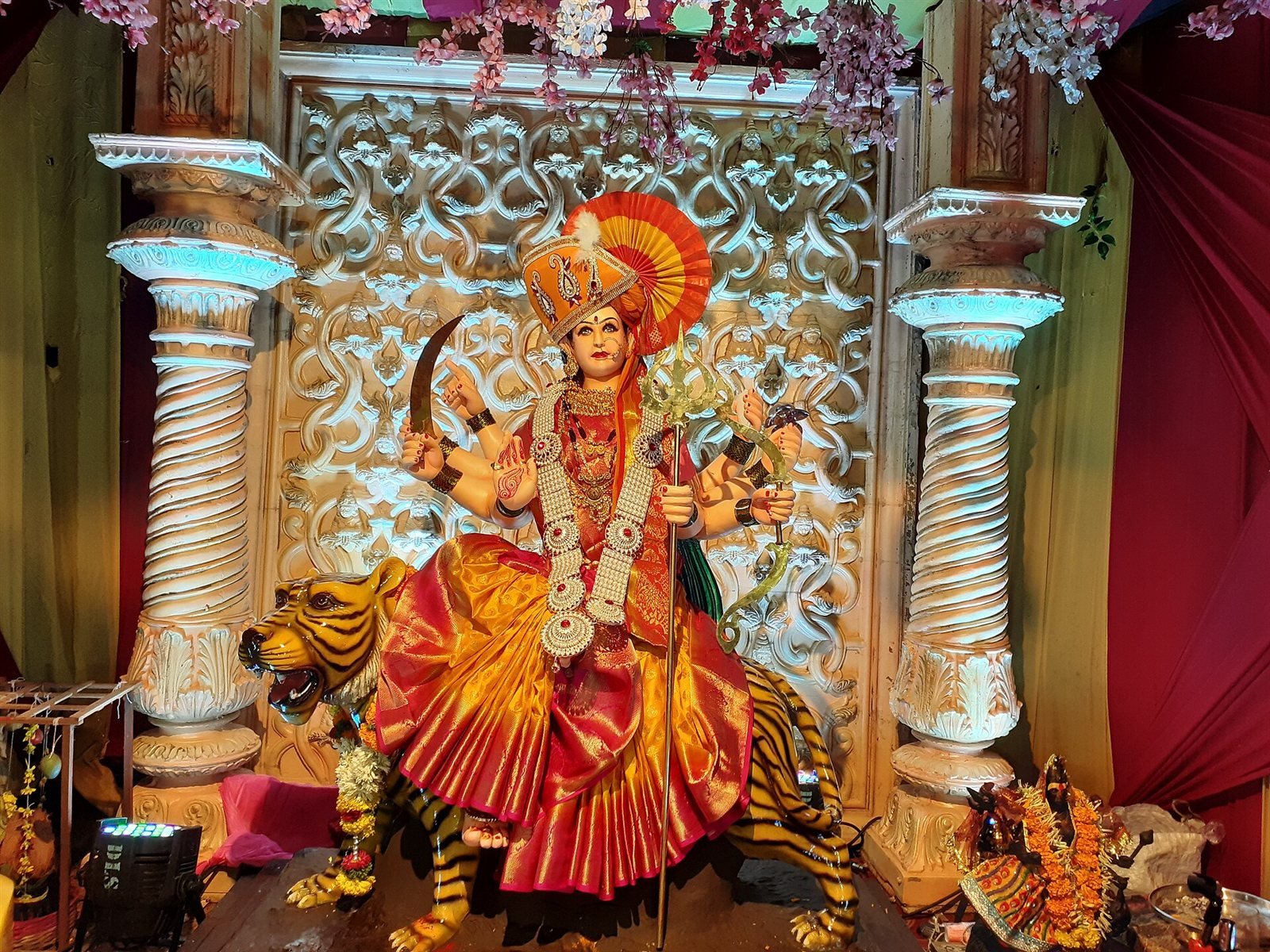
Navratri nights, kite-filled skies and the white desert at full moon.
From the white desert to tribal fairs
Rann Utsav reshapes the winter map entirely. From roughly November to February, a tented city rises near Dhordo on the edge of the white salt desert, and evenings fill with folk music, Kutchi embroidery stalls, camel-cart rides and full-moon walks across ground that glows silver under the night sky. It has grown from a small local fair into the reason many travellers time their whole Gujarat trip for winter, and booking tents well ahead is now essential. The days here are for craft villages and camel safaris; the nights are for the strange, level horizon of the salt.
Quieter dates reward the curious. The Modhera Dance Festival, usually in January, sets classical Bharatanatyam and Kathak performances against the floodlit Sun Temple, dancers framed by carved pillars a thousand years old. Across the tribal belt of eastern and southern Gujarat, fairs like Tarnetar in Saurashtra, famous for its embroidered courtship umbrellas, and the Dang Durbar near Saputara bring together courtship dances, decorated umbrellas and drum circles that predate any tourist brochure. These gatherings feel less staged and more like a community simply being itself, and they are among the most rewarding festivals to stumble into, especially if you can travel with someone who knows the local calendar and can explain the rituals unfolding around you.
Explore Festivals
Every Festival in Gujarat
Festivals of Gujarat: A Year-Round Guide
A complete Gujarat festivals guide: Navratri garba, the Uttarayan kite festival, Rann Utsav and…
Nine Nights, One City: Navratri in Vadodara
What Navratri in Vadodara is really like, from free neighbourhood garba to past-midnight dandiya,…
Kite Strings & Rooftops: Uttarayan Explained
The Uttarayan kite festival turns Ahmedabad's rooftops into a citywide duel of glass-coated strings…
Rann Utsav: A Full-Moon Night on the White Desert
A first-person Rann Utsav Kutch guide: full-moon nights on the white salt desert, the…
A year of Gujarati festivals
Gujarat's festival calendar is unusually full, and because most dates follow the lunar calendar they shift year to year — always confirm before booking travel around one.
January opens with Uttarayan on the 14th, when Ahmedabad and every other city climb to the rooftops for a full day of kite flying, followed after dark by drifting paper lanterns; the International Kite Festival runs at the Sabarmati Riverfront in the days before. The Modhera Dance Festival follows later in the month, staged against the Sun Temple. Rann Utsav spans roughly November to February, with the White Rann at its most dazzling on full-moon nights.
March belongs to Holi, and in the tribal east it becomes something larger — the Kawant fair in Chhota Udaipur and the Dang Darbar at Ahwa fill the days after with dance, costume and trade. April brings the Madhavpur Mela on the Porbandar coast, re-enacting Krishna's marriage to Rukmini.
The second half of the year
The monsoon months are quieter, though Saputara runs a Monsoon Festival through the rains. August–September brings Janmashtami, kept most intensely at Dwarka, and the Tarnetar fair in Surendranagar with its famous embroidered umbrellas. September carries Bhadarvi Poonam, when pilgrims walk to Ambaji in their lakhs.
September–October is Navratri, the state's defining festival: nine nights of garba danced in every neighbourhood, with Vadodara and Ahmedabad hosting the largest grounds. October–November closes the year with Diwali and, the following day, Bestu Varas — the Gujarati New Year — while Surat spends the night after Sharad Purnima eating ghari under the moon at Chandni Padva.
For the big festivals, book accommodation weeks ahead and expect roads and trains to be crowded; for the tribal fairs, hire a local guide and photograph people only with their assent.
Our Gujarat festivals guide covers timings, tickets and how to get there.