Best time
October to March
Avoid
Bhadarvi Poonam mela (Aug/Sep) unless you want it
Good for
Pilgrimage, Gabbar Hill sunset
Nearest base
Ambaji town / Balaram
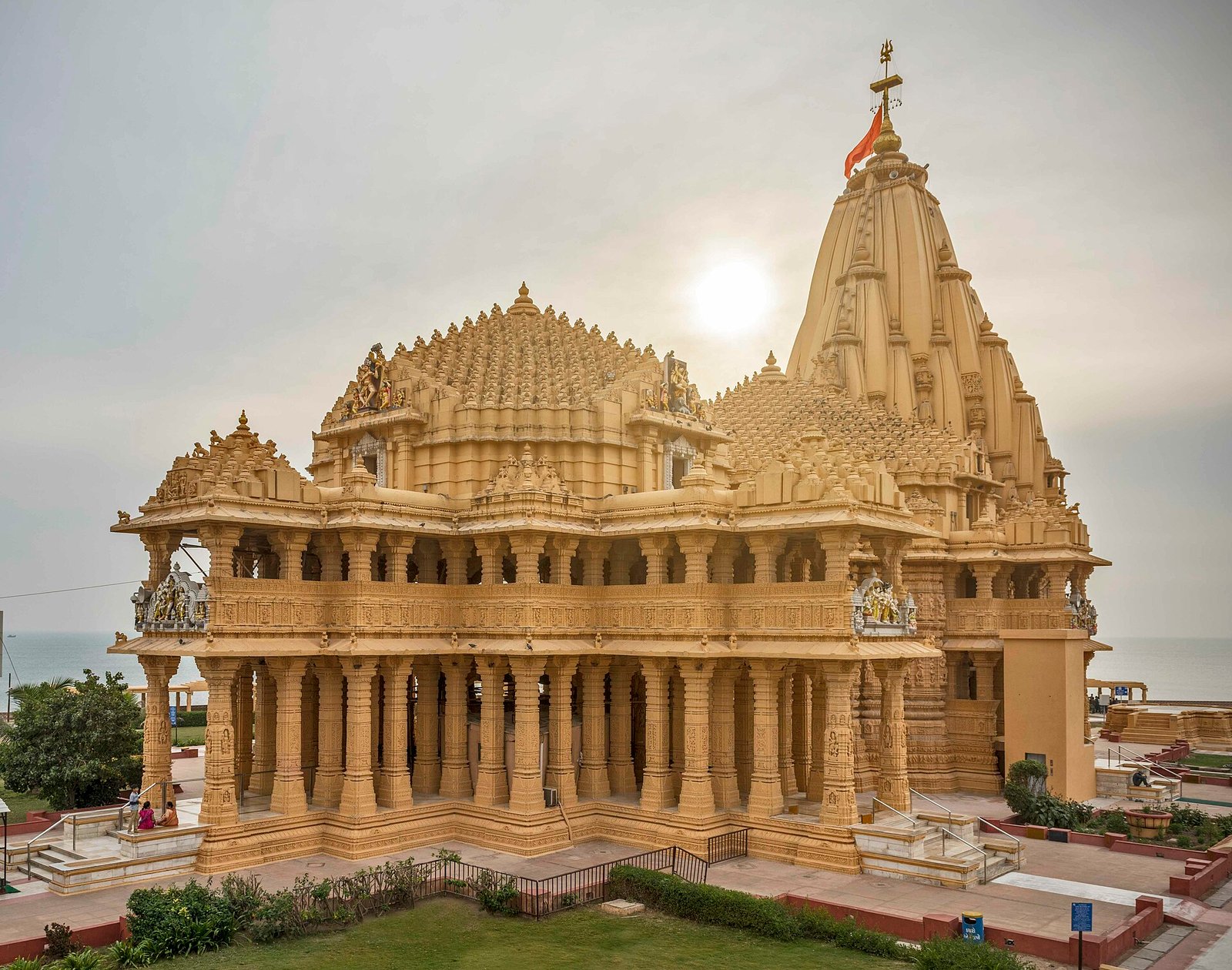
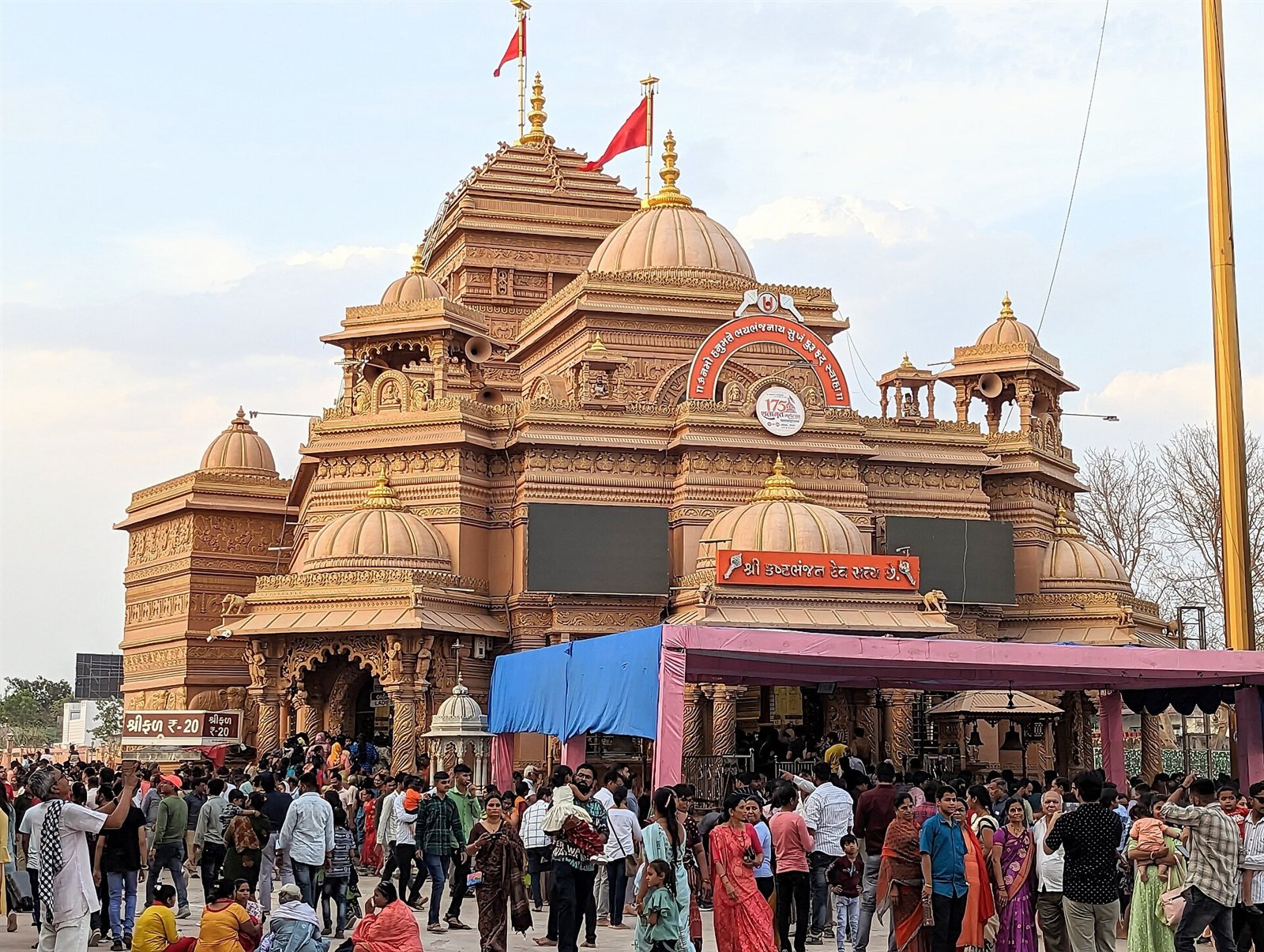
Ambaji is one of the fifty-one Shakti Peeths and among the most visited temples in Gujarat, drawing millions of pilgrims a year to a small town in the Aravalli foothills of Banaskantha, close to the Rajasthan border. Its distinguishing feature is an absence: there is no idol in the sanctum. Devotees face the Vishwa Yantra, a triangular inscribed diagram, dressed and adorned so that from a distance it reads as the goddess.
The town is organised around moving very large numbers of people through that sanctum efficiently, and it does so well. Beyond the main temple, the essential second half of a visit is Gabbar Hill, four or five kilometres away, traditionally the goddess's original abode, reached by steps or ropeway and much the more atmospheric of the two at sunset. This guide covers darshan, timings, the mela to avoid, and how to use Ambaji as a hinge towards Mount Abu.
Why visit Ambaji
For its religious standing and the sheer scale of devotion. Ambaji is a major Shakti Peeth, associated in tradition with the heart of Sati, and the intensity of the pilgrimage — particularly the walking sanghs that converge here — is the experience. The complex itself is large, white-marble, gold-topped and modern in its facilities: wide courtyards, queue management, cloakrooms and prasad counters, built to handle festival-scale crowds.
And for Gabbar Hill, which many visitors find the better half. A flight of steps and a ropeway climb to a summit shrine with a perpetual flame, venerated footprint markings, subsidiary shrines and a view running north into Rajasthan across the Aravalli foothills. Evening aarti up there, with the light going long over the hills and the wind moving, is considerably more affecting than the queue below. The surrounding marble-quarrying landscape also explains why the town looks the way it does.
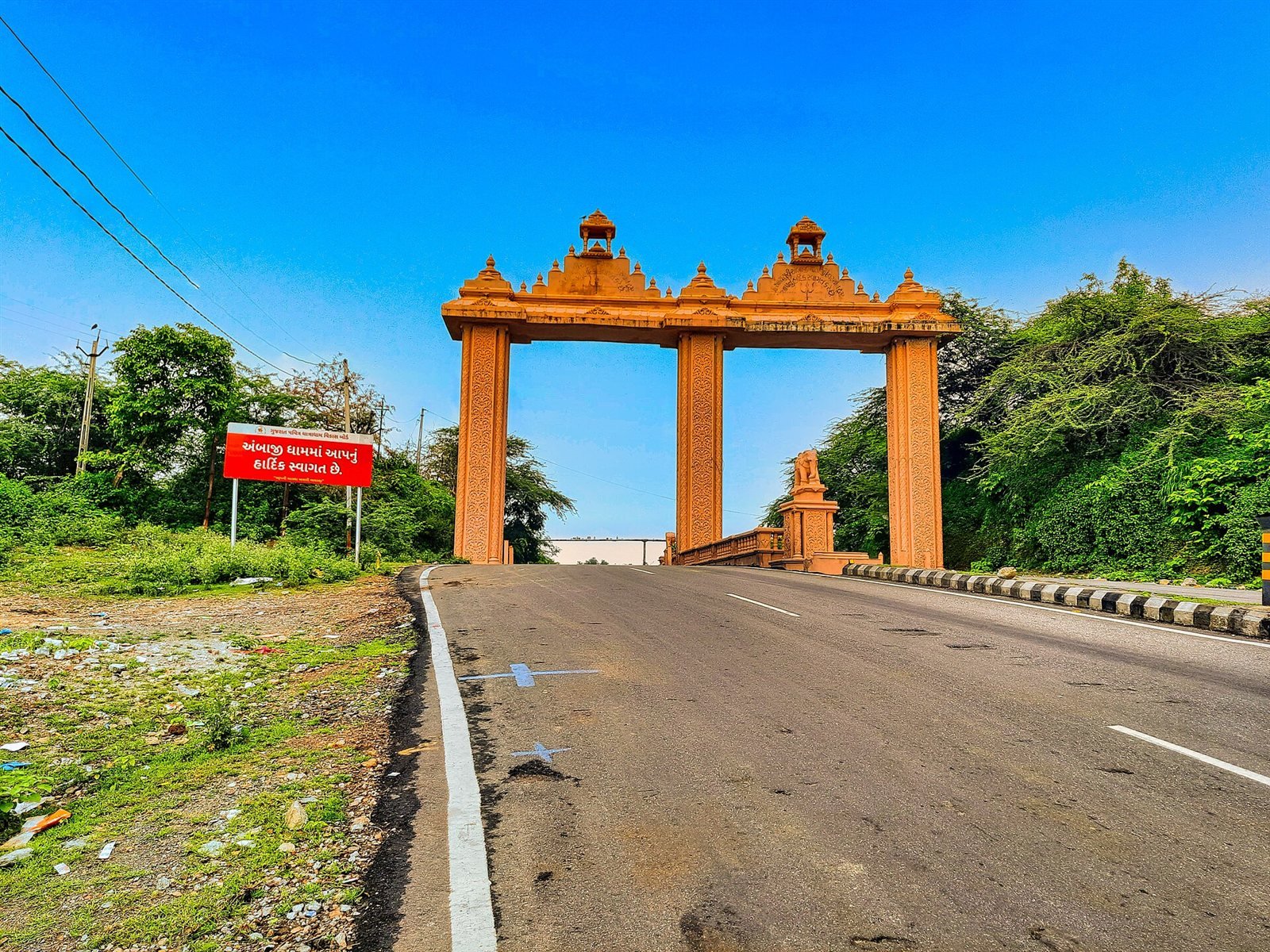
A major Shakti Peeth whose sanctum holds an inscribed yantra rather than an image.
How to plan an Ambaji visit
- Do darshan earlyQueues build through the day and are very long at weekends and on festival dates. Early morning is calmest. Expect security screening, cloakrooms for phones and bags, and no photography of the sanctum.
- Understand what you are seeingThe sanctum holds the Vishwa Yantra, an inscribed triangular plaque, not a carved image. Knowing this beforehand makes the darshan make sense.
- Go up Gabbar Hill in the late afternoonSteps or ropeway, four to five kilometres from the main temple. Aim to be at the top for the evening aarti and the light over the Aravallis.
- Check the ropeway is runningIt is the easy way up and down, but it stops for maintenance and in bad weather. Ask in town before you drive out.
- Steer around Bhadarvi PoonamThe full moon of Bhadrapada, usually late August or September, brings the great Ambaji mela and crowds in the millions. Spectacular, but roads, rooms and queues are overwhelmed.
- Sleep at Balaram if you want comfortTown accommodation is pilgrim-standard. The heritage palace hotel at Balaram, about 45 km south, is far more comfortable and an easy drive.
How to get there
Ambaji is roughly 180 km north of Ahmedabad and about 60 km from Palanpur, near the Rajasthan border. The nearest railheads are Palanpur and Abu Road, both well served on the Ahmedabad–Delhi corridor, with taxis and buses onward. The closest airport of any use is Ahmedabad.
Buses run constantly from Ahmedabad, Mehsana, Palanpur and Abu Road, and this is a well-worn pilgrimage route with plenty of shared transport. A hired car is worth it if you intend to combine Ambaji with Gabbar Hill, Balaram, Taranga and the north Gujarat heritage sites, since local transport between those is patchy. Roads throughout are good.
Where to stay
Ambaji has a great deal of accommodation and almost all of it is pilgrim-oriented: dharamshalas, trust guesthouses and simple hotels, plus a Gujarat Tourism property. It is plentiful, cheap and functional rather than comfortable, and it puts you within walking distance of the temple for an early darshan, which is its main advantage.
For anything more comfortable, look outside town. Balaram Palace, a 1920s Nawab's retreat converted into a heritage hotel about 45 km south towards Palanpur, is the standout choice and makes a much more pleasant base. Mount Abu, around 45 km north, has a full hill-station range of hotels and works well if you are combining the two. Book far ahead for Bhadarvi Poonam and Navratri, when everything within a hundred kilometres is taken.
Best time to visit
October to March is the comfortable season, with pleasant days and cold nights in the Aravalli foothills, and it is the best window for combining darshan with Gabbar Hill and the drive on to Mount Abu. November to February is the pick. Summer here is severe — April to June is genuinely hot — and the town has limited relief.
The festival calendar dominates. Bhadarvi Poonam, in late August or September, is the great Ambaji fair, with pilgrim numbers reported in the millions across four or five days and huge walking sanghs converging along the highways. Navratri in autumn is also intensely busy, with garba in the temple precinct, and the Chaitra full moon draws large crowds. These are extraordinary occasions and terrible times to attempt an ordinary visit — choose deliberately.
Practical tips
- Do darshan early and expect cloakrooms and screening; the sanctum may not be photographed.
- Save Gabbar Hill for late afternoon and stay for the evening aarti and the view into Rajasthan.
- Confirm the ropeway is operating before driving out to the hill.
- Book Balaram or Mount Abu if you want comfortable accommodation; town hotels are pilgrim-standard.
- Check the Bhadarvi Poonam and Navratri dates against your plans, and decide whether you want the mela or not.
Frequently asked questions
Why is there no idol at Ambaji temple?
Ambaji is a Shakti Peeth where worship centres on the Vishwa Yantra, an inscribed triangular plaque, rather than a carved image. It is dressed and adorned so that it reads as the goddess.
How far is Ambaji from Mount Abu?
About 45 km north, an easy drive, which is why the two are commonly combined.
What is Gabbar Hill?
A hill four to five kilometres from the main temple, traditionally the goddess's original abode, with a summit shrine reached by steps or ropeway and excellent evening views.
When is the Ambaji mela?
Bhadarvi Poonam, the full moon of the Bhadrapada month, usually in late August or September. It draws pilgrim numbers in the millions over several days.
How far is Ambaji from Ahmedabad?
Roughly 180 km north, about four hours by road. The nearest railheads are Palanpur and Abu Road.
Ambaji is best treated as two visits in one day: an early, efficient darshan at the marble complex where the sanctum holds a yantra rather than an image, and a late-afternoon climb up Gabbar Hill for the older shrine, the aarti and the light over the Aravallis. Come between October and March, sleep at Balaram if comfort matters, check the ropeway, and make a deliberate decision about Bhadarvi Poonam before you book anything.