Ahmedabad gets the credit for Gujarati street food and Surat does the eating. The city has a reputation across the state for spending money on food with a seriousness bordering on the devotional — there is a well-worn Gujarati saying about Surat's food and Kashi's death being the two best things going — and its specialities are genuinely its own. Some of them exist nowhere else in any recognisable form.
A proper Surat food crawl is a full day and probably an evening, and it is best done with an appetite managed carefully across many small plates. What you are chasing is a specific list: locho, khaman that bears little resemblance to what the rest of India calls dhokla, undhiyu in winter, ponk in its brief season, ghari at Diwali, and a set of desserts and drinks that Surat treats as essentials rather than extras.
Locho, and the accident that made it
Start with locho, because it is the thing you cannot get properly anywhere else. It is a steamed batter of gram flour and lentils, soft to the point of collapse, served hot in a bowl and dressed with butter, sev, chopped onion, coriander, red chilli powder and often a squeeze of something sharp. You eat it with a spoon. It is savoury, faintly sour from fermentation, rich with the butter, and completely unlike the neat springy squares that pass for Gujarati steamed snacks elsewhere.
The origin story, told all over Surat, is that locho was a mistake: a batch of khaman batter that came out too wet to set into cuttable pieces, which a vendor sold anyway rather than waste, and which turned out to be better than the thing he had intended to make. Whether or not that is literally how it happened, it is a good description of what locho is — khaman that has given up on being solid.
The other Surat gram-flour speciality is its khaman, which is softer, moister and more generously dressed than the versions found in Ahmedabad or outside the state, and often served with a wet, sweet-sour chutney and a great deal of sev. Sev khamani — khaman crumbled, seasoned and heaped with sev and pomegranate — is a related item and a Surat staple. All three are breakfast and evening food, sold from stalls and dedicated shops, and best eaten hot at the counter rather than carried away.
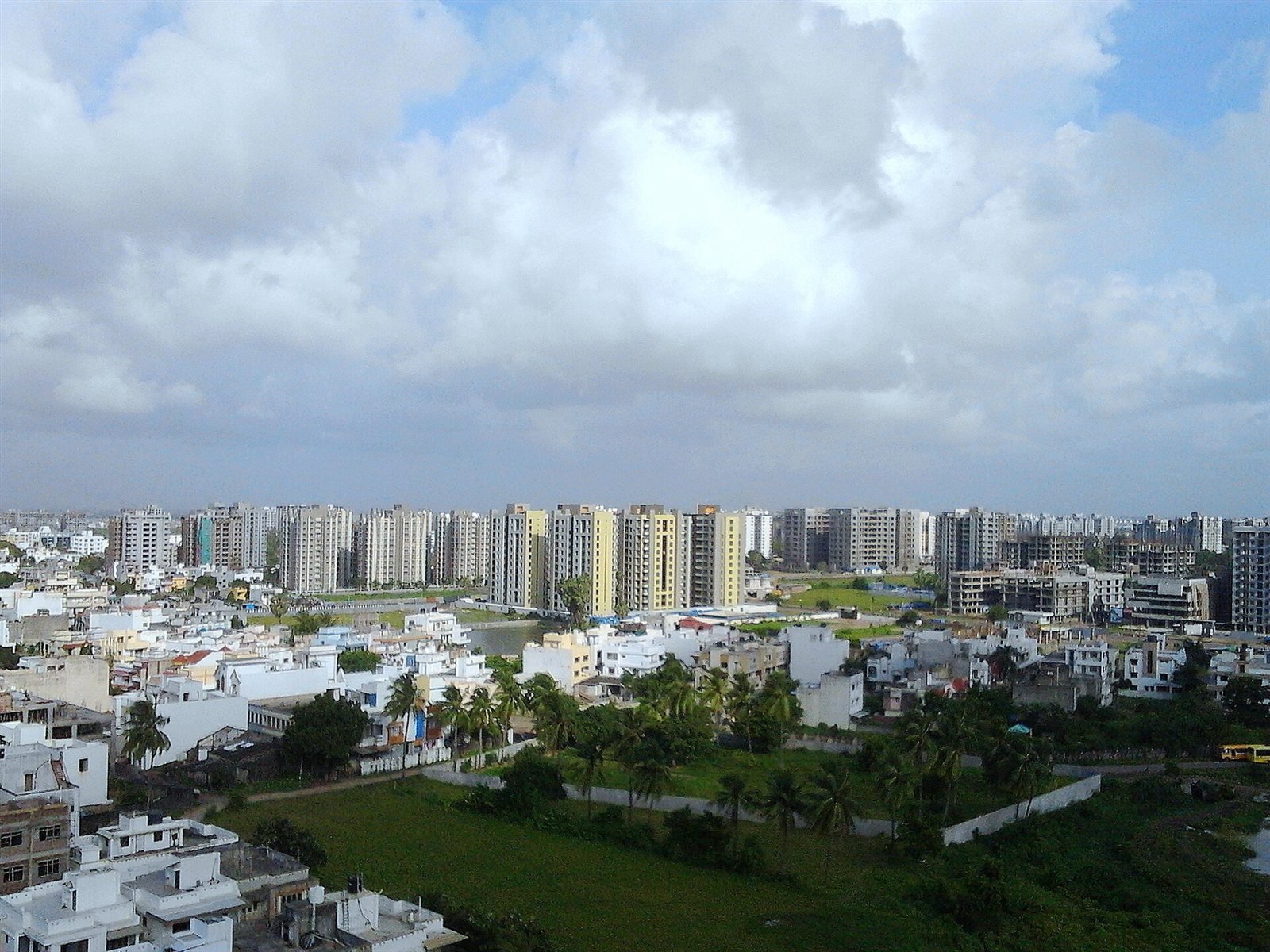
Locho: what happens when a batch of khaman fails to set, and someone decides to sell it anyway.
The seasonal things, which are the best things
Two Surat specialities exist only for a few weeks a year, and if your trip coincides with either, reorganise your plans around it. The first is ponk — tender, immature jowar or millet grains, harvested green in the cold months, roasted and served with sev, chutney, lime and spices. It has a fresh, milky, faintly sweet quality that has no real equivalent, and the season is short, roughly from late autumn into the winter. Surat and the surrounding south Gujarat districts are its heartland.
Ponk exists for a few weeks in winter and undhiyu for a few months. If your trip lines up with either, reorganise around it
The second is undhiyu, the great winter one-pot of Gujarat, and Surat's version — Surti undhiyu — is widely held to be the definitive one. Root vegetables, small aubergines, beans, unripe banana and muthiya dumplings of gram flour and fenugreek, cooked slowly with green masala of coriander, coconut and garlic. Traditionally it was cooked upside down in a sealed earthen pot buried in a fire pit, which is where the name comes from, and a few places still do it that way around Uttarayan in January. It is a winter dish and it is worth planning a trip around.
Then there is ghari, the dense round sweet of thickened milk, ghee, nuts and flour, associated above all with Chandni Padva — the full moon just after Diwali — when Surtis eat it in enormous quantities and the sweet shops work through the night. Surti ghari is a protected local identity and a genuine institution. Outside the season it is available year-round in the city's better sweet shops, but the Chandni Padva version, eaten on a rooftop under the full moon, is the real thing.
Where to eat, and how to pace it
Surat's eating is dispersed rather than concentrated in one lane, which is why a crawl needs either local advice or a food tour. Broadly: the areas around Bhagatalav and the older parts of the city hold the long-established locho and khaman specialists; Rander, across the Tapi, has its own strong reputation; and the stretches around Sardar Bridge and along the riverfront have busy evening street-food concentrations. Chowk Bazaar and the old city lanes reward wandering.
The practical advice is to go with someone who eats here. Surat's best food is sold from small, unremarkable-looking, often decades-old establishments with fierce local followings and no interest whatever in visitors, and the difference between the right locho shop and the one next door is substantial. Ask your hotel, ask a taxi driver, or take one of the food walks that now operate in the city. Then pace yourself: single portions, shared, across six or seven stops, starting around five in the evening and finishing late.
The rest of Surat, and when to come
Surat is India's diamond-cutting capital and one of its biggest textile centres, a fast, wealthy, unsentimental working city that makes very little effort to charm visitors. Beyond food, there is the Dutch Garden and the European tombs from its trading heyday, the old castle by the Tapi, the riverfront, and Dumas beach 20 km out with its black sand and evening food stalls. The city is not a sightseeing destination and does not pretend to be.
Come in winter. November to February gives you comfortable weather, ponk in season, undhiyu at its best, and — if your dates land right — Chandni Padva ghari just after Diwali or undhiyu around Uttarayan in mid-January. The monsoon in Surat is heavy and the city has a long history of serious flooding; April to June is hot and humid. Getting there is trivial: Surat has an airport, sits on the main Mumbai–Delhi railway line with frequent expresses, and is around 270 km from Ahmedabad and 280 km from Mumbai.
If you go
- Come in winter — for the weather, for ponk in season, and for undhiyu at its best.
- Eat locho hot at the counter, with butter and sev, and do not confuse Surti khaman with dhokla from elsewhere.
- Get local recommendations or take a food walk; the difference between the right shop and the next one is significant.
- Pace it across six or seven stops from about five in the evening, sharing single portions.
- If your dates fall near Chandni Padva just after Diwali, prioritise ghari; if near Uttarayan in January, prioritise undhiyu.
Surat is the best eating in Gujarat and it makes no effort at all to tell you so. Come in winter, find someone who knows which locho shop is the right one, work through six or seven small plates from early evening onwards, and build the trip around ponk in the cold weeks or undhiyu in January if you possibly can. Then go and look at a black sand beach and an iron bridge, because you will need the walk.