You leave Ahmedabad at half past five with the city still asleep, drive forty kilometres north-west while the sky goes from black to grey to a pale washed orange, and park on an earth bund beside a sheet of water with mist coming off it. Within ten minutes of getting out of the car you have seen more birds than most people see in a year: flamingos standing in the shallows, cranes calling somewhere out of sight, ducks in rafts of several hundred, a marsh harrier working low along the reeds.
Thol Lake is the closest serious birdwatching to Ahmedabad and, for a certain kind of morning, the best-value trip in Gujarat. It is not a wilderness — it is an artificial reservoir surrounded by farmland, built for irrigation over a century ago — and it holds a bird list that runs past three hundred species and a Ramsar designation, awarded in 2021, recognising it as a wetland of international importance. You can be back in the city for breakfast.
An accident of irrigation
Thol was built as a water tank, dammed in the early twentieth century to irrigate the farmland of what is now Mehsana district. Nobody was thinking about birds. But a large shallow freshwater body in a dry region, with reedbeds developing along its margins and cultivated land all around supplying food, is exactly what migratory waterfowl are looking for, and within decades the lake had become a major wintering site. It was declared a wildlife sanctuary in 1988.
The shallowness is the key to it. Thol is not deep, which means the water is full of the submerged vegetation, invertebrates and small fish that waders and dabbling ducks feed on, and the margins are extensive rather than steep. That produces an enormous carrying capacity for birds in a relatively small area — the sanctuary covers only a handful of square kilometres — and it concentrates them close enough to the bunds to be watchable.
It also makes the lake volatile. Thol's extent depends on the previous monsoon, and a poor rainfall year can shrink it dramatically, concentrating birds into a smaller area — sometimes better for viewing, sometimes a sign of a stressed wetland. In a strong year the water spreads wide and the birds disperse. Regulars will tell you no two winters at Thol are quite the same.
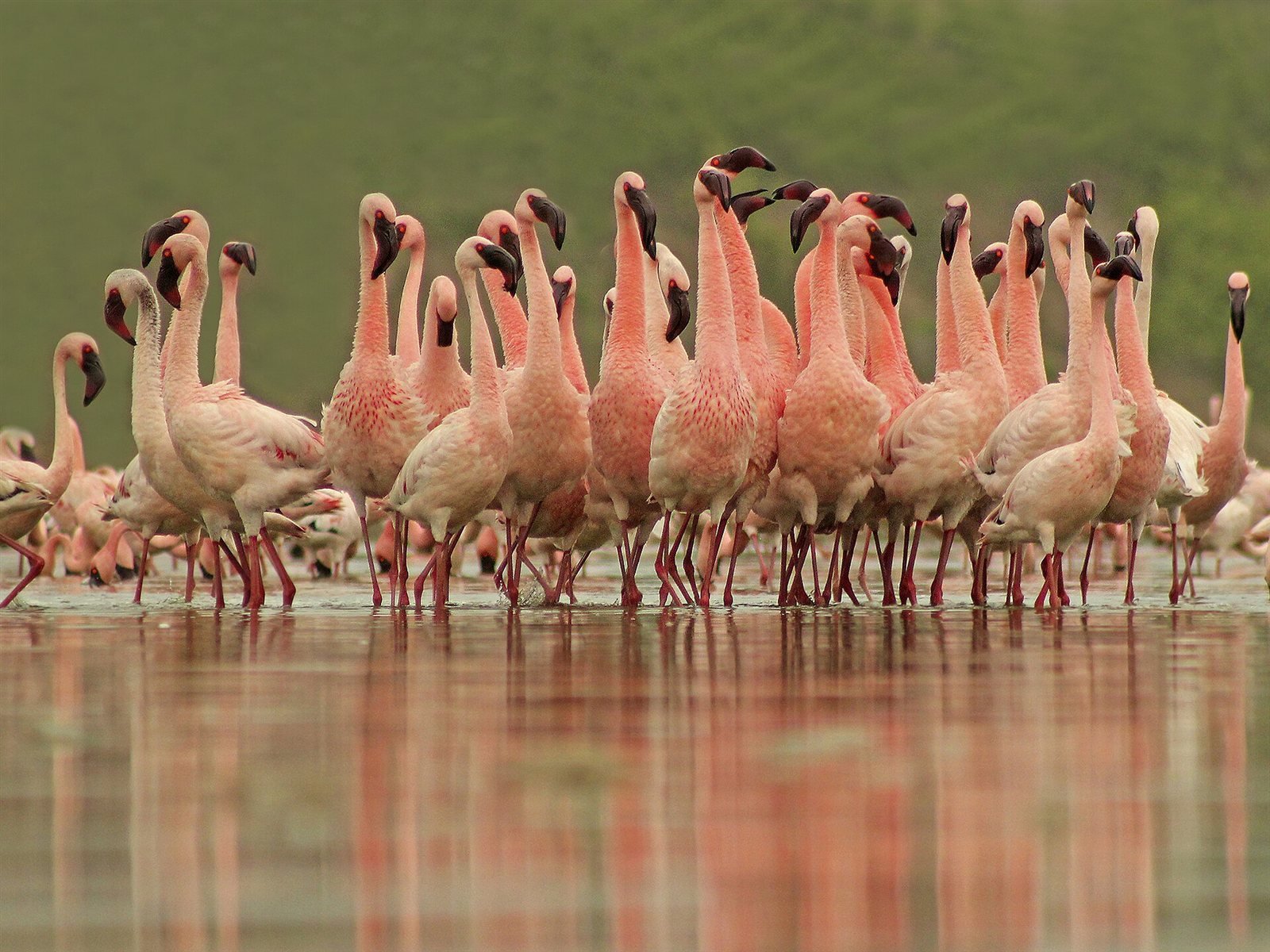
An irrigation tank from the 1910s that turned into one of the best wetlands in western India.
What a winter morning delivers
The headline birds are the big ones. Both greater and lesser flamingos use the lake, sometimes in substantial numbers, and a line of them in early light is the photograph everybody comes away with. Great white pelicans appear on the open water. Common and demoiselle cranes come in from Central Asia, and sarus cranes — the tall grey residents, the world's tallest flying bird, and a species in real trouble across much of its range — are seen regularly in the surrounding fields and margins.
Both flamingos, three kinds of crane, pelicans and rafts of northern ducks — forty kilometres from a city of eight million
Beneath the headliners is the volume: rafts of northern pintail, shoveler, garganey, teal, wigeon and pochard; coots and grebes; painted and openbill storks, spoonbills, ibises, herons and egrets on the margins; black-winged stilts, avocets, stints, plovers and sandpipers working the mud; purple swamphens and jacanas in the vegetation; and raptors overhead — marsh harriers most reliably, with ospreys and eagles turning up. Kingfishers of three or four species work the edges.
The advantage Thol has over Nalsarovar, its larger and more famous rival an hour to the south-west, is that you see it on foot. There is no boat, no boatman and no negotiation about how long the ride lasts. You park, you walk the bunds, and you set your own pace — which means you can stand still for twenty minutes when something interesting is happening, use reeds as cover to get closer, and work the light. For photographers in particular that walk-up access is worth a great deal.
How to work the lake
Arrive at sunrise. This is not a preference, it is the whole trip: the first two hours after first light are when the birds feed and move and call, when the light is low and warm across the water, and when the day's heat has not yet flattened everything into a torpid stillness. Leaving Ahmedabad by half past five in winter gets you there about right. By ten the lake goes quiet and you may as well leave.
Then walk rather than drive, and use cover. The commonest mistake is to stride along the top of the bund in a bright jacket, skylining yourself against an empty sky, and wonder why everything flushes at two hundred metres. Approach the water's edge behind reeds and scrub, wear neutral colours, move slowly and stop often. Binoculars are the minimum equipment; a spotting scope or a long lens turns the far side of the lake from a rumour into a species list. Take an entry ticket at the forest department point, and check timings and any weekly closure locally, since arrangements here have changed over the years.
Making a day of it
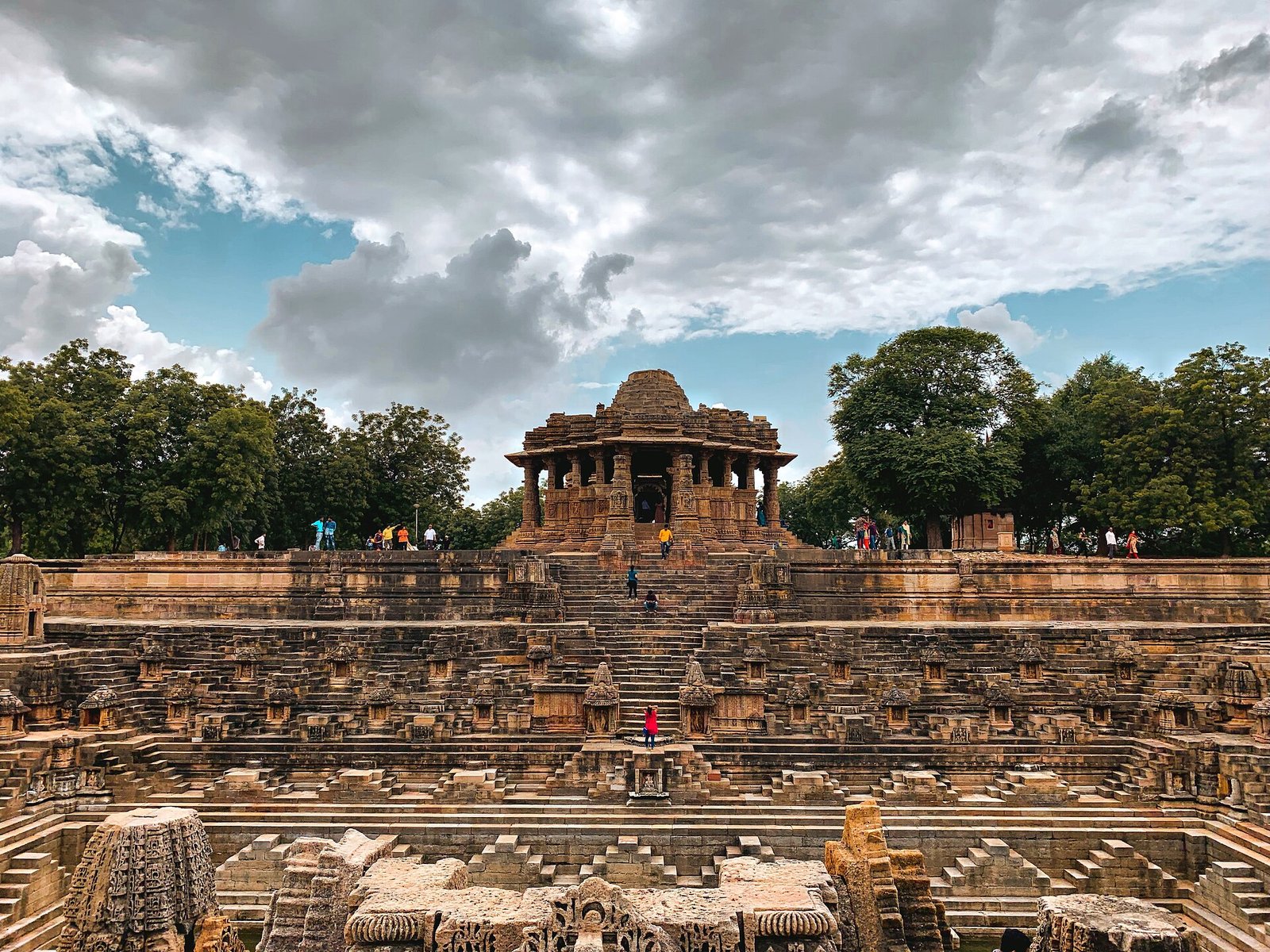
Thol sits on the north side of Ahmedabad, which makes the return journey productive rather than dead time. Adalaj stepwell is close to the route back — a complete five-storey vav from 1499 that takes an hour and is at its best in soft light. Akshardham at Gandhinagar is a little further along. If you want a full day, keep driving north instead: the Sun Temple at Modhera is about two hours from the lake, Rani ki Vav at Patan a little beyond it, and both are among the finest buildings in India.
The season is November to February, with December and January the peak for both numbers and variety. March sees the migrants leave; April to June is hot and much reduced; the monsoon refills the tank and brings resident breeding activity but makes the bunds muddy and access awkward. Serious birders working the region usually do Thol at dawn one day and Nalsarovar at dawn the next, staying in Ahmedabad in between, and treat Lothal or Velavadar as the third leg.
If you go
- Leave Ahmedabad by 5.30 am in winter. Sunrise at the lake is worth more than everything else combined.
- Walk the bunds rather than driving them, wear neutral colours and use reeds as cover instead of skylining yourself.
- Bring binoculars at minimum; a scope or long lens is what makes the far shore worth scanning.
- Come November to February, and accept that water levels — and therefore the birds — depend on the previous monsoon.
- Add Adalaj stepwell on the way back, or push north to Modhera and Patan to make it a full day.
Thol is the best hour-for-hour wildlife experience within reach of Ahmedabad: a hundred-year-old irrigation tank that became a Ramsar wetland, holding flamingos, three species of crane, pelicans and rafts of northern ducks, walkable from a bund at sunrise for the price of one early alarm. Go in December or January, be there as the light comes up, stay behind the reeds, and be back in the city before the traffic starts.