
About Handvo
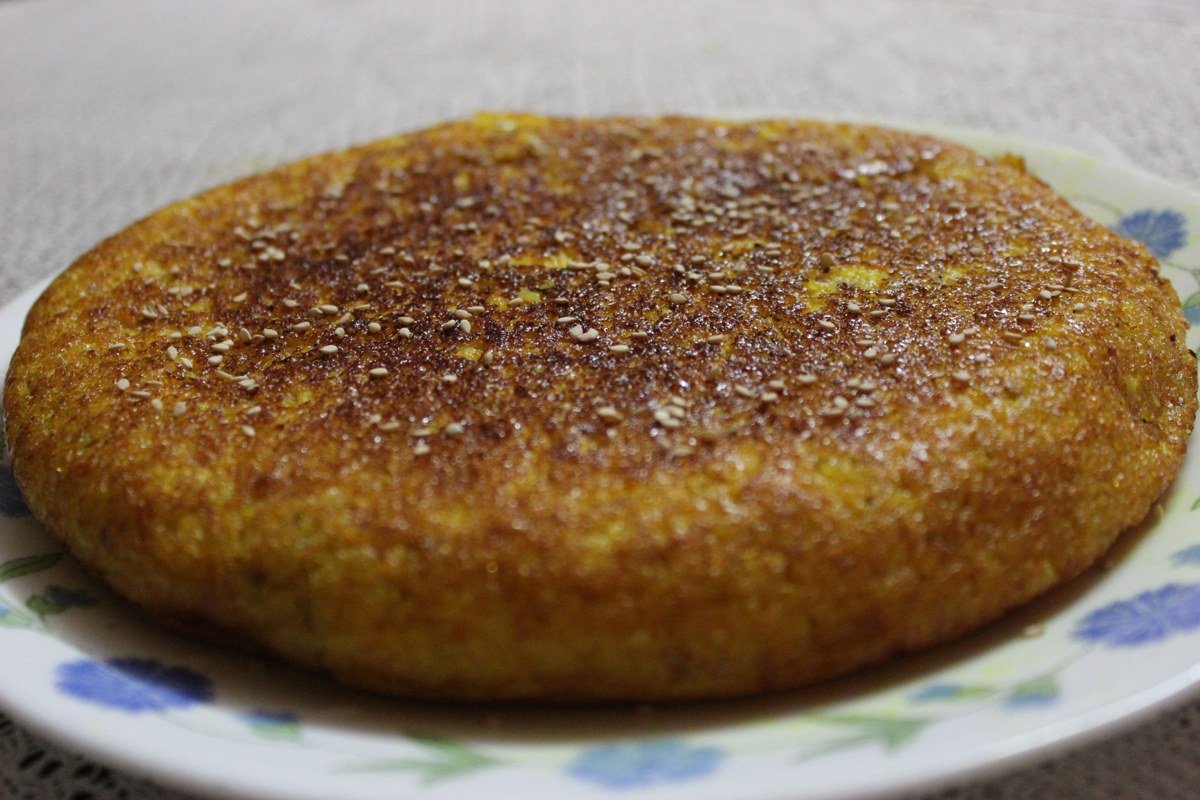
Handvo is a baked or pan-cooked savoury cake made from a fermented batter of rice and mixed lentils, usually with grated bottle gourd (dudhi) folded in, seasoned with ginger, chilli and a mustard-sesame tempering. The outside turns deeply golden and crusty while the inside stays soft and moist.
Heartier than most farsan, a wedge of handvo with chai or chutney is a popular breakfast or tiffin, and its keeping quality makes it a favourite for journeys.
Handvo sits between a cake, a bread and a bake, and belongs to the same fermented-batter family as dhokla without sharing its lightness. Rice and mixed lentils are soaked, coarsely ground and left to ferment, then bulked out with grated bottle gourd — dudhi — along with ginger, green chilli, yoghurt and spices. The vegetable is not optional: it supplies the moisture that keeps the dense batter from baking into a brick.
Traditionally the batter goes into a heavy covered pan set over a low flame, or into a purpose-made handvo tin, with a generous scatter of sesame seeds on the base so the crust comes out studded and nutty. It cooks slowly on both sides until the outside is dark and crisp. Ovens do the job perfectly well today, but the pan-cooked version keeps a better crust and remains the one most families make.
The story
Handvo comes from the same Gujarati love of fermented, batter-based food as dhokla, but baked rather than steamed, giving a richer, crusted result. Traditionally it was cooked in a covered pot over coals, heated top and bottom.
Key ingredients
How it's made
Ferment the batter
Ground rice and lentils are fermented with yoghurt.
Add vegetables
Grated bottle gourd, spices and tempering are mixed in.
Bake or pan-cook
Poured into a tin and baked, or cooked in a pan, until crusty.
Slice
Cooled slightly, sesame-crusted, and cut into wedges.
How it tastes
Handvo is savoury and satisfying in a way most Gujarati snacks are not, with a genuine crust — crisp, sesame-studded and deeply browned — giving way to a soft, moist, faintly sour interior. The bottle gourd keeps the crumb from drying out, the fermented batter carries a pleasant tang, and the tempering runs through the whole cake rather than sitting on top of it.
Where to eat it
Farsan shops sell handvo in thick wedges cut from a large round, usually in the mornings and often still warm from the pan. It is common across the state and especially reliable in Ahmedabad, Vadodara and the Charotar towns. Because it is bulky and filling, it is one of the few Gujarati snacks that works as a genuine meal on its own.
Worth seeking out
Dudhi Handvo
The classic with bottle gourd.
Instant Handvo
Made from a quick semolina-besan batter.
Muthiya-style
Shaped small and steamed or fried.
Pairs well with
On the table
Handvo is breakfast, lunchbox food and a standard part of the travelling Gujarati’s provisions, since it holds up for a day without refrigeration and tastes good at room temperature. Households make it when there is leftover batter from other dishes, and it appears at festival meals and family gatherings where something more substantial than farsan is wanted.
Close cousins worth ordering next: Sev Khamani and Locho.
Foodie tips
Good to know
What is handvo made from?
A fermented batter of rice and mixed lentils, usually with grated bottle gourd, baked or pan-cooked into a crusty savoury cake.
Is handvo baked or fried?
Traditionally baked (originally in a covered pot over coals) or pan-cooked — not deep-fried — giving a crust outside and soft inside.
Why is it good for travel?
It keeps well for a day or more and tastes fine at room temperature, making it a classic tiffin and journey food.
Is it spicy?
Mildly — warmed by ginger, green chilli and the tempering, but not hot.

WHERE TO STAY
Find your stay in Gujarat
Compare live prices across the big booking sites and reserve in a few taps. Booking happens securely on the partner's site — we may earn a small commission at no extra cost to you.
Book directly on our partner sites — tap a provider to see live Gujarat hotels & prices:
SHOP THE REGION
Bring home Gujarat — & travel essentials
Hand-picked crafts and trip gear, available on Amazon.