
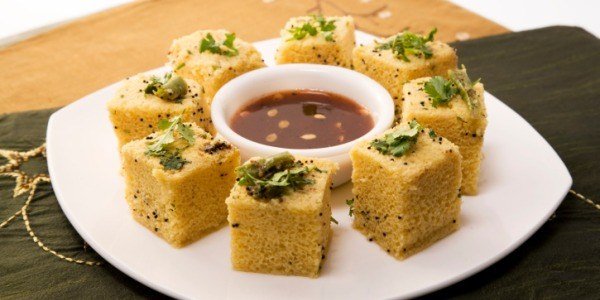
About Dhokla
Dhokla is a savoury steamed cake of fermented rice-and-gram-flour batter, cut into soft squares and tempered with mustard seeds, curry leaves and green chilli. Light, spongy and a little tangy, it is eaten at breakfast, as a snack, or as part of a thali.
Though often used interchangeably with khaman, true dhokla is whitish and made from a fermented rice-and-lentil batter, giving a gentle sourness; the bright-yellow, sweeter version is properly khaman. Both are steamed, both are beloved.
The distinction that confuses most visitors is worth learning, because Gujaratis observe it strictly even when menus do not. True dhokla is made from a batter of rice and split chana dal, soaked and ground and then left overnight to ferment, which produces a pale, faintly sour, close-grained cake. Khaman is made from gram flour alone, raised quickly with a pinch of soda or Eno, and comes out bright yellow, sweeter and much softer. Most shops selling ‘dhokla’ outside Gujarat are in fact selling khaman.
The fermentation is what earns dhokla its reputation as one of India’s lighter snacks. Wild yeasts and lactic bacteria work through the batter overnight, raising it, souring it gently and making its proteins easier to digest — the same process behind idli and dosa. Because the cake is then steamed rather than fried, it carries almost no oil beyond the spoonful of tempering poured over at the end.
The story
Dhokla is centuries old and rooted in the Gujarati love of fermented, steamed, oil-light food. Its portability and long shelf life made it a staple of tiffins and train journeys long before it became a national snack.
Key ingredients
How it's made
Ferment
Ground rice-and-gram batter is left to ferment until light.
Steam
The batter is poured into a tray and steamed until set and spongy.
Cut
The cake is cooled slightly and cut into neat squares.
Temper
A tadka of mustard, curry leaves and chilli is poured over and garnished.
How it tastes
Soft and airy with a clean, tangy savouriness, dhokla leads with the gentle sourness that overnight fermentation builds into the batter. The tempering adds a low, aromatic heat rather than a fierce one — mustard seeds popping in hot oil, curry leaves, slit green chillies — and a drizzle of lightly sweetened water keeps the crumb moist. Eaten warm, the texture should yield instantly and spring back.
Where to eat it
Farsan shops across Gujarat steam fresh trays each morning and sell by weight until they run out, which is usually well before noon. Ahmedabad and Vadodara are the strongest cities for both dhokla and khaman, with dedicated farsan houses in the old-city bazaars that have worked the same recipes for generations. Anywhere you see a queue at eight in the morning, join it.
Worth seeking out
Khaman
The bright-yellow, softer, sweeter gram-flour cousin.
Khatta Dhokla
A more sour, white version from a rice-lentil batter.
Sandwich Dhokla
Layered green and white batters with a chutney filling.
Pairs well with
On the table
Dhokla is everyday food before it is festival food: a standard Gujarati breakfast, the default four-o’clock snack with tea, and a fixture in the farsan corner of a full thali. It also travels well enough to have become the classic tiffin and train-journey item, and it appears at weddings, religious gatherings and office celebrations across the state.
Khaman is the one it is most often confused with — we have a full page on khaman and where to eat it.
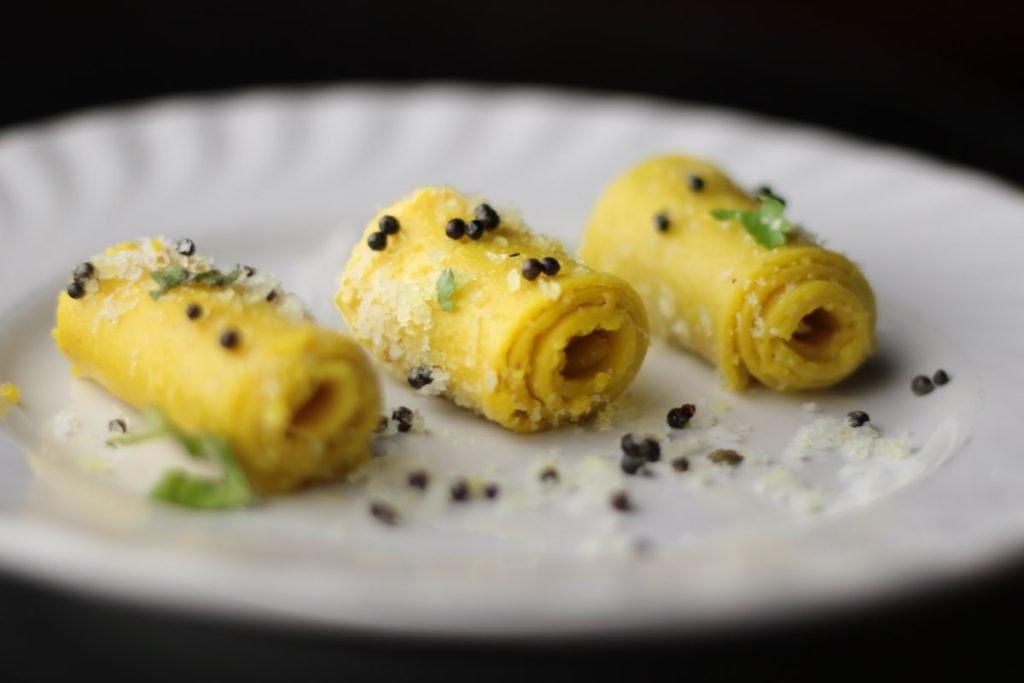
If you liked this, try Khaman and Khandvi from the same family.
Foodie tips
Good to know
Difference between dhokla and khaman?
Dhokla is traditionally a white, mildly sour cake from a rice-and-lentil batter; khaman is the bright-yellow, softer, sweeter version made purely from gram flour. Shops often use the names loosely.
Is dhokla healthy?
Relatively — it's steamed not fried, fermented, and protein-rich from gram flour, making it one of the lighter Indian snacks.
Is it sweet or savoury?
Mainly savoury and tangy with only a faint sweetness; khaman is noticeably sweeter.
Can it be made without fermenting?
Yes — quick versions use Eno or soda for sponginess instead of overnight fermentation, especially for khaman.
Related dishes
WHERE TO STAY
Find your stay in Gujarat
Compare live prices across the big booking sites and reserve in a few taps. Booking happens securely on the partner's site — we may earn a small commission at no extra cost to you.
Book directly on our partner sites — tap a provider to see live Gujarat hotels & prices:
SHOP THE REGION
Bring home Gujarat — & travel essentials
Hand-picked crafts and trip gear, available on Amazon.